- Amazon LTL Expansion quietly debuts U.S. inbound service, hinting at a nationwide, tech‑driven rollout by 2026.
- European pilots hit 97 % on‑time delivery, proving Amazon Freight’s less‑than‑truckload playbook works across borders.
- Asset‑light partnerships and AI dispatch position Amazon to disrupt LTL pricing and visibility for shippers everywhere.
Why Amazon LTL Expansion Matters in 2025
Amazon’s LTL pilot quietly shifts from rumor to reality.
Amazon’s entry into LTL arrives at a turning point for freight markets. For the latest Amazon logistics news, explore our dedicated coverage hub. Demand has softened since the pandemic boom, leaving excess capacity but persistent cost pressures for shippers. By integrating LTL alongside parcel, truckload, and intermodal modes, Amazon Freight promises simpler booking, dynamic pricing, and real‑time tracking through a single portal—capabilities many midsize businesses struggle to obtain from traditional carriers. Industry veterans note that Amazon’s data‑driven culture could streamline hub‑and‑spoke terminals, optimize freight consolidation, and shorten transit times, potentially resetting customer expectations across North America. To see how the wider market is shifting, dive into our in‑depth LTL coverage.
Amazon LTL Expansion Strategy Revealed
Behind the scenes, Amazon has assembled a “dispatch and disruption” team, combining software engineers, network planners, and operations managers.
“Their mandate: build a disruptive transportation product that scales without Amazon owning every truck or terminal.”
More strategic insights are available in our logistics insights archive.

The strategy relies on three pillars:
Enjoying our insights?
Subscribe to our newsletter to keep up with the latest industry trends and developments.
Stay Informed
- Asset‑light partnerships – Amazon continues to lease trailer pools and contract independent drivers, sidestepping large unionized fleets and fixed terminal costs.
- Technology integration – Machine‑learning algorithms match pallets to lanes, boosting trailer fill rates and slashing empty miles. Discover related breakthroughs in our roundup of logistics‑tech innovations.
- Customer ecosystem – By first serving Amazon vendors’ inbound pallets, the company guarantees baseline volume while refining service before courting external shippers.
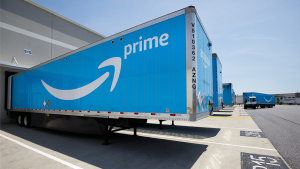
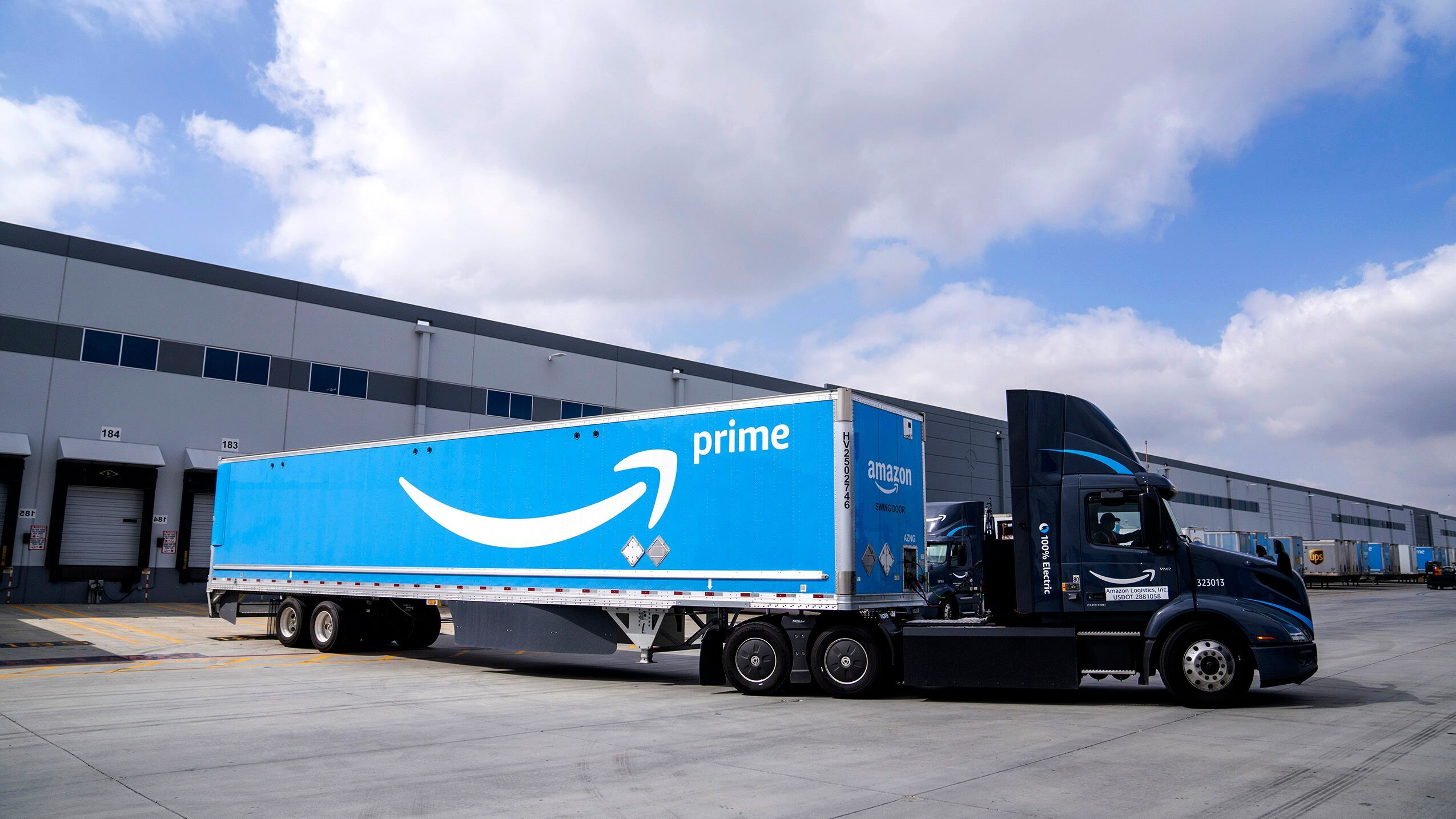
Inbound service now covers 6,000 U.S. origins—nationwide by 2026.
If performance mirrors Amazon Air’s decade‑long growth, analysts expect nationwide coverage by the end of 2026, with selective terminal leases or acquisitions filling network gaps.
Amazon LTL Expansion in North America: Timeline and Milestones
- Q2 2025 – Soft launch of inbound‑only LTL to U.S. fulfillment centers, covering 6,000 origin ZIP codes and 100 FC destinations.
- Q4 2025 – Planned expansion to outbound consolidations, enabling multi‑stop deliveries from FCs to retail stores and 3PL warehouses.
- 2026 goal – Full third‑party LTL brokerage, public rate sheets, and guaranteed two‑day pallet service on core lanes.
- Infrastructure moves – While Amazon skipped Yellow Corp.’s bankruptcy terminal auction, it began evaluating smaller cross‑dock properties near Atlanta, Dallas, and Riverside to bolster network density.
- Technology rollouts – A new Freight API will let enterprise shippers inject orders directly into Amazon’s TMS, gaining pallet‑level visibility once pallets clear origin gates.
For broader context, consult our ongoing freight‑industry analysis. This phased timeline lets Amazon scale methodically, testing each operational layer before widening the customer base.
European Pilot Programs Lay the Groundwork for Global Reach

European trials hit 97 % on‑time delivery, validating the playbook.
Amazon LTL Expansion debuted in the U.K. in 2023, quickly hitting 100 percent on‑time pickups and 97 percent on‑time deliveries. Building on that success, Amazon extended service to Germany in September 2024, citing strong uptake from small electronics and apparel vendors that traditionally relied on pricey dedicated trucks. European shippers praise:
- Transparent, all‑in digital quotes up to 14 days in advance.
- Consolidated customs data for intra‑EU moves, reducing border delays.
- Predictive ETAs via Amazon’s machine learning route‑optimization engine.
You can trace similar themes in our coverage of supply‑chain trends. These wins demonstrate a replicable template: launch in a mature parcel market, layer in LTL where Amazon already controls significant freight flow, then refine the model for export to North America and Asia‑Pacific.
Beyond speed and cost, Amazon LTL Expansion also advances a quieter but increasingly important metric—network sustainability. By consolidating partial pallets that once moved on half‑empty trailers, Amazon projects a reduction of up to 15 percent in linehaul emissions on its high‑volume retail lanes. Internal modeling shared with prospective shippers shows that every incremental two‑pallet order shifting from dedicated truckload to LTL prevents roughly 250 pounds of CO2 from entering the atmosphere. While the company is not branding the service as a green initiative, analysts note that lower empty‑mile ratios and denser trailer utilization align with Amazon’s broader Climate Pledge targets.
To support these gains, Amazon Freight’s data science team is integrating real‑time weather overlays, road‑congestion heatmaps, and warehouse dock schedule APIs into its dispatch engine. The goal is predictive slotting—sequencing pickups and deliveries so pallets spend minimal dwell time and trailers avoid peak traffic windows. According to a senior program manager, early A/B tests in Southern California shaved an average of 42 minutes off terminal turnarounds during the spring produce surge, translating to faster cycle times and more capacity without adding tractors.
Shippers stand to benefit in two ways. First, Amazon can pass a share of its fuel savings back through to dynamic LTL rates, making the offering price‑competitive even when freight markets tighten. Second, participating vendors receive quarterly sustainability scorecards that quantify greenhouse‑gas savings attributable to their consolidated moves—data that can bolster corporate ESG reports without additional auditing fees.
While incumbents also tout load‑optimization tools, Amazon’s ability to pool freight across parcel, truckload, and now LTL layers gives it a unique vantage point. If the company scales predictive slotting nationwide, Amazon LTL Expansion could redefine how environmental efficiency is measured inside the U.S. hub‑and‑spoke model, turning carbon reduction from a compliance box into a competitive differentiator.
How Will Amazon LTL Expansion Affect Shippers?
“Will Amazon’s LTL expansion lower my shipping costs in 2025?”
Shippers should see immediate benefits on Amazon‑inbound pallets—early adopters report savings of 8–12 percent versus traditional common‑carrier rates, plus faster dock appointments. As coverage grows, Amazon’s open marketplace could exert downward pricing pressure on incumbent carriers, particularly in high‑density retail corridors. Yet savings will hinge on volume, lane balance, and willingness to adopt Amazon’s digital workflow. Shippers handling bulky, non‑parcel freight (furniture, appliances, packaged foods) stand to gain the most by shifting sporadic truckload moves into Amazon’s pooled LTL.
What Challenges Could Slow Amazon LTL Expansion?
“Why might Amazon struggle in the LTL market?”
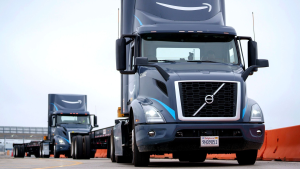
Asset‑light partnerships keep Amazon nimble and capital‑lean.
Three hurdles loom:
- Terminal complexity – LTL needs synchronized load transfers at metropolitan terminals; Amazon must either build, lease, or partner to achieve service parity with Old Dominion or FedEx Freight.
- Labor dynamics – The Teamsters union may intensify organizing drives if Amazon’s LTL headcount grows, adding cost and regulatory scrutiny.
- Economic cycles – LTL’s low margins during freight recessions could dampen ROI unless Amazon maintains strict cost discipline.
Failure to navigate any one of these could limit Amazon’s national share, confining the service to verticals tied closely to its e‑commerce ecosystem.
Competitive Response: Incumbent Carrier Strategies
Legacy carriers are unlikely to yield share without a fight. Many are enhancing APIs, dynamic pricing engines, and real‑time visibility to match Amazon‑like transparency. Some—particularly regionals—are exploring white‑label partnerships, offering capacity through Amazon’s portal to monetize empty linehaul miles while retaining their own customer base. Others emphasize premium value‑adds, such as guaranteed before‑noon delivery windows, climate‑controlled services, or white‑glove residential offerings where Amazon currently lacks scale. Whether Amazon disrupts pricing or expands the total LTL pie by attracting new customers remains the pivotal question for 2026 boardrooms.
Future Outlook: Amazon LTL Expansion Scenarios Through 2030
- Accelerated dominance (40 percent probability) – Amazon acquires strategic terminals, integrates parcel and LTL for true hub‑and‑spoke synergy, reaching double‑digit LTL market share.
- Broker‑centric growth (45 percent probability) – Amazon stays asset‑light, reshaping pricing transparency but outsourcing most physical linehaul, capturing 5–8 percent share and driving broader digital adoption.
- Niche service (15 percent probability) – Operational or labor setbacks confine Amazon LTL to Amazon‑bound freight plus select verticals, nudging incumbents but leaving the overall market structure intact.
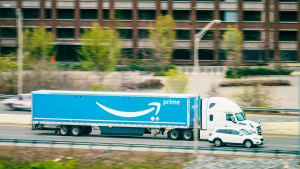
AI‑driven dispatch targets fuller trailers and fewer empty miles.
Regardless of the scenario, Amazon’s relentless focus on customer experience will continue to pressure carriers to modernize routing, pricing, and visibility systems.
Conclusion
Amazon LTL Expansion is no longer speculative—it is an emerging reality redefining less‑than‑truckload logistics. With phased North American rollouts, proven European pilots, and a technology‑first approach, Amazon brings unprecedented data, capacity, and customer reach to an industry ripe for innovation. Shippers should monitor service availability by lane, evaluate cost‑to‑service trade‑offs, and prepare to integrate Amazon’s APIs into transportation management systems. Carriers must accelerate digital initiatives, refine value propositions, and anticipate intensified competition on dense retail lanes. Stay current on sector moves with our latest transportation sector updates. As Amazon scales its latest logistics venture, the next five years promise dynamic shifts in how freight is priced, moved, and managed across continents.
Looking ahead, analysts anticipate a steady drumbeat of milestones as Amazon LTL Expansion matures. In the near term, watch for public rate sheets that clarify service tiers, pilot cross‑dock leases in port‑adjacent markets, and the introduction of urban pickup‑and‑delivery fleets designed to reach dense retail clusters overnight. Each step will test Amazon’s ability to balance an asset‑light playbook with the physical demands of hub‑and‑spoke freight. For shippers and carriers alike, staying alert to these incremental moves will be key to understanding how far—and how fast—Amazon intends to reshape the nation’s less‑than‑truckload landscape.
Key Developments in Amazon LTL Expansion
- Limited inbound LTL service is live in 6,000 U.S. origin ZIP codes, with nationwide coverage targeted for 2026.
- Proven U.K. and Germany pilots deliver 100 % on‑time pickups and 97 % on‑time deliveries, validating the model.
- “Dispatch & Disruption” team deploys machine‑learning algorithms to optimize trailer fill rates and cut empty miles.
- Amazon bypasses Yellow Corp.’s terminal assets, signaling a continued asset‑light strategy centered on leased trailers and contracted drivers.
- Shippers report early cost savings of 8–12 % and faster dock appointments versus legacy LTL carriers.
- Teamsters union monitoring growth; potential labor pressures remain a risk factor as Amazon scales driver headcount.
- Incumbent carriers respond by accelerating API integrations, dynamic pricing, and premium service offerings to defend market share.

Shippers report early savings of up to 12 % versus legacy carriers.
Amazon LTL Expansion has moved from rumor to reality, quietly launching limited inbound service in the United States while scaling successful pilots in the United Kingdom and Germany. The initiative signals Amazon Freight’s intent to leverage its vast trucking, intermodal, and data assets to modernize less‑than‑truckload shipping, offering shippers fresh options for cost, speed, and visibility in 2025 and beyond.
Authoritative Resources on Amazon’s Emerging LTL Footprint
- Learn how the company positions palletized freight inside its network at Amazon Freight – Less‑Than‑Truckload services.
- Review Amazon’s European growth strategy in the official UK LTL launch announcement.
- Examine the on‑time performance metrics highlighted in the Germany LTL program release.
- See the Teamsters’ perspective on Amazon logistics labor issues in the Teamsters’ statement on Amazon workforce accountability.
- Explore the data‑driven view of Amazon’s air‑cargo buildout in DePaul University’s Chaddick Institute Amazon Air report.
- Track regulatory guidelines affecting LTL carriers via the Federal Motor Carrier Safety Administration regulations portal.
- Compare industry benchmarks in the Bureau of Transportation Statistics’ U.S. Freight Indicators dashboard.