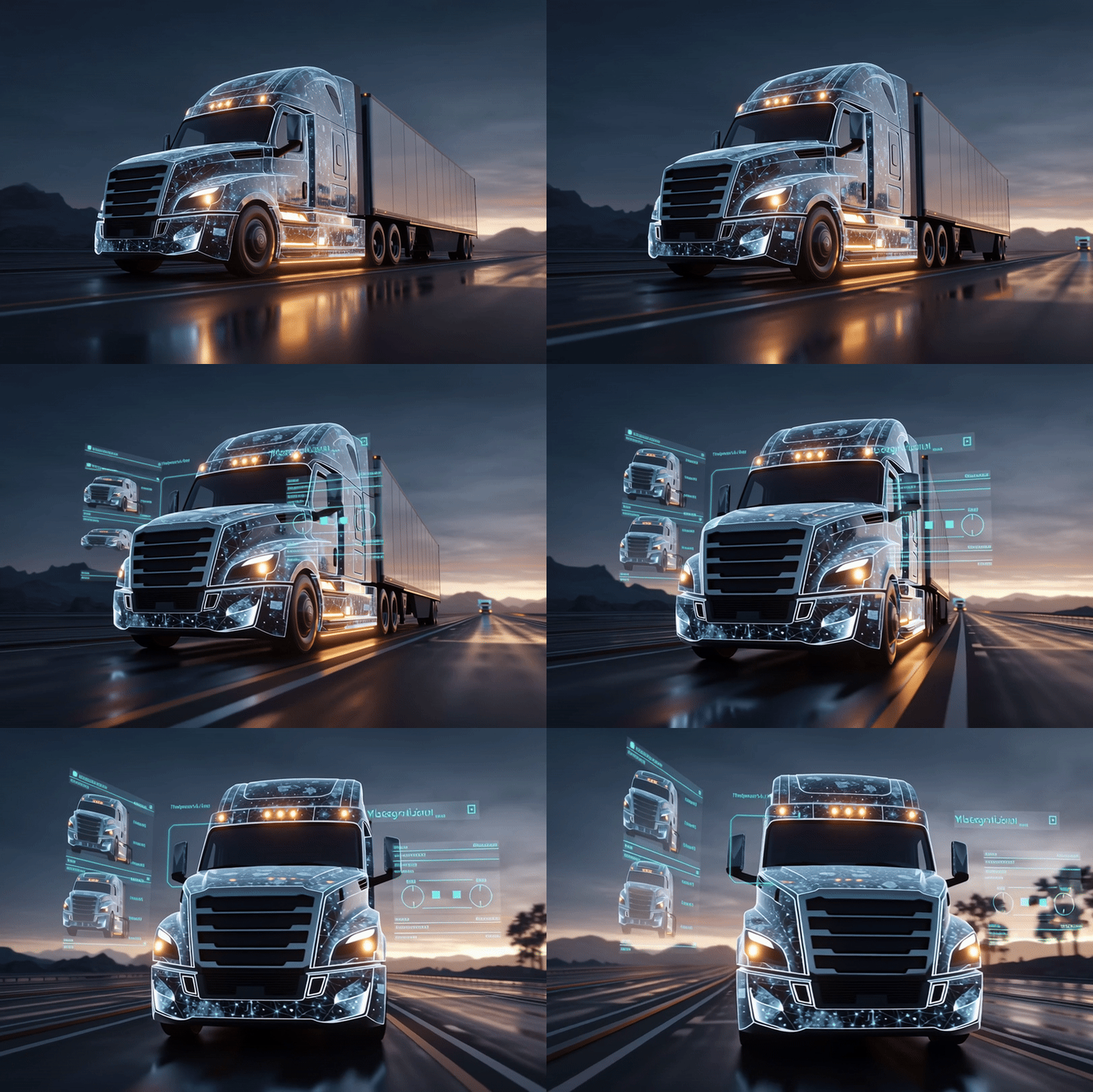
- AI fleet safety technology slashes preventable accidents by up to 92 percent—discover the data‑driven dashcam, weather‑intelligence, and driver‑coaching breakthroughs making it happen.
- Learn how predictive maintenance AI and smart‑trailer sensors are cutting breakdowns, avoiding CSA violations, and unlocking insurance discounts of 5‑15 percent.
- See why OEM‑integrated advanced driver‑assistance systems (ADAS) and autonomous yard trucks signal a new era of “Smart Trucking” for fleets of every size.
AI fleet safety technology is reshaping the trucking industry, ushering in a new era of more innovative and safer operations. In the second quarter of 2025, fleets saw a surge of high-tech telematics and AI-powered safety systems designed to prevent accidents and improve efficiency. This comprehensive overview examines the latest developments – from advanced AI dash cams and driver coaching apps to smart trailer sensors and predictive maintenance – all through a factual, impartial lens.
For more news and updates on AI in the trucking industry, check out this page.
Fleet operators, logistics managers, and OEMs are increasingly leveraging these innovations to enhance safety, reduce costs, and protect their drivers. Importantly, insurance providers are also taking note, offering incentives for adopting such tech as carriers strive for a “zero-accident” future. Below, we break down the key advancements and their impact on trucking safety and productivity.

AI-Powered Telematics Driving Safety & Efficiency Gains in Trucking (Q2 2025)
Data‑driven safety is now affordable for any fleet size.
[drocap]H[/drocap]igh-tech telematics combined with artificial intelligence are dramatically improving fleet safety and efficiency. At Samsara’s “Beyond 2025” conference in late June, the IoT fleet management company unveiled a suite of new AI-driven safety features that exemplify this trend. These tools integrate machine vision, real-time data, and big data analytics to help drivers and fleet managers prevent accidents before they happen and streamline operations. Crucially, the approach is impartial and data-driven – focusing on measurable safety outcomes rather than hype.
For more news on the latest in fleet management and telematics technology, visit this page.
Enjoying our insights?
Subscribe to our newsletter to keep up with the latest industry trends and developments.
Stay Informed
One headline innovation is Samsara’s AI Dash Cam Multicam system, which allows up to four additional HD cameras per truck, creating a 360-degree view around the vehicle. The system’s AI actively monitors these camera feeds and notifies drivers in real time of hazards, such as a pedestrian or cyclist in a blind spot. This effectively gives drivers an extra set of eyes. All camera views are accessible via an in-cab display, so drivers get immediate visual feedback when the AI detects something risky.
For a deeper look at the telematics innovations reshaping fleet operations, explore our dedicated telematics coverage.
For instance, if the truck is following another vehicle too closely or about to rear-end (tailgate) someone, the system issues an instant alert. Much like advanced driver-assistance systems (ADAS) in modern cars, these smart dashcams provide forward collision warnings and side blind-spot alerts using AI vision. By reducing blind spots and reaction times, such video telematics technology directly tackles one of trucking’s biggest safety challenges. Fleet executives at the event noted that combining telematics with AI marks a shift from traditional GPS tracking to an “AI-first approach” for safety.
AI safety tech cuts preventable crashes by 92 percent.
Another breakthrough announced was Samsara’s Weather Intelligence feature, which overlays real-time National Weather Service data onto the fleet management dashboard. Dispatchers and drivers receive automated alerts for severe weather conditions along planned routes – for example, sudden thunderstorms, wildfires, or flash flooding. If a driver is heading toward a dangerous storm, the platform can warn them in advance or suggest a safer route.
Samsara’s CPO explained that AI could even predict weather impacts by analyzing data from millions of IoT sensors and dashcams across the community. If a hazardous event arises, concise alerts (text or audio) are sent to in-cab devices so drivers can stay informed without needing to look at a phone. In an era of increasingly volatile weather, this kind of real-time, location-specific intelligence helps fleets avoid accidents and delays, boosting both safety and on-time performance.
Advanced Dashcams & AI Alerts: A 360° Safety Shield for Drivers
Smart dashcams have evolved far beyond simple video recorders – they are now intelligent co-pilots that can intervene to prevent incidents. Modern AI dash cams like those from Samsara, Motive, and others continuously analyze driving behavior and road conditions to warn drivers of hazards. Importantly, these systems don’t just silently record; they actively provide in-cab audio and visual alerts. For example, if a driver is distracted (looking at their phone) or drowsy, the AI can detect it and issue a loud alert or voice prompt to get their attention.
If the truck is speeding or tailgating, the camera can audibly warn, “Maintain distance” – effectively acting like an automated safety coach in real time. According to industry reports, vendors such as Motive and Netradyne offer AI dashcams that automatically detect unsafe behaviors (hard braking, following too closely, lane departures, etc.) and alert drivers immediately to correct them. This instant feedback loop helps drivers self-correct minor mistakes before they lead to significant problems.
Crucially, the footage and data from these ADAS-like dashcams are also sent to the cloud for fleet managers to review. If a near-miss or harsh braking event occurs, managers can see the context (via video) and take appropriate action. Many platforms allow retrieving historic video clips with corresponding audio to investigate incidents and resolve disputes. This has become invaluable for accident reconstruction and liability protection – the video evidence can exonerate drivers when they are not at fault, shielding operators from false claims.
More than 50% of fleets using Samsara’s dashcams have utilized video footage to exonerate drivers, saving $5,000 to $25,000 on average per incident (with some saving over $100,000 a year). By documenting what happened on the road, AI dashcams help combat the threat of “nuclear verdicts”, the massive lawsuit awards that have driven insurance costs sky-high for trucking companies.
Predictive maintenance flags brake faults days ahead.
Stay current on evolving fleet‑safety strategies and regulatory changes by visiting our fleet safety news hub.
Multi-camera setups like Samsara’s new AI Multicam take this a step further by eliminating blind spots around large vehicles. Tanker and bulk haulers, for example, have limited visibility around long trailers – but with up to four external cameras feeding into the cab, the driver gains a near 360° awareness. The system can highlight a person walking near the truck or a car lingering alongside the trailer, issues that often lead to side collisions. By addressing these blind spot risks automatically, fleets hope to slash common accident types like side-swipes and backing collisions.
Additional insights into next‑generation collision‑avoidance systems can be found in this collision‑avoidance resource.
Early adopters report impressive results: Coach USA (a major bus operator) saw a 92% reduction in preventable accidents after implementing AI camera systems and focused safety coaching. Such a dramatic drop in accidents underscores the life-saving potential of these technologies. It also suggests a positive trend for the industry – fewer crashes mean fewer injuries, less downtime, and lower costs for everyone from drivers to fleet owners and insurers.
AI Driver Coaching and Gamification: Improving Safety Culture
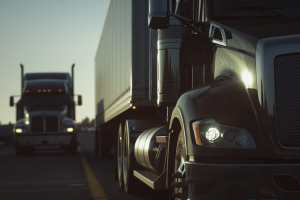
360° dashcams turn blind spots into full visibility.
While technology provides the tools, improving safety in trucking also requires engaging the human element – the drivers themselves. AI is stepping in here as well, helping to coach drivers and reinforce safe habits in a scalable way. Samsara introduced a feature called “Safety Coaching for Lean Teams,” aimed at fleets that may not have large safety departments. Essentially, the platform’s AI analyzes hundreds of driving events across the fleet – hard braking, sharp cornering, speeding, not wearing a seatbelt, etc. – and automatically evaluates them by risk level, considering factors like severity and road conditions.
Lower-risk incidents trigger an automatic, gentle coaching message or a short training video sent directly to the driver’s smartphone app. For example, if a driver had a couple of rolling stops or minor speed exceedances, the system might push a reminder and a quick video on safe braking techniques. These are delivered soon after the event, so the feedback is timely and relevant.
For higher-risk events, such as a driver nearly causing a collision or a severe distraction alert, the AI flags those for management’s immediate attention. Fleet managers can then intervene one-on-one where it matters most. This targeted approach ensures safety managers aren’t overwhelmed with data – they can focus on the truly critical issues while the AI handles routine coaching. Over time, the system identifies behavioral trends (e.g., a pattern of harsh cornering for a specific driver) so that training can address root causes rather than isolated incidents. This data-driven coaching is impartial and based on facts, which helps build trust with drivers that the goal is improvement, not punishment.
To make training more engaging, companies are turning to gamification and modern app design. Samsara’s Driver App, for instance, was revamped with TikTok-style safety videos and end-of-day scorecards. Drivers receive short, bite-sized videos on topics like avoiding distracted driving or proper mirror use – formatted much like social media content to keep their attention. They can also see a daily safety score and compare their performance, introducing a friendly competitive element.
Some fleets even offer rewards: the app allows dispatchers or managers to send digital gift cards or badges to recognize safe driving streaks or improvements. By rewarding positive behavior (not just pointing out mistakes), these tools aim to foster a stronger safety culture. Drivers are more likely to buy into AI coaching if they feel it’s there to help them get home safely and maybe even earn perks, rather than just surveillance.
Fleet leaders emphasize that driver acceptance of AI is crucial. At industry conferences, safety directors shared how they frame these systems to drivers: not as “Big Brother” watching, but as “Big Coach” helping them avoid accidents. When implemented with transparency and respect, AI coaching programs have seen good buy-in. For example, Western Express structured bonus programs around safety scores from its AI dashcam system, turning it into a source of driver pride and motivation rather than fear. This balance of technology and human touch – AI providing personalized feedback with a bit of gamified encouragement – is proving effective in elevating safety standards across fleets, large and small.
Weather, Maintenance, and Cargo: Predictive Analytics for Proactive Safety

Weather Intelligence reroutes fleets before storms hit.
AI in trucking isn’t just about cameras and driving behavior – it’s also helping fleets predict and prevent problems with equipment and cargo before they result in roadside incidents. In Q2 2025, several companies showcased predictive analytics tools that address the less-glamorous but critical aspects of safety: vehicle maintenance and freight condition.
Predictive maintenance software uses AI algorithms to analyze sensor data, telematics, and even maintenance records to foresee mechanical issues. By recognizing patterns (like a subtle vibration or temperature increase in a component), AI can forecast a potential breakdown and alert the fleet to service the truck before it fails on the highway. This is more than just convenience – a blown tire or brake failure on the road is a significant safety hazard. New fleet platforms and OEM systems are increasingly embedding such predictive alerts.
For instance, maintenance solutions like Uptake and Fleetio ingest data from engine ECUs, brake sensors, and fault codes to flag anomalies. One industry guide noted that a predictive maintenance system ensures brakes, tires, and engine components are kept in top condition by issuing automated service reminders and diagnostic alerts, helping prevent unexpected failures that could lead to accidents. In other words, AI is making vehicle inspections continuous and proactive, rather than relying solely on a driver’s pre-trip check or periodic shop visits.
This trend also extends to smart trailers – the trailers now carry their own telematics and sensor arrays to monitor conditions. During the CVSA International Roadcheck 2025 (held May 13-15), inspectors placed special emphasis on tires as the vehicle focus and false records of duty status (RODS) as the driver focus. cvsa.org Telematics providers have highlighted that innovative trailer technology can catch brake and tire issues before inspectors do. For example, Great Dane’s FleetPulse system can detect problems such as low brake-lining thickness, under-inflated or damaged tires, or an ABS fault in a trailer’s braking system, and alert the fleet manager.
Instead of a driver discovering a tire or ABS warning light during an inspection (or worse, an inspector finding it and issuing a violation), the maintenance team can be notified in advance via the telematics platform and fix it. According to FleetPulse data, roughly 75 % of trailer-related violations involve components that could be monitored or prevented through proactive checks and innovative technology. That statistic shows the potential for tech to eliminate common causes of breakdowns and fines – from tires to brakes to lights.
For more news on CVSA safety enforcement and initiatives, visit this page.
Beyond brakes, cargo-monitoring sensors are another innovation making inroads. Trailers can be equipped with wireless sensors that track cargo movement, temperature, pressure, and more. If a tanker trailer’s internal pressure or temperature drifts out of the safe range, the system can send an alert to prevent a dangerous situation. Likewise, for dry van or flatbed loads, there are load stability sensors that detect if the cargo has shifted unexpectedly (which can lead to weight imbalance or tip-overs).
Some 2025-model trailers even come with these load shift alert systems from the factory. For refrigerated shipments, IoT sensors monitor temperature and humidity in real time, protecting against spoilage and ensuring compliance with food safety, which is also a safety issue for the public. During Roadcheck and other safety blitzes, cargo securement is a key focus. If an IoT sensor tells a fleet that a strap loosened or a door opened, they can address it immediately.
In sum, the fusion of telematics with sensors on both tractors and trailers is enabling a predictive, condition-based approach to fleet safety. Fleets are increasingly fixing problems in the yard or at a service bay – whether it’s a thinning brake pad or an unstable load – instead of reacting to emergencies on the highway.
Q: How Are Fleet Operators and Insurers Responding to AI Safety Tech?
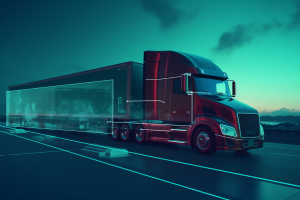
Smart trailers watch cargo, brakes, and temperature in real time.
Fleet operators are embracing these AI and telematics solutions not just for safety’s sake, but because they also make good business sense. Safer driving leads to fewer accidents, which means lower operating costs, less vehicle downtime, and improved reliability for customers. A single prevented accident can save tens of thousands in repairs and liability. Moreover, as accident rates drop, fleets can negotiate lower insurance premiums. Insurance companies have taken notice of AI safety tech and, in many cases, actively encourage it. Some insurers offer significant premium discounts (5–15%) to fleets that install AI-driven dashcams and monitoring systems.
For example, major insurer Progressive’s SmartHaul program gives trucking clients discounts up to 30 % (per partner materials; Progressive advertises 5 – 12 %+ for most fleets) for using approved telematics and dashcam solutions, recognizing that those fleets tend to have fewer claims. Similarly, specialty insurer RLI partnered with Samsara to provide free AI dashcams plus a 5% insurance discount for fleets that signed on, using the video data to improve safety with their insured customers jointly. The rationale is clear: if technology can cut accidents by, say, 50% or more, everyone benefits – fewer people hurt, and fewer payouts by insurers.
From an operator’s point of view, these partnerships and savings are a welcome relief amid rising insurance costs. Trucking insurance premiums have soared in the past decade (partly due to those nuclear verdicts in large lawsuits), so anything that promises fewer crashes and solid evidence when incidents do happen is valuable. To stay informed on trends in insurance premiums affecting the trucking industry, click here. Fleet managers report that having AI dashcam footage and telematics data at their fingertips makes the claims process smoother and often prevents claims from escalating.
If a truck is involved in a collision, it can quickly provide video to show its driver was not at fault, shutting down fraudulent claims. As one safety manager put it, “The camera is our witness that never blinks.” That peace of mind is turning even once-skeptical trucking companies toward widespread adoption of these tools.
Insurance companies, for their part, are also leveraging the data insights from telematics. By analyzing patterns (like frequent hard braking or speeding incidents), they can work with fleets on loss prevention programs. This collaborative approach marks a shift from the old model of just raising rates after incidents; now the focus is on continuous improvement. As RLI’s transportation VP noted during their Samsara partnership announcement, “a more collaborative approach to loss control” is emerging, where insurers actively help fleets identify high-risk behaviors and reduce them.
In the long run, widespread use of AI safety tech could even impact how insurance is underwritten – moving toward usage-based models where safe fleets pay less. It’s an encouraging alignment of incentives: the safer the fleet (thanks to AI tools), the lower the costs, which further incentivizes investment in safety.
OEMs Integrating Safety Tech and the Global Outlook

Insurers reward telematics fleets with premium savings.
Truck manufacturers (OEMs) and industry suppliers are also onboard with the AI telematics revolution. Many new trucks now come factory-equipped with advanced safety features and connectivity that were optional or aftermarket in years past. For instance, most Class 8 trucks in the U.S. now include forward collision mitigation, lane-departure warnings, and adaptive cruise control as standard or easily added options. These built-in systems, using radar and cameras, work in tandem with the add-on telematics platforms.
OEMs like Daimler (Freightliner), Volvo, and Paccar are rolling out integrated platforms that link the truck’s sensors to cloud dashboards for fleets. This means a brake warning or stability control event from the truck’s onboard system can trigger an entry in the fleet’s telematics system for follow-up, and vice versa. The convergence of OEM ADAS and aftermarket AI cameras will eventually blur – as trucks become smarter natively, the aftermarket focuses on analytics and driver-facing features.
In Q2 2025, we even saw autonomous and remote-operated trucks inching closer to reality in controlled environments. Several OEMs and startups demonstrated yard trucks (also known as terminal tractors used in distribution yards) that can be operated remotely or run autonomously. At a major industry expo in May, Kalmar (a leading yard tractor manufacturer) unveiled an autonomous electric yard truck developed with partner Fortera, which can move trailers around a freight yard without a human driver.
Around the same time, startup Outrider announced a first-of-its-kind safety system for its driverless yard trucks, as they prepare to deploy with select customers in late 2025. These yard bots leverage AI for obstacle detection and use teleoperation as backup – a remote human operator can take control if needed. While not on public roads, autonomous yard trucks eliminate a lot of low-speed accidents and injuries that occur during trailer shunting, and they improve efficiency at large warehouses.
On the highway side, autonomous trucking companies like Kodiak Robotics are integrating remote control capabilities for tricky scenarios. In June 2025, Kodiak partnered with tele-driving company Vay to enable “Assisted Autonomy” – human operators can remotely guide a self-driving truck through complex situations (say, a construction zone or truck stop) if the AI gets uncertain. This kind of fail-safe enhances safety for the nascent autonomous systems by ensuring there’s always a way to handle the unexpected. While full self-driving trucks are still in limited pilots, these developments show how AI and connectivity are permeating every level of trucking, from the yard to long-haul routes.
Globally, similar trends are playing out, with Europe and Asia also adopting AI telematics for commercial fleets. In some regions, regulations are pushing certain tech – for example; the EU has made advanced safety systems mandatory on new trucks (like automatic emergency braking and lane assist). These global moves influence what’s available and standard in the U.S. as well. International logistics companies often pilot tech overseas and then bring it stateside once proven.
To follow the latest breakthroughs in autonomous‑truck technology and pilot programs, check out our autonomous‑trucks section.
However, since this discussion is focused on a U.S. audience, it’s worth noting that America’s trucking industry is rapidly catching up in tech adoption. Historically, smaller U.S. fleets were slow to digitize, but that’s changing fast in 2025. The cost of sensors, cameras, and data has come down, and the benefits have been demonstrated in large fleets – making even independent owner-operators more comfortable investing in a dashcam or telematics device.
Privacy, Trust, and the Road Ahead for “Smart Trucking”
Gamified coaching turns data into safer driving habits.
As with any new technology, there remain considerations around privacy and driver trust. Some drivers initially feel uneasy about constant camera surveillance or AI scrutinizing their every move. It’s a valid concern that trucking companies must handle with care. Clear policies about how footage is used (e.g., for coaching and protection, not for spying) and respecting driver privacy during off-duty times are essential. The best practices emerging in the industry include only reviewing footage for safety events or training purposes, and often allowing drivers to trigger recordings themselves if needed (such as to document an unsafe motorist on the road).
Over time, many drivers come to see the AI gadgets as an ally – especially after a camera exonerates them from blame in a crash or protects them from a false complaint. As one driver put it, “I was against the dashcam until it saved my job by proving I wasn’t at fault in an accident.” This kind of real-world win is turning skeptics into supporters. Moreover, younger drivers who grew up with technology tend to be more receptive to these tools as just another app or device they use daily.
Looking forward, the drive toward zero accidents in trucking is leveraging high tech. Industry analysts often refer to this evolution as “Smart Trucking” – essentially the application of IoT, AI, and data analytics to every facet of trucking operations. The second quarter of 2025 showed that this is not just experimental; it’s becoming mainstream in fleet after fleet. As these technologies mature and prove their ROI, even mid-size and small carriers are jumping onboard.
Many telematics providers offer affordable, scalable solutions – from plug-and-play dashcams to subscription-based analytics – making it feasible for a 10-truck fleet to use the same safety tech that a 1000-truck fleet uses. In addition, the impartial, fact-based nature of AI helps in standardizing safety practices across a dispersed workforce. Whether a truck is in rural Texas or downtown Chicago, the AI will apply the same safety criteria and assist as needed.
The benefits also extend to efficiency and sustainability (a greener fleet is often a side effect of smoother operations and less idling due to breakdowns or accidents). With AI optimizing routes around weather, predicting maintenance to avoid road failures, and coaching better driving (which saves fuel), fleets are seeing productivity gains alongside safety improvements. It’s a holistic win-win.
In summary, the trucking industry in 2025 is experiencing a tech-driven safety renaissance. AI fleet safety technology – from intelligent dashcams and driver coaching apps to predictive maintenance and smart trailers – is making trucking safer, smarter, and more efficient than ever before. The approach is highly data-driven and impartial, focusing on real results like accident reduction percentages and cost savings. Fleet operators in the U.S. are increasingly viewing these tools as essential parts of their operation, much like seat belts and air brakes – not just nice-to-have gadgets.
Challenges like privacy and change management are being addressed through transparency and demonstrating value. With support from insurers and even truck makers, “smart trucking” innovations are here to stay and likely to advance even further. The road ahead points to a future where technology and trucking go hand-in-hand, enabling the industry to achieve new levels of safety and reliability while maintaining the vital flow of goods that keeps the economy moving.
To explore more stories on cutting-edge trucking tech developments, visit this link.
Key Developments in AI‑Driven Fleet Safety (2025)
- Multicam 360° AI dash cams deliver real‑time blind‑spot and tailgating alerts, protecting drivers and reducing litigation exposure.
- Weather Intelligence overlays feed National Weather Service data directly to in‑cab devices, enabling proactive rerouting around storms, wildfires, and floods.
- Automated AI driver coaching ranks risk events, pushes micro‑training to smartphones, and gamifies safety with end‑of‑day scorecards and rewards.
- Predictive maintenance platforms analyze ECU fault codes and sensor data to flag brake wear, tire-pressure problems, and ABS faults before roadside failures.
- Smart‑trailer telematics monitors cargo shift, temperature, and pressure, preventing securement violations and load spoilage.
- Insurers partner with telematics vendors, offering premium reductions and free hardware in exchange for sharing safety data
- OEMs roll out factory‑installed ADAS, integrated cloud dashboards, and pilot autonomous yard tractors, accelerating the march toward a zero‑accident future.
In‑Depth Resources on AI‑Driven Fleet Safety
- Explore Samsara’s latest AI Multicam and safety‑technology releases at the official “Beyond 2025” press announcement.
- Review the U.S. NHTSA overview of advanced driver‑assistance technologies on the Driver Assistance Technologies page.
- Understand FMCSA’s CSA safety‑compliance and enforcement framework via the CSA Motor Carrier portal.
- See the CVSA’s official 2025 International Roadcheck focus areas for tires and false RODS on the Roadcheck information page.
- Learn how Progressive’s SmartHaul telematics program offers premium savings for data‑sharing fleets at SmartHaul by Progressive Commercial.
- Read the IIHS crash‑avoidance effectiveness study detailing AEB and forward‑collision warning results at IIHS research reference 2297.
- Get details on the Vay–Kodiak partnership for assisted autonomy in highway trucking at Vay’s official press release.
- Discover Outrider’s safety system for driverless yard‑truck operations in the Outrider press announcement.