- FMCSA Non‑Domiciled CDL Rule explained: what’s changing now on eligibility, SAVE verification, and in‑person renewals—and how fleets and state DMVs must respond.
- Could a D.C. Circuit stay hit pause? Inside AFSCME’s legal strategy and what an injunction would mean for carriers, immigrant truck drivers, and CDL training pipelines.
- Entry‑Level Driver Training (ELDT) under pressure: how schools are triaging enrollments, tightening intake screening, and minimizing workforce shocks without compromising safety.
Understanding the FMCSA Non-Domiciled CDL Rule and Its Background

Emergency rule narrows eligibility for non‑domiciled CDLs, effective immediately. (FMCSA Non-Domiciled CDL Rule – Example 1)
In late September 2025, the U.S. Department of Transportation announced an emergency interim final rule to overhaul how states issue so‑called “non‑domiciled” CDLs. A non‑domiciled CDL is a special commercial driver’s license granted to individuals allowed to work in the U.S. but not permanent residents of the state (often foreign nationals on temporary work authorization). This rule, effective immediately upon announcement, was triggered by a nationwide FMCSA audit and a spate of fatal crashes involving non‑domiciled drivers.
The audit uncovered alarming lapses: some states were improperly issuing CDLs to ineligible foreign drivers, and many licenses remained valid long after the holders’ legal presence in the country had expired. In one example, a driver in California had obtained a CDL (with school bus and passenger endorsements) that remained valid even months after the holder’s visa expired.
Federal officials characterized the situation as a direct threat to public safety requiring urgent action. The rule — titled “Restoring Integrity to the Issuance of Non‑Domiciled Commercial Driver’s Licenses” — aims to close loopholes and hold states accountable for stricter enforcement.

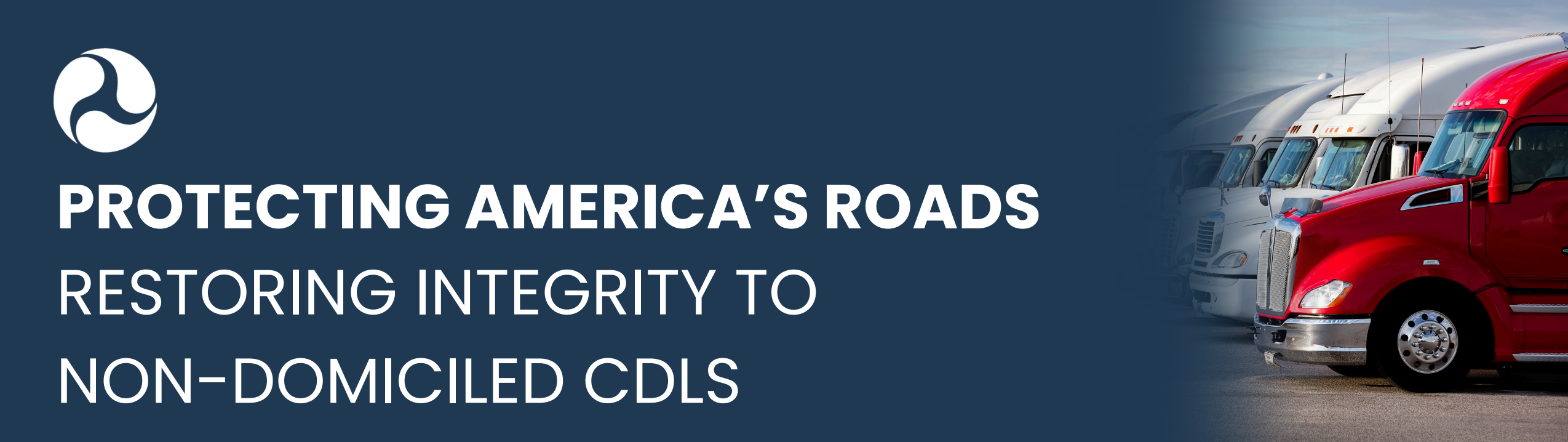
“Restoring Integrity to the Issuance of Non‑Domiciled Commercial Driver’s Licenses.”
For instance, California, identified as a major offender in the audit, was ordered to pause all non‑domiciled CDL issuances and review its existing licenses within 30 days, under threat of losing federal highway funds. California officials pushed back, noting that the state’s CDL holders have a fatal crash rate lower than the national average. The crackdown also extends to other states where audits found widespread non‑compliance in CDL licensing practices.
For more news and updates on FMCSA’s actions and regulations, see our FMCSA coverage.
To dive deeper into regulatory updates published in the Federal Register, explore our Federal Register archives.
AFSCME Leads Legal Challenge Against the FMCSA CDL Rule
The American Federation of State, County & Municipal Employees (AFSCME) — alongside the American Federation of Teachers (AFT) and several affected drivers — filed a lawsuit in the U.S. Court of Appeals for the D.C. Circuit seeking to block the rule. The petitioners argue that FMCSA’s emergency action is unlawful both substantively and procedurally. They contend the rule was issued without the usual notice-and-comment period and took effect immediately without public input. According to the lawsuit, this denied stakeholders any chance to weigh in, which they say violates federal rulemaking requirements.

AFSCME and AFT are seeking a D.C. Circuit stay on enforcement.
Substantively, the unions criticize the policy as punitive and unjustified, alleging it targets immigrant truck and bus drivers solely due to their immigration status. AFSCME and AFT emphasize that the rule bars asylum seekers, refugees, and Deferred Action for Childhood Arrivals (DACA) recipients from holding CDLs even though many are legally authorized to work in the United States. By the unions’ estimate, the livelihoods of nearly 200,000 commercial drivers are at stake.
For example, a named plaintiff who is a DACA recipient and an 11‑year trucker was denied renewal of his CDL one day after the rule took effect. Another plaintiff, an asylum seeker who has driven professionally for five years, fears the rule will undermine years of work and cut off his ability to support his family.
Union leaders voice sharp criticism. AFSCME’s leadership warns that the rule prevents lawfully present immigrants from supporting themselves and their families and risks disrupting vital public services that rely on these workers (from school bus transport to sanitation). AFT’s leadership notes that many members, such as school bus drivers, need CDLs for their jobs, and reports that people are being turned away from training for these positions due to the new eligibility requirements. The unions argue that FMCSA cited no solid evidence that immigration status itself correlates with unsafe driving and that the real issues lie in enforcement failures and inconsistent state practices.
For more news and updates on lawsuits affecting the trucking industry, see our Lawsuits coverage.
Impact on CDL Training Firms and Entry‑Level Drivers
The ripple effects of the FMCSA’s rule are being felt at CDL training schools and programs nationwide. Because the rule instantly rendered certain immigrants ineligible for a commercial learner’s permit (CLP) or a CDL, some training providers have had to turn away otherwise qualified students who can no longer obtain a license upon completing training. Truck driving schools have reported prospective school bus drivers being turned away mid‑course once it became clear they fall into a prohibited status category. This interruption in entry‑level driver training (ELDT) upends the plans of aspiring drivers. It could exacerbate workforce shortages in sectors such as school transportation and local delivery that rely on these workers.
Established CDL training firms and associations are responding by doubling down on compliance and safety messaging. The Commercial Vehicle Training Association (CVTA), representing truck driving schools nationwide, has cautiously welcomed stricter oversight as a needed measure to reinforce licensing integrity. While the rule does not directly change ELDT curricula, it underscores the importance of rigor in CDL licensing and training systems.
The association views the federal action as a signal that loopholes and inconsistent standards in CDL issuance will no longer be tolerated — a stance they hope will elevate the reputation of training providers that already adhere to high standards. At the same time, CVTA and training schools are closely watching for any follow‑on effects, such as changes to ELDT requirements or the Training Provider Registry.
On the ground, many truck driving academies are updating admissions screening — for example, verifying immigration categories of applicants upfront to ensure they meet the new FMCSA eligibility criteria before enrollment. Trainees who are now barred (such as those with only an Employment Authorization Document but no qualifying visa) face difficult choices: some may postpone career plans, while others explore alternative pathways in the industry that don’t require a CDL.
Meanwhile, incumbent drivers affected by the rule are seeking refresher courses or legal guidance through training providers on maintaining compliance, especially if they hope to regain a CDL under a different status in the future. In short, CDL training firms are on the front lines of implementing the rule’s consequences, helping students and drivers navigate an abruptly changed landscape while emphasizing the goal of safer highways.
For additional insights into the challenges facing truck driver training programs, explore our Truck Driver Training section.
To learn more about Entry-Level Driver Training (ELDT) requirements and their impact on new drivers, check out our ELDT coverage.
Industry Perspectives on the New CDL Rule and Safety Concerns
FMCSA moves to restore integrity to non-domiciled CDLs with immediate enforcement.
The broader trucking industry is divided — and not always along predictable lines — in its view of the FMCSA Non‑Domiciled CDL Rule. Significant trucking associations and many fleet owners have strongly supported the crackdown, framing it as a long‑overdue action to close a safety gap. The Owner‑Operator Independent Drivers Association (OOIDA), which represents small‑business truckers, had warned about problems with non‑domiciled CDLs before the rule and applauded intense federal action to address the issue. From OOIDA’s perspective, weeding out improperly licensed drivers (regardless of nationality) will reduce unnecessary safety risks on the road.
The American Trucking Associations (ATA) also praised the move and emphasized that rules only work when consistently enforced. Many carriers contend that a subset of drivers exploited lenient state systems to obtain CDLs without meeting standards such as English proficiency or valid legal presence, posing a risk on the road. For these stakeholders, the focus is safety: by tightening eligibility and mandating immigration status checks via SAVE verification, the rule is seen as bolstering highway safety and the integrity of the CDL licensing process.
On the other hand, industry critics worry about unintended consequences. Small fleet owners who have legally employed asylum seekers or DACA recipients as drivers are now facing sudden staffing shortages. Some logistics companies and freight brokers warn that pulling nearly 200,000 drivers off the road could create a capacity crunch in freight movement, potentially driving up shipping rates. Analysts estimate the rule could sideline roughly 5% of the nation’s 3.9 million commercial drivers, tightening trucking capacity over the next two years.
Some observers caution that the effect on capacity might come faster than regulators assume, as carriers preemptively avoid hiring non‑domiciled CDL holders to limit liability risks. Already, there are reports of trucking companies reassigning or laying off affected drivers and of shippers bracing for potential delays in regions that relied heavily on this segment of the workforce.
Safety advocates are also split. Some highway safety groups support FMCSA’s aggressive stance, arguing that even if only a few lives are saved by removing unqualified drivers, the rule is worth it. Others urge a more nuanced view: they say that improving training and testing standards for all drivers — citizen or not — is the real key to safety, rather than focusing solely on immigration status.
They point out that language proficiency and training quality have been factors in specific serious incidents, which could be addressed by better enforcement of CDL exam requirements and the ELDT mandate, rather than an outright ban on particular categories of immigrant drivers. This perspective suggests that robust oversight — for example, auditing state licensing exams and cracking down on fraudulent testing — should complement the rule to truly improve safety outcomes.
For more insights into changes within the trucking industry, see our Trucking Industry coverage.
Key Provisions of the New CDL Rule
- Stricter eligibility: Only specific categories of non‑U.S. citizens can now obtain or renew a non‑domiciled CDL. Eligible categories are limited primarily to certain employment‑based visa classes (notably H‑2A, H‑2B, or E‑2) and a few other narrow groups. Asylum seekers, refugees, DACA recipients, and others with temporary work permits (EADs) are excluded from obtaining a CDL or a commercial learner’s permit under the rule. Previously, an Employment Authorization Document alone could be sufficient for states to issue a CDL; under the new rule, EAD‑only applicants no longer qualify.
- SAVE verification: State Driver Licensing Agencies (SDLAs) must perform a mandatory immigration status check for every non‑citizen CDL applicant using the Department of Homeland Security’s Systematic Alien Verification for Entitlements (SAVE) database. This ensures that documents a driver presents (visa, I‑94, etc.) are verified as accurate and current. In practice, no state can issue or renew a non‑domiciled CDL unless the person’s lawful status is confirmed through SAVE in an accepted visa category.
- In‑person renewals and aligned expirations: All non‑domiciled CDL holders must renew in person, typically annually, and the license’s expiration date must match or be shorter than the person’s authorized stay in the U.S. If, for example, a visa or I‑94 expires in six months, the state can only issue a CDL valid for those six months (or less). Previously, some states issued multi‑year CDL renewals without aligning to immigration expiration dates — a practice now prohibited. States must also retain copies of immigration documents used in applications to facilitate audits.
- Ongoing compliance and enforcement: States must actively monitor and downgrade (revoke) a non‑domiciled CDL if they learn the holder has fallen out of lawful status or otherwise becomes ineligible. As an immediate enforcement measure, states identified in the audit were instructed to find and invalidate any existing non‑domiciled CDLs that were improperly issued under prior practices. FMCSA has signaled that it may withhold federal highway funds from states that do not comply.
Collectively, these provisions represent a sweeping overhaul of a niche area of CDL policy. They effectively reverse prior guidance that expanded states’ ability to issue non‑domiciled CDLs to more categories of immigrants. Supporters say the new rules restore integrity by aligning CDLs with strict legal presence requirements, thereby removing any drivers who should not have been licensed under federal law. Critics see these measures as sacrificing capable, legal workers under the guise of safety, when the real issue was administrative failure in some states.
For a comprehensive overview of Federal Motor Carrier Safety Regulations (FMCSRs) that shape CDL policies, check out our FMCSR coverage.
For additional perspective on how State Driver Licensing Agencies (SDLAs) enforce these rules, read more on SDLAs.
—
Official FMCSA Document on New Non-Domiciled CDL Rule:
- Official interim final rule detailing eligibility, SAVE verification, in-person renewals, and state compliance.
Legislative Push to Cement the FMCSA Rule
While litigation proceeds, allies of the rule are moving in Congress to codify the FMCSA Non‑Domiciled CDL Rule into federal law. A bill introduced in the U.S. House would incorporate the new provisions and make them permanent by statute, with supporters arguing that codification would prevent a future administration from reversing the changes. The legislative push has been accompanied by high‑profile examples cited by proponents as evidence of fraudulent or negligent licensing practices. They argue that the rule — and its codification — are necessary to ensure a uniform baseline of safety and security in CDL issuance nationwide.
Opponents in Congress, including lawmakers focused on immigrant rights and urban constituencies, characterize the bill as politically motivated and warn that it could exacerbate a driver shortage. They echo points raised by unions that the rule amounts to an immigrant exclusion in the trucking sector, with limited demonstrable safety benefits, and whether codification advances will depend on broader political dynamics and the outcomes of ongoing court decisions.

Congress is weighing codification of the non-domiciled CDL rule, a move that would make the changes harder to reverse.
Meanwhile, in the courts, the union‑led lawsuit is proceeding on an expedited schedule. The plaintiffs have sought an emergency stay to pause enforcement while the case is litigated,
“Every day the rule remains in effect, lawfully present workers lose their jobs and communities lose critical services — harms they say cannot be undone.”
A three‑judge panel requested a prompt government response, and a decision on temporary relief is expected to set the near‑term compliance posture for states, carriers, and drivers.
What Is a Non‑Domiciled CDL under FMCSA Rules?
A non‑domiciled CDL is a commercial driver’s license issued by a U.S. state to an individual who is not a permanent resident of that state or of the U.S. It has been used to license foreign drivers who are legally authorized to work in the U.S. but who do not have permanent status — for example, temporary visa holders or individuals awaiting immigration decisions. Unlike a regular CDL tied to state residency, a non‑domiciled CDL is marked to indicate the holder’s country of domicile.
FMCSA standards require that these licenses meet the same knowledge and skills testing requirements as any CDL. Because of varying state practices, some non‑domiciled CDLs were issued in circumstances that fell into gray areas or exploited loopholes. The new FMCSA Non‑Domiciled CDL Rule tightens the definition and eligibility so that only certain categories of legal presence (primarily specific work visas) qualify. If a person does not meet those strict criteria, states can no longer grant them a CDL, even if they previously could under older guidance.
Stay updated on the latest developments in commercial driver’s license (CDL) standards, visit our CDL news archive.
How Will the FMCSA CDL Rule Affect the Trucking Industry?

Compliance planning continues amid legal uncertainty and possible policy shifts.
The FMCSA CDL rule’s impact on the trucking industry is significant and multifaceted. The most immediate effect is on the available driver pool: thousands of current drivers may lose their CDLs over the next year or two as renewals come due and ineligibilities are enforced. FMCSA has anticipated a phased reduction, but some experts warn the adjustment could occur more quickly as companies proactively remove at‑risk drivers to avoid compliance risks.
This contraction comes at a time when the sector has often cited driver shortages, meaning specific routes or freight lanes — especially those reliant on immigrant drivers — could face capacity constraints. Shippers may experience tighter trucking capacity and higher spot rates as carriers compete for a smaller pool of eligible drivers.
Compliance burdens are also rising. Trucking companies and logistics providers are investing time and resources to audit driver rosters, verify immigration documents, and navigate new requirements. Many fleets are consulting legal teams to ensure no driver falls through the cracks — for example, by reviewing CDL holders’ status and planning transitions for those who will no longer be eligible. Large fleets operating nationwide may harmonize hiring practices to the strictest jurisdiction to avoid state‑by‑state discrepancies. Recruitment strategies are shifting toward drivers with U.S. citizenship or permanent residency, and toward the limited pool of visa holders who still qualify, though that pool is comparatively small.
On safety, proponents believe the industry will benefit from a higher baseline of vetted, qualified drivers, potentially reducing crash risks associated with unvetted or improperly credentialed operators. If the rule achieves its intent, any driver behind the wheel of a heavy truck would be either a U.S. citizen, a lawful permanent resident, or a vetted temporary visa holder — ideally eliminating cases in which drivers with lapsed status or insufficient language skills were involved in serious incidents. The ultimate outcomes will depend on robust enforcement by states and FMCSA, coupled with continued oversight of training and testing quality through ELDT.
In the near term, legal uncertainty is a factor in its own right. If courts suspend the rule or if future policy shifts occur, the industry could experience regulatory whiplash. For now, most carriers are planning for compliance as if the rule will remain in force, while affected drivers and their advocates seek relief through legal channels. In sum, the FMCSA Non‑Domiciled CDL Rule is reshaping the trucking workforce and regulatory landscape — tightening safety and compliance on one hand, while introducing challenges in labor supply, training pipelines, and operational planning on the other.
Stay abreast of the latest trends in trucking compliance and safety enforcement by visiting our Compliance News section.
7 Key Updates — FMCSA Non-Domiciled CDL Rule
- Immediate effect: The emergency interim final rule (IFR) took effect upon publication, overhauling issuance of non-domiciled CDLs.
- Eligibility narrowed: Only H-2A, H-2B, and E-2 categories qualify; EAD-only, DACA, asylum, and refugee statuses are not eligible.
- Verification & audits: SAVE verification is mandatory for every non-citizen CDL/CLP applicant, with document retention for audits.
- Renewals & terms: In-person renewals required; expiration must align to the I-94 admit-until date or one year, whichever is sooner; downgrade if status lapses.
- State enforcement: States must pause non-compliant issuance, review/downgrade improper licenses, and risk loss of federal highway funds for noncompliance.
- Workforce impact: Estimated tens of thousands to ~200,000 drivers (~5%) could be sidelined over the near term, tightening capacity.
- Legal & legislative front: The AFSCME/AFT lawsuit seeks a D.C. Circuit stay, while a House bill would codify the rule.
Industry Signals:
- Industry split: ATA/OOIDA and safety advocates emphasize integrity and risk reduction, while unions and some fleets warn of labor shortages and limited safety gains.
- Training pipeline: CDL training providers are tightening admissions (status checks, counseling), updating compliance workflows, and managing ELDT disruptions.
- Carrier playbook: Fleets are conducting roster audits, proactive status reviews, revising recruiting to eligible categories, and implementing liability mitigation strategies.
What to Watch Next:
- D.C. Circuit decision on a stay and the resulting compliance timeline.
- FMCSA implementation guidance and state-level audits/downgrades.
- Congressional movement on codification or amendments.
- Stabilization of ELDT pipelines and training program enrollments.
FAQ: FMCSA Non-Domiciled CDL Rule
When did this rule take effect?
The rule took effect immediately upon publication in late September 2025. States were directed to begin compliance actions at once and to review existing non-domiciled CDLs for eligibility.
Who is still eligible for a non-domiciled CLP/CDL?
Eligibility is now limited primarily to specific employment-based visa classes (e.g., H-2A, H-2B, E-2) and a few narrow categories. An Employment Authorization Document (EAD) alone no longer qualifies. For ongoing regulatory updates, see our FMCSA actions and guidance and CDL standards and policy news.
Does this change apply to current non-domiciled CDL holders?
Yes. Existing non-domiciled CDLs remain valid until expiration unless a state downgrades them based on ineligibility. Renewals must be in person, and the term must align with the holder’s authorized stay. States may revoke or downgrade credentials if legal status lapses.
What documents will SDLAs require?
Expect to present a foreign passport, Form I-94/I-94A, and proof of an eligible visa category, which the state will verify through DHS’s SAVE system. For state-level processes, see our coverage on State Driver Licensing Agencies (SDLAs).
What is SAVE, and why does it matter?
SAVE (Systematic Alien Verification for Entitlements) is the DHS verification system used by SDLAs to confirm immigration status. It’s central to the rule’s objective of preventing improper issuance and improving licensing integrity.
How do the new renewal rules work?
Renewals are in-person, typically annual, and the CDL’s expiration date must match or be shorter than the driver’s authorized stay. Documentation will be re-verified at each renewal.
What changes for training and ELDT?
The ELDT curriculum itself hasn’t changed, but admissions screening at schools is tightening to confirm eligibility before enrollment. Get more background in our ELDT requirements and updates, and Truck Driver Training coverage.
What should carriers and fleets do now?
Conduct roster audits, re-verify documentation, plan for renewals, and adjust recruiting toward eligible status categories. Review best practices in our Compliance reporting and broader Trucking Industry coverage.
What happens if a driver loses eligibility mid-term?
SDLAs are required to downgrade/revoke non-domiciled CDLs if a holder becomes ineligible. Affected drivers should consult employers, legal counsel, and—if applicable—training providers about next steps or alternative roles that don’t require a CDL.
Is there litigation, and could enforcement be paused?
Yes. A union-led suit seeks a stay in the D.C. Circuit. If a stay is granted, enforcement could pause; if not, the rule remains in effect during litigation. For legal context as it evolves, consult our Lawsuits coverage.
“A court-ordered stay would temporarily pause enforcement; absent a stay, compliance continues.”
What is Congress considering?
Pending legislation would codify this rule, making it harder to reverse through future administrative changes. Watch our Federal Register updates and FMCSA coverage for developments.
Where can I read the official rule?
See the Federal Register interim final rule for the complete text and effective dates: FMCSA’s “Restoring Integrity to the Issuance of Non-Domiciled CDLs”.
Trusted External References for the FMCSA Non‑Domiciled CDL Rule
- Interim Final Rule text — Federal Register (Sept. 29, 2025): Restoring Integrity to the Issuance of Non‑Domiciled CDLs
- Correction notice — Federal Register (Oct. 2, 2025): IFR correction and clarifications
- FMCSA newsroom announcement: Interim Final Ruling — Restoring Integrity to the Issuance of Non‑Domiciled Drivers’ Licenses (CDL)
- FMCSA fact sheet overview: Protecting America’s Roads — Non‑Domiciled CDLs (Fact Sheet)
- Full rule PDF (FMCSA): Interim Final Rule — complete document
- Public docket & comments (Regulations.gov): FMCSA‑2025‑0622: Non‑Domiciled CDL IFR
- DHS verification program used by SDLAs: USCIS SAVE — Systematic Alien Verification for Entitlements
- SAVE verification steps for licensing agencies: How SAVE verification works
- Union litigation overview (Public Citizen): Rivera Lujan v. FMCSA — case page
- AFSCME press release on the D.C. Circuit petition: Lawsuit challenges non‑domiciled CDL rule
- Industry association response (ATA): ATA statement on USDOT action
- CDL training community update (CVTA): Update on eligibility for non‑domiciled CLPs/CDLs
- Congressional action — H.R. 5688 (Congress.gov): Non‑Domiciled CDL Integrity Act
- USDOT press release on emergency actions: Secretary Duffy announces emergency measures