- Tremcar Pacific Truck Tank could reshape West Coast support for propane bobtails—what it may mean for repair turnaround time, parts availability, and fleet uptime.
- The Sacramento hub’s ASME “R” Stamp and DOT-registered repair facility status may become a bigger deciding factor for fleets weighing compliance, quality controls, and vendor risk.
- This deal is also a clean case study in tank trailer industry consolidation—and how consolidation can change lead times, warranty handling, and pricing dynamics.
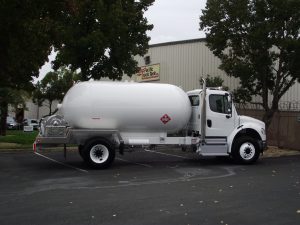
A PTT-built bobtail illustrates the propane delivery equipment segment at the center of the Tremcar–PTT deal. Credit: Courtesy Pacific Truck Tank.
In late 2025, the acquisition of Pacific Truck Tank (PTT), a Sacramento-based builder and servicer of petroleum and propane delivery trucks, signaled a strategic move by North American tank trailer manufacturer Tremcar to broaden its footprint. The deal officially closed on Oct. 20, 2025, bringing PTT under the Tremcar umbrella. PTT’s established presence in California – including a 22,000-square-foot facility with six service bays – now becomes a key hub in Tremcar’s network, aimed at improving service coverage across the western United States and even western Canada.
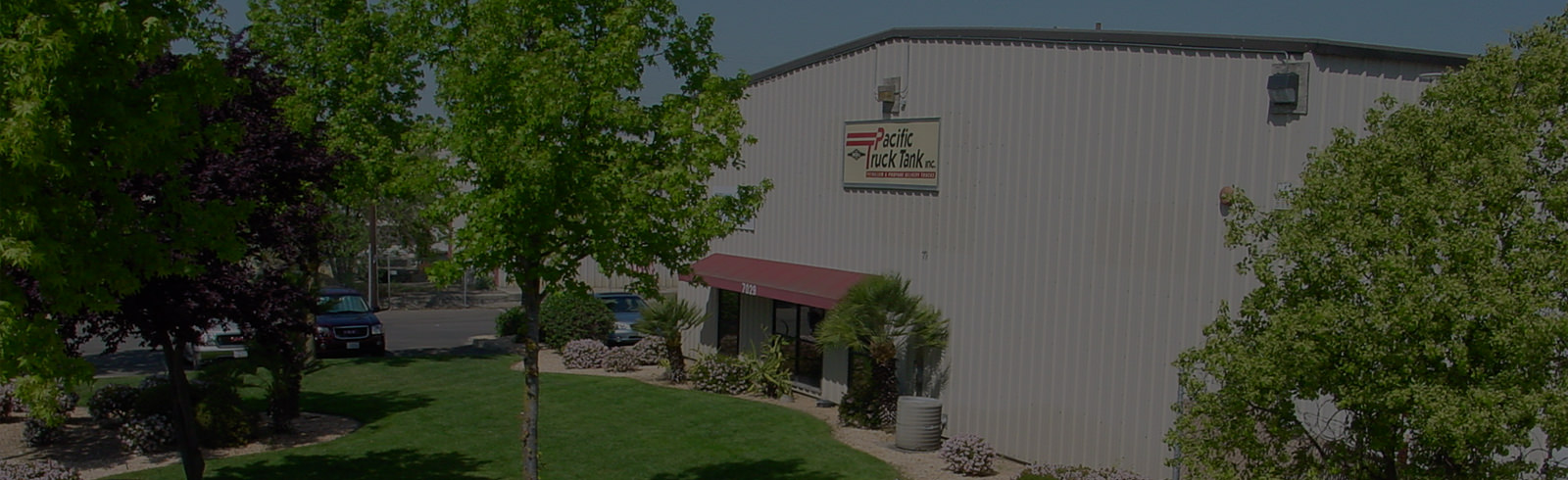
Company leadership from Tremcar and Pacific Truck Tank at PTT’s Sacramento facility, which will remain a regional service and assembly hub under the new ownership. For more news and updates on Tremcar, visit our news archives.
Acquisition Overview
The acquisition, announced in industry press by late 2025, is positioned as a win-win for both companies and their customers. Tremcar – a family-owned manufacturer of tank trailers and truck-mounted tanks for liquid and dry bulk transport – announced the Tremcar Pacific Truck Tank acquisition as part of its US growth strategy. The transaction was effective as of October 20, 2025, though news of the deal was reported in trade outlets through late October and into December. By joining forces with PTT, Tremcar signaled its intent to strengthen its position in the petroleum and propane equipment sector and expand its market presence westward.

PTT, founded in 1981, is well known on the US West Coast for building and servicing custom fuel delivery trucks, including propane bobtails (propane delivery tank trucks), LPG service trucks, and petroleum bobtails. Under the terms of the acquisition, PTT’s owners and employees will remain with the company, and Tremcar will retain the Sacramento site as a strategic service and assembly hub for US customers. In other words, the PTT operation continues business as usual, now with the backing of Tremcar’s broader organization. Daniel Tremblay, president of Tremcar, stated that the company is “thrilled to welcome Pacific Truck Tank to the Tremcar family.”
Adding that the move will reinforce Tremcar’s service offerings in the petroleum and propane industries while extending its footprint across the western United States. Kirby Fleming, CEO of Pacific Truck Tank, echoed the positive outlook, citing “shared values — quality, innovation, and customer dedication” and emphasizing that by joining Tremcar, PTT gains access to greater resources and manufacturing capacity while continuing to serve customers with the same trusted team. For additional insights into recent industry acquisitions and mergers, explore our Acquisitions news section.
Enjoying our insights?
Subscribe to our newsletter to keep up with the latest industry trends and developments.
Stay Informed
Pacific Truck Tank’s Legacy and Capabilities
Pacific Truck Tank, Inc. has been a fixture in the West Coast fuel equipment market for over four decades. Founded in 1981, PTT has built a reputation for manufacturing high-quality custom fuel delivery units and providing comprehensive service for fleets in the propane and petroleum distribution industry. The company operates from a 22,000-square-foot facility in Sacramento, California, equipped with six large work bays for truck assembly, repair, and maintenance. This sizable facility allowed PTT to build trucks and perform quick turnarounds on service efficiently – a point proudly noted on its website, which highlights that its building and extensive parts inventory enable “efficient assembly and fast delivery” for customers’ vehicles.
Notably, Pacific Truck Tank is a US Department of Transportation-registered repair shop and holds an ASME “R” Stamp (No. 2483) certification. The “R” Stamp is issued by the National Board for the repair and/or alteration of pressure vessels (like propane tanks on bobtail trucks), indicating that PTT meets strict quality standards for welding, inspection, and safety in tank repairs and pressure vessel repair and alteration. For fleet operators, this certification is a significant credential – it signals that PTT (now part of Tremcar) can perform tank modifications and repairs in compliance with recognized national standards, an assurance of quality control that matters when you’re evaluating service vendors for hazardous materials equipment.
In practical terms, a fleet that needs a propane tank repaired or altered can trust a shop with an R-stamp to do the job to code and with appropriate oversight. PTT’s long-standing certifications and experience underpin the value Tremcar saw in the company as a Western US center of excellence for tank truck assembly and service. Before the acquisition, PTT served customers throughout the Western US and even into Western Canada. Their projects ranged from building propane bobtails for local fuel companies to assembling LPG service trucks (for delivering and installing propane tanks) and petroleum tank trucks for gasoline/diesel distribution.
PTT’s ability to deliver custom-built units to clients across California, Puerto Rico, and Canada demonstrated its reach despite operating from a single site. Now, as part of Tremcar, that regional reach adds a path to integrate with Tremcar’s North American network, potentially offering customers a more seamless experience across regions.
To stay updated on the latest trends in fleet operations and management, check out our Transport Fleets coverage.
Tremcar’s Strategic Expansion into Western Markets
The North American tank trailer and truck-mounted tank manufacturer acquired Pacific Truck Tank in October 2025 as part of its Western U.S. expansion strategy.
For Tremcar, acquiring PTT is a strategic expansion of its geographic footprint and service network. Tremcar is headquartered in Canada (with manufacturing in Québec) and has significant US operations, including manufacturing plants in Ohio and Massachusetts. Before this deal, Tremcar’s physical presence in the Western US was limited, so adding a Sacramento location fills an important gap in proximity to West Coast and Rocky Mountain customers. The company explicitly framed the acquisition as “an important step in Tremcar’s strategic plan to expand its market presence in the United States.”
By joining with PTT, Tremcar expected to strengthen its position in the petroleum and propane sectors and better serve customers across the western United States and western Canada. In essence, Tremcar can now offer sales, assembly, and support services on the West Coast without customers having to work through distant facilities. Tremcar’s president, Daniel Tremblay, highlighted multiple benefits of the PTT deal in a news release. Beyond extending Tremcar’s footprint westward, he noted that integrating PTT would “generate additional work for our manufacturing plants in Ohio, Massachusetts, and Québec, strengthening our North American operations.”
This suggests Tremcar will leverage PTT’s orders and customer needs to keep its other production lines busy – for example, including opportunities to distribute fabrication and final assembly work across facilities. In this way, the acquisition not only provides Tremcar with a Western outlet but also creates a pipeline of work that returns to its core manufacturing facilities. Such load sharing could shorten lead times and improve logistics and throughput, depending on chassis supply and scheduling.
It also implies that Tremcar sees robust demand in the propane/petroleum delivery market and wants to ensure it has capacity across the continent to meet that demand. Kirby Fleming, the CEO of Pacific Truck Tank, likewise saw strategic advantage in merging with a larger manufacturer. “By joining Tremcar, we gain access to broader resources and manufacturing capacity while continuing to serve our loyal customers with the same trusted team,” Fleming said. From PTT’s perspective, being part of Tremcar means they are no longer constrained to only their Sacramento shop’s throughput.
They can tap into Tremcar’s engineering, supply chain, and production resources. This gives PTT access to Tremcar’s engineering, supply chain, and production resources, which could support higher throughput and more complex projects as integration progresses. It could also give PTT’s customers access to a wider product line. Tremcar’s product range includes not only propane bobtails but also tank trailers (e.g., for fuels, chemicals, and dry bulk) and other truck-mounted tankers. A fleet that previously sourced bobtails from PTT and trailers elsewhere might now source both through the combined Tremcar/PTT entity.
To dive deeper into developments in tank trailers and tanker technology, follow our Tanker Trailers news page.
Crucially, Tremcar has emphasized that continuity is part of the plan: keeping PTT’s existing leadership and employees and maintaining the Sacramento facility’s role. This is a reassuring message for customers who may worry when an external company acquires a familiar regional supplier. It means the faces and expertise they’ve come to trust at PTT will remain in place, and day-to-day operations (from maintenance services to new unit assembly) will continue to be handled by the same team, just under the Tremcar banner. Tremcar gains a seasoned workforce with deep customer relationships in the Western market, thereby avoiding the disruption that can occur when new management starts from scratch.
For the industry at large, this approach of keeping acquired businesses intact (at least initially) is common in consolidation moves – it helps preserve the acquired company’s goodwill and know-how, which are key assets beyond just physical infrastructure.
Implications for Fleet Operations
Whenever industry consolidation like this occurs, fleet operators immediately ask: “What does this mean for us?”
In the case of the Tremcar Pacific Truck Tank consolidation, the practical implications center on build timing, service capacity, parts/warranty support, pricing leverage, and scheduling visibility—especially for petroleum and propane tank truck operations in the western US.
At a glance:
- More West Coast service access via a Sacramento hub—potentially improving turnaround and uptime.
- Expanded parts and warranty pathways as Tremcar integrates PTT into a larger support network.
- Consolidation tradeoffs: fewer independent options may shift pricing and scheduling dynamics.
What could improve for fleets?
- Build and delivery timelines: Adding PTT’s assembly capacity and West Coast location could help shorten bobtail build lead times for regional customers—especially if work is distributed across Tremcar’s plants (Ohio/Québec) and finalized in Sacramento. Coordination across multiple sites can increase throughput, but benefits may ramp over time.
- Regional repair capacity and turnaround: With PTT serving as Tremcar’s West Coast service center, fleets may have better access to specialized tank work without long-distance repositioning. The Sacramento shop’s six bays, experienced team, and DOT registration/R-stamp capability can support quicker repairs and reduced downtime for western operators.
- Parts availability and warranty support: PTT’s stock-and-service approach, paired with Tremcar’s broader supply chain, may improve parts availability and speed up repair cycles. Warranty handling may also become more streamlined as service and claims move through a larger OEM-backed network.
- Scheduling and coordination: A larger organization can improve visibility into order status and service scheduling through enterprise systems and single-point coordination—potentially easing multi-location fleet planning and giving the Sacramento hub more flexibility to absorb overflow work.
What fleets should watch closely?
- Integration speed: Multi-site production and unified service processes can take time to align; early-stage friction is possible as scheduling, parts systems, and workflows standardize.
- Service demand vs. bay capacity: A stronger West Coast hub may attract more volume; if demand outpaces staffing or bay capacity, repair turnaround could tighten before expansion.
- Warranty terms and process changes: As policies standardize, fleets should monitor documentation requirements, approval turnaround times, and any changes to how claims are managed.
- Pricing and vendor dynamics: With fewer independent builders in the region, fleets should benchmark labor rates, parts pricing, and build terms. Economies of scale may help, but consolidation can also reduce competitive pressure.
Bottom line: The immediate practical implication of the Tremcar-PTT consolidation is that Western US fleets now have a direct line to a major OEM-backed facility in their region—one that could improve service access, parts availability, and repair turnaround times. While it may take time for all benefits (such as reduced lead times or fully unified support systems) to materialize, fleet operators will be watching through 2026 for measurable improvements in build turnaround, parts fulfillment speed, and overall customer experience.
Understand how expanding service centers are enhancing industry support and efficiency, and explore our Service Centers updates.
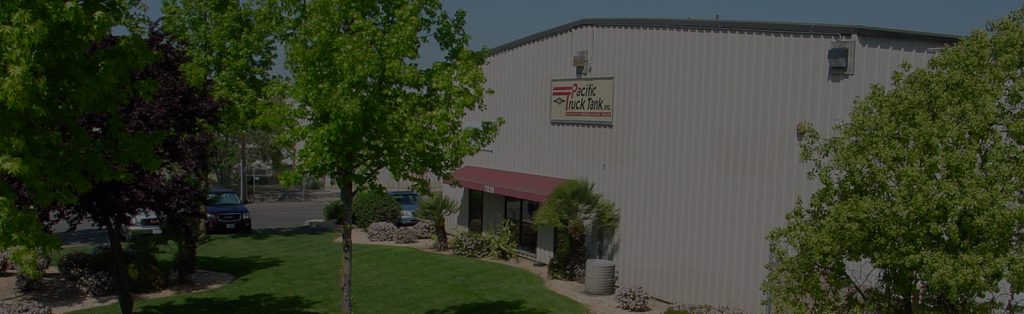
Pacific Truck Tank’s Sacramento site is positioned to remain a regional service and assembly hub under Tremcar. Credit: Courtesy Pacific Truck Tank.
Western Service Coverage and Regional Presence
From a regional standpoint, this acquisition gives Tremcar a stronger footprint on the West Coast. Service coverage in the western United States – an area that includes major propane markets in California, the Pacific Northwest, Arizona, and beyond – is a central part of Tremcar’s stated rationale for the deal. For fleets in states such as Oregon or Nevada, the Sacramento facility creates a closer option for certain service, repair, and assembly needs than relying solely on distant OEM facilities or authorized shops.
The same geographic logic applies to western Canada. Tremcar is headquartered in Québec, and the company has said the acquisition is intended to strengthen support for customers across the western United States and western Canada. Exactly how individual Canadian fleets use the Sacramento operation will depend on equipment type, routing, and scheduling, but the facility adds a western regional point in Tremcar’s broader network.
The Sacramento location’s ongoing operation as a service and assembly hub means it isn’t just a sales office – it’s a working shop where new units are built, and in-service units are repaired or retrofitted. This is a meaningful capability for regional fleets, particularly those that prioritize turnaround time and consistent repair standards. Many large tank trailer manufacturers rely on distributed service centers and authorized repair partners; by acquiring PTT, Tremcar adds an established West Coast operation with long-standing local service experience.
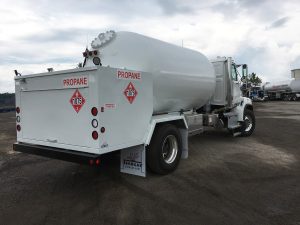
Tremcar’s propane cargo tank truck product imagery reflects its broader tank-equipment portfolio. Credit: Courtesy Tremcar.
For example, if a Tremcar-built tanker trailer needs its five-year inspection and welding repairs, a western fleet can now schedule that work through the Sacramento hub under the same ownership umbrella, rather than repositioning equipment to a more distant facility.
Another practical consideration is the availability of emergency repairs and parts in the region. Propane and fuel delivery fleets can face time-sensitive issues (such as tank or piping problems during peak winter demand). Having a capable facility within the western region can reduce downtime by shortening travel distance and improving access to specialized tank work. The acquisition does not, by itself, guarantee faster response times or expanded stocking levels, but it does add an established service location to Tremcar’s western coverage.
On the operational side, fleets should expect some integration over time as Tremcar and PTT align processes. That can include systems, documentation, and service workflows, with the stated goal of maintaining continuity at the Sacramento operation. As with any ownership change, the practical test for fleets will be whether scheduling, turnaround, and service consistency improve, remain stable, or face short-term friction during integration.
In summary, the western region’s service footprint is broader than before, with the Sacramento facility now part of Tremcar’s network. For fleets operating west of the Rockies, that adds a closer, OEM-aligned point of contact for certain repairs, builds, and support needs. Stay abreast of developments in the propane gas sector; see our Propane Gas industry news.
A Lens on Industry Consolidation in Tank Manufacturing
Tremcar’s acquisition of Pacific Truck Tank is part of a broader industry consolidation trend in tank manufacturing and service. In recent years, mergers and acquisitions have reshaped the landscape for companies that build and maintain tank trailers and tank trucks, as manufacturers seek broader geographic coverage, greater customer access, and tighter integration of service capabilities.
Recent consolidation signals
- TerraVest Industries acquired Engineered Transportation International (EnTrans) in 2025 for $546 million, adding major tank-trailer brands and expanding its US scale.
- TerraVest previously acquired Signature Truck Systems in 2015, a notable manufacturer of propane bobtails.
- In January 2026, TerraVest acquired KBK Industries, a Texas-based manufacturer of fiberglass and steel storage tanks.
Why it matters to fleets
- Potential upside: Better-supported products, more consistent quality control, and broader “one-stop” sourcing as larger organizations standardize engineering, service, and parts support.
- Potential downside: Reduced competition can shift pricing power and limit vendor choice, raising concerns about costs, service responsiveness, and customization flexibility.
- Service network integration: More companies are bringing service in-house or expanding authorized centers to capture aftermarket revenue and improve customer experience—moving toward cradle-to-grave support.
The Tremcar-PTT deal can be viewed as a microcosm of this trend: combining manufacturing scale with a regional service and assembly footprint to be closer to customers, expand coverage, and strengthen lifecycle support. For fleets, the key will be tracking outcomes—lead times, parts availability, warranty responsiveness, and repair turnaround—while maintaining leverage through benchmarking and supplier optionality where possible.
To learn about consolidation trends shaping the market, check out our Consolidation news archives.
Conclusion
The acquisition of Pacific Truck Tank by Tremcar marks a significant development in the tank truck industry, particularly for those operating in western North America. For Tremcar, it’s a strategic foothold that extends their reach and bolsters their service infrastructure; for Pacific Truck Tank, it’s an opportunity to grow under the umbrella of a larger manufacturer while continuing to serve customers with the same local expertise. Fleets will be watching for benefits from a stronger support network – potentially seeing shorter wait times for new builds, more convenient repair options, and a robust supply of parts and service backed by an OEM. Yet, like any consolidation, the real proof will come over time.
Stakeholders will be watching to see whether this union delivers on promises of improved lead times, enhanced service turnaround, and seamless handling of parts and warranty issues. Early indicators are positive: both companies have demonstrated a commitment to customer service continuity and quality, and industry observers note that establishing a Western US assembly and service hub is a logical step for Tremcar’s growth.
In the bigger picture, Tremcar’s westward expansion via PTT is a useful lens on the consolidation trend shaping the industry. It underscores that even niche sectors, such as propane delivery equipment, are not immune to mergers and acquisitions aimed at building continent-spanning organizations. For fleets, staying informed about these changes is crucial – understanding the new capabilities your suppliers have, as well as any new limitations or changes in how they do business. As Tremcar integrates Pacific Truck Tank, fleet customers should communicate their needs and hold the company accountable to the higher standards this consolidation aims to achieve.
If all goes well, this deal will not only strengthen Tremcar’s business but also set a precedent for how collaboration can deliver better service in the tank trucking industry. In an industry where safety, reliability, and timely delivery are paramount, this development is worth noting. For a closer look at innovations in petroleum delivery and fuel transport, visit our Petroleum Delivery news page.
Key Developments: What the Tremcar–PTT Deal Signals for Western Fleets
- Deal close and timeline clarity: The acquisition closed Oct. 20, 2025, with broader trade visibility building through late 2025.
- Western footprint expansion: Tremcar adds a Sacramento-based West Coast tank service center to strengthen service coverage across the western United States and western Canada.
- Sacramento operations remain in place: The facility remains a service and assembly hub, with existing leadership and employees expected to continue supporting fleet customers’ needs.
- Facility capacity matters to fleets: PTT’s 22,000-square-foot Sacramento operation with six large service bays becomes a tangible lever for tank truck repair capacity and potential turnaround improvements.
- Compliance and repair credentials: PTT’s DOT-registered repair status and ASME “R” Stamp capability (pressure vessel repair/alteration) remain key differentiators for propane and petroleum fleets.
- Potential lead-time impact (to watch): Tremcar’s multi-site manufacturing footprint, combined with West Coast assembly, could help reduce propane-delivery truck lead times, depending on chassis supply, staffing, and parts flow.
- Aftermarket and parts leverage: Integration may improve parts availability, repair-scheduling flexibility, and warranty throughput, while fleets should monitor any process changes as systems standardize.
- Pricing and vendor dynamics: As vendor consolidation continues, fleets may see shifts in pricing power and quote availability—making it important to benchmark labor rates, parts pricing, and build terms.
- Strategic signal to the market: The acquisition of Tremcar Pacific Truck Tank reinforces a broader consolidation strategy to expand regional service coverage while strengthening full-lifecycle support (build, service, warranty) for fleets.
Tremcar–Pacific Truck Tank acquisition, compliance, and fleet implications
- Learn more about Tremcar’s North American tank manufacturing footprint on Tremcar’s official company overview.
- Explore Tremcar’s product categories—including propane and truck-mounted tank offerings—via Tremcar’s published product lineup.
- Review Tremcar’s service footprint and support network through the Tremcar service centers directory.
- See Pacific Truck Tank’s Sacramento facility details, certifications, and service capabilities on Pacific Truck Tank’s “About” page.
- Understand what the National Board “R” Certificate of Authorization covers (repairs/alterations on pressure-retaining items) at NBBI’s R Certificate program page.
- Dive into the program requirements and accreditation expectations in NBBI’s NB‑415 (Accreditation of “R” Repair Organizations) PDF.
- Reference an ASME/National Board explainer on stamps and related programs in ASME’s “National Board & ASME Guide” PDF.
- Check the regulatory text for cargo tank testing/inspection requirements at PHMSA’s 49 CFR §180.407 page (interpretations and guidance hub).
- Review the same cargo tank test/inspection rule language in the federal eCFR at eCFR: 49 CFR §180.407.
- Use an alternate legal-reference view of §180.407 at Cornell Law School’s CFR page for 49 CFR §180.407.
- Reference operational and inspection best practices in FMCSA’s cargo tank operation/repair/inspection guidelines PDF.
- For fleet training and repair/inspection facility readiness, consult NTTC’s cargo tank repair/inspection training requirements guidance.
- For propane workforce training options tied to bobtail operations and safety, explore PERC’s Propane Learning Center and NPGA’s overview of PERC’s Propane Education Program updates.
SOURCES
- Tremcar acquisition announcement and details – Truck News, Oct. 30, 2025; Fuel Oil News, Dec. 17, 2025; LP Gas Magazine, Dec. 11, 2025; Bulk Transporter, Oct. 28, 2025.
- Pacific Truck Tank company background – PTT website; LP Gas Magazine profile of PTT; Bulk Transporter coverage.
- Quotes from Daniel Tremblay (Tremcar) and Kirby Fleming (PTT) – Truck News, Bulk Transporter, Fuel Oil News.
- Industry context on consolidation – LP Gas Magazine (TerraVest acquisitions); gasworld report on TerraVest–EnTrans deal.
- Fleet operations context – LP Gas Magazine (on new truck delivery times); PTT site info on stock parts and quick assembly, and PTT parts availability/shipping info.
- Tremcar’s stated expansion aims – Fuel Oil News; Bulk Transporter.