- Q4 2025 refinery outages: EIA weekly utilization slid to ~81% in PADD 2 and the high‑80s in PADD 3—see how that reshapes rack supply, pricing, and dispatch planning.
- Gulf Coast refinery maintenance & Midwest fuel logistics: From Colonial Pipeline schedule hiccups to Magellan/Explorer reroutes, learn the playbook that kept product flowing.
- Short‑haul tanker demand as a signal: MR rates spiked then sank—use these moves to anticipate rack supply disruptions and time nominations with precision.
Refinery Utilization Trends and EIA Weekly Data
Refinery utilization rates (% of operable capacity) for PADD 3 (Gulf Coast) and PADD 2 (Midwest) fell sharply during October 2025, reflecting widespread maintenance slowdowns.
Q4 2025 refinery outages drove sharp declines in refinery utilization across PADD 3 (Gulf Coast) and PADD 2 (Midwest), as indicated by weekly EIA data. Gulf Coast run rates eased from the low‑to‑mid 90s in early October to the upper 80s by late October as multiple units underwent planned work. The Midwest saw a steeper swing, sliding from the mid‑90s in late September and early October to near the low‑80s by the final week of October.

Refinery utilization rates for PADD 3 and PADD 2 fell sharply during October 2025
According to the U.S. Energy Information Administration’s Weekly Petroleum Status Report, refinery run rates in both the Gulf Coast and Midwest dropped notably in Q4 2025. Gulf Coast refineries (PADD 3) were running at ~93.5% of operable capacity in early October, but utilization fell to 87.1% by the week of October 10 amid turnarounds. After briefly rebounding to ~92% mid-month, PADD 3 utilization settled around the upper 80s by late October. The Midwest (PADD 2) saw an even steeper decline: from ~94–95% in late September and early October down to just 81.0% by the week ending October 24. For additional data and analysis from the EIA on petroleum supply and refinery operations, browse our EIA reports.

This plunge in PADD 2 refining activity – dropping below five-year seasonal norms – coincided with multiple refinery outages and maintenance events in that region. The EIA data underscores that the autumn 2025 maintenance season materially curbed refining throughput, especially in mid-October when national refinery inputs dipped and inventories built slightly. Refiners often plan heavy work in the fall, and 2025 was no exception, with utilization rates falling ~5–15 percentage points versus summer peaks across PADD 2 and PADD 3. These lower run rates tightened the supply of refined products and primed the market for localized distribution challenges. For more news and updates on U.S. refineries and refining capacity, check out our Refineries coverage and Refinery Capacity news.
Notable Gulf Coast Refinery Maintenance and Outages
Several major Gulf Coast refineries underwent planned turnarounds and unplanned outages in Q4 2025, constraining regional fuel output. In Southeast Texas and Louisiana (PADD 3), autumn maintenance was in full swing; for example, TotalEnergies’ Port Arthur refinery (Texas) was undergoing a significant planned maintenance outage that took ~151,000 barrels per day (bpd) of capacity offline until October 21. This turnaround at Port Arthur represented the most critical single Gulf Coast capacity reduction during the fall maintenance peak.
Enjoying our insights?
Subscribe to our newsletter to keep up with the latest industry trends and developments.
Stay Informed

Planned work trimmed Gulf runs—without hurricane‑driven shutdowns. (ExxonMobil Baton Rouge (Louisiana))
Additionally, ExxonMobil carried out work at its Baton Rouge refinery in Louisiana, with an estimated 120,000 bpd of capacity offline for part of late October. Notably, these planned activities fortunately coincided with a quiet hurricane season, so refiners avoided weather-related shutdowns that often compound fall outages.
Unplanned issues also impacted Gulf Coast throughput. On October 2, Colonial Pipeline Company – the primary artery for moving Gulf Coast gasoline and diesel to the East Coast – experienced a brief system-wide shutdown due to unplanned maintenance. Colonial’s 5,500-mile pipeline was taken offline and then restarted that same day, according to a company spokesperson, causing only short-term delays. While brief, this incident forced some last-minute rerouting of fuel and highlighted the sensitivity of distribution schedules to pipeline hiccups. Among refiners, Marathon Petroleum reported that an earlier June fire at its Galveston Bay refinery in Texas had constrained some summer output and carried into Q3 results.
By Q4, Marathon had repaired the unit. However, the company still planned to run its 13-refinery system at a more conservative ~90% of capacity in Q4 (versus 95% in Q3) to accommodate heavy maintenance and ensure reliability. Similarly, Citgo Petroleum deferred a scheduled turnaround at its Lake Charles, LA, refinery, opting to push maintenance to 2026 to sustain strong output through year-end. This decision came after a minor fire in late September at Lake Charles, which was quickly contained with no significant production loss, allowing Citgo to keep product flowing into the regional market.
Overall, Gulf Coast refinery maintenance in Q4 2025 was extensive but managed; companies staggered their turnarounds to minimize overlap, and no catastrophic outages were reported in Texas or Louisiana during the quarter. Gulf refiners benefited from robust profit margins and worked to maximize diesel and jet fuel output on units not under maintenance. This helped mitigate the impact on total throughput, though specific fuel grades (e.g., specialty gasoline blends) saw tighter supplies when specific units (like reformers or FCCs) went offline.
Gulf Coast rack suppliers did report some localized supply tightness for premium gasoline and ultra-low sulfur diesel at times in October. Still, in general, the region’s storage and import capabilities smoothed over the maintenance dip. Refiners also leaned on inventories – PADD 3 distillate stocks drew down in late October as production temporarily lagged demand. From a logistics perspective, Gulf Coast product terminals and traders increased exports when runs were high early in the quarter, then pivoted to serving domestic needs as output dipped. This dynamic kept overall Gulf Coast fuel availability adequate, albeit with less cushion than in summer. For additional insights into diesel fuel supply and distribution, read our Diesel Fuel news coverage.
Central Midwest (PADD 2) Refinery Outages and Slowdowns

Whiting’s turnaround pulled Midwest utilization to ~81%, the quarter’s low. (Midwest anchor — BP Whiting Refinery (Indiana))
The Midwest region experienced pronounced refinery outages in Q4 2025, leading to significant drops in regional fuel production and some supply hiccups for local markets. Chief among these was the planned turnaround at BP’s Whiting refinery in Indiana – the largest inland refinery in the U.S. (440,000 bpd). In mid-October, BP undertook extensive maintenance at Whiting, temporarily idling roughly 430,000 bpd of capacity (its full crude throughput) for inspections and upgrades.
This turnaround was a key driver of PADD 2 utilization, which plunged to ~81% by late October, as reflected in the EIA data. During Whiting’s downtime, gasoline and diesel production in the Chicago area dropped sharply, tightening supply to the Great Lakes market. Rack supply allocations were reported at some terminals serving Illinois, Indiana, and Michigan, as Whiting’s output is crucial for those distribution systems. BP coordinated alternative supply where possible – for instance, tapping into inventories and arranging pipeline transfers from the Gulf – but the Whiting outage created a temporary bottleneck for specific fuel grades, especially during the peak of the harvest season, when diesel demand was strong.
Phillips 66 also had maintenance at its Wood River refinery (Illinois) during the fall. In late September, Phillips 66 reported shutting an unspecified process unit at Wood River for planned work, and industry monitors noted continued turnaround activity into October. While smaller in scale than Whiting’s overhaul, the Wood River maintenance and other scattered refinery work (e.g., at Marathon’s Detroit refinery and HollyFrontier’s Mid-Continent facilities) collectively curbed Midwest output. By East Daley Analytics’ count, about 1.8 million bpd of U.S. refining capacity was offline for planned maintenance as of mid-late October, with PADD 2 contributing heavily to that figure.
Notably, no major unplanned disasters struck Midwest refineries in Q4 – unlike in some prior years, when fire or flood events occurred. However, there were minor incidents: on October 16, BP’s Whiting plant experienced an operational upset that led to flaring, though production was not significantly impacted beyond ongoing maintenance work. And in late August (just before Q4), Citgo’s Lemont, IL, refinery suffered a brief power outage that caused a shutdown and flaring, but it was restarted within a day. These short disruptions, combined with planned turnarounds, meant the Midwest refining system ran with little spare capacity throughout October. By early November, most PADD 2 refineries were coming back online, and utilization began climbing back above 90%.
The impact of Midwest refinery slowdowns was felt keenly at the fuel distribution level. Rack supply disruptions and allocation measures emerged in some areas – particularly in the Upper Midwest – as local terminals saw reduced inflows. For example, on October 27, South Dakota’s government issued an emergency declaration due to “extremely low inventories and outages” of gasoline, diesel, and propane at fuel terminals, citing high harvest-season demand and delayed resupply as contributing factors. The supply shortfall prompted South Dakota to suspend truck driver hours-of-service rules to expedite fuel deliveries, as the “return of normal supply flows…[was] unknown” during the refinery outages. This underscores how the convergence of refinery maintenance and seasonal consumption spikes stressed Midwest fuel logistics.

Gulf refiners maximized diesel and jet fuel where units stayed online. (Texas City cluster — Galveston Bay / Texas City Refineries)
Downstream operators (fuel haulers and distributors) had to adapt by sourcing product from further afield (e.g., pulling diesel from Gulf Coast pipelines or redirecting barrels from other PADD 2 refineries not under maintenance) to meet local needs. In Ohio and Michigan, wholesale gasoline prices jumped by 15–25 cents/gallon in mid-October, a direct result of refinery slowdowns and tighter supply. However, these price spikes were temporary. As refineries like BP Whiting completed work and ramped up runs by early November, regional supply improved and prices moderated.
This episode highlighted the importance of refinery turnaround alerts and contingency planning for fuel marketers – those who heeded early warnings of the Whiting outage (communicated via industry notices and state energy bulletins) were better prepared to secure alternate supplies and manage their inventories. For more updates on regional fuel prices and gasoline supply, see our Fuel Prices updates and Gasoline stories.
Pipeline & Terminal Logistics: Colonial, Magellan, and More
Logistics infrastructure in PADD 2 and PADD 3 faced a few hurdles in Q4 2025, though overall, the pipeline systems proved resilient in redistributing fuel during refinery downtime. The Colonial Pipeline, which carries refined products from Gulf Coast refineries through the Southeast and up to the Northeast, had the most notable event: an unplanned shutdown on October 2. Colonial took its system offline due to a “technical issue” requiring urgent maintenance—essentially a system-wide pause on shipments. The outage was resolved within roughly one day, and Colonial resumed regular scheduling after restoring its nomination systems.
During the brief halt, some Gulf Coast shippers diverted cargoes to waterborne transport (barges and coastal tankers) to keep product moving toward the East Coast, and Southeastern terminals drew down inventories to meet local demand. Colonial’s quick restart meant impacts were limited; unlike previous multi-day pipeline outages, this incident did not trigger significant spot price spikes or widespread rack outages. Nonetheless, it served as a reminder of how a sudden pipeline issue can force last-minute scheduling changes and highlight bottlenecks – Colonial had suspended shippers’ ability to change destinations during the downtime, leaving some barrels temporarily stranded in the system. Once the pipeline was back, operations normalized, and any delayed cycles were delivered with minor timing adjustments.
Meanwhile, Magellan Midstream Partners – a key pipeline and terminal operator in the Midwest and Gulf – reported no significant disruptions during the quarter. Magellan’s refined products pipeline network (which extends from the Gulf Coast up through the mid-continent) operated steadily, helping to compensate for local refinery outages. In late October, Magellan implemented updates to its product grade specifications and tariffs (in coordination with ONEOK), but these were administrative changes and did not impede flows.
The fact that Magellan’s systems had spare capacity was fortunate for Midwest distributors. For instance, when Kansas and Oklahoma faced tighter supply due to nearby refinery maintenance, Magellan’s Longhorn/BridgeTex and Explorer pipeline connections pushed additional barrels north from Gulf Coast origins. Similarly, the Explorer Pipeline (co-owned by Magellan and others) ran at high rates to supply Illinois and Ohio markets while regional refineries were down. No major pipeline maintenance was reported on these routes in Q4, so they served as reliable relief valves.
Terminal operations at the rack level did see periodic congestion. In some Gulf Coast port cities (e.g., Houston, New Orleans), product loadings onto vessels increased when inland demand was soft, then slowed when domestic demand spiked. Terminal scheduling bulletins from Colonial and others indicated expected cycle timing through most of Q4, aside from the brief Colonial outage.
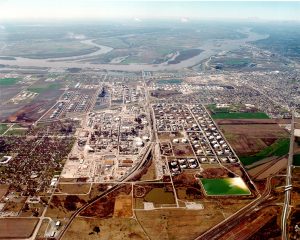
Rack allocations eased as Midwest units returned above 90% by early November. (PADD‑2 supplemental — Phillips 66 Wood River)
One logistics challenge noted by shippers was the tighter scheduling on Colonial’s Line 2 (distillate line) due to strong diesel demand in the Midwest, as some Midwestern markets drew supplemental diesel from the Gulf via pipeline, and capacity on specific cycles approached full allocation. Colonial’s scheduling data showed near-full nominations in late October, but the pipeline managed without invoking widespread pro-rationing. Additionally, barge traffic on the Mississippi and Ohio Rivers was robust, as traders used river transport to reposition fuel to areas such as the upper Midwest and the Tennessee Valley when pipeline deliveries were maxed out. Barge operators did not report any unusual delays beyond standard seasonal low-water slowdowns.
It’s also worth noting that short-term fuel swaps and exchanges helped alleviate terminal shortages. For example, during the South Dakota supply emergency, suppliers in neighboring states arranged swaps to truck in propane and diesel from terminals in Nebraska and Minnesota that had supplies, while waiting for pipeline deliveries to resume in South Dakota. These kinds of adaptive logistics measures were crucial in preventing isolated outages from becoming broader crises.
Terminals in the Midwest generally maintained minimum working stock levels, but pressure was evident – state agencies closely monitored rack inventories and, in some cases, issued public warnings about fuel availability. Overall, the midstream logistics network flexed effectively to accommodate the refinery outages: pipelines ran at high utilization, terminal operators extended hours for truck loading, and coordination among shippers increased to reroute fuel as needed. For in-depth coverage of pipeline operations and fuel terminals, visit our Pipelines section and Terminals news page.
Shipping and Tanker Market Dynamics
Maritime logistics also played a role in balancing the market during Q4 2025. The tanker market for refined products out of the U.S. Gulf Coast saw unusual swings tied to regional supply-and-demand shifts. In mid-October, freight rates for short-haul tankers (MR class) spiked to multi-month highs as Latin American and Caribbean importers scrambled to book cargoes. Strong export demand – especially for U.S. gasoline and diesel bound for Mexico, Central America, and Brazil – coincided with some Gulf Coast refiners operating at reduced rates, which briefly tightened prompt availability and lifted freight rates. For instance, MR tanker spot rates from the Gulf to the Caribbean jumped to about $1.3 million per voyage around October 16 (a two-month high).
Sensing an arbitrage opportunity, many shipowners repositioned vessels to the Gulf, significantly boosting available tonnage by late October. By October 30, shipbrokers reported 19 MR tankers open and available in the Gulf loading window – the highest vessel count in that window since May – leading freight rates to collapse to six-month lows by early November. Essentially, a surge of incoming tankers overshot actual export demand once geopolitical concerns (such as a late-October Caribbean tropical storm and Middle East turmoil) eased, resulting in an oversupply of ships.

Pipelines acted as the system’s pressure valve when refinery output dipped.
This rapid swing illustrates how short‑haul tanker demand was influenced by refinery maintenance schedules and regional stocking patterns. Early in the quarter, as Gulf Coast refiners produced ample fuel, exports were robust and tanker rates were moderate. When refiners cut runs for maintenance, traders initially bid up freight to import needed volumes into deficit markets (e.g., importing extra gasoline into Florida or diesel into South America). But the market quickly readjusted: with global product supply relatively healthy and Gulf refineries coming back online by November, many of those tankers ended up waiting (“floating storage”) or ballasting elsewhere due to lack of cargo.
One positive outcome for shippers was that ample tanker availability reduced costs for Gulf Coast exporters by November – MR freight rates to Latin America dropped by ~60% from mid-October highs. Long-range (LR) tankers also saw increased use: large cargoes of diesel were booked from the Gulf to Europe and Brazil to cover for overseas refinery issues, supported by U.S. refiners’ ability to export surplus distillate. In fact, data showed that October 2025 had the highest volume of long-range product loadings from the Gulf in years, as Brazil’s demand for U.S. diesel surged amid refinery outages in Russia and a seasonal shortfall.
This trend of pre-staging vessels to capture regional demand spikes was noted by market analysts – shipowners positioned tankers near the U.S. Gulf in anticipation that Caribbean and Mexican buyers would need prompt resupply after Hurricane Melissa in mid-October. Some owners took short Caribbean charters expecting to quickly re-enter the Gulf market for the next upswing in demand. While the anticipated post-storm demand bump was modest, this strategic staging helped clear some of the vessel surplus by late November.
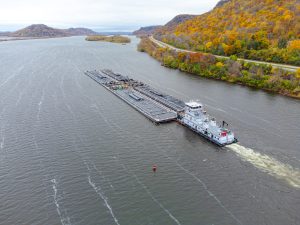
Barge traffic backstopped near‑full pipeline cycles during maintenance peaks.
For downstream logistics operators, the key takeaway is that global waterborne movements buffer local outages. When Midwest refineries were offline, additional gasoline was imported into the East Coast (via Colonial and via cargo imports) to backfill any knock-on shortfalls to the upper Midwest. The Jones Act (which restricts domestic tanker shipments) limited direct Gulf-to-East Coast U.S. shipments. Still, traders used foreign-flagged tankers to bring in gasoline from Europe to New York, effectively freeing more Gulf production to stay in PADD 2 and 3.
In short, the international tanker market acted as a safety valve: areas with excess fuel (the Gulf Coast at times, Europe at others) sent cargoes to areas with deficits, helping avert severe shortages. Energy analysts noted that medium-range tanker freight trends became a valuable indicator of evolving supply tightness – the mid-October spike signaled tightening in our region. In contrast, the early November plunge signaled easing supply and successful mitigation of outages. To learn more about tanker shipping and its impact on fuel markets, explore our Tankers coverage.
Implications and Actionable Insights for Fuel Logistics
The events of Q4 2025 carry several vital lessons for downstream logistics operators, fuel dispatchers, and market analysts:
- Advance Turnaround Planning: The significant drop in refinery utilization in both PADD 3 and PADD 2 underscores the need for proactive planning around refinery turnaround alerts. Downstream players should closely monitor refiners’ maintenance schedules (often announced in advance via trade press or state filings) and plan alternative supply arrangements. In this case, knowing that BP Whiting and Total Port Arthur would be down in October allowed some marketers to preposition extra fuel at Midwest and Gulf Coast terminals ahead of time. Those who built additional inventory in late September were better insulated once the outages hit. Actionable insight: Maintain a maintenance calendar for key refineries supplying your market, and enter into contingency stock or supply contracts 1–2 cycles in advance to ride out the dip.
- Flexible Logistics and Routing: The brief Colonial Pipeline outage and the near-capacity pipeline shipments highlight the value of logistical flexibility. Fuel dispatchers benefited from having multiple routing options—for example, diverting volume to barge or truck when a pipeline segment went down. Downstream companies should invest in optionality, such as access to storage in different PADDs or exchange agreements that allow pulling from a different terminal in emergencies. During Q4 2025, companies with access to both pipeline and waterborne supply were able to pivot quickly when Colonial halted or when Magellan pipeline capacity tightened. Colonial Pipeline scheduling bulletins should be watched closely; even a one-day unplanned shutdown can create ripple effects, so shippers may want to nominate extra volumes in the cycle immediately following a known disruption to rebuild stock.
- Real-Time Monitoring of Utilization and Stocks: The fact that PADD 2 utilization plunged to 81% and South Dakota terminals ran dry shows the importance of tracking EIA weekly data and local rack metrics in real time. Market analysts and dispatchers should utilize the EIA’s Weekly Petroleum Status Report (WPSR) for up-to-date regional utilization and inventory levels. In Q4 2025, the WPSR signaled rising stockpiles and dropping runs in early October, giving a heads-up that maintenance was biting. Combining that data with on-the-ground intel (like rack supply disruptions or state emergency declarations) provides a fuller picture. Action item: set alerts for when refinery utilization in your PADD falls below certain thresholds (e.g., <90%), as it could presage supply tightness that warrants securing additional supply or reallocating trucks to where fuel is available.
- Supplier Communication and Collaboration: Refiners and pipeline companies provided frequent updates during this period. For instance, Marathon and others communicated their planned maintenance and expected throughput cuts, and Colonial sent notices during its outage. Fuel distributors who stayed in close contact with their suppliers and carriers could respond faster. It’s advisable to subscribe to maintenance bulletins and pipeline customer communications (Colonial and Magellan offer web portals for shippers). Additionally, collaboration was key: peer exchanges (swapping fuel loads between companies or lending trucks to affected areas) helped in South Dakota and elsewhere. Fostering these industry relationships and mutual aid agreements can pay dividends when normal operations are disrupted.
- Market Intelligence on Tanker Movements: Even for primarily domestic players, keeping an eye on the tanker market and import/export flows can yield insights. In Q4 2025, the surge in Gulf Coast exports and the subsequent decline in tanker rates indicated that the U.S. fuel supply shifted from tight to long. Traders and analysts who caught this shift could anticipate price movements – e.g., easing wholesale prices once exports slowed and more fuel stayed in the U.S. For fuel buyers, tracking import arrivals (for instance, gasoline cargoes into New York Harbor) can signal relief for constrained inland markets. Essentially, global logistics trends (such as short-haul tanker demand to Latin America) increasingly influence local rack supply and prices. Leverage tools and reports (Argus, OPIS, etc.) that report on these shipping patterns alongside domestic pipeline flows.
In conclusion, Q4 2025’s refinery outages in the Gulf Coast and Midwest tested the fuel supply chain’s agility. The industry broadly rose to the challenge: no widespread consumer shortages occurred, and price impacts were regionally contained. This was achieved through diligent planning, responsive logistics, and the ability to adapt supply routes on the fly. Downstream operators are reminded that the fall turnaround season is a predictable strain every year – building resiliency (via inventory management, diverse supply sources, and real-time intelligence) is critical to navigate these periods.
Market analysts will continue to watch metrics such as refinery utilization rates, pipeline scheduling status, and tanker queues as early warning indicators of trouble ahead. By applying the lessons from late 2025, fuel distributors and analysts can better insulate their operations and customers from the impacts of future refinery maintenance and unexpected outages. For more insights on fuel distribution strategies and logistics trends, visit our Logistics news hub.
Sources: U.S. EIA Weekly Petroleum Status Reports; company press releases and earnings calls; Reuters and Argus Media news reports; East Daley Analytics maintenance insights; Land Line Media (Oct 29, 2025) state emergency bulletin; Colonial Pipeline and Magellan tariff notices. All linked references are publicly available for further detail on the events described, among others.
Key Developments — Q4 2025 Refinery Outages & Logistics
- Utilization troughs: PADD 3 eased from the low‑mid‑90s to the upper‑80s by late October; PADD 2 fell from ~94–95% to ~81% in the week of Oct 24, then rebounded to >90% by early November.
- Gulf Coast maintenance: TotalEnergies Port Arthur (~151 kbpd) down into Oct 21; ExxonMobil Baton Rouge (~120 kbpd) late‑October work; Marathon system guided to ~90% runs in Q4; Citgo Lake Charles deferred a turnaround into 2026; localized tightness in premium gasoline and ULSD; brief PADD 3 distillate draws.
- Midwest outages: BP Whiting’s comprehensive turnaround (~430 kbpd) drove the sharpest regional impact; Phillips 66 Wood River unit work added to constraints; rack allocations appeared across parts of IL/IN/MI; OH/MI wholesale gasoline briefly +$0.15–$0.25/gal; South Dakota issued an HOS emergency to speed resupply.
- Pipelines & terminals: Colonial Pipeline had a one‑day system pause on Oct 2 before regular scheduling resumed; Line 2 (distillate) cycles ran near full; Magellan/Explorer pushed incremental barrels north; racks extended loading hours; swaps/exchanges alleviated spot shortages; river barge flows supplemented pipeline deliveries.
- Tanker dynamics: MR spot rates from the U.S. Gulf to Latin America spiked mid‑October (~$1.3M/voy) before sliding to multi‑month lows by early November as tonnage surged; LR diesel liftings to Europe/Brazil stayed elevated, indirectly easing U.S. inland balances.
- Operational playbook: Maintain a refinery turnaround calendar; trigger contingency actions when EIA weekly utilization dips <90% in your PADD; pre‑stage drivers/equipment for 3–10‑day windows at key racks (Houston/Beaumont/Lake Charles/Port Arthur; Wood River/Chicago/Detroit/Toledo); diversify routing (pipeline/barge/truck) and lock exchange options; watch MR/LR freight and prompt tonnage as early indicators of tightening or relief.
Further Reading & Official Sources — Q4‑2025 Refinery Outages, Pipelines & Tankers
- Weekly U.S. petroleum data and refinery utilization: EIA Weekly Petroleum Status Report (WPSR) · WPSR summary (PDF) · full report tables (PDF)
- Regional utilization time series: Midwest (PADD 2) · Gulf Coast (PADD 3) · distillate stocks & days of supply
- Capacity and retail pricing context: EIA Refinery Capacity (annual) · Gasoline & Diesel Fuel Update
- Pipeline rules, tariffs, and Oct 2 service note: Colonial Pipeline shipper manual & tariffs (FERC 3.30.0 · FERC 100.44.0) · ONEOK refined‑product tariffs · Explorer Pipeline shipping & tariffs · Reuters: Colonial restart (Oct 2, 2025)
- Tanker freight benchmarks and recent trends: Baltic Exchange clean‑tanker indices · Argus: U.S. Gulf product tanker rates.
- Company operations & turnaround signals (Q3‑2025): Marathon Petroleum · BP results · BP trading statement (PDF) · ExxonMobil · Phillips 66 · Phillips 66 call transcript (PDF) · TotalEnergies · press release (PDF) · CITGO press room
- Emergency measures and policy references: FMCSA: South Dakota HOS waiver · State announcement · MARAD: Jones Act overview
- Infrastructure maps and performance data: PHMSA National Pipeline Mapping System · pipeline safety data index
- Ports and river conditions for resupply planning: Port Houston facilities map · Port of New Orleans terminals · USACE St. Louis channel status
- Independent maintenance and outage context: East Daley Analytics: Crude Oil Edge · Land Line Media: fuel supply bulletin (Oct 29, 2025)