- How the EPA 2027 NOx rule could add $8,000–$25,000 per new Class 8 truck – and the timing strategies fleets can use to blunt the impact.
- Why extended emissions warranties and 650,000‑mile useful life targets may be scaled back in 2026 – and what that means for long-term maintenance risk.
- How the tug-of-war between EPA and California’s CARB is resolving into one national standard – and what that alignment really means for fleet emissions planning.
The EPA 2027 NOx rule is set to bring the toughest diesel emissions limits the U.S. trucking industry has ever seen, with a coalition of new regulations in 2027 driving much stricter NOx controls for heavy-duty trucks nationwide.
Overview: “EPA27” Emissions Standards and Timeline

The EPA 2027 NOx rule will reshape how fleets buy, run, and maintain heavy-duty trucks.
The EPA 2027 NOx rule — the Agency’s 2027 heavy-duty engine rule (often called “EPA27”) — introduces the strictest NOx emission limits ever for new trucks. Starting with model year 2027, diesel trucks must cut NOx (oxides of nitrogen) emissions by about 90% compared to the previous standard. The rule caps NOx at 0.035 g/bhp-hr in normal operation (down from 0.2 g/bhp-hr today) with additional limits of 0.05 g at low engine load and 10 g/hour at idle. Unlike earlier rules, EPA27 targets emissions even during low-load and startup conditions (when exhaust aftertreatment is cool), closing loopholes in real-world emissions control. These standards are over 80% stricter than current federal requirements, representing a massive leap in technology needed on trucks.
For additional reporting on tightening NOx limits and their impact on engine design and operations, browse our NOx coverage. To see how broader emissions rules are reshaping trucks, engines, and infrastructure, explore our Emissions section.

Implementation Date: The EPA finalized these NOx standards in late 2022, with a four-year lead time, meaning the rule is scheduled to take effect January 1, 2027. Despite speculation of delays, EPA officials have reaffirmed the 2027 timeline as critical for public health and regulatory certainty. In early 2025 the Agency announced it would “revisit” the rule as part of a broader review, but no formal delay or suspension has been enacted. As of late 2025, EPA27 remains the law, and EPA leadership signaled they do not plan to push back the start date or weaken the core NOx limit.
For ongoing developments, rulemakings, and enforcement actions from the Environmental Protection Agency, review our EPA news hub.
Fleet operators should therefore assume January 2027 compliance unless and until EPA issues an official change. The EPA is expected to propose some amendments in spring 2026, but those are aimed at refining the rule rather than changing its date.
Rule Context: EPA27 is part of the national Clean Truck Plan and comes on the heels of state-level action. Notably, California’s Low-NOx “Omnibus” regulation (adopted 2020) set similar 90% NOx reductions on an earlier timeline (Model Year 2024 in CA). EPA27 essentially federalizes that level of stringency by 2027, creating a uniform nationwide standard by that year. The new rule was published just before a change in U.S. administrations, and its fate became uncertain in 2025 as policy priorities shifted. However, until EPA or Congress formally alters it, fleet compliance planning for 2027 should move forward. As one industry expert warns, “if you’re not prepared when a decision is finally made, you could be in a tough spot.”
For more news and analysis on equipment cycles and procurement strategy for major fleets, explore our Fleets coverage.
New Warranty and Useful Life Obligations

For many carriers, the biggest question isn’t if the rule arrives, but how to pay for it.
Beyond tightening NOx limits, the EPA 2027 NOx rule (EPA27) significantly extends how long engines must meet those standards. The rule lengthens the defined “useful life” of heavy-duty engines from 435,000 miles to 650,000 miles. In parallel, emissions-related component warranties jump from 100,000 miles to 450,000 miles on Class 8 trucks. In practical terms, manufacturers must ensure emission control systems (like DEF aftertreatment, SCR catalysts, EGR, sensors) will operate effectively much longer than before. This is intended to keep trucks cleaner over more of their lifespan, preventing high-emitting older trucks from undermining air quality gains.
For deeper context on trends affecting the Class 8 truck market, including pricing and spec decisions, visit our Class 8 Truck page.
For fleet owners, these provisions mean 2027+ model trucks should retain low emissions far beyond the first few years in service. The flipside is higher upfront costs: designing durable aftertreatment that lasts 600k+ miles and providing extended warranty coverage adds substantial expense for OEMs, which gets passed through in truck prices. In fact, the mandated warranty and useful-life boosts are among the major cost drivers of EPA27 compliance.
Possible Revisions: Industry feedback has zeroed in on these requirements as an area for relief. The EPA has indicated it is considering adjustments here. Agency officials plan a proposal by spring 2026 to “ease compliance burdens” – likely by dialing back the extreme warranty/useful-life increases – while keeping the 2027 start date. For example, EPA may revert to the prior warranty mileage or something more intermediate, which OEMs say would meaningfully cut per-truck costs.
Daimler Trucks North America noted that the warranty extension (to 650k miles) is one change that EPA could roll back to “take some cost out” of 2027 trucks. Any such revision would be proposed in 2026, with a final decision expected by late 2026. Fleet operators should watch for this warranty/useful-life rulemaking, as it could slightly reduce the compliance cost impact without removing the NOx standards themselves.
Aside from warranty length, no major changes to the NOx limit (0.035 g/bhp-hr) or the 2027 date are expected in EPA’s review. Instead, tweaks may focus on practical flexibilities – e.g. simplifying test procedures, adjusting recall thresholds, or providing transition credits – to address industry concerns while still delivering the huge NOx reductions by 2027. The EPA’s goal is to implement the health protections on schedule, but with refinements that make the rule more workable in the real world.
To keep up with changing federal and state regulations affecting trucking and tank transport, check our Regulations updates.
Industry Reactions and Readiness
Trucking Industry: Calls for Delay and Cost Concerns
Fleet owners and trucking companies, represented by groups like the American Trucking Associations (ATA), have voiced strong concern about the 2027 timeline of the EPA 2027 NOx rule. In August 2025, ATA led a coalition of 50+ trucking associations in a letter urging EPA to delay the NOx rule by four years (to 2031). The industry argued that today’s diesel trucks are already “99% cleaner” in NOx and PM than decades past, and that forcing another major emissions jump in 2027 would “impose substantial compliance costs and operational burdens” in an already challenging freight market.
The letter noted trucking was in a freight recession with high inflation in 2025, warning that a 2027 implementation could “intensify strain” across the industry. ATA and its allies asked not only for a delay, but a full reconsideration of the rule’s provisions – including stringency levels, warranty and useful-life mandates, and technical requirements – with any changes finalized by end of 2026 to align with a 2031 start.
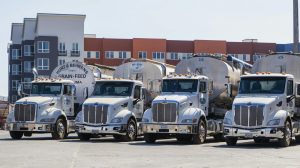
Extended useful life and longer warranties push emissions performance deeper into a truck’s operating years.
So far, EPA’s response has been firm on the date: the Agency refused to push the compliance deadline to 2031. However, EPA did acknowledge the cost concerns by launching the review and signaling it will introduce “major changes” to ease burdens without moving the goalposts. In other words, the 2027 standards are likely to stay in place, but with adjustments that could lower the expense or difficulty of compliance (for example, scaling back the extreme warranty lengths or offering more credit for early compliance). ATA has cautiously welcomed any cost-relief tweaks, but continues to advocate that a later phase-in would be more practical.
Other trucking voices echoed ATA. The Owner-Operator Independent Drivers Association (OOIDA) criticized EPA’s rush to approve California’s stringent rules and warned that injecting such uncertainty and cost into a $700 billion industry could backfire.
“Purposefully injecting uncertainty…is bad for our economy and makes no meaningful progress toward purported environmental goals,” OOIDA’s president argued, urging a more “achievable” path. In general, trucking stakeholders are not opposed to cleaner air – many support reasonable emissions improvements – but they insist on balancing real-world costs and operational feasibility. The bottom line for fleets is that EPA27’s upfront costs (discussed below) are steep, and industry groups are fighting to mitigate those impacts either via delay or policy adjustments. Until that plays out, fleets remain in a holding pattern of uncertainty in procurement planning.
For broader context on trends, costs, and policy shifts across the sector, explore our Trucking Industry stories.
Truck & Engine Manufacturers: Prepared, but Seeking Adjustments
Truck OEMs and engine manufacturers have been developing EPA27-compliant technology for years and publicly affirm they can meet the standards by 2027 – though not without challenges. A key message from manufacturers is that they value regulatory certainty and adequate lead time. For example, Daimler Truck North America (Freightliner/Western Star) stated that it has “a product…very confident in, prepared to meet the 2027 standards” with advanced technology already in development. Daimler’s VP of compliance Sean Waters noted OEMs have spent 5–7 years on EPA27 R&D and “must be ready” to sell compliant trucks in 2027 since the rule is still law.

OEMs say they can meet the 2027 targets, but they want clarity and consistency from regulators.
He cautioned that by late 2025 it was “getting too late” for regulators to eliminate or overhaul the rule without causing chaos, because emission rules ideally shouldn’t change without four years’ lead time. In short, major OEMs are on track to deliver 2027 trucks meeting 0.035 g NOx – and have invested heavily to do so – but they are lobbying EPA to fine-tune the requirements in ways that reduce unnecessary cost. As mentioned, Daimler sees rolling back the excessive warranty extension as a prime opportunity for relief.
Similarly, Cummins Inc., the largest heavy-duty engine maker, has been at the forefront of EPA27 prep but had to adjust plans due to policy uncertainty. Cummins unveiled a next-generation X15 diesel engine in early 2025 that was designed to comply with both EPA’s and California’s 2027 NOx standards. This engine uses new strategies like a 48-volt electrical subsystem driving heated aftertreatment elements to keep the SCR catalyst hot and effective even at idle and low loads. (Such technology is vital for meeting the ultra-low NOx in all duty cycles.)
For more insight into engine platforms, aftertreatment advances, and product strategies at Cummins, see our Cummins coverage.
The X15 was slated for production in 2026. However, when EPA announced its 2025 review of the rule, Cummins delayed the engine’s launch by about 6 months into late 2026. Cummins’ CEO Jennifer Rumsey told investors that “ongoing uncertainty” around the federal regulations led them to pause – essentially waiting to see if the target moves before fully ramping up manufacturing.
This regulatory limbo has real market impacts: fleet orders slowed sharply in 2025 because many buyers took a “wait and see” approach rather than pre-buying or investing early in the new technology. Cummins reported its North American heavy-duty engine sales fell 29% year-over-year in Q2 2025 amid the EPA27 uncertainty. Fleets weren’t rushing to pre-buy 2026 trucks (since they hoped the 2027 costs might be alleviated), but neither were they ordering 2027-compliant specs yet – a true pause.
Despite this, Cummins believes a stringent 2027 NOx rule will ultimately take effect (if not exactly the current version) and that a “belated pre-buy” surge could still occur once the situation clarifies. In other words, engine makers are continuing R&D toward cleaner diesels, hedging their bets that something close to EPA27 will be needed.
Other OEMs have voiced cautious optimism that the rule might be moderated. The CEO of Traton SE (parent of Navistar International and European brands) said in mid-2025 that “it’s highly unlikely” the rule launches on time in January 2027 given the lack of clear direction, suggesting a delay is possible. This uncertainty led Traton to doubt any big 2026 pre-buy, since “we do not yet really know towards what level of NOx we need to type-approve our engines.” Yet, even as they braced for a possible postponement, truck makers have continued validating their low-NOx engine designs in case 2027 proceeds.
Multiple OEMs (and their engine suppliers) have announced new 2027-ready models entering testing or pre-production, indicating that technologically, the industry will have solutions available on time. For instance, manufacturers are testing heated catalyst systems, cylinder deactivation, improved diesel aftertreatment materials, and even 24-volt electrical architectures to ensure NOx stays down under all driving conditions.
The Truck and Engine Manufacturers Association (EMA), which represents all major OEMs, has actively engaged regulators to ensure feasibility. EMA’s president noted that the 2023 “Clean Truck Partnership” deal with CARB (discussed later) helped “secure needed lead time and stability” for manufacturers by aligning California’s requirements with EPA’s 2027 timeline. This alignment was crucial – in 2022, EMA had even filed a lawsuit to enforce the four-year lead time rule for California’s standards. (They withdrew the suit after reaching a compromise, but the point was made that adequate lead time = smoother implementation.)
Now, EMA and its members seem resigned to EPA27 happening in some form, and are concentrating on fine-tuning the rule rather than blocking it. As a trade-off for these tough standards, manufacturers want regulatory consistency – no last-minute surprises – so they can confidently invest in tooling and production.

California’s Low-NOx strategy helped drive federal action, yet the EPA 2027 standard will ultimately set the floor nationwide.
In summary, OEMs are walking a tightrope: publicly supporting cleaner emissions and demonstrating technical readiness, while privately urging regulators to eliminate any “unnecessary” cost elements and to hurry up with a final decision. The consensus among truck makers is that they will meet EPA27 if it proceeds (indeed, they’ve spent billions on development already), but they’d prefer a bit more leeway on provisions like warranty or a short delay if it avoids stranding their investments. Until EPA announces the spring 2026 proposal outcomes, manufacturers are in cautious execution mode – continuing to prepare 2027-compliant products, yet adjusting roll-out timing to market demand. Fleet operators should expect OEM messaging to remain “ready for EPA27, but awaiting final confirmation.”
To follow emissions, technology, and regulatory changes shaping modern heavy-duty trucks, see our HD Trucks reports.
State-Level Policies vs. Federal Direction
Actions by states, especially California, have both influenced and complicated the federal EPA 2027 NOx rule. California’s Air Resources Board (CARB) has long pushed stricter emission standards on a faster timeline. CARB’s Heavy-Duty Low-NOx Omnibus regulation took effect for MY 2024 engines in California and certain adopter states, ahead of EPA’s 2027 schedule. The Omnibus rule is broadly similar to EPA27 (90% NOx reduction) but started three years earlier and included even more aggressive durability requirements in some respects. However, states need EPA waivers to enforce stricter-than-federal standards.
For ongoing developments around California’s role, waivers, and alignments with federal rules, follow our CARB reporting.
EPA granted California a waiver for the Low-NOx Omnibus in December 2024, just weeks before the federal administration change. This allowed California (and any states that adopted CARB’s rule) to proceed with requiring 2024–2026 trucks to meet the ultra-low NOx limits. Indeed, by late 2024 nine other states (including New York, Oregon, Washington, Massachusetts, etc.) were poised to enforce the CARB NOx standards in their jurisdictions over 2024–2026.
Federal pushback: The incoming administration in 2025 moved quickly to challenge California’s independent authority. In May 2025, the U.S. Congress took the unprecedented step of passing joint resolutions under the Congressional Review Act (CRA) to revoke California’s waivers for the heavy-duty Omnibus rule as well as its zero-emission truck mandates. By narrow votes, both the House and Senate approved resolutions disapproving the EPA waivers for CARB’s Advanced Clean Trucks (electric truck sales mandate) and Low-NOx Omnibus regulations.
These measures, if signed by the President (the new administration signaled support), would prohibit California or any other state from enforcing those specific rules despite the earlier EPA waiver. California’s governor and attorney general immediately vowed to fight this in court, arguing that EPA waivers are not “rules” subject to the CRA and that revoking them breaks decades of precedent. This legal clash is ongoing – the outcome will determine whether California can continue to lead with its own emissions program or must fully cede to federal standards through 2027.
For fleet operators, the short-term impact of the CRA effort was a sigh of relief in CARB-rule states. If the Omnibus waiver is nullified, California and the 14 states adopting its NOx rule cannot enforce those stricter 2024–2026 engine requirements. In fact, some states had already gotten cold feet: in early 2025, states like Vermont and Oregon announced pauses or delays in enforcing their adopted CARB rules, citing insufficient EV infrastructure and the burden on trucking companies. The expectation of federal rollback gave those states cover to hold off.

Pre-buy decisions now hinge on whether fleets fear higher truck prices more than new-tech uncertainty.
That means through 2025–2026, fleets operating in those states likely won’t face different NOx standards than the rest of the country (at least pending the legal outcome). However, note that California’s separate zero-emission vehicle rules (Advanced Clean Trucks and Fleets) are also entangled in this fight – those would have required manufacturers and larger fleets to start transitioning to electric trucks in the late 2020s. The CRA resolutions targeted those as well, effectively halting them for now outside of California’s own incentive-driven programs.
Importantly, despite federal attempts to rein in CARB, California and the OEMs reached a landmark compromise in mid-2023: the Clean Truck Partnership. Under this July 2023 agreement, the Truck & Engine Manufacturers Association and major companies (Cummins, Daimler, Paccar, Volvo, etc.) agreed to comply with California’s ZEV and pollutant rules, and in return CARB agreed to align its NOx standards with EPA’s 2027 regulations and guarantee at least four years of lead time for any future regs.
In essence, CARB promised to harmonize California’s NOx requirements with the federal 2027 level (instead of pursuing an even lower NOx limit or different timeframe), ensuring one national standard for NOx by 2027. CARB also said it would adjust its 2024–2026 requirements (providing flexibility or credits) so that manufacturers can meet emission targets without duplicative burdens. In exchange, the OEMs committed to drop their legal challenges and accept California’s authority, even pledging to support the state’s aggressive zero-emission truck sales goals regardless of federal interference.
This OEM–CARB pact signaled a cooperative path forward: it “aligned on a single nationwide NOx standard” (EPA 2027) while also advancing the long-term transition to zero-emission trucks. From a fleet perspective, that reduces the risk of a patchwork of engine standards. If upheld, by 2027 any new truck you buy for California or any state will simply be an EPA2027-certified truck – no special “50-state vs 49-state” engine variants as in past decades. It’s worth noting that the political turbulence of 2025 (the CRA actions) came after this partnership was formed.
If the CRA-based repeal of California’s waivers stands, it could moot parts of the agreement (since California wouldn’t be allowed to enforce even aligned standards until 2027 anyway). But since EPA27 itself mirrors what CARB wanted, the end result in 2027 is largely the same for fleets: one harmonized set of NOx rules nationwide.
State influence on federal direction: California’s early move undeniably pressured EPA to act. The threat of multiple states enforcing the Omnibus rule from 2024 gave manufacturers a strong incentive to back a single federal standard (EPA27) to avoid dual certification regimes. Now that federal policy has swung, the influence runs the other way – the new administration is pushing back on state climate policies, causing some retrenchment. For fleet operators, these dynamics mean you must stay alert to which rules apply where.
At present, the federal EPA27 standard will effectively overtake state NOx programs by 2027, and interim state-level NOx rules are paused or in limbo. But California’s push for zero-emission trucks (and likely future stricter standards beyond 2027) will continue to shape the market. Long-term, many expect a tighter integration of state and federal efforts – as seen in the Clean Truck Partnership – to provide industry one clear roadmap. The key takeaway is that state policies prompted the 2027 change and could prompt future federal moves; however, the 2027 milestone itself now appears firmly embedded in federal regulation, preempting further divergence at least in the near term.
Compliance Planning and Implications for Fleets
Cost Impact and Truck Procurement
One of the most pressing questions for fleet operators is: How much more will 2027-compliant trucks cost under the EPA 2027 NOx rule, and how to plan equipment purchases? All signals point to notable price increases for new diesel trucks due to EPA27. Estimates vary, but industry experts project anywhere from an $8,000 to $25,000 uptick in the cost of a Class 8 tractor once the rule is in effect. Early in 2023, analysts warned of potential $20,000–$25,000 per truck price hikes given the combination of complex new hardware and extended warranty coverage.
This figure included costs for advanced aftertreatment systems (e.g. bigger SCR catalysts, 48V heaters, dual dosing of DEF), on-board diagnostic upgrades, and the built-in expense of a longer warranty (since OEMs will likely charge upfront for the risk of covering components to 450k miles). The good news is that if EPA trims the warranty requirement or otherwise softens the rule in 2026, the actual price increase may land on the lower end of projections. Some in the industry now believe an $8–$10k per vehicle increase is more realistic, assuming certain costly provisions (like the full warranty extension) are dropped or delayed.

New aftertreatment, higher-voltage systems, and tighter diagnostics will make technician training a frontline compliance issue.
For instance, in California currently an “Omnibus-compliant” engine carries about an $8,000 premium; that could reflect the kind of upcharge fleets nationwide see for EPA27-level tech if warranty costs are moderated. However, if EPA sticks closer to the original rule, be prepared for a five-figure price jump on new units. Fleet budgeting for 2027 and beyond should account for these higher capital costs per truck. Lease rates and financing costs will also rise accordingly.
This looming cost drove talk of a pre-buy – fleets purchasing trucks in bulk before 2027 to avoid the price hike and unproven technology. Historically, such pre-buys happened in advance of past EPA mandates (e.g. 2007 and 2010 engine emission rules) and caused cyclical swings in new truck sales. Early market analysis indeed predicted a “2026 pre-buy” surge: as one trucking CEO noted, fleets might accelerate orders in 2025–26 to lock in older-generation (cheaper, known-reliable) equipment ahead of the 2027 change.
By mid-2024 there were reports of pre-buy activity starting as early as 2025 in anticipation of EPA27. However, by 2025 that narrative shifted. The regulatory uncertainty introduced by EPA’s potential revisions actually suppressed buying in 2025 – many fleets took a “wait-and-see” approach rather than rushing to buy or to adopt the new tech prematurely. As noted, engine orders fell and the expected early pre-buy hadn’t materialized by late 2025.
What does this mean going forward? Fleets should stay nimble. If EPA in 2026 confirms the rule (with only minor tweaks), we could see a late 2026 order rush – a shorter, more modest pre-buy as companies finally decide to grab remaining pre-2027 models before the curtain falls. One industry executive suggested that if freight market conditions improve in 2026 and the rule is indeed set to hit in 2027, those factors “could still spark a modest pre-2027 Class 8 pre-buy.” So, consider your fleet’s needs: it may be advantageous to advance some 2027–28 planned purchases into 2026 to avoid higher costs and first-generation emission systems.
But balance that against the maintenance costs of keeping older units longer, and the possibility (however slim) that the rule could be watered down or delayed which might negate some savings. Essentially, keep an eye on EPA’s final ruling (expected late 2026) and be ready to act. If the stringent standards remain, front-loading truck acquisitions before year-end 2026 could yield significant savings per unit. If major delays or changes occur, you might have more flexibility. In all cases, closely communicate with your truck suppliers – OEM build slots and component supply will be tightening if a wave of pre-buy orders hits in 2026.
To follow developments in emissions and technology for heavy-duty trucks and how they play into procurement timing, see our HD Trucks reports.
Emissions Technology and Maintenance
Fleet operators should prepare for new technology under the hood of 2027 trucks. To meet the ultra-low NOx, manufacturers are incorporating advanced emission control strategies. These include:
- Upgraded Aftertreatment Systems: Expect larger capacity SCR catalysts, improved DPFs, and possibly dual selective catalytic reduction setups, to ensure near-total NOx conversion. Some engines will use heated DEF dosing and electrically heated catalysts to maintain efficiency during low-temperature operation. For example, Cummins’ 2027 design integrates a 48-volt alternator and heating elements to rapidly warm the exhaust aftertreatment on cold start. These changes mean technicians will encounter new components (e.g. catalyst heating modules, 48V batteries or converters, additional sensors) and will need updated training on their operation and diagnostics.
- Higher Power Electrical Systems: As noted, manufacturers are considering moving from the traditional 12-volt system to 24-volt or higher to support the power needs of heating and advanced EGR/SCR controls. Volvo has already introduced 24V architectures on some new models, and other OEMs are evaluating it. A higher-voltage system can run aftertreatment heaters and possibly future electrified auxiliaries, but it also means new electrical maintenance practices for fleets (different batteries, alternators, perhaps DC-DC converters to still run 12V accessories).
- Engine Calibration Changes: To reduce NOx 90%, engines may use strategies like cylinder deactivation, enhanced turbocharging, improved fuel injection timing, and more aggressive EGR. Some engines might adopt cylinder cut-out at idle to keep exhaust temps up (avoiding NOx spikes when idling). These changes could alter how engines sound and perform at low load. Drivers and technicians should be briefed on any new operating characteristics (for example, an engine that intentionally keeps a higher idle RPM or one that periodically revs up to warm the aftertreatment).

Regulatory debates continue in Washington and Sacramento, but fleets still have to keep freight moving every day.
Fleets should coordinate with OEMs for training programs in 2026 so that shop personnel are ready to service the new 2027 emissions systems from day one. Proper maintenance of DEF systems, sensors (like NOx and ammonia sensors), and on-board diagnostics will be even more critical, as any degradation could more quickly lead to non-compliance under the extended useful life regime. The EPA27 rule also tightened some emissions monitoring and in-use testing requirements, meaning fleets could see more frequent or more sensitive OBD alerts if emissions performance drops. Staying ahead with preventive maintenance – using the correct engine oils, DEF, and adhering to cleaning/replacement intervals for DPF/SCR – will be key to avoid costly downtime or warranty fights under the new standards.
To see more on how emissions rules and technology upgrades are reshaping maintenance practices, explore our Emissions section.
One upside: the longer warranty (even if not 450k miles, it will likely still be substantially higher than today’s 100k miles) means manufacturers bear more responsibility for emission-related failures in early years. Fleet operators should take full advantage of this. Ensure you document all maintenance and promptly address check-engine lights related to emissions. If an aftertreatment component fails at, say, 300k miles, it could be covered by the extended warranty – a relief for maintenance budgets that currently must account for those mid-life expenses. However, note that the cost of that warranty is effectively in the truck purchase price, so it’s a pay-now-or-pay-later scenario.
Operational Considerations: There is some evidence that the 2027 changes might negatively impact fuel efficiency slightly. Because engines may use more auxiliary power and heat to control NOx, EPA27 trucks could see a small MPG drop (one projection is a 1–3% fuel economy penalty on 2027 models). This is not certain and will vary by OEM; some manufacturers will work hard to maintain or even improve fuel economy despite the tighter NOx.
Nonetheless, fleets should monitor fuel performance closely when integrating MY2027 units. It may be wise to pilot a few units in 2027 and compare their real-world MPG to your 2025–2026 trucks. Any dip in efficiency will affect operating cost calculations and could influence how quickly you cycle older trucks. Also, be prepared for more frequent active regenerations or new regen strategies – the pursuit of lower NOx can sometimes produce more particulate matter, which could mean DPF regen frequency changes. Manufacturers haven’t indicated any major DPF issues, but it’s something to watch.
Fleet Compliance Strategy and Next Steps
As a fleet operator, you should approach EPA27 with a strategic plan:
- Audit your Fleet Age Profile: Identify units that would normally be retired around 2026–2028 and decide if it’s better to replace them before 2027 (to get pre-EPA27 trucks) or to wait and replace with EPA27 trucks. Consider total cost of ownership: the pre-2027 trucks are cheaper upfront but will face higher emissions-control costs (and possibly restrictions) later in life, whereas the post-2027 trucks cost more upfront but run far cleaner and may avoid future regulatory headaches (e.g. cities banning older diesel models). In areas with air quality programs, having EPA27-compliant trucks could be a competitive advantage or even a requirement down the line.
- Engage Manufacturers and Dealers: Talk to your truck OEM reps about their EPA2027 product roadmap. By 2H 2026, you should know what engine models and ratings will be offered with the new emissions tech, and what (if any) options you have regarding voltage systems or aftertreatment configurations. Some OEMs might offer early production runs in late 2026 for fleets that want to test the new tech. Others might extend production of EPA2026 trucks a bit longer if demand surges. Understanding these timelines will help you schedule orders. Also, clarify with OEMs how they plan to handle the warranty: e.g., will the base vehicle price include the full emissions warranty or will it be an add-on option if EPA allows flexibility? Many fleet procurement managers are already in dialogue with OEMs as production slots for late 2026 (MY2027) could fill up quickly if a lot of buyers rush at once.
- Budget for Higher Capital Expenditures: Update your capital budgets to reflect the expected price increase per truck. Also factor in potential infrastructure needs – for instance, if trucks move to 24V or 48V systems, do you need different shop tools or diagnostic devices? Budget modestly higher maintenance in the first year of new technology adoption (experience from 2007/2010 EPA changes shows there can be a learning curve and some teething troubles, even if ultimately resolved). If your fleet generally operates on tight margins, consider strategies like leasing or extended financing to spread the higher purchase costs over time. Lessors will undoubtedly adjust residual values and lease rates to account for EPA27; get updated quotes for both pre-2027 and post-2027 equipment to make informed own-vs-lease decisions.
- Stay Informed on Policy Changes: The next critical update will come when EPA releases its spring 2026 proposal on the heavy-duty NOx rule adjustments. That will clarify if the 2027 standards are being amended (and how). Be ready to provide comments or at least to adjust your plans accordingly. Also watch the legal developments: if California wins its case against the CRA nullification, it could reassert influence (though likely not before 2027). If the 2024 election again shifts the political landscape, that too could alter the regulatory outlook for emissions in the late 2020s. Essentially, remain agile – incorporate the best information available each quarter into your planning, and have contingency plans. For example, have a plan if “EPA27 stays fully in effect” and a plan if “EPA27 is deferred to 2031,” and even one for “EPA27 is replaced by something stricter on a later timeline” – so that whichever scenario becomes reality, your fleet is not caught flat-footed.
- Consider Environmental Zones and Customer Expectations: Even aside from direct regulation, shippers and localities are increasingly concerned with emissions. By deploying EPA27 trucks, fleets may gain a competitive edge in sustainability metrics or be eligible for “green fleet” programs and incentives. Some metropolitan areas might incentivize or eventually require newer low-NOx trucks for certain routes or permits. So beyond compliance, there’s an element of future-proofing and corporate social responsibility in adopting the cleanest equipment available.

Operators who plan early for EPA27 are more likely to turn a mandate into an operational advantage.
In conclusion, EPA’s 2027 heavy-duty NOx rule is poised to usher in a new generation of ultra-clean diesel trucks, with significant implications for fleet operations. The implementation timeline – long set for 2027 – has been publicly reaffirmed by regulators even as specific provisions are being fine-tuned. Fleet owners should treat 2027 as a firm deadline and use the remaining time to optimize purchasing, prepare maintenance teams for new technology, and budget for the higher costs associated with compliance.
While industry lobbying may yield some relief (e.g. slightly reduced warranty obligations or other “major changes” to ease compliance), the core outcome will remain: starting in 2027, any new truck you buy will emit dramatically less NOx pollution than its predecessors – and it will be engineered to keep emitting less for many years of service.
Fleet operators who plan ahead for these changes – balancing equipment cycles, cost pressures, and technological adaptations – will be in the best position to comply smoothly and capitalize on the benefits (cleaner, more durable trucks) that come with the EPA27 era. Begin your planning now, stay tuned for EPA’s final rule updates in 2026, and don’t hesitate to seek expert guidance on compliance strategies. With careful preparation, your fleet can turn this regulatory challenge into an operational success story for 2027 and beyond.
To stay on top of broader trends, consolidation, and policy shifts shaping the sector, explore our Trucking Industry stories.
Sources: Recent industry reports and regulatory announcements have informed this synopsis, including analysis from Tank Transport, FleetOwner, Heavy Duty Trucking, EPA/CARB releases, and stakeholder statements from OEMs and trucking groups. These provide the latest insights (mid-2025 onward) into the EPA27 rule’s requirements, timeline, industry feedback, and the intersection with state-level policies. The information above is drawn from those sources to ensure accuracy and impartiality for fleet operators planning their next steps in emissions compliance.
Key Developments for Fleet Operators Under the EPA 2027 NOx Rule
- 2027 start date reaffirmed: Despite political shifts and industry pressure, regulators continue to signal that the EPA 2027 NOx rule and its 0.035 g/bhp‑hr standard will take effect for model year 2027.
- Deep NOx cuts required: Engines must deliver ~90% lower NOx than today, including during idle and low-load operation, forcing adoption of far more sophisticated aftertreatment and control strategies.
- Warranty and useful life extended: Useful life stretches to 650,000 miles and emissions-related warranty up to 450,000 miles on Class 8, shifting more long-term performance risk and cost exposure onto OEMs (and into the purchase price).
- Potential 2026 rule refinements: EPA is preparing a spring 2026 proposal that may ease some burdens (especially warranty/useful life provisions) while keeping the 2027 implementation date and core NOx targets intact.
- OEMs technically ready but cautious: Major manufacturers (engines and trucks) are far along with EPA27-compliant platforms, yet are pacing launches and investments until regulatory details are finalized.
- State-federal alignment emerging: California’s CARB Omnibus and the Clean Truck Partnership are pushing toward a single nationwide NOx standard by 2027, reducing the risk of a patchwork of engine variants for fleets.
- Higher truck prices and strategic pre-buys: New EPA 2027 NOx rule–compliant trucks are expected to carry meaningful premiums, encouraging fleets to consider selective pre-buying and tighter lifecycle planning ahead of 2027.
- Maintenance and training demands: New 24–48V systems, heated catalysts, and more complex aftertreatment will require updated technician training, revised PM schedules, and closer monitoring of emissions-related diagnostics.
External Resources on EPA 2027 NOx Rule and Heavy‑Duty Emissions
- For the official summary of the 2027 heavy‑duty engine and vehicle standards, see EPA: Control of Air Pollution from New Motor Vehicles – Heavy-Duty Engine and Vehicle Standards (Final Rule).
- To understand how the EPA 2027 NOx rule fits into the broader regulatory roadmap for trucks, review EPA’s Clean Trucks Plan overview.
- For technical details on California’s ultra‑low NOx requirements that helped shape federal policy, consult CARB’s Heavy-Duty Low NOx Omnibus Regulation fact sheet (PDF).
- For a program‑level view of how California implements and amends its low‑NOx engine rules, see CARB’s Heavy-Duty Low NOx program page.
- To explore how California and major truck and engine manufacturers aligned around a single NOx standard and transition path, read CARB’s “Clean Truck Partnership” announcement.
- For the full text of the negotiated understanding between CARB and the Truck & Engine Manufacturers Association, see Final Agreement between CARB and EMA on heavy-duty regulations (PDF).
- For engine‑manufacturer specifics on a 2027‑ready diesel platform designed to meet the new standards, review Cummins 2027 X15 heavy-duty engine product page.
- For a technical reference on U.S. heavy‑duty emission limits, test cycles, and timelines, consult DieselNet: USA Heavy-Duty Onroad Engine Emission Standards.
- To see how low‑NOx and alternative‑fuel engines are being evaluated as tools to comply with 2027 criteria pollutant rules, read NACFE’s “Natural Gas’ Role in Decarbonizing Trucking” executive summary (PDF).
- For broader context on transitional technologies and how fleets can navigate the “messy middle” between diesel and zero‑emission trucks, see NACFE’s “The Messy Middle: A Time for Action” report (PDF).