- How autonomous oilfield trucks are already running 24/7 frac sand routes on private lease roads in the Permian Basin.
- Inside Atlas Energy Solutions’ strategy to own its fleet while buying Kodiak’s “Driver-as-a-Service” for driverless frac sand delivery.
- What this first large-scale deployment of autonomous trucks in oilfield logistics could mean for tank truck utilization, labor, and safety.
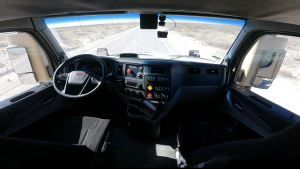
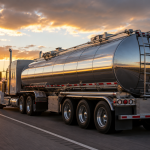
Inside Atlas’s driverless RoboTruck, the wheel turns with no one in the cab as the Kodiak Driver follows a pre‑mapped Permian route.
Kodiak’s driverless trucks in the Permian Basin are marking a historic turning point for oilfield logistics. In a first-of-its-kind deployment, autonomous oilfield trucks equipped with the Kodiak Driver system are hauling frac sand on remote West Texas roads without human drivers. This pioneering initiative – a partnership between startup Kodiak Robotics and Atlas Energy Solutions – has already logged hundreds of deliveries in the heart of the Permian’s oilfields. The project demonstrates how autonomous trucking technology can tackle arduous, dusty oilfield routes around the clock, signaling a new era of efficiency and safety in the tank transport and energy industries.
For more on Kodiak Robotics and its autonomous ventures, see our Kodiak Robotics updates.
Milestone: Kodiak Driverless Trucks in Permian Basin Transform Oilfield Logistics
In late 2024, Kodiak Robotics and Atlas Energy Solutions launched the first commercial driverless trucking operations on private oilfield roads in the Permian Basin. Atlas, a major supplier of frac sand (or proppant) for hydraulic fracturing, received two Class 8 autonomous semi-trucks fitted with Kodiak’s self-driving system and began using them to transport sand to well sites.

The initial 21-mile driverless delivery was completed with no one in the cab, proving the concept on a real-world route through Atlas’s network of dirt lease roads. By January 2025, the two Kodiak driverless trucks had successfully delivered over 100 loads of sand across the Permian – a milestone heralded as the first time a customer-owned fleet of robo-trucks executed real commercial hauls without safety drivers.
Atlas’s deployment is notable for its high impartiality and data-driven approach to assessing the technology’s value. Company officials report that the automated trucks have maintained reliable service despite extreme West Texas conditions.
The Permian Basin’s oilfields are known for harsh environments – blistering heat, blinding dust storms, and rugged unpaved roads. Such conditions make truck driving challenging and hazardous, contributing to high driver turnover and accident rates in the region.
By leveraging autonomous oilfield trucks, Atlas aims to improve safety and operational continuity. The Kodiak vehicles operate at modest speeds (often under 20 mph) on private lease roads, minimizing risk while negotiating constantly changing work sites and heavy equipment traffic. After validating performance in an initial pilot, Atlas’s leadership placed orders for additional Kodiak-equipped trucks and committed to scaling up the program across its operations.
For more news and updates on fleets adopting autonomous technology, explore our Fleets news section.
Scaling Up Driverless Truck Operations in West Texas
Following the early success, Kodiak and Atlas moved quickly to scale their driverless trucking initiative. In December 2024, Atlas officially launched an ongoing commercial service with its first two Kodiak Driver-powered trucks, making regular unmanned deliveries of frac sand to multiple drilling locations.
The positive results led Atlas to invest further – by mid-2025, the company expanded its autonomous fleet to four trucks and began running them nearly 24/7 in routine service. These trucks pause only for scheduled maintenance or refueling, otherwise hauling loads around the clock – a feat impossible with human drivers due to duty hour limits.
An integrated logistics approach has facilitated the project’s rapid scale-up. Atlas opened an 18,000-square-foot support facility in Odessa, Texas (near the heart of the Permian oilfield) to collaborate with Kodiak on truck maintenance, remote monitoring, and data analysis.
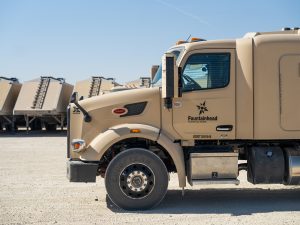
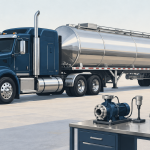
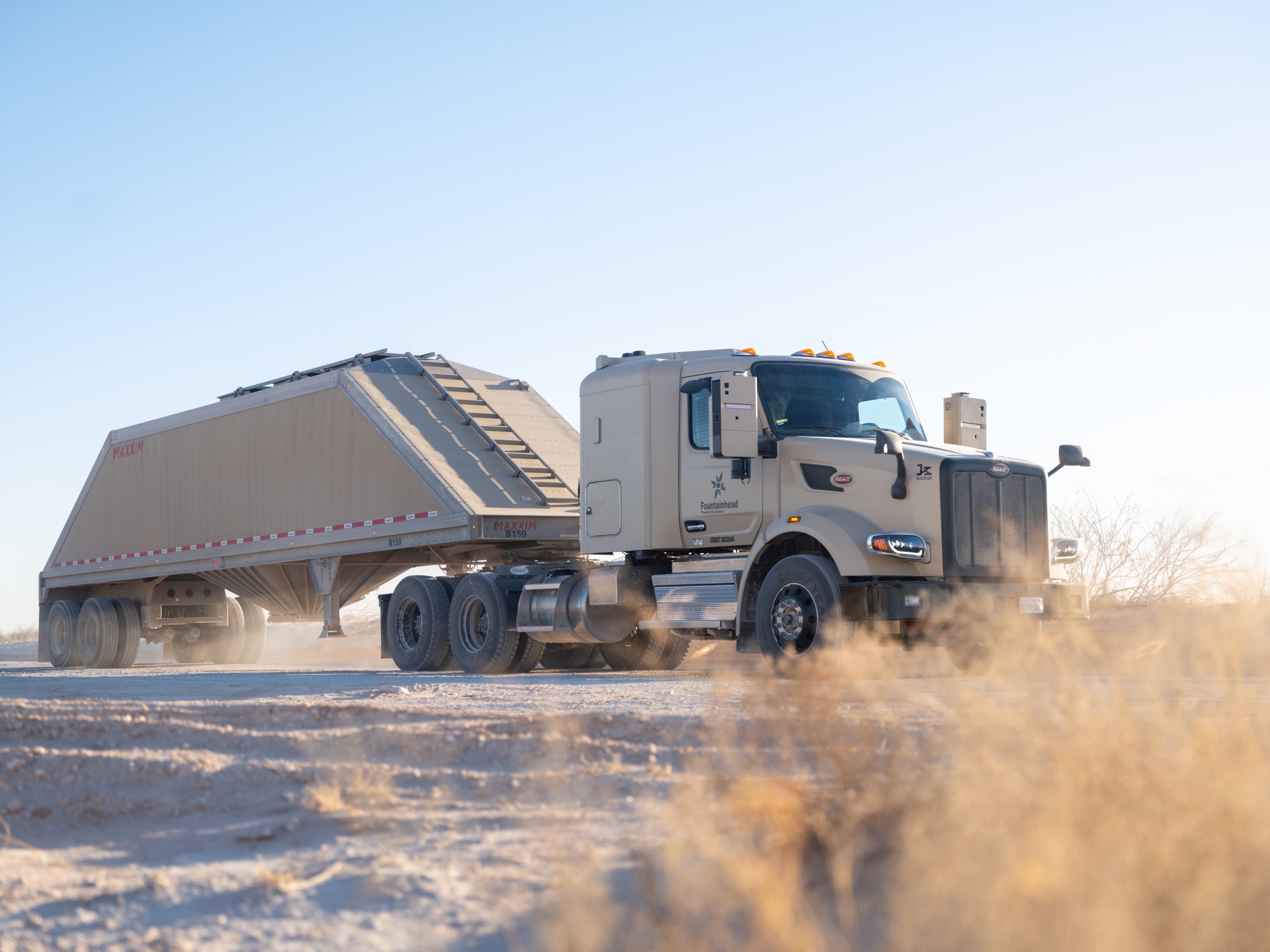
Tan day‑cab sand haulers like these are being outfitted with Kodiak’s autonomous system as Atlas scales its driverless fleet in the Permian.
The autonomous trucks are integrated with Atlas’s Dune Express conveyor system – a 42-mile automated conveyor belt that moves sand from Atlas’s mining sites closer to the wellheads. At the end of the conveyor, the driverless trucks pick up pre-loaded sand and handle the last-mile delivery to the frac site. This synergy between conveyors and self-driving trucks creates a largely automated supply chain from the mine to the well.
Since commencing continuous operations, Atlas’s robo-trucks have collectively delivered over 800 loads of sand and logged more than 1,600 hours of driverless runtime within their first six months.
Crucially, Kodiak’s business model for this deployment is a “Driver-as-a-Service” subscription. Rather than Kodiak operating the trucks, Atlas wholly owns the vehicles and pays Kodiak for the autonomous driving technology on a per-mile or per-truck basis.
This arrangement allowed Atlas to become the first company to own and operate its own autonomous semis in active commercial service. Kodiak’s founder and CEO, Don Burnette, emphasized that this marks a long-awaited industry inflection point. After years of testing, autonomous trucking is now a real business generating revenue, not just a pilot program. For Kodiak, the Atlas partnership validates its product and provides a steady income stream via hardware and software licensing. For Atlas, it addresses labor challenges and positions the company as a technology leader in the oil and gas sector.
For additional stories on developments in the Permian region’s logistics and energy sector, browse our Permian news archive.
Autonomous Technology: Kodiak’s AI Driver and SensorPods
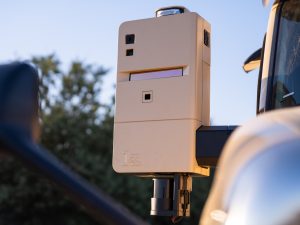
A close-up of Kodiak’s SensorPod shows the integrated lidar, radar, and cameras that give driverless trucks 360‑degree perception on unmarked oilfield roads.
At the core of the Kodiak driverless trucks is an advanced autonomous driving system known as the Kodiak Driver. This system combines artificial intelligence software with a suite of sensors and controls to pilot heavy trucks without human input.
Kodiak’s vehicles used in the Permian feature the company’s sixth-generation hardware platform. Key to this platform are proprietary SensorPods – modular sensor units mounted on the truck that each contain cameras, radar, LiDAR, and other sensors needed for 360-degree perception. The SensorPods are pre-calibrated and designed for easy swapping, enabling quick repairs or upgrades to keep trucks running with minimal downtime.
The trucks also incorporate fully redundant systems for safety. This means critical components like braking, steering, computing, and power have backup systems. If a primary system fails or an unexpected obstacle arises, the backup can seamlessly take over to maintain control.
Kodiak has integrated a drive-by-wire control interface and a high-performance onboard computer that runs the AI driving algorithms. In the Permian operations, these autonomous trucks are also connected via cellular networks to a remote operations center in Texas, where Kodiak staff can monitor their status in real time and provide assistance or intervention if necessary.
To launch the driverless service, Kodiak’s engineers worked closely with Atlas to define a detailed operational safety case – a formal evaluation demonstrating the system could handle the specific off-road domain safely. Only after exhaustive testing and validation did regulators and stakeholders give a green light for trucks to run without any human in the cab.
To stay informed about the latest in autonomous trucks and self-driving vehicles, visit our Autonomous Trucks archive.
How does Kodiak’s autonomous driving system work?
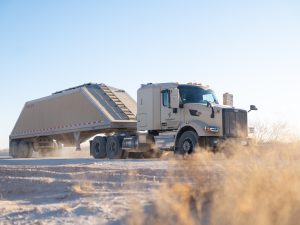
Driverless RoboTrucks equipped with the Kodiak Driver haul frac sand for Atlas on private lease roads across the Permian Basin.
Kodiak’s autonomous system uses a combination of sensors, machine learning, and pre-mapped routes to navigate the oilfield environment. High-resolution cameras and LiDAR scanners on the truck continuously detect obstacles, road edges, other vehicles, and even wandering livestock on remote lease roads.
The sensor data feeds into the Kodiak Driver’s AI software, which has been trained on thousands of miles of road data. The AI plans a safe path for the truck, controlling acceleration, braking, and steering to follow the designated route while avoiding hazards.
Importantly, Kodiak developed specialized techniques for unmarked, unpaved roads – unlike highway driving, these oilfield routes have no lane lines and can change after rain or heavy use. Kodiak’s mapping technology enables new routes to be established or modified within hours rather than weeks. This flexibility is vital in oilfield logistics, where drilling sites frequently relocate, and truck routes must adapt.
To read about innovations transforming the oil & gas industry, visit our Oil & Gas section.
The SensorPod architecture plays a significant role in maintenance and reliability. All the sensors (radar, cameras, LiDAR) are housed in two pods on the truck’s side mirrors, allowing technicians to quickly replace a pod if a sensor fails or becomes obscured by dust. This modular design keeps trucks running in the harsh Permian Basin conditions where dust or vibration can otherwise degrade equipment.
Additionally, Kodiak’s trucks leverage a remote monitoring system. While the trucks drive themselves locally, human supervisors track multiple vehicles from the Odessa operations hub via video feeds and telemetry. If a truck encounters a situation it can’t handle – say heavy equipment blocking a road or an unprogrammed detour – it can alert the remote operator.
The operator can then give new instructions or take low-speed remote control to guide the truck through the anomaly, after which autonomous mode resumes. Overall, the system is designed to ensure driverless trucks maintain high uptime and safety, even in the unstructured environment of oilfields.
Ensuring Safety with Redundant Systems and Remote Oversight
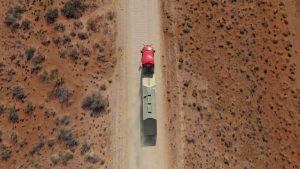
An Atlas truck equipped with the Kodiak Driver moves single‑lane on a private lease road, illustrating how driverless operations fit naturally into closed, oilfield-style routes.
Safety has been the paramount concern in deploying driverless trucks for Atlas’s operations. Each Kodiak-equipped truck comes with multiple layers of fail-safes. The vehicles have dual braking systems, redundant steering motors, and numerous onboard computers running in parallel – if one computer encounters an error, another can instantly take over.
The autonomous driving software itself constantly self-checks and can initiate a safe stop if something isn’t functioning as expected. Before going live, Kodiak completed a thorough safety assessment to prove that its system could handle all the known risks on Atlas’s routes. This included testing emergency braking on dirt roads, verifying that the trucks can detect and avoid unexpected obstacles such as wildlife or stalled vehicles, and programming strict adherence to the low-speed limits on leased roads.
Another safety element is geofencing. The Kodiak trucks are digitally restricted to operate only on pre-approved private routes within Atlas’s domain. They cannot roam onto public highways or unauthorized areas without explicit programming and regulatory approval.
This containment ensures the autonomous system only drives where it has been tested and where external traffic is minimal. Meanwhile, as mentioned, Kodiak’s remote operators serve as a constant safety net. If weather conditions deteriorate (e.g., a severe dust storm) or the truck’s sensors are obstructed by mud, the team can command the truck to pull over or adjust its route.
These measures have paid off – since the start of operations, there have been no serious incidents reported. In fact, Kodiak and Atlas have noted that the trucks drive “predictably and safely” even in conditions that are stressful for human drivers, thereby avoiding the risks of fatigue or human error.
For in-depth coverage of trucking technology advancements, check out our Trucking Tech articles.
24/7 Operations and Oilfield Integration
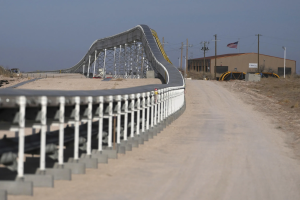
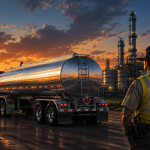
Atlas’s 42‑mile Dune Express conveyor carries frac sand across the Permian, feeding driverless trucks that handle the last‑mile haul to customer well pads.
One of the most significant advantages demonstrated by the Kodiak driverless trucks Permian program is the ability to operate nearly 24/7 on arduous routes. Human drivers in the oilfield must contend with long shifts on monotonous roads, often at night, under strict federal hours-of-service rules that limit how long they can drive without rest.
By contrast, an autonomous truck faces no such fatigue and can be productive for more hours of the day. Atlas Energy Solutions has capitalized on this by scheduling the robo-trucks to haul continuously to active well sites, loading and unloading in coordination with the drilling and fracking schedule.
The result is a more efficient logistics flow, with sand arriving on time consistently to keep fracking operations running without delays. This helps avoid costly downtime caused by waiting for sand deliveries.
To learn more about frac sand and its role in oilfield operations, read our Frac Sand stories.
Atlas’s CEO, John Turner, highlighted that integrating driverless trucks is a “significant advancement” for the company, enabling it to provide safe, reliable service at the best price for customers. Without salaries, overtime, or lodging to account for, each autonomous truck can potentially reduce per-ton delivery costs, especially as the system scales up.
Crucially, the driverless trucks are part of a broader automation push in Atlas’s operations. The Dune Express conveyor, for instance, already moves large volumes of sand without the need to truck it over that 42-mile distance, cutting down on road traffic.
The autonomous trucks then handle the last segment, often called the “last mile,” to the well pad. Because these segments are on private oilfield roads, Atlas has been able to deploy autonomy more quickly than on public highways. There is no need for special permits to run unmanned vehicles, and interactions with the general public are minimal.
This controlled environment effectively serves as a real-world laboratory for autonomous trucking. Kodiak’s team points out that lessons learned here (in maintenance, remote oversight, and system robustness) will inform their eventual deployment on open highways. Indeed, operating trucks continuously in the Permian’s dust and heat is giving Kodiak valuable data on how to improve its AI Driver for any domain.
What are the benefits of driverless trucks for oilfield operations?
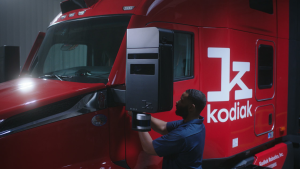
Kodiak’s mirror‑mounted SensorPods can be swapped in minutes, a key factor in keeping Atlas’s driverless oilfield trucks on the road in harsh Permian conditions.
Early results from the Permian Basin deployment highlight several clear benefits of autonomous oilfield trucks. Safety is a top benefit: removing human drivers from cabs eliminates the risk of fatigue-related accidents and exposure to hazardous conditions.
Oilfield driving can be perilous – narrow dirt roads, heavy equipment, and extreme weather have historically contributed to high accident rates. By letting the AI handle the driving, companies can reduce the likelihood of serious crashes and protect workers who would otherwise be in harm’s way.
Atlas’s driverless trucks have now covered thousands of miles with a strong safety record, validating this approach. Another benefit is addressing the chronic labor shortage in trucking. Qualified commercial drivers are in short supply nationwide, and remote oilfield locations are among the most demanding jobs to fill.
Autonomous trucks help fill that gap by taking on routes that are difficult to staff, freeing up human drivers for other routes or tasks that still require the human touch. Atlas’s management specifically noted that Kodiak’s technology helps with “challenges ranging from driver recruitment to demanding operating conditions” in their business.
Beyond safety and staffing, efficiency and productivity gains are significant. Each driverless truck can operate for many more hours per day than a driver could legally or physically manage, meaning fewer trucks may be needed to move the same amount of material.
The autonomous trucks maintain steady, optimized speeds and can platoon multiple loads reliably. This consistency can lower fuel consumption per trip and reduce wear and tear from sudden braking or acceleration.
Furthermore, by automating routine hauls, companies like Atlas can better allocate their human workforce to more skilled or value-added roles (for example, overseeing multiple autonomous vehicles or handling complex jobs at the well site). Over time, autonomous operation could also bring environmental benefits – smoother driving patterns and less idling could reduce emissions and dust generation on these routes.
For the tank transport and bulk hauling industry, the successful use of driverless trucks in the Permian Basin suggests a model for how automation might be rolled out in other private industrial settings, such as mines or large construction projects, before hitting public highways.
For broader trends and news in tank transport and bulk hauling, check out our Tank Transport coverage.
Addressing Labor Shortages and Enhancing Safety

Atlas is showing how a shipper can own the iron, subscribe to the ‘driver,’ and modernize oilfield logistics without becoming a tech company.
The tank transport sector, especially in oil and gas fields, has long grappled with labor and safety challenges. The Permian Basin boom has at times created a significant demand for truckers to haul water, oil, and sand, but the harsh conditions have led to high turnover.
By embracing autonomous trucks, companies like Atlas are directly tackling the driver shortage. Instead of scrambling to hire and retain drivers willing to work 12-hour shifts in remote deserts, Atlas can let technology shoulder the “dull, dirty, and dangerous” driving jobs that humans often avoid. This not only helps keep operations running smoothly when labor is scarce, but it also elevates existing employees – technicians and remote operators become the overseers of a high-tech fleet, rather than having all personnel out on the road.
Safety improvements are another compelling factor. The driverless trucks maintain strict adherence to speed limits and never resort to risky maneuvers, whereas human drivers might be under pressure. The autonomous system doesn’t get tired at 3 A.M. or distracted by the harsh sun and dust; its vigilance is unblinking.
Early data from these operations suggest that accident rates could decline as more autonomous vehicles enter the mix. Additionally, reducing human exposure to dangerous driving means fewer injuries and health issues (for instance, drivers no longer breathing in dust for hours or enduring extreme heat with broken air conditioning).
For industry professionals, these benefits translate to fewer disruptions, lower insurance costs, and a stronger safety culture – all critical for companies operating in hazardous environments.
Stay updated on efforts to address the truck driver shortage by following our Driver Shortage coverage.
Kodiak’s Driver and SensorPods are turning some of trucking’s dullest, dustiest routes into a proving ground for commercial autonomy.
Kodiak’s driverless trucks in the Permian Basin represent a meaningful leap forward for autonomous technology in heavy-duty trucking. In a remarkably short time, the venture progressed from a pilot run to an expanding fleet poised to reach dozens of vehicles.
Atlas Energy Solutions has ordered 100 autonomous trucks as part of its long-term strategy, underscoring the company’s confidence in the technology’s viability. As those trucks roll out through 2025 and 2026, the Permian oilfields may become the first locale to see autonomous trucking on an industrial scale.
The lessons learned here are expected to propel broader adoption – Kodiak is already working to adapt its self-driving system for highway freight routes and even military applications.
For the tank transport and trucking industry, this development is a case study in innovation meeting practical needs. It shows that, with the right conditions – private roads, supportive partners, and clear use cases – autonomous trucks can deliver tangible benefits in cost, safety, and efficiency.
While full driverless trucking on public highways is still on the horizon, the Permian Basin project offers a real-world glimpse of that future. In a highly impartial assessment, industry observers note that results so far have aligned with expectations or exceeded them, without hype.
Kodiak’s collaboration with Atlas has turned a challenging oilfield logistics operation into a proving ground for autonomy, potentially paving the way for similar deployments in other sectors of trucking technology.
To see how companies are optimizing logistics in trucking operations, explore our Logistics section.
Key Developments: Autonomous Oilfield Trucks in the Permian
- Atlas Energy Solutions has become the first shipper to own and operate autonomous oilfield trucks at a commercial scale, using Kodiak’s Driver-as-a-Service model.
- Kodiak’s trucks are running fully driverless on private lease roads in the Permian Basin, executing hundreds of frac sand deliveries with no human in the cab.
- The deployment is tightly integrated with Atlas’s Dune Express conveyor system, creating an automated mine-to-wellpad frac sand supply chain.
- Trucks are designed for near 24/7 operation, constrained primarily by maintenance and refueling rather than hours-of-service rules.
- Kodiak’s sixth-generation platform with modular SensorPods and redundant safety-critical systems is purpose-built to handle harsh, unmarked oilfield roads.
- The model shifts value from labor to technology, with implications for driver recruitment, training, and new remote-operator roles across tank and bulk fleets.
- For tank transport carriers, the project provides a working template for corridor-based autonomy on private and semi-private networks—potentially extendable to crude, NGL, produced water, and chemical shuttle lanes.
Industry Reading on Autonomous Oilfield Trucking
- Review the original partnership announcement, “Atlas Energy Solutions and Kodiak Announce Agreement for Autonomous Trucking Technology,” at Atlas Energy Solutions investor relations.
- See how the first 100 driverless frac sand loads were documented in “Kodiak Delivers Customer-Owned Autonomous RoboTrucks to Atlas Energy Solutions” on Atlas Energy’s news and events page.
- Read Kodiak’s own account of scaling the fleet in “Kodiak Announces Delivery of Two Additional Customer-Owned and -Operated Driverless Trucks to Atlas; Launches Driverless Service Up To 24/7” at Kodiak AI News.
- For a concise overview of the first commercial deployment, consult “Kodiak has made its first driverless truck deliveries to customer Atlas Energy” by Rebecca Bellan on TechCrunch.
- Examine the fleet-focused perspective in “Driverless Trucks Delivering in Permian Basin,” a feature on Heavy Duty Trucking’s TruckingInfo.
- Understand the broader regulatory context around self-driving commercial vehicles in FMCSA’s “Safe Integration of Automated Driving Systems-Equipped Commercial Motor Vehicles” notice at FMCSA.gov.
- For a high-level view of federal safety thinking on automation, explore NHTSA’s “Automated Vehicles for Safety” resource at NHTSA.gov.
- See how U.S. highway planners are preparing for automated freight corridors at FHWA’s “Automated Vehicle Activities and Resources” portal on Highways.dot.gov.
References:
- Atlas Energy Solutions & Kodiak. “Atlas Energy Solutions and Kodiak Announce Agreement for Autonomous Trucking Technology.” Press release, July 23, 2024. Available at Atlas Energy Solutions investor relations press release.
- Bellan, Rebecca. “Kodiak has made its first driverless truck deliveries to customer Atlas Energy.” TechCrunch, January 24, 2025. Available at the full article on TechCrunch.
- Heavy Duty Trucking (TruckingInfo). “Driverless Trucks Delivering in Permian Basin.” January 24, 2025. Available at the feature story on TruckingInfo.
- Kodiak Robotics. “Kodiak Announces Delivery of Two Additional Customer-Owned and -Operated Driverless Trucks to Atlas; Launches Driverless Service Up To 24/7.” Press release, June 10, 2025. Available at Kodiak Robotics news release.
- Trucking Dive. “Kodiak, Atlas Energy Solutions scale autonomous frac sand trucks in Texas.” February 18, 2025. Available for coverage on Trucking Dive.
- Atlas Energy Solutions. “Kodiak Delivers Customer-Owned Autonomous RoboTrucks to Atlas Energy Solutions, Completes 100 Loads of Proppant with First-Ever Driverless Commercial Semi-Truck Service.” Press release, January 24, 2025. Available at the Atlas Energy Solutions news release.
- ACT News. “Kodiak, Roush Deliver First Production-Line Autonomous Truck.” September 11, 2025. Available at ACT News coverage of Kodiak and Roush.