- Autonomous trucking expansion is entering a new phase as California opens a staged permitting path for heavy-duty AV testing and deployment.
- Kodiak AI’s growth shows the technology is moving beyond pilots, with freight lanes, industrial use cases, SensorPods, Bosch hardware integration, and advanced safety validation shaping the next commercial stage.
- Tank fleets should read the fine print: California’s current rules exclude bulk-liquid commercial motor vehicles requiring a tank endorsement, making tank autonomy a later and more complex frontier.
Autonomous Trucking Expansion: California Rules, Kodiak Growth, and the Technology Integration Behind the Next Freight Phase
California has opened a new door for autonomous trucking expansion. Still, the industry should be careful not to confuse that door with a blanket approval for every freight segment. The state’s updated autonomous vehicle rules create a permitting path for heavy-duty autonomous vehicle testing and deployment, while companies such as Kodiak AI are pushing the technology deeper into commercial freight, oilfield logistics, industrial operations, and hardware-scale partnerships.

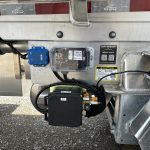
“The next test for autonomous trucks is not just whether they can drive, but whether their hardware can be maintained, replaced, and scaled like fleet equipment.” Kodiak SensorPod mounted on an autonomous truck platform. (Photo: Kodiak AI)
For tank fleets, the most important part of the story is not simply that driverless heavy-duty freight is moving forward. It is that the first wave is being shaped by technical limits, operating-domain restrictions, safety cases, emergency-response requirements, remote operations, and a clear California carveout affecting bulk-liquid commercial motor vehicles that require a tank endorsement.
That makes this moment more important than a typical regulatory update. Autonomous trucking expansion is entering a phase in which policy, software, sensors, manufacturing, fleet maintenance, insurance, customer-site integration, and public-safety procedures must work together. The technology is no longer judged only by whether a truck can stay in its lane on an interstate. It is being judged by whether it can become a dependable freight system. For more reporting, follow Tank Transport Trader’s related coverage on autonomous truck development.
“The strongest signal from California’s new rules is not unrestricted approval. It is the arrival of a more formal, safety-driven pathway for heavy-duty autonomous freight.”
Autonomous Trucking Expansion Moves From Rulemaking to Real Freight
The central development is California’s adoption of new autonomous vehicle regulations on April 28, 2026. The California Department of Motor Vehicles said the new rules cover both light-duty and heavy-duty vehicles, strengthen oversight and enforcement, and allow AV manufacturers to apply for permits to test and deploy heavy-duty autonomous vehicle technology on California roadways.
That is a major shift because California had previously prohibited the operation of autonomous vehicles with a gross vehicle weight rating of 10,001 pounds or more. With that barrier removed, the state is now creating a formal path for autonomous freight operations involving heavier commercial vehicles. Heavy-duty AVs still must stop at California Highway Patrol weigh stations and comply with applicable state and federal commercial motor vehicle requirements. For additional context on heavy-duty truck developments, browse related industry updates.
The move does not create an open-ended right to run driverless trucks anywhere in the state. California’s framework is staged. Manufacturers must begin with testing using a safety driver, move to driverless testing, and then apply for deployment. For heavy-duty vehicles, the DMV highlights 500,000 miles of testing at each phase, along with a structured safety case covering vehicle hardware, software, and operations.

“The autonomous trucking race is increasingly about industrial execution: sensors, actuation, redundancy, manufacturing, and repeatable installation.” Kodiak AI and Bosch autonomous trucking hardware collaboration image. (Photo: Kodiak AI/Bosch)
The adopted deployment text adds more detail. A manufacturer of autonomous heavy-duty commercial motor vehicles must test at least 500,000 autonomous miles with a valid drivered testing permit and at least 500,000 autonomous miles with a valid driverless testing permit. Some out-of-state miles may count, but California requires a portion of the miles to occur within the intended operational design domain in California, including driverless testing miles before deployment.
That matters because autonomous trucking expansion depends on more than a successful technology demonstration in one state, on one road, or under one set of weather conditions. California is asking companies to define where the automated driving system is intended to operate, demonstrate that it can operate safely in that domain, and provide data for regulators to review. For broader updates on California freight and policy developments, visit the California coverage hub.
The rulemaking also adds enforcement and emergency-response structure. Law enforcement agencies may issue a Notice of AV Noncompliance when an autonomous vehicle commits a moving violation. AV companies must respond to first-responder calls within 30 seconds. Emergency officials may issue electronic geofencing directives requiring AVs to clear active emergency zones. The DMV may also impose targeted restrictions on fleet size, location, speed, or weather conditions when necessary for public safety. For more on rules affecting carriers, see Tank Transport Trader’s transportation regulations coverage.
Those details are essential to the story. California is not merely approving a new class of freight automation. It is building a regulatory system around that automation.
How Autonomous Trucking Expansion Is Becoming a Technology Integration Test
The commercial phase of autonomous trucking expansion will be won or lost on integration.
A truck that can drive itself on a controlled stretch of highway is one achievement. A truck that can operate safely within a real freight network is a much harder product to build. The vehicle has to understand the road, but it also has to interact with dispatch systems, remote-assistance teams, customer yards, weigh stations, maintenance programs, law enforcement, emergency responders, telematics platforms, and inspection procedures.
That is where the technology story becomes more interesting for fleets. The industry is moving from “Can the truck drive?” to “Can the truck work?”
Kodiak AI’s recent growth provides a useful case study. The company says its Kodiak Driver combines AI-powered software with modular and vehicle-agnostic hardware. Its SensorPods house lidar, radar, and cameras for 360-degree coverage. Kodiak says those SensorPods are designed to be field-swappable in minutes, which points directly at uptime, maintenance, and daily fleet operations. For broader industry updates on automation, sensors, and connected systems, explore Tank Transport Trader’s trucking technology coverage.
“Autonomous freight is becoming a high-compute transportation system where software, simulation, sensors, and safety validation are part of the same operating stack.” NVIDIA DRIVE infrastructure for autonomous vehicle development and validation. (Image: NVIDIA)
That serviceability point is not a minor technical feature. Trucks operate in harsh environments. Sensors can be damaged, dirty, misaligned, or degraded. A commercial autonomous system must be built so technicians can inspect, service, and replace components without turning every repair into an engineering project. Modular hardware makes the autonomy stack more realistic for fleets by bringing the technology closer to standard maintenance practices.
Kodiak also says the Kodiak Driver is designed to work across vehicle platforms that meet minimum specifications. Its architecture includes safety compute and redundant power, steering, and braking. In practical terms, redundancy is what gives an autonomous truck a path to remain controlled when something fails. Without redundancy, a single failed component can become a safety-critical event.
The company’s hardware collaboration with Bosch adds another layer. Bosch began delivering critical hardware components to Kodiak as part of the companies’ autonomous driving technology collaboration. Kodiak said it was testing Bosch camera samples, integrating early prototype sensors into SensorPods, and evaluating vehicle actuation components. The companies said they are working toward a production-grade, redundant autonomous platform designed for high-volume deployment.
That speaks to a major transition in the expansion of autonomous trucking. The industry is moving from custom prototypes toward scalable systems. The question is not only whether sensors, compute, and software work. It is whether those components can be manufactured, installed, validated, supported, and repeated across a fleet.
Kodiak’s work with NVIDIA DRIVE Hyperion adds the compute side of the story. Kodiak said it intends to use NVIDIA’s DRIVE Hyperion architecture in next-generation driverless solutions. NVIDIA describes DRIVE Hyperion as a production-ready reference architecture and development platform for Level 4-ready autonomous vehicles, combining a standardized sensor suite, high-performance compute, and a software stack designed to reduce integration risk and shorten development cycles.
In trucking, the important thing is not that every truck application will look like a robotaxi platform. Autonomous freight is becoming a high-compute, software-defined transportation system. Advanced perception, sensor fusion, planning, generative AI, transformer models, vision-language models, simulation, cybersecurity, and over-the-air software management are all becoming part of the freight technology conversation.
A future autonomous tractor will be evaluated as a truck, a computer system, a safety-critical machine, and a connected fleet asset simultaneously.
“The next stage of autonomous trucking will not be decided by software alone. It will depend on whether sensors, compute, remote operations, maintenance, safety cases, and customer-site workflows can function as one freight system.”
California’s Staged Permit Path Raises the Bar for Autonomous Trucking Expansion
California’s new rules give carriers a preview of how regulators may evaluate heavy-duty AV deployment.
The state requires manufacturers to submit a comprehensive safety case, supported by evidence, that addresses functional safety, safety of the intended function, artificial intelligence safety, cybersecurity, and operational safety. That is a broad framework, and it matters because the risks of autonomous trucking are not limited to broken parts.
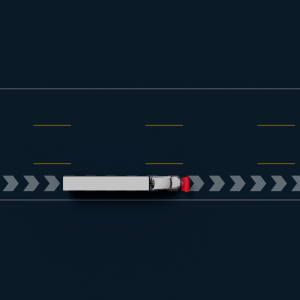
“A driverless truck has to see the road, predict what comes next, and fit into a freight system that still expects accountability at every mile.” Top-down visualization of Kodiak Driver path planning and lane awareness. (Image: Kodiak AI)
Functional safety asks what happens when components fail. Safety of the intended function asks whether the system can behave safely when all components are working, even when the driving situation is difficult or unexpected. AI safety asks whether the software can make reliable decisions. Cybersecurity asks whether the truck and supporting infrastructure can resist malicious interference. Operational safety asks whether the surrounding business process can support safe deployment.
That is exactly where tank fleets should pay attention. Autonomous trucking expansion is not only a vehicle issue. It is a systems issue.
California’s testing rules also require detailed descriptions of remote operations. Manufacturers must explain when remote assistance is triggered, what information is shared with remote assistants, which camera feeds and telematics data are available, how communication systems support real-time exchange, and the average and maximum latencies between the vehicle and remote personnel.
That is a practical requirement. A driverless truck will not operate in isolation. It will be supported by remote operations personnel who may assist with unusual situations, emergency response, vehicle immobilization, detours, inspection events, and communications with public safety officials.
The adopted text also addresses training for remote assistants. A manufacturer using remote assistance must describe how requests are assigned, how many agents must be available, how agents are trained and certified, and how tools are updated. Remote assistants must be able to immobilize the autonomous vehicle, follow instructions issued by first responders, bring the vehicle to a controlled stop, and comply with law enforcement during a traffic stop or inspection.
This is one of the most important integration points in the rule. A driverless truck must not simply navigate the highway. It must be inspectable, stoppable, reachable, and accountable.
For heavy-duty AVs, California’s first-responder interaction requirements go further. Manufacturers must describe how the automated driving system will recognize and respond to vehicle inspections, traffic control devices, pavement markings, zones designated for inspection, and directions from law enforcement or vehicle inspectors. They must also maintain a dedicated emergency response telephone line that can be answered within 30 seconds by personnel with situational awareness of the vehicle. For related coverage on carrier compliance and risk management, visit the fleet safety reporting section.
That is a significant operational burden, but it is also a sign of maturity. The state is treating the autonomous truck as part of a public-road operating ecosystem, not as a stand-alone technology product.
The same logic applies to maintenance. California requires manufacturers to describe procedures for tracking damage, conducting maintenance inspections, returning to service, and complying with maintenance schedules. For fleets, that means autonomous tractors will need traditional truck maintenance plus sensor, compute, software, communications, cybersecurity, and diagnostic checks.
A vehicle may be mechanically roadworthy but not autonomy-ready. A camera could be obstructed. A radar unit could be misaligned. A SensorPod could be damaged. A software version could be outside the approved configuration. A communications link could be degraded. A fault log could require review before the truck is allowed to operate in autonomous mode.
This is why autonomous trucking expansion should be understood as much a fleet-integration project as a driverless-vehicle project.
Kodiak’s System Shows How Autonomous Trucking Expansion Is Being Built
Kodiak’s recent commercial activity gives the California story a real-world technology thread.
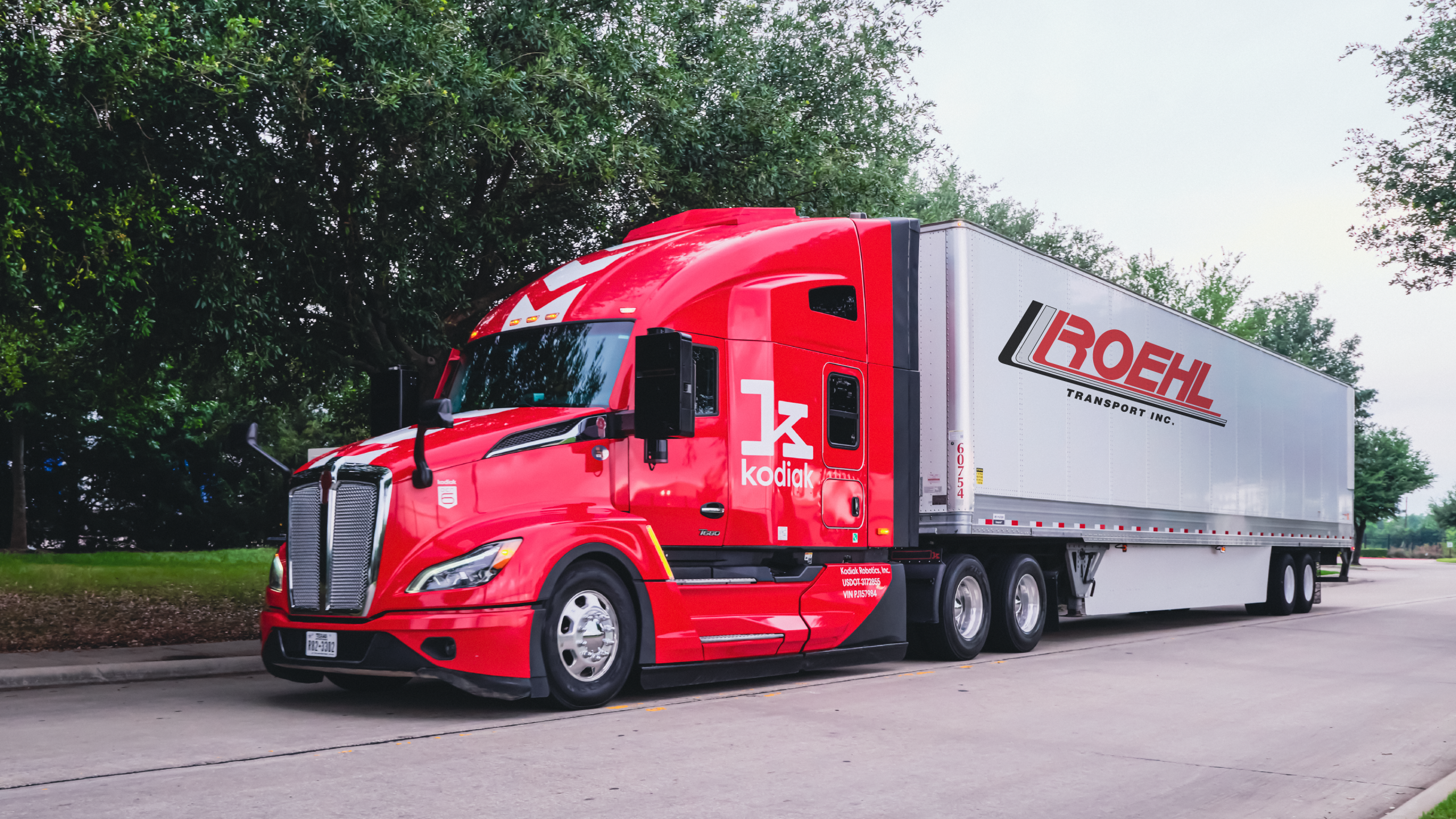
On May 7, 2026, Kodiak announced it had begun hauling freight autonomously with Roehl Transport between Dallas and Houston. The service started in April 2026, with Kodiak Driver-equipped trucks hauling freight on four round-trips per week for Roehl. Kodiak also said it continues to make progress toward closing its long-haul safety case and launching driverless operations by the end of 2026. For company-specific updates involving Kodiak and autonomous truck development, follow Tank Transport Trader’s Kodiak Robotics coverage.
The Roehl operation is notable for integrating autonomous technology into a traditional freight carrier’s network. Roehl is a Wisconsin-based truckload carrier with dry van, refrigerated, flatbed, curtainside, specialized, and dedicated services. That makes the partnership a useful example of how driverless technology may first enter mainstream freight: controlled routes, defined service frequency, known customer expectations, and a carrier with a safety-oriented operating culture. For more updates on self-driving freight, browse the self-driving coverage archive.
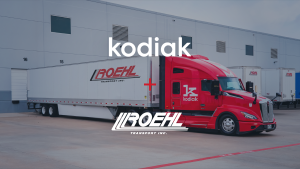
“Autonomous trucking is moving from isolated pilots into freight lanes where technology, safety, and carrier operations have to work together.” Kodiak Driver-equipped tractor paired with a Roehl Transport trailer. (Photo: Kodiak AI/Roehl Transport)
Kodiak also said its autonomous technology delivers freight between Dallas, Houston, Oklahoma City, Atlanta, and El Paso. Those lanes show how the company is building around the southern freight corridor, where weather, routing, freight density, and regulatory environments may be more favorable for early autonomous trucking operations than more complex national rollout scenarios.
At the same time, Kodiak is not only focused on interstate freight. The company said it had 20 self-driving trucks operated by Atlas Energy Solutions in West Texas’s Permian Basin by the end of 2025. That industrial deployment is important for tank and bulk readers because the Permian Basin is a demanding logistics environment with dust, vibration, rough roads, oilfield traffic, remote sites, and time-sensitive service requirements.
Kodiak has also announced a West Fraser pilot in Alberta, Canada, to use Kodiak Driver-equipped trucks in logging operations. The pilot is intended to transport timber from forest sites to a West Fraser processing facility. Kodiak framed the project as its expansion into the timber industry and its first international operations.
The West Fraser pilot matters because it shows autonomous trucking expansion moving beyond clean highway use cases. Logging roads can involve rough terrain, remote locations, uneven surfaces, exposure to weather, and low-speed industrial travel. That is not the same as hauling a dry van on Interstate 10 or Interstate 45. It is closer to the rugged operating environment many industrial carriers know well.
Kodiak’s discussion of “negative obstacles” adds another technical layer. The company uses that term to refer to voids or terrain features such as potholes, puddles, ruts, ditches, and similar below-grade hazards. Kodiak says its Traversability Framework identifies those negative obstacles, assesses their physical dimensions, and helps the Kodiak Driver decide whether to drive through, nudge around, straddle, slow down, or stop for further evaluation.
That matters because industrial freight does not always happen on ideal pavement. Oilfield lease roads, forest roads, construction access roads, and remote industrial lanes can include conditions that confuse a system optimized only for lane lines and common highway obstacles. For a truck to operate commercially in those environments, autonomy must become more adaptive than a simple stop-or-go planner.
Kodiak’s safety validation work also deserves attention. The company has described its use of Probabilistic Risk Assessment to estimate expected collision rates, identify scenarios and failure modes that dominate risk, and compare outputs against human performance baselines. Kodiak has also described BreakPoint, an internal AI validation tool designed to identify edge cases and failure modes in simulations.
That is important because real-world miles alone cannot expose every rare scenario. A truck could drive hundreds of thousands of miles without encountering the exact combination of poor visibility, unusual construction markings, stopped traffic, sensor ambiguity, road debris, and erratic road-user behavior that matters most. Simulation and risk modeling help developers search for low-frequency, high-consequence events before commercial deployment.
For fleets, this is the technical core of autonomous trucking expansion. The industry is trying to prove that driverless trucks can handle both routine freight and rare edge cases. The technology must be measurable, repeatable, diagnosable, and supportable.
What Does Autonomous Trucking Expansion Mean for Tank Fleets?
For TankTransport readers, the most important California detail is the exclusion.
The adopted California testing text excludes commercial motor vehicles used to transport bulk liquids requiring a tank endorsement. That means California’s new heavy-duty AV pathway should not be framed as approval of autonomous fuel tankers, chemical tankers, or other bulk-liquid tank operations that require a tank endorsement.
This distinction matters. Autonomous trucking expansion is real, but it is not uniform.
“California is opening a heavy-duty autonomous freight path, but the current rules do not put fuel tankers, chemical tankers, or other bulk-liquid tank vehicles requiring a tank endorsement into the first deployment lane.”
Dry van, refrigerated, dedicated, some flatbed, and certain industrial freight applications may move faster than liquid bulk. Tank operations bring a different risk profile. Liquid surge, rollover exposure, cargo movement, hazmat response, loading and unloading complexity, terminal procedures, rack operations, product compatibility, contamination risk, spill consequences, and specialized driver qualifications all make tank automation more complex than many linehaul freight applications. For coverage focused on liquid and dry bulk operations, visit Tank Transport Trader’s Tank Transport updates.
That does not mean tank autonomy is impossible. It means regulators appear to be treating bulk-liquid tank operations as a later and harder frontier.
That is a reasonable position. A driverless truck hauling dry freight may face significant road safety challenges, but a driverless bulk-liquid vehicle adds cargo behavior and cargo consequence to the problem. A liquid load can shift. A tanker may require special handling at curves, grades, stops, and customer sites. The loading and unloading process is often more operationally sensitive than a dock-to-dock dry van move.
“For industrial freight, autonomy has to do more than follow lane lines — it has to read the road surface, manage uncertainty, and keep the mission moving.” Kodiak Driver-equipped vehicle encountering a negative obstacle. (Image: Kodiak AI)
For chemical and fuel fleets, the most difficult integration challenge may not be highway driving. It may be the complete operating cycle.
A tank operation can involve terminal access, identity verification, product selection, compartment management, grounding, vapor recovery, hose connections, pump operation, seal verification, sampling, paperwork, spill prevention, emergency shutdown procedures, and site-specific safety rules. Even if an autonomous tractor can safely travel between two points, it does not automatically solve those customer-site and terminal-interface tasks.
That is why the California carveout should be treated as a signal. Regulators are willing to move heavy-duty autonomous freight forward, but they are not treating every segment of trucking as equivalent.
For tank fleets, the better question is not “Are driverless tankers approved?” The answer, under the current California pathway, is no for bulk-liquid commercial motor vehicles requiring a tank endorsement. The better question is: “Which pieces of the autonomous freight system will mature now and later affect tank operations?”
The answer includes remote operations, safety cases, sensor diagnostics, fleet maintenance, emergency response, cybersecurity, route design, shipper expectations, and insurance models.
How Should Fleets Prepare for Autonomous Trucking Expansion?
Fleets should treat autonomous trucking expansion as a developing operating model, not simply a future equipment purchase.
The first step is to separate highway driving from the rest of the job. Many truck operations look simple on a map but complex in the field. A route may include a clean interstate segment, a difficult plant entrance, an unmarked yard, a congested terminal, a narrow customer site, or a difficult loading process. Autonomous systems will likely enter freight first, where the operating domain is repeatable and controllable.
That means lane structure matters. Autonomous freight is more likely to develop first on consistent routes with predictable highway miles, stable customer locations, clear operating procedures, defined handoff points, and manageable weather patterns. Tank operations with variable customer sites, hazmat-sensitive routes, or complex delivery procedures may take longer.
The second step is to examine maintenance readiness. Autonomous vehicles add new inspection categories. Cameras, radar, lidar, compute modules, wiring, power redundancy, brake and steering actuation, communications systems, and cybersecurity protections become part of the safety envelope. Fleet maintenance teams will need training, diagnostic tools, replacement components, and clear return-to-service standards.
The third step is to understand remote operations. California’s rules make clear that remote support is not a casual add-on. It is part of the safety case. Fleets should expect future autonomous freight operations to include remote-assistance centers, incident response protocols, first-responder communication plans, geofencing procedures, and documented training requirements.
The fourth step is to watch customer-site integration. Kodiak CEO Don Burnette has emphasized that making the truck drive itself is only part of the battle; the harder commercial problem is making the vehicle work inside real customer operations. That includes uptime, utilization, ownership, cargo workflow, pickups, drop-offs, monitoring, and communication tools.
That point is especially relevant for tank fleets. A dry van operation can often separate linehaul driving from dock work. A tank fleet may not have that luxury. The driver often plays a central role in loading and unloading, safety checks, customer interactions, product handling, and exception management. Replacing or automating the driving task does not automatically replace the full tank-driver role.
The fifth step is to monitor regulation by vehicle type and cargo type. California’s bulk-liquid exclusion should be watched closely because future rule changes may either maintain that separation or create more specialized requirements for tank applications. Other states may choose different approaches, and a federal framework could eventually change the balance between state-by-state rules and national deployment standards.
Kodiak’s support for the BUILD America 250 Act language shows that the autonomous trucking industry wants greater regulatory certainty. The company described the bill as a potential federal policy framework for autonomous truck deployment. Whether federal legislation ultimately moves forward as proposed or changes during the legislative process, fleets should expect the policy conversation to continue.
The Integration Checklist for Autonomous Trucking Expansion
Fleet leaders should begin with a practical checklist.
- Which lanes are repetitive, highway-heavy, and operationally predictable?
- Which routes involve hazmat, bulk liquid, tank endorsements, surge-sensitive cargo, or specialized unloading?
- Which customer sites require a driver to perform non-driving work?
- Which maintenance facilities could support sensor inspection, calibration, diagnostics, and software-controlled systems?
- Which dispatch and telematics platforms could integrate with autonomous operations?
- Which emergency-response agencies would need pre-planning?
- Which insurers, shippers, and regulators would require data before accepting autonomous service?
- Which parts of the driver’s job are driving tasks, and which are cargo-handling, safety, compliance, or customer-service tasks?
Those questions matter because autonomous trucking expansion will not unfold as a single, uniform event. It will arrive lane by lane, operating domain by operating domain, customer by customer, and cargo type by cargo type. For more reporting on autonomous vehicle deployment and policy, explore Tank Transport Trader’s AV coverage.
Tank fleets should also watch industrial deployments closely. Kodiak’s Permian Basin work and West Fraser pilot may be more relevant to tank transport than a simple dry-van highway route because many tank fleets operate near refineries, terminals, chemical plants, oilfields, mines, and remote industrial sites. Lessons learned in dusty, rough, remote environments may eventually influence future automation models for adjacent bulk and industrial freight.
The near-term impact may come indirectly. If autonomous dry freight improves utilization or changes shipper expectations for lane pricing, delivery windows, or overnight operations, tank carriers may feel competitive pressure before they face direct tanker automation. If autonomous systems become common in industrial yards or private-road environments, tank carriers may also see changes in how facilities manage traffic, loading windows, and site safety.
For now, the strongest conclusion is measured. The technology is advancing. The regulatory path is becoming more formal. The integration work is getting more serious. But bulk-liquid tank fleets are not in the first lane for California deployment.
Bottom Line: Autonomous Trucking Expansion Is Real, but Tank Autonomy Is Later
The biggest story is not that California has approved driverless trucks in a simple, unrestricted sense. It has not.

“Some of the most important lessons for future tank and bulk fleets may come from autonomy working in rough, remote, industrial environments first.” Kodiak AI and West Fraser’s autonomous timber-hauling pilot image. (Photo: Kodiak AI/West Fraser)
The bigger story is that autonomous trucking is entering a more formal commercial phase. California has created a staged pathway for heavy-duty AV testing and deployment while adding oversight, enforcement, emergency response, remote operations, data reporting, and safety case requirements. Kodiak AI is showing how companies are trying to turn autonomy into an integrated freight product through commercial lanes, modular hardware, industrial deployments, high-performance compute, safety modeling, and manufacturing partnerships.
For general freight, this points toward a future in which driverless technology may gradually move from pilots into defined commercial corridors. For industrial freight, Kodiak’s oilfield and logging work suggests autonomy may also grow in controlled, rugged, nontraditional environments. For tank fleets, the message is more cautious: watch the technology closely, but read the fine print.
California’s current pathway excludes commercial motor vehicles used to transport bulk liquids requiring a tank endorsement. That makes it inaccurate to describe the rule as approval for driverless tankers. It is more accurate to say California is opening a heavy-duty autonomous freight path while keeping bulk-liquid tank operations outside the first wave.
The next phase will be about integration. Can autonomous trucks be maintained at scale? Can sensors and compute survive daily freight use? Can remote operations support real-world exceptions? Can safety cases satisfy regulators and insurers? Can customer yards, terminals, weigh stations, law enforcement, and emergency responders interact safely with driverless vehicles? Can the technology work when the job is dirty, dull, dangerous, repetitive, or remote?
Those are the questions that will determine how far autonomous trucking expansion reaches.
For tank transport, the answer is not immediate driverless bulk-liquid hauling. The answer is preparation. The rules, hardware, remote operations models, inspection procedures, safety cases, and industrial deployments being built now may become the foundation for later phases of tank automation. Fleets that understand that foundation early will be better positioned when regulators, shippers, technology providers, and insurers begin asking harder questions about what comes next.
Key Developments: Autonomous Trucking Expansion, California Rules, and Kodiak’s Integration Push
- California created a formal heavy-duty AV pathway. The state’s updated rules allow manufacturers to apply for permits to test and deploy heavy-duty autonomous vehicle technology on public roads.
- The process is staged, not unrestricted. Manufacturers must begin with safety-driver testing, move to driverless testing, and then seek deployment approval once they meet mileage, reporting, and safety-case requirements.
- Heavy-duty AVs remain subject to commercial vehicle rules. Driverless trucks must still comply with state and federal commercial motor vehicle requirements, including CHP weigh station obligations.
- Oversight and emergency-response rules are central to the framework. California added tools for AV noncompliance notices, remote-operations requirements, first-responder communication, and emergency geofencing.
- Bulk-liquid tank operations are excluded from the first wave. Commercial motor vehicles used to transport bulk liquids requiring a tank endorsement are not included in California’s current testing and deployment approval path.
- Kodiak AI is expanding beyond early demonstrations. The company has added Roehl Transport freight activity, Permian Basin industrial operations with Atlas Energy Solutions, and a West Fraser logging pilot in Alberta.
- Technology integration is becoming the real test. Kodiak’s SensorPods, redundant safety systems, collaboration with Bosch on hardware, NVIDIA DRIVE Hyperion plans, and simulation-based safety validation show that autonomous trucking is becoming a full fleet-integration project.
- Tank fleets should monitor the technology now, even if deployment comes later. Remote operations, sensor maintenance, safety cases, route design, customer-site integration, and regulatory carveouts will shape how autonomous freight eventually reaches more specialized segments.
External Resources: Autonomous Trucking Rules, Kodiak Growth, and AV Technology Integration
- Understand California’s updated heavy-duty autonomous vehicle rules through the official California DMV autonomous vehicle regulations announcement.
- Review the adopted California testing language in California DMV Article 3.7, Testing of Autonomous Vehicles.
- Review the adopted California deployment requirements in California DMV Article 3.8, Deployment of Autonomous Vehicles.
- Learn more about Kodiak’s freight activity with Roehl Transport in Kodiak AI’s autonomous freight hauling announcement.
- Explore Kodiak’s broader autonomous truck platform through the official Kodiak Driver technology overview.
- Read about Kodiak’s hardware-scaling work with Bosch in Kodiak AI’s Bosch autonomous trucking hardware update.
- See how Kodiak is extending autonomous operations into industrial applications through its West Fraser autonomous timber hauling pilot.
- Review Kodiak’s position on federal autonomous truck policy in its BUILD America 250 Act statement.
- Learn how Kodiak is using advanced compute for future autonomous driving systems in Kodiak AI’s NVIDIA DRIVE Hyperion collaboration update.
- Explore the technology platform behind high-performance autonomous vehicle development at NVIDIA DRIVE Hyperion.
- Review federal crash-data resources for large trucks and buses through FMCSA Large Truck and Bus Crash Facts.
- For a wire-service summary of California’s heavy-duty AV rule change, see Reuters’ report on California heavy-duty autonomous vehicle rules.
- For additional context on Kodiak’s commercial integration strategy, read The Verge interview on Kodiak’s self-driving truck operations.