- Toyota hydrogen trucks are shifting the story from fuel-cell research to dedicated Class 8 freight operations.
- A Cellcentric stake would put Toyota beside Daimler Truck and Volvo Group in heavy-duty fuel-cell system development.
- Southern California hydrogen refueling, Hyroad Energy trucks, and Toyota logistics could test whether controlled freight lanes can make hydrogen practical.
Toyota Hydrogen Trucks Face a Critical 2026 Test After Bold Class 8 Moves

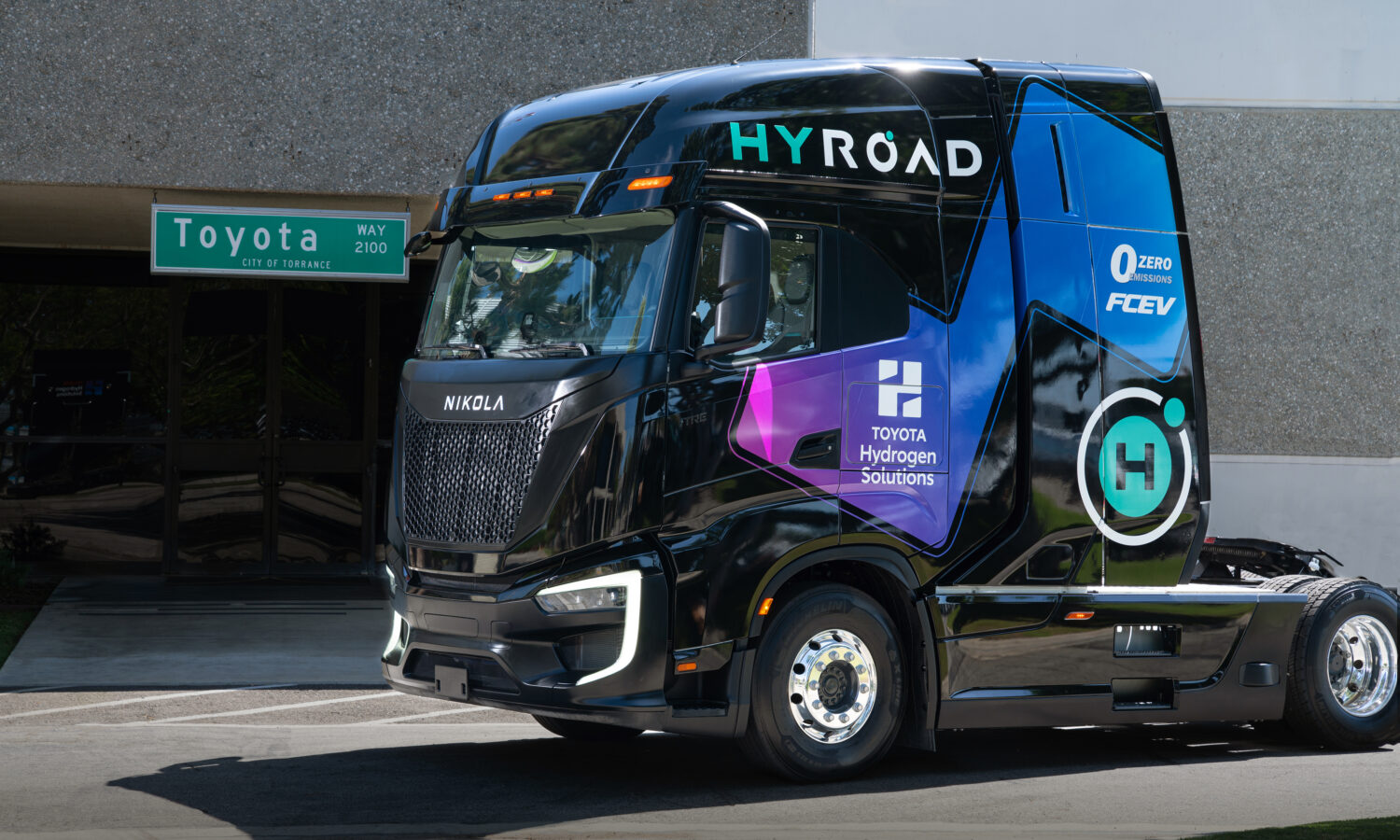
A Hyroad Energy Class 8 hydrogen fuel-cell truck co-branded with Toyota Hydrogen Solutions. (Toyota Motor North America)
Toyota hydrogen trucks are beginning to look less like a technology showcase and more like a freight strategy built around fuel-cell scale, dedicated logistics, and controlled hydrogen refueling. Toyota’s latest moves put the company on two sides of the heavy-duty hydrogen equation: the manufacturing side, where it intends to join Daimler Truck and Volvo Group as an equal shareholder in Cellcentric, and the operating side, where Toyota Motor North America and Hyroad Energy have announced plans to deploy 40 hydrogen fuel-cell Class 8 commercial trucks in Southern California.
”Toyota’s hydrogen strategy becomes most tangible when fuel-cell technology is tied to real Class 8 freight equipment and dedicated fueling plans.”
That combination matters for tank transport, bulk freight, and fleet logistics because hydrogen trucking is not only a vehicle story. It is a story about fuel supply, storage, compression, dispensing, permitting, routing, and maintenance. A fuel-cell tractor can only be as useful as the hydrogen system around it, and Toyota’s latest activity now reads as a controlled-lane freight model rather than a broad claim that hydrogen is ready to replace diesel in every over-the-road application.
”A fuel-cell tractor can only be as useful as the hydrogen system around it, and Toyota’s latest activity now reads as a controlled-lane freight model rather than a broad claim that hydrogen is ready to replace diesel in every over-the-road application.”
Why Toyota hydrogen trucks now read as a freight strategy instead of a tech story
Toyota has spent decades developing fuel-cell technology, but the commercial trucking opportunity is different from the passenger-vehicle hydrogen market. In passenger vehicles, hydrogen has struggled due to limited public refueling stations, high fuel prices, and the rapid rise of battery-electric cars. Heavy-duty freight presents a narrower but potentially more realistic opening because Class 8 trucks often run repeatable freight lanes, return to depots, ports, distribution centers, or fixed customer locations, and can be planned around known fuel demand.
”The commercial case for hydrogen depends on fuel-cell systems that can move from demonstration hardware to certified, supportable equipment.”
That does not mean hydrogen wins automatically. It means hydrogen has a more plausible starting point when the fleet, fueling site, service support, and duty cycle are managed together. Toyota’s strategy appears to be built around that logic. The Cellcentric move addresses fuel-cell scale and manufacturing cost. The Hyroad agreement addresses real trucks, maintenance support, fleet data, software, and fuel supply. The Ontario, California refueling project addresses one of the biggest questions in hydrogen trucking: where the trucks will actually fuel.

Toyota Hydrogen Solutions commercial fuel-cell unit shown after achieving key ANSI/CSA certifications. (Toyota Motor North America)
The important point is not that Toyota hydrogen trucks are about to displace diesel tank fleets. The more grounded takeaway is that hydrogen may first prove itself in dedicated Class 8 lanes before it becomes relevant to more complicated tank, hazmat, liquid-bulk, or long-haul freight operations. Those applications have unique payload, safety, route, customer, and equipment requirements, and a hydrogen tractor that works in a controlled parts-distribution lane still has to prove range, uptime, fuel access, maintenance support, and economic performance before it becomes a broad freight solution.
Toyota’s recent moves show a more serious commercial structure than a one-off demonstration. The company is pairing fuel-cell system development with an actual logistics use case, and that is what makes the story relevant. Hydrogen trucking has often been discussed in broad terms. Still, Toyota’s activity points toward a more specific question: can hydrogen work first in high-utilization freight lanes where the route, depot, service model, and fuel supply are tightly controlled?
How Toyota hydrogen trucks connect Cellcentric scale with California freight operations
The Cellcentric development is the global manufacturing side of the story. Daimler Truck, Volvo Group, Cellcentric, and Toyota signed a nonbinding memorandum of understanding for Toyota to enter the joint venture as an equal shareholder beside Daimler Truck and Volvo Group. The company’s stated objective is to develop, produce, and commercialize fuel-cell systems for heavy-duty commercial vehicles and similar high-demand applications.
Toyota’s role would not simply be financial. Toyota and Cellcentric intend to jointly manage the development and production of fuel-cell unit cells, along with related system architecture and control elements. That is significant because the fuel-cell unit cell is a core component of the system. Daimler Truck and Volvo Group bring deep commercial-vehicle expertise, Toyota brings long-running fuel-cell development and production knowledge, and Cellcentric is positioned as the shared center for heavy-duty fuel-cell systems.
The arrangement remains important even though the publicly disclosed transaction was still framed as nonbinding and subject to final agreements, approvals, and regulatory review. For fleets, that distinction matters. Toyota has signaled its intent, but the Cellcentric ownership structure should be described carefully until the final transaction is completed. The timing also matters because Cellcentric has moved forward with its next-generation BZA375 fuel-cell system, which it presents as a heavy-duty platform for long-haul trucks and other demanding applications.
Cellcentric says the BZA375 is designed around heavy-duty operating requirements, including sustained power, efficiency, durability, integration, and total cost of ownership. Its stated specifications include up to 375 kW of constant net power from a single system package, less than 500 kilograms of system weight, and a target life of 25,000 operating hours. Cellcentric also said the system is designed to reduce fuel consumption compared with its previous BZA150 system and to fit more easily into vehicle architectures that were originally designed around large diesel engines.
”The freight test is not just whether a hydrogen truck can run, but whether the fuel-cell system behind it can scale, last and be supported like commercial equipment.”
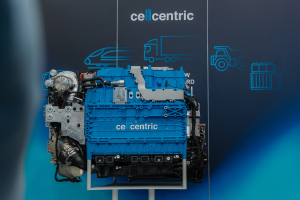
The Cellcentric BZA375 fuel-cell system was displayed for heavy-duty commercial vehicle applications. (cellcentric)
For fleet operators, those details are more than engineering trivia. They point directly to the questions that determine whether hydrogen tractors become useful freight equipment: whether the system can deliver the power needed for heavy loads, whether it can last long enough, whether it can be integrated without excessive weight penalties, whether the cooling package can be managed, whether the system can be serviced, and whether it can be produced at enough scale to reduce cost. Toyota’s Cellcentric move suggests the company wants to help answer those questions through a larger industrial platform rather than a Toyota-only fuel-cell path.
That fits the commercial vehicle market, where scale, supplier networks, service support, and standardization often matter as much as the underlying powertrain technology. A truck powertrain does not succeed only because it works in a test environment. It succeeds when it can be built, installed, fueled, repaired, and supported through the demanding rhythms of commercial freight.
What does the Cellcentric investment mean for Toyota hydrogen trucks?
The Cellcentric plan matters because hydrogen trucking has been held back by problems that are difficult for any single company to solve on its own. Fuel-cell systems remain expensive; durability requirements for Class 8 work are demanding; truck builders need predictable component supply; fleets need parts availability and service support; and hydrogen suppliers need sufficient vehicle demand to justify fueling investment.
Cellcentric is meant to concentrate development and production for heavy-duty fuel-cell systems. If Toyota becomes an equal shareholder, the venture would combine Toyota’s fuel-cell knowledge with the truck-market experience of Daimler Truck and Volvo Group. That does not mean Daimler Truck, Volvo, and Toyota will stop competing in other areas. The disclosed plan says the companies would remain independent competitors outside the Cellcentric collaboration.
”Toyota’s Cellcentric move places hydrogen trucking inside a wider heavy-duty fuel-cell platform strategy.”
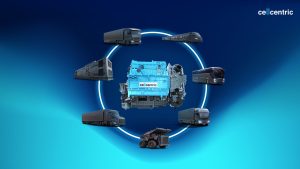
The BZA375 fuel-cell system is shown for heavy-duty applications, including trucks, rail, coaches, and industrial equipment. (cellcentric)
That structure is important because it suggests the companies see fuel-cell system scale as a shared bottleneck, even while they continue to compete in trucks, commercial vehicles, and mobility services. For Toyota hydrogen trucks, the practical result could be a stronger path from fuel-cell technology to fleet-grade product. The best-case version is not simply a more advanced fuel cell. It is a fuel-cell system supported by industrial production, validated duty cycles, OEM integration, and service infrastructure.
The harder version is that fuel-cell cost, hydrogen price, and infrastructure constraints remain stubborn, even with larger partners involved. Both possibilities need to be kept in the story. This is why the Toyota hydrogen truck strategy should be described as promising but cautious. It is promising because Toyota, Daimler Truck, and Volvo Group are large enough to influence the heavy-duty fuel-cell supply chain. It is cautious because the commercialization of hydrogen trucks has already experienced significant volatility, including Nikola’s bankruptcy. This company had been one of the most visible names in hydrogen and battery-electric Class 8 trucking.
The market is not short on ambition. It is short on proven economics at scale. Toyota’s approach appears to acknowledge that reality by linking technology development to dedicated freight use and controlled fueling.
Why Southern California gives Toyota hydrogen trucks a controlled-lane test
The Hyroad Energy agreement gives Toyota’s hydrogen activity a U.S. fleet deployment angle. Hyroad announced a definitive agreement with Toyota Motor North America to deploy 40 hydrogen fuel-cell Class 8 commercial trucks in Southern California. Under that agreement, Hyroad will provide the trucks, maintenance, data, and software services for Toyota logistics operations. At the same time, Toyota will supply hydrogen fuel through its own refueling infrastructure under development in Ontario, California.
That structure is different from asking fleets to buy trucks and then figure out fuel, service, uptime, data systems, and residual risk on their own. Hyroad describes its model as a truck-as-a-service and pay-per-mile approach. The company says it bundles vehicles, hydrogen supply, fueling infrastructure, maintenance support, and fleet management software. That model is especially relevant in hydrogen trucking because early adopters face a more complicated operating environment than diesel fleets.
A diesel fleet has an extensive fueling network, broad maintenance familiarity, and mature parts channels. A hydrogen fleet does not. A bundled service model can reduce friction by providing the fleet with a single operating framework rather than several disconnected vendors. Toyota’s side of the arrangement is also significant because it places Toyota hydrogen trucks inside logistics work that can be planned, measured, and refined.
Southern California is one of the most important freight regions in North America, with dense port, warehouse, rail, distribution, and regional freight activity. It also has air-quality pressure and a policy environment that continues to push zero-emission freight equipment. That makes it a logical region for hydrogen fuel-cell trucks, but not an easy one. Traffic, port cycles, driver schedules, high equipment utilization, and station reliability all matter. A truck may have a theoretical range, but fleet managers need uptime, predictable fueling, and service support that works on freight schedules.
”Toyota’s hydrogen work is increasingly centered on California freight realities: infrastructure, fleet operations and commercial fuel-cell deployment.”

Toyota’s North American Hydrogen Headquarters, known as H2HQ, is in Gardena, California. (Toyota Motor North America)
The Hyroad-Toyota agreement puts the hydrogen model into that real-world operating context. Hyroad’s announcement said a fuel-cell Class 8 truck can carry up to 70 kilograms of hydrogen, fill in about 15 to 20 minutes, and deliver an approximate driving range of up to 500 miles between fill-ups. Those numbers are attractive because they resemble the operational language fleets already understand: range, refueling time, and utilization.
But they still need to be proven in daily freight work. Range depends on load, terrain, speed, route, weather, driver behavior, and accessory loads. Fueling time depends on station capacity, compression, temperature management, dispenser availability, and maintenance. Uptime depends on both the truck and the fueling site. That is why the Ontario fueling project may be as important as the trucks themselves.
Hydrogen truck pilots often fail to scale when fueling access is treated as a secondary issue. Toyota’s model appears to place fueling at the center of deployment from the outset. That is exactly where the tank transport angle comes in. Hydrogen adoption requires a supply chain. It requires hydrogen production or procurement, transportation, storage, compression, dispensing, site safety systems, permitting, maintenance, and emergency planning.
For those in tank transport and bulk logistics, that part of the story may matter even before they consider buying hydrogen tractors. Hydrogen trucking is also hydrogen logistics.
What should tank transport and bulk freight fleets watch?
Tank fleets should watch Toyota hydrogen trucks less as a near-term replacement claim and more as an infrastructure signal. The first question is whether the dedicated-lane model works. If Toyota and Hyroad can keep 40 hydrogen fuel-cell Class 8 trucks operating in Southern California logistics with reliable refueling, predictable maintenance, and useful fleet data, the model becomes more credible. If the trucks experience fueling outages, high hydrogen costs, slow service response, or low utilization, the model will remain limited.
The second question is whether the Ontario infrastructure becomes a fleet asset beyond Toyota’s own needs. Hydrogen fueling economics improve when a station has predictable, high-volume demand. A station that supports a single fleet may be easier to control. A station that supports multiple compatible freight customers can improve throughput, but also adds scheduling, access, safety, and commercial complexity.
The third question is whether hydrogen supply can be reliable and cost-competitive. Hydrogen can be produced from different pathways, including natural gas-based production and electrolysis. The carbon profile depends heavily on how the hydrogen is produced, transported, and dispensed. That matters for fleets because customers, regulators, and shippers may care not only about tailpipe emissions but also about lifecycle emissions.
The fourth question is whether hydrogen truck service networks are mature. Fuel cells, high-pressure storage systems, hydrogen sensors, valves, thermal management, and electric drivetrains require a different service ecosystem from diesel powertrains. The Hyroad model addresses part of that by bundling maintenance and support. Still, the broader market will need trained technicians, parts supply, diagnostic tools, safety procedures, and recovery plans for trucks in service.
The fifth question is whether the model fits tank, hazmat, and liquid-bulk duty cycles. Tank transport often has specialized trailer requirements, weight sensitivity, route constraints, customer-site safety rules, and hazmat compliance obligations. A hydrogen tractor may be suitable in some dedicated return-to-base bulk operations before it is practical for more variable routes. For example, hydrogen could make more sense first in port drayage, plant-to-plant moves, private fleet logistics, parts distribution, dedicated regional freight, and industrial corridors. It is less convincing as a general national diesel substitute until public or semi-public hydrogen refueling is broader, more reliable, and more affordable.
Where the business case still has to prove itself
Hydrogen trucks have several practical advantages on paper. They can refuel faster than many battery-electric trucks charge. They may avoid the weight and charging constraints associated with very large battery packs in some long-range or high-utilization applications. They produce no tailpipe carbon emissions, with water vapor as the local emission from the fuel-cell process. They also fit operational models where trucks run repeatable routes from known terminals.
But the unresolved challenges remain significant. Hydrogen fuel is expensive in many markets. Heavy-duty public hydrogen refueling stations remain limited. Station reliability has been a recurring concern in hydrogen mobility. Permitting and construction can take time. Vehicle acquisition costs are high. Residual values are uncertain. Maintenance networks are still maturing. The source of hydrogen also matters because a truck with zero tailpipe emissions can still be tied to upstream emissions if the hydrogen is produced from fossil fuels without carbon capture. Renewable hydrogen can improve the emissions profile, but it also introduces questions about electricity cost, electrolyzer availability, production scale, and delivery logistics.
That makes hydrogen a system decision, not just a truck decision. Toyota’s strategy appears to recognize that. The Cellcentric side works on fuel-cell systems. The Hyroad side works on fleet deployment, maintenance, data, and software. The Ontario infrastructure addresses fueling. The Southern California freight setting provides a use case where route control and station planning may reduce adoption risk.
The strongest interpretation is that Toyota is not trying to prove hydrogen works everywhere. It is trying to prove that hydrogen can work in a specific setting: heavy-duty freight lanes where fueling, routes, and operations can be controlled. That is a more realistic test, and it fits the broader pattern in hydrogen trucking. The market has moved away from broad promises and toward operationally defined deployments. That is why port drayage, regional freight, dedicated logistics, and return-to-base operations remain the most credible early applications.
”The strongest interpretation is that Toyota is not trying to prove hydrogen works everywhere. It is trying to prove hydrogen can work somewhere specific: heavy-duty freight lanes where fueling, routes and operations can be controlled.”
Toyota hydrogen trucks may eventually become part of a larger zero-emission freight mix, but the first test is narrower. Can they move freight reliably, at acceptable cost, with enough fuel availability and service support to satisfy fleet operators? That is the question.
How Toyota hydrogen trucks fit fuel logistics, safety, and station planning
For the industry players, the hydrogen station is not just a backdrop. It is central to the story. A hydrogen refueling site for Class 8 trucks must handle high fuel volumes, fast fills, heavy-vehicle access, pressure management, cooling, safety setbacks, leak detection, emergency systems, and operational redundancy. Hydrogen can be stored and distributed in different forms, including compressed gas and liquid hydrogen, and each pathway carries different equipment requirements, cost profiles, and safety considerations.
Heavy-duty stations also have different needs than passenger-car stations. A Class 8 truck may take far more hydrogen per fill than a light-duty fuel-cell car. That means station throughput, storage capacity, and compression systems must be planned for freight-scale demand. Hyroad’s model points in that direction. The company says it focuses on hydrogen-powered Class 8 trucks, fueling stations near trucking hubs and arteries, and a simplified pay-per-mile model.
That approach makes sense because freight does not tolerate fragile infrastructure. If a truck misses its fueling window, the issue becomes a customer service problem. If a station goes down, the fleet needs contingency plans in place. If the hydrogen supply is interrupted, the entire zero-emission freight lane can stall. This is where hydrogen differs from diesel. Diesel fleets can usually reroute to another fueling location. Hydrogen fleets often cannot.
That is why the Toyota-Hyroad deployment should be watched not just for truck performance but for station performance. The key operating questions include how often the trucks are fueled, what the average fill time is, how much station downtime occurs, how many kilograms are dispensed daily, how the station handles peak demand, how fueling performs in hot Southern California conditions, and what the maintenance response looks like when a dispenser, compressor, or cooling system goes down.
Those are the operational details that will matter to freight executives, terminal managers, fuel suppliers, and tank transport operators. The more Toyota hydrogen trucks operate like normal freight equipment, the more credible the model becomes. The more they require special handling, schedule compromises, or backup diesel coverage, the harder the economics become.
Toyota Hydrogen Trucks Key Developments
- Toyota intends to join Cellcentric as an equal shareholder. Daimler Truck, Volvo Group, Cellcentric, and Toyota have signed a nonbinding agreement for Toyota to enter the fuel-cell joint venture, with the final transaction still subject to binding agreements and approvals.
- Cellcentric is moving toward heavier-duty fuel-cell products. The company has introduced the BZA375 fuel-cell system for heavy-duty applications, with specifications aimed at long-haul truck requirements, high utilization, and diesel-like integration targets.
- Toyota and Hyroad are moving into Southern California freight. Hyroad and Toyota Motor North America announced a definitive agreement to deploy 40 hydrogen fuel-cell Class 8 trucks for Toyota logistics operations in Southern California.
- Ontario, California, fueling is central to the plan. Toyota is expected to supply hydrogen through its own refueling infrastructure under development in Ontario, giving the project a controlled fueling base rather than relying only on a broad public network.
- Hyroad is positioning itself as an ecosystem operator. The company’s model includes trucks, maintenance, data, software, hydrogen supply, and fueling support, designed to reduce the operational complexity of early hydrogen truck adoption.
- The Nikola bankruptcy remains an important cautionary sign. Hydrogen trucking still carries commercialization risk, especially around cost, demand, capital intensity, station reliability, and long-term support.
- The relevance of tank transport is infrastructure first. Hydrogen adoption depends on fuel logistics, storage, compression, dispensing, safety systems, and reliable station operations before it can become a mainstream tractor decision for bulk and hazmat fleets.
External Resources for Toyota Hydrogen Trucks and Fuel-Cell Freight Strategy
- Read Toyota’s official announcement on the Southern California Class 8 deployment at Toyota’s strategic collaboration with Hyroad on hydrogen fuel-cell trucks.
- Learn more about Toyota’s North American hydrogen development, commercialization, and engineering work at Toyota Hydrogen Headquarters in Gardena, California.
- Review Cellcentric’s official announcement on Toyota’s planned entry as an equal shareholder at Cellcentric’s Toyota, Daimler Truck, and Volvo Group fuel-cell joint venture update.
- Explore Cellcentric’s next-generation heavy-duty fuel-cell system details at Cellcentric’s BZA375 fuel-cell system announcement for heavy-duty applications.
- See Hyroad Energy’s partner-side announcement for the Toyota deployment at Hyroad Energy and Toyota’s hydrogen fuel-cell truck collaboration.
- Find background on Hyroad’s truck-as-a-service, fueling, and fleet-support model at Hyroad Energy’s hydrogen trucking platform.
- Review Hyroad’s Nikola asset announcement for context on its hydrogen truck fleet expansion at Hyroad Energy’s acquisition of hydrogen fuel-cell trucks and related assets.
- Read the independent Reuters report on Toyota’s Cellcentric move at Reuters coverage of Toyota joining the Volvo Group and Daimler Truck in Cellcentric.
- Review Reuters’ market-context report tied to Nikola and Lucid at Reuters coverage of Lucid’s selected Nikola asset acquisition.
- Understand hydrogen fuel basics, production pathways, and transportation uses at the U.S. Department of Energy Alternative Fuels Data Center hydrogen guide.
- Learn how hydrogen fuel-cell electric vehicles work at the U.S. Department of Energy fuel-cell electric vehicle explainer.
- Search public and private hydrogen fueling infrastructure by location at the U.S. Department of Energy Alternative Fueling Station Locator.
- Review California’s zero-emission truck regulatory framework at the California Air Resources Board Advanced Clean Trucks program.
- Explore California fleet incentive information for zero-emission trucks and buses at California’s Clean Truck and Bus Voucher Incentive Project.