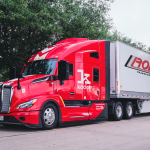
- FMCSA Motus registration changes how USDOT numbers, operating authority, docket numbers, and registration statuses are issued, tracked, and verified.
- Identity proofing, business verification, randomized new numbers, and entity-linked filings move carrier identity risk closer to the front door of federal registration.
- Cargo tank facilities, brokers, insurers, BOC-3 filers, freight forwarders, and transportation service providers all sit inside the Motus registration ecosystem.
FMCSA Motus registration is best understood as FMCSA’s attempt to modernize the identity layer of trucking and related registration activity. Motus is not simply a new website. It is the federal registration gateway through which motor carriers, brokers, freight forwarders, intermodal equipment providers, cargo tank facilities, insurance filers, BOC-3 filers, and transportation service providers interact with USDOT registration records, operating authority, supporting filings, and authorized user access.
“Motus puts more of the federal registration process into a single digital identity and access-control environment.” Motus update graphic displayed on FMCSA’s registration modernization resource page. (Attribution: Federal Motor Carrier Safety Administration)
Motus is the Federal Motor Carrier Safety Administration’s new USDOT Registration System. The system is designed to centralize registration activity, reduce duplicate entries and data gaps, improve real-time validation, strengthen fraud-resistant security, and link filings to verified entities. That makes FMCSA Motus registration especially relevant in a freight market facing carrier impersonation, chameleon carrier risk, fraudulent authorities, double-brokering, fake pickup schemes, stolen USDOT identities, altered contact information, and more sophisticated supply chain fraud. For more federal agency coverage affecting tank fleets and motor carriers, see our FMCSA news archive.
FMCSA’s registration modernization effort places identity verification, business verification, registration-status clarity, and user access control inside a single online registration environment. The result is a more structured registration lifecycle for new applicants and existing registrants, with implications for due diligence, compliance maintenance, operating authority review, broker-carrier vetting, and cargo tank facility administration.


”Motus does not turn a USDOT number into proof that a company is safe, insured, authorized for every load, or free from fraud risk. It does, however, change how registration records are created, updated, accessed, verified, and tracked. For bulk freight, hazmat logistics, petroleum transport, chemicals, food-grade liquids, waste, LPG, and other higher-consequence freight sectors, that change matters because identity control is one of the earliest points where a transportation relationship can become legitimate, suspicious, or fraudulent.“
FMCSA Motus Registration Modernizes the Federal Gateway for Carrier Identity
FMCSA Motus registration consolidates many registration tasks that previously involved legacy systems, forms, and separate workflows. FMCSA has described Motus as a modern, secure, mobile-friendly platform that allows businesses to register with the agency, manage registrations, and control authorized access in one place. For ongoing agency rule and compliance developments, browse our FMCSA updates coverage.
The system supports registration activity for entities that require a USDOT number, operating authority, or both. That includes motor carriers, brokers, freight forwarders, intermodal equipment providers, and cargo tank facilities. Supporting companies also have roles in the Motus environment, including blanket companies that file Form BOC-3, financial responsibility filers such as insurance and surety companies, and transportation service providers that perform authorized registration-related actions for regulated entities.
“The Motus rollout is not just a portal change; it is a shift in how regulated entities learn, claim, and manage registration records.” Banner image for FMCSA’s Motus explainer series. (Attribution: Federal Motor Carrier Safety Administration)
FMCSA’s Federal Register notice described Motus as being introduced in phases. Phase I was released for supporting companies, including BOC-3 filers, financial responsibility filers, and transportation service providers. Phase II was planned for regulated entities and the broader registration community, with the system intended to satisfy the statutory mandate for a unified registration system and replace or sunset several legacy registration components. For broader rulemaking and carrier-compliance coverage, see our Regulations & Compliance News.
The policy significance goes beyond a portal migration. Motus sits at the point where business identity, operating authority, process-agent filings, insurance filings, user access, status tracking, and public registration information intersect. In a freight market where fraud increasingly depends on controlling or mimicking legitimate credentials, the registration system becomes part of the industry’s identity-security infrastructure.
Motus turns registration control into part of freight-security infrastructure.FMCSA Motus registration also changes the practical workflow for routine compliance maintenance. Registrants can use the system to apply for a new USDOT number, apply for operating authority, submit biennial updates, update business information, apply for additional authorities or registrations, reinstate suspended authority, reapply after revocation, inactivate or reactivate a USDOT number, track registration actions, and upload supporting documents. For related tank-fleet rule changes and operational compliance coverage, visit our compliance reporting.
For established carriers, that means Motus is not only a new-entrant system. Existing companies with active USDOT numbers, operating authority, insurance filings, BOC-3 filings, company officials, physical addresses, mailing addresses, DBA information, and third-party service relationships have a reason to verify that their records and access permissions are accurate.
For brokers and shippers, FMCSA Motus registration has due diligence implications. Public users can search registration records, view FMCSA Register information for daily decisions and notices, and access public data on FMCSA-registered entities. That public-search function does not eliminate the need for separate verification, but it adds another channel for checking registration records and tracking authority-related activity.
How FMCSA Motus Registration Changes Verification, Status Tracking, and Record Control
The anti-fraud value of FMCSA Motus registration is concentrated in several changes: identity proofing, business verification, randomized numbers, clearer status explanations, controlled access, and a more structured registration-action history.
FMCSA partnered with IDEMIA for identity document capture and verification services. The agency has described the identity verification process as a way to safely collect customer registration data, verify legitimacy, reduce fraudulent activity, protect sensitive information, and require new registrants to pass identity proofing and verification before obtaining new registration.
Identity proofing adds friction where fraudulent carrier records often begin.The process uses a mobile device such as a smartphone or tablet. Applicants follow prompts to capture a government-issued ID, take a photo of themselves, and complete identity verification through the registration workflow. FMCSA’s FAQ materials state that identity proofing focuses on analysis of data and information to validate a person’s identity, while verification focuses on confirming the authenticity of the documents and information provided.
That distinction matters because registration fraud often begins before a truck arrives at a shipper’s gate. Fraudulent actors may try to create new entities, claim control of an existing registration identity, alter contact information, exploit a dormant authority, or pose as a legitimate carrier through documentation that appears credible at first glance. FMCSA Motus registration places identity proofing closer to the creation and control of federal registration records. For additional coverage of transportation fraud, forged credentials, and compliance schemes, follow our fraud coverage.
“Fraud prevention begins before the load moves, when carriers, brokers, and service providers verify who controls the registration identity.” FMCSA fraud-alert graphic used on the agency’s registration fraud warning page. (Attribution: Federal Motor Carrier Safety Administration)
FMCSA’s Federal Register notice also described business verification as part of Motus. Business verification is intended to confirm a company’s authenticity and validate key information such as legal name, principal place of business address, ownership structure, company officials, and status. That function is separate from the individual identity-proofing process. It addresses the company-level risk that a technically valid user may still be associated with inaccurate or suspicious business information.
Motus also randomizes newly issued USDOT numbers and operating authority docket numbers. Existing USDOT numbers and existing docket numbers do not change. Randomization matters because sequential or predictable numbering can reveal patterns, approximate age, or other cues that fraudsters may exploit when presenting a company as older, newer, or more established than it is. Randomization is not a complete fraud solution, but it reduces one form of easy pattern recognition.
New operating authorities granted in Motus receive one unique docket number per new authority, even when multiple authorities are requested in the same application. Each new operating authority has its own distinct history in the system. That makes the lifecycle of each authority easier to track and separates the history of one authority from another.
FMCSA Motus registration also adds more detailed operating authority status explanations. The status names themselves remain the same, but Motus can show the reason behind a status. A pending application may identify whether the delay relates to FMCSA review, process-agent Form BOC-3 filings, or financial responsibility filings. For carriers, brokers, freight forwarders, insurers, process agents, and compliance staff, the additional detail can reduce uncertainty about the status of a registration action.
USDOT number suffixes are another change at Motus. Motus displays suffixes at the end of new USDOT numbers to help identify regulated entity type and the specific registrations granted by FMCSA. Existing USDOT and docket numbers do not change. Cargo tank, intermodal equipment provider, and hazardous-material entities do not have their own specific suffixes. FMCSA has also stated that suffixes are not a vehicle-marking requirement, which means the suffix system should not be interpreted as a new truck-marking obligation.
FMCSA Motus Registration Broadens Responsibility Beyond Motor Carriers
FMCSA Motus registration affects more than for-hire trucking companies. The system includes brokers, freight forwarders, intermodal equipment providers, and cargo tank facilities. It also includes supporting companies whose records and actions can directly affect whether a carrier, broker, or freight forwarder appears ready to operate.
BOC-3 filers, also called blanket companies, are part of the registration support structure because process-agent filings are required for operating authority. Insurance and surety companies are part of the financial responsibility structure because required insurance filings are a core part of operating authority status. Transportation service providers can perform authorized actions on behalf of registrants, which means account roles and access controls are not administrative details; they are identity-control points.
Supporting companies are part of the same registration trust chain.This expanded scope is especially relevant for tank transport. Cargo tank facilities are explicitly included in Motus. That makes the system relevant to cargo tank inspection, repair, testing, registration, and related compliance activity, not only highway transportation operations. Tank fleets often depend on third-party service providers, insurers, process agents, cargo tank shops, and compliance consultants. A registration system that controls who can file, update, claim, or manage those records is part of the operating environment.
The same is true for brokers and freight forwarders. Broker fraud and carrier impersonation frequently depend on documents, numbers, email domains, load-board profiles, and registration details that appear legitimate. A stronger registration identity layer does not prove that a brokered transaction is legitimate, but it can make certain forms of record manipulation harder and provide clearer points of verification. For more reporting on brokers, double brokering, and freight-intermediary risk, browse our broker coverage.
FMCSA’s registration-alert materials also highlight one transition issue: some carrier email addresses were inadvertently registered for the Transportation Service Provider role in Motus. FMCSA’s guidance states that affected carriers can close the TSP account and, where appropriate, proceed toward claiming the USDOT number. That issue underscores the importance of account role accuracy. In Motus, who controls an account can matter as much as what the public registration record says.
Account claiming, user management, and third-party authorization are therefore part of the operational response. A company’s USDOT number, legal name, DBA, principal place of business, mailing address, company officials, contact email, phone number, operating authority, insurance filings, and BOC-3 status collectively form the same identity-management picture.
FMCSA Motus Registration Adds Anti-Fraud Friction Where Identity Risk Enters the System
FMCSA Motus registration responds to a freight environment in which cargo theft and logistics fraud are increasingly identity-based. Cargo thieves and fraudulent brokers do not always steal a truck or break into a terminal. Many schemes begin with impersonation, spoofed email domains, altered documents, compromised registration data, fake pickup credentials, double-brokered loads, or misuse of a legitimate carrier’s information. For more on theft trends affecting freight movement, review our cargo theft coverage.

“When a tank truck moves regulated freight, the carrier identity, equipment record, and operating authority all become part of the same trust chain.” A cargo tank truck transporting flammable material on a highway. (Attribution: DeFelsko Corporation)
Strategic cargo theft often relies on making the wrong entity appear to be the right one long enough for a shipper, broker, carrier, or warehouse to release freight. The fraud may not become visible until the load fails to arrive, the GPS signal disappears, the driver cannot be reached, or the real carrier denies involvement.
Freight fraud often succeeds when a false identity looks legitimate long enough to release cargo.Motus is aimed at the registration side of that problem. It does not police every load transaction, every pickup appointment, every bill of lading, or every broker-carrier relationship. It does, however, make the federal registration layer more structured by adding identity proofing, business verification, controlled access, data validation, randomized numbering, clearer status reasons, and entity-linked filings.
That matters because USDOT numbers, MC numbers, MX numbers, FF numbers, legal names, DBAs, insurance filings, BOC-3 filings, and operating authority statuses often serve as the starting point for vetting. A shipper or broker may begin with public records, then move to insurance confirmation, direct carrier contact, driver verification, pickup controls, factoring/payment checks, load history, and real-time monitoring. For broader reporting on freight protection, cargo risk controls, and supply chain security, see our freight security coverage.
”FMCSA Motus registration strengthens one part of that chain. It is not a replacement for the rest of the chain. It is better understood as a registration modernization that reduces some identity vulnerabilities while leaving transactional fraud prevention, cargo-security controls, and counterparty due diligence in the hands of industry participants and enforcement partners.“
FMCSA’s temporary suspension of USDOT inactivation, tied to incomplete biennial updates, also shows that the rollout has encountered practical friction. FMCSA stated that, as part of the Motus transition, the agency temporarily suspended inactivation of USDOT numbers for entities that had not completed required biennial updates since June 1, 2026. Registrants were given additional time while recovery and stabilization efforts continued. That suspension was a transition measure, not a permanent removal of the biennial update requirement.
The agency also expanded support channels and directed Motus users to customer service tools, registration alerts, video resources, job aids, and the public Motus search function. That support posture reflects the scale of the transition. A registration system that affects hundreds of thousands of existing registrants, as well as new applicants and supporting companies, will create access, identity, role, and record-matching issues during implementation.
FMCSA Motus Registration and Cargo Tank Facility Compliance
FMCSA Motus registration is specifically linked to cargo tank facilities, as FMCSA lists them among the entities that can use Motus. That point is important for tank transport operations because the registration ecosystem extends beyond motor carriers and brokers.

“Registration identity is only one part of the risk picture; tank operations still depend on inspection, documentation, and equipment integrity.” Registered inspector records findings during a cargo tank inspection. (Attribution: DeFelsko Corporation)
Cargo tank facilities support regulated transportation through inspection, testing, repair, and related compliance functions. Tank operations often involve hazardous materials, food-grade products, petroleum, chemicals, corrosives, compressed gases, waste, and other freight where chain-of-custody, facility qualifications, equipment condition, and accurate records carry elevated operational significance.
For tank freight, identity control is tied to safety, custody, and equipment integrity.For tank carriers and bulk shippers, carrier identity risk can have consequences beyond stolen freight. A fraudulent or poorly vetted transportation entity can create exposure involving product contamination, unauthorized terminal access, hazmat handling failures, uninsured loss, rejected loads, regulatory violations, or emergency-response complications. In that context, a more secure registration system becomes part of a larger safety and security environment. For a tank-specific example of freight security risk, see “Texas Petroleum Theft Surge: 9 Critical Risks Driving a Dangerous Cargo-Tank Crackdown.”
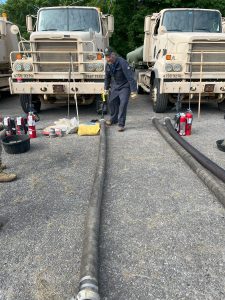
“The more valuable or hazardous the load, the more important it becomes to verify equipment, records, people, and authority before freight is released.” DLA Energy Americas East quality assurance representative inspects military fuel tankers and equipment. (Attribution: DLA Energy Americas)
Motus gives cargo tank facilities a place inside the modernized FMCSA registration framework. That inclusion means cargo tank facility records, registration activity, supporting documentation, and public searchability should be considered part of industry due diligence. It also means tank operations should not treat Motus as only a carrier or broker issue.
The most important distinction is that Motus may improve control over identity and registration records, but it does not verify every operational fact that matters in tank transport. Equipment compatibility, cargo tank test status, hazmat registration, driver qualifications, insurance coverage, shipper-specific requirements, terminal access rules, product handling standards, and emergency-response readiness remain separate controls.
FMCSA Motus Registration and Broker, Shipper, and Carrier Vetting
FMCSA Motus registration falls within a broader carrier- and broker-vetting process. Public registration search, operating authority status, insurance filings, BOC-3 filings, suffixes, docket history, and company information are useful signals. They are not enough on their own.
A practical vetting process checks whether the USDOT number and operating authority match the legal entity, whether the contact information aligns with independent records, whether the insurance filing is current and appropriate, whether the BOC-3 filing is in place, whether the company has suspicious recent changes, whether the email domain is legitimate, whether the dispatcher or driver can be validated through known company contacts, and whether the pickup appointment matches the carrier actually assigned to the load.
The FMCSA Licensing & Insurance system remains an important reference point for operating authority. FMCSA registration-alert materials state that the official record of an entity’s operating authority registration is found in the Licensing & Insurance system once the certificate, permit, or license is generated. They also state that once L&I reflects that FMCSA has issued the certificate, permit, or license, the motor carrier, broker, or freight forwarder is authorized to begin operations.
Live-system verification matters because paper authority can be outdated, copied, or misused.That distinction is essential in fraud prevention. A hard copy of a certificate or permit is not the same as live authority confirmation. A document can be outdated, altered, copied, or presented by an unauthorized party. Live-system verification, direct confirmation, and transaction-level controls remain necessary. For a closer look at enforcement pressure on unauthorized brokerage, read FMCSA’s Critical Push for Unauthorized Brokerage Penalties.

“For bulk fuel and tank operations, identity control is only one layer of a larger chain-of-custody and safety environment.” U.S. Army Reserve soldiers deliver fuel during the 2024 Quartermaster Liquid Logistics Exercise. (Attribution: DLA Energy Americas)
FMCSA’s move toward electronic-only payments is another related registration-development point. Effective September 30, 2025, the FMCSA announced that it would no longer accept paper payments, such as checks and money orders, for agency transactions, including initial operating authority applications, reinstatements, legal name changes, civil penalties, and other fee-based transactions. This change aligns with the broader modernization of federal transaction handling and reduces reliance on paper processes.
For brokers, shippers, and carriers, the operational lesson is clear: FMCSA Motus registration should be one input in a layered verification model. The system can improve registration integrity, but freight release decisions still require controls at the load, driver, facility, appointment, payment, and communication levels.
What Does FMCSA Motus Registration Not Solve on Its Own?
FMCSA Motus registration does not, by itself, eliminate cargo theft, double brokering, carrier impersonation, chameleon carrier activity, identity spoofing, fraudulent pickup credentials, or suspicious load-board behavior.
Motus strengthens registration integrity; it does not replace load-level fraud controls.The system does not replace insurance verification. It does not confirm that a specific driver is employed by the carrier that accepted a load. It does not prove that the registered entity controls a truck arriving at a terminal. It does not validate every bill of lading, rate confirmation, bank account, dispatcher email, pickup appointment, or GPS location.
Motus also does not automatically make a carrier safe. Safety performance, crash history, inspection history, hazmat compliance, equipment condition, driver qualification, hours-of-service compliance, and insurance adequacy remain separate issues. A verified identity is not the same as a complete safety profile.
The system also does not change existing USDOT numbers or existing docket numbers. Randomization applies to new numbers. Existing operating authorities that share a docket number continue to be identified by that docket number. New suffixes are not truck-marking requirements. Cargo tank, intermodal equipment provider, and hazardous-material entities do not receive their own specific suffixes.
The strongest interpretation is balanced. FMCSA Motus registration improves the structure, security, and transparency of the registration layer. It does not replace field-level judgment, shipper controls, broker controls, insurer checks, terminal procedures, driver verification, or law-enforcement investigation.
In a high-risk freight environment, the value of Motus lies in narrowing certain registration vulnerabilities and creating clearer data pathways. It does not remove the need for skepticism when a high-value or hazardous load is assigned, picked up, rebrokered, rerouted, or handled by a party that cannot be independently verified.
FMCSA Motus Registration Key Developments
Key Developments
- Motus centralizes FMCSA registration activity for USDOT numbers, operating authority, biennial updates, business information, additional authorities, reinstatements, inactivation or reactivation, document uploads, and status tracking.
- FMCSA’s modernization effort places identity verification and business verification closer to the registration gateway, reducing reliance on self-entered information alone.
- IDEMIA performs identity document capture and verification services for FMCSA’s registration identity-proofing process.
- Motus randomizes newly issued USDOT numbers and newly issued operating authority docket numbers to help prevent fraud; existing USDOT and docket numbers do not change.
- Motus assigns a unique docket number to each newly granted authority and creates a separate lifecycle history for each.
- Motus provides clearer explanations of operating authority status, including whether a pending application is awaiting FMCSA review, BOC-3 process-agent filings, or financial responsibility filings.
- USDOT number suffixes are displayed in Motus to identify entity type and registration categories, but suffixes are not a vehicle-marking requirement.
- Motor carriers, brokers, freight forwarders, intermodal equipment providers, and cargo tank facilities are all included in the Motus registration ecosystem.
- Supporting companies, including BOC-3 filers, insurance and surety filers, and transportation service providers, have registration roles that require accurate account control and authorized access.
- FMCSA temporarily suspended USDOT inactivation tied to incomplete biennial updates during the Motus transition, giving affected registrants more time while access and system issues were stabilized.
- FMCSA registration alerts identified an issue in which some carrier email addresses were tied to Transportation Service Provider roles, requiring affected users to close the TSP account or seek support to claim the correct USDOT record.
- Motus strengthens registration identity controls but does not replace live operating authority checks, insurance verification, carrier confirmation, driver validation, shipper pickup procedures, terminal security, or cargo-fraud monitoring.
Authoritative External Resources for FMCSA Motus Registration and Carrier Identity
- Review FMCSA’s central Motus guidance, quick links, fact sheets, user guides, registration alerts, and transition resources at the FMCSA Registration Modernization Resources Hub.
- Access the official federal registration platform for USDOT registration actions, record updates, and Motus registration activity at Motus: USDOT Registration System.
- Learn how FMCSA explains Motus, eligible entities, registration actions, public search functions, and fraud-prevention goals in FMCSA’s “What is Motus?” fact sheet.
- See FMCSA’s explanation of randomized USDOT numbers, operating-authority docket numbers, suffixes, and authority-status changes in FMCSA’s “Changes to FMCSA Registrations in Motus” fact sheet.
- Understand the official rollout notice, phased implementation, legacy-system transition, identity verification, and business verification framework in the Federal Register notice on FMCSA’s Motus registration system.
- Review FMCSA’s identity-proofing requirements, mobile verification process, technical requirements, and IDEMIA verification role at FMCSA Identity Verification.
- Find FMCSA updates on account-claiming issues, Transportation Service Provider access, electronic-only payments, identity verification, and official operating authority guidance in FMCSA Registration Alerts.
- Read FMCSA’s transition notice on the temporary pause in USDOT inactivation due to incomplete biennial updates, titled Temporary Suspension of USDOT Inactivation in Motus.
- Verify operating authority, insurance filings, and authority status through FMCSA’s official public system at FMCSA Licensing & Insurance Public Search.
- Check the carrier’s identity and public company registration details via the FMCSA SAFER Company Snapshot.
- Review motor carrier safety data and enforcement-related performance information through FMCSA’s Safety Measurement System.
- Track daily FMCSA registration decisions, certificates, permits, letters, reinstatements, re-entitlements, and financial-security notices at FMCSA Daily Registration Decisions.
- Review FMCSA’s broker-registration requirements and official guidance for freight brokers at FMCSA Broker Registration.
- Find official FMCSA registration information for cargo tank facilities at the FMCSA Cargo Tank Facility Registration page.
- Understand the federal operating authority application rules in 49 CFR Part 365, Rules Governing Applications for Operating Authority.
- Review the statutory registration requirement for motor carriers, brokers, and freight forwarders at 49 U.S.C. 13901, Requirements for Registration.
- Learn more about the federal sign-in service used across participating government systems at Login.gov.
- Find background on the identity-verification technology company referenced in FMCSA’s Motus materials at IDEMIA.