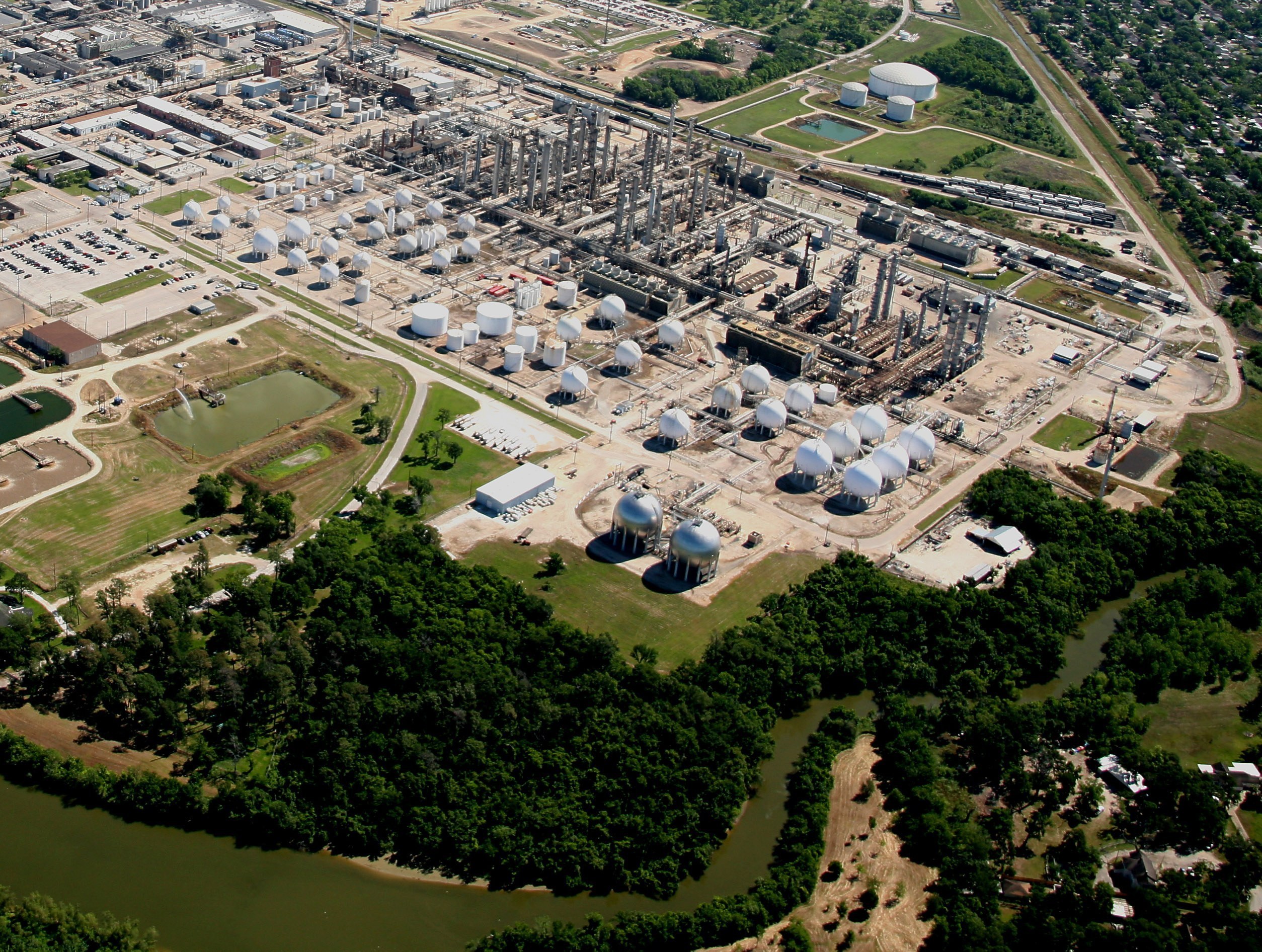
- ENEOS Holdings signed an agreement on Aug. 7 to acquire TPC Holdings, the parent of Houston-based TPC Group.
- The pending transaction covers a Houston C4-chemicals plant and terminal operations in Port Neches, Texas, and Lake Charles, Louisiana.
- Houston supports selected truck and ISO-container services, while Port Neches and Lake Charles are primarily terminal, storage, barge, rail, and pipeline operations.
TPC Group’s five-acre Lake Charles-area terminal receives butadiene by barge, stores it on-site and transfers product to customers by pipeline. (Photo: TPC Group, used with permission.)
The ENEOS TPC acquisition would place one of North America’s largest C4-chemicals platforms under new ownership: a major Houston manufacturing site and two Gulf Coast terminals, if the deal closes as planned.
ENEOS Holdings said it will acquire TPC Holdings, Inc., the parent of operating company TPC Group, Inc., through a merger involving a special-purpose vehicle under a wholly owned U.S. subsidiary. The companies expect the transaction to close in October 2026, subject to regulatory approvals and other conditions in the merger agreement.
For tank and bulk transportation, the immediate relevance is ENEOS’s agreement to acquire facilities that produce, store, and transfer bulk C4 products across several modes. Houston already supports selected truck service, while any change in highway demand will depend on post-closing production and logistics decisions.
What ENEOS has agreed to buy
According to TPC Group’s official facility descriptions, Houston is the company’s largest operating facility; Port Neches moves crude C4, butadiene, and raffinate through pipeline, barge, and rail infrastructure; and Lake Charles receives butadiene by barge for storage and pipeline delivery. The three sites serve distinct manufacturing, terminal and storage roles within the Gulf Coast network.
| Site | Disclosed role | Documented logistics | Highway relevance |
|---|---|---|---|
| Houston, Texas | C4 manufacturing; more than 1.5 billion pounds of combined annual production capacity | Pipeline, marine, rail, and selected truck/ISO-container service | Selected truck and ISO-container service documented |
| Port Neches, Texas | Terminal moving crude C4, butadiene and raffinate | Pipeline, barge, rail and tank car | Public profile emphasizes pipeline, barge and rail |
| Lake Charles area, Louisiana | Barge dock and storage tank farm for butadiene | Barge receipt, on-site storage and pipeline delivery | Public profile emphasizes barge receipt and pipeline delivery |
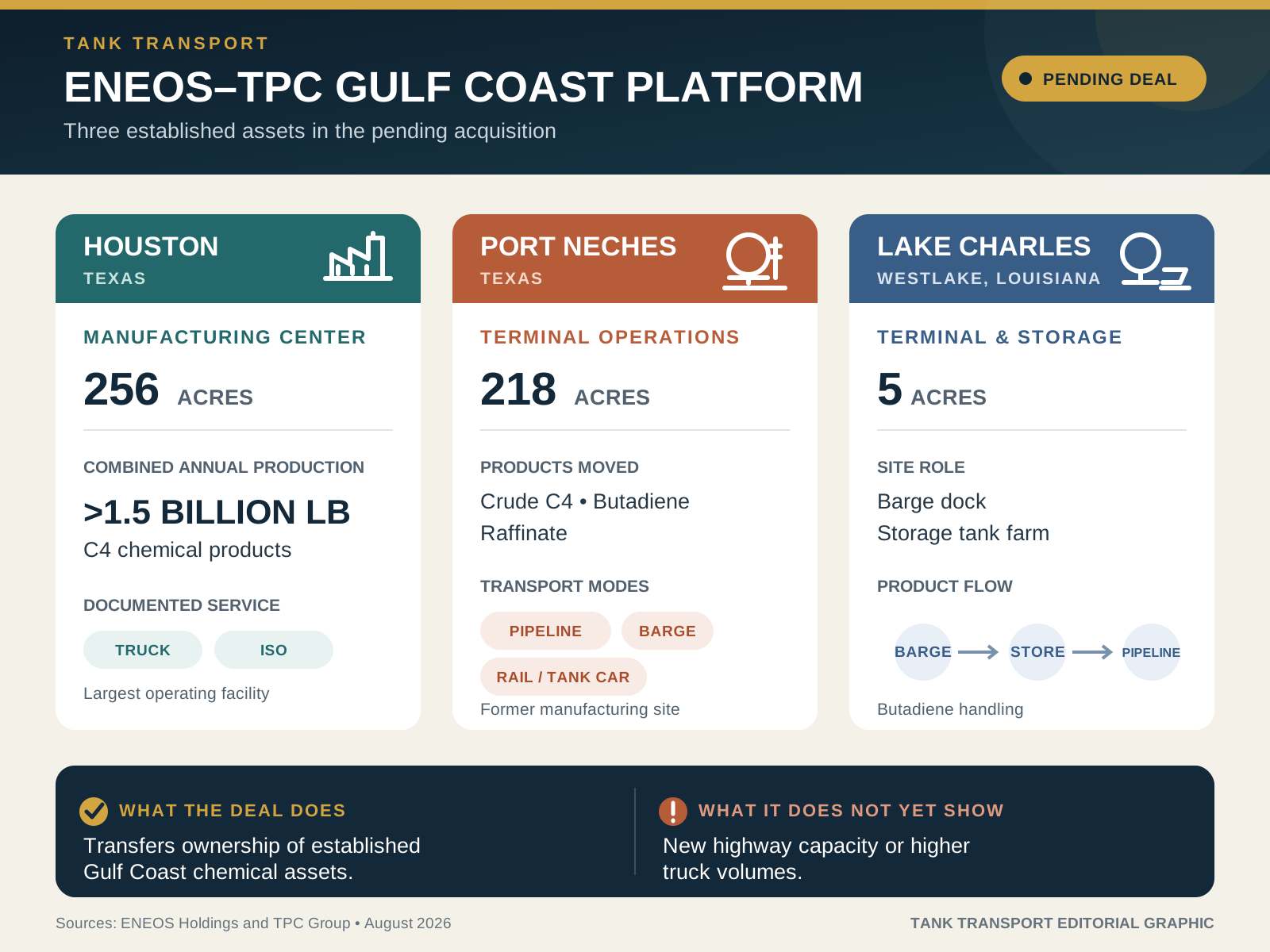
The pending ENEOS–TPC transaction covers a 256-acre Houston manufacturing complex, a 218-acre Port Neches terminal and a five-acre Lake Charles-area terminal. Together, the properties combine chemical manufacturing, terminal storage and multimodal logistics across Texas and Louisiana. (Graphic: Tank Transport)
The Houston site produces butadiene, butene-1, raffinate, isobutylene, di-isobutylene and polyisobutylene. A capital program completed in 2024 raised Houston’s butadiene nameplate capacity to 1.1 billion pounds per year, according to TPC.
ENEOS says TPC holds leading North American positions in butadiene, raffinate, 1-butene and polybutene. After closing, ENEOS expects the combined group to rank third worldwide in butadiene production capacity, underscoring the scale of the U.S. platform it is adding to its materials business.
ENEOS’s disclosure lists TPC Group’s consolidated 2025 net sales at $1.511 billion, consolidated operating profit at $25 million, and a $34 million loss attributable to owners of the parent. The companies did not disclose the transaction value in their announcements; Beaumont Enterprise, citing Bloomberg, reported an enterprise value of approximately $1.28 billion including debt.
Port Neches now operates as a terminal rather than a manufacturing plant. The U.S. Chemical Safety Board’s final investigation documents the November 2019 explosions and fire, which destroyed the site’s butadiene unit, along with subsequent safety recommendations covering terminal operations. Under a 2024 Justice Department resolution, TPC Group LLC pleaded guilty to a Clean Air Act violation and agreed to $30.1 million in criminal and civil penalties plus approximately $80 million in safety and risk-management improvements at Port Neches and Houston. The acquisition announcement separately says ENEOS intends to support continued investment in TPC’s Gulf Coast assets and downstream capabilities.

TPC Group’s 218-acre Port Neches property operates as a terminal moving crude C4, butadiene and raffinate by pipeline, barge and rail. (Photo: TPC Group, used with permission.)
Where highway service fits into the network
TPC’s product information confirms two direct highway connections. The company says it can make bulk butene-1 deliveries by truck, along with pipeline, marine and rail service. It also lists railcar and truck service for di-isobutylene, ISO-container availability, and truck delivery from an off-site terminal.
Those services give the transaction a direct highway-bulk connection. Post-closing carrier demand will depend on ENEOS’s production, sourcing, and modal decisions, which were not detailed in the announcement. TPC’s butadiene product page, for example, describes broad logistics capability without listing truck as a current delivery mode.
That makes this transaction different from KAG’s acquisition of MC Tank, where power units, trailers/chassis, and three ISO tank depots were central disclosed assets, or CSX’s completed acquisition of Quality Carriers, which explicitly involved a bulk-chemical motor carrier. ENEOS is acquiring a chemical producer and terminal platform, not an announced trucking fleet.
TPC says it has no planned changes to day-to-day business operations, customer commitments or supplier relationships in connection with the transaction. For carriers and chemical shippers, the meaningful post-closing signals will be named capital projects, changes in loading capability, new carrier procurement, modal shifts, export growth or verified production increases.
October closing is the next milestone.
The TPC transaction announcement says the companies will remain separate until closing and expect required approvals in October. Until then, the current operating structure and commercial commitments remain in place.
After completion, TPC Holdings would become a wholly owned ENEOS subsidiary and be consolidated in the High Performance Materials segment. ENEOS is positioning the acquisition as a way to expand its U.S. C4-chemicals business, improve access to North American feedstocks, and connect C4 products more closely with its elastomers portfolio.
For chemical transportation, the immediate takeaway is the addition of a significant U.S. C4 producer and multimodal terminal network to ENEOS’s materials business. Houston provides a documented highway connection, while the scale of future carrier demand will follow from post-closing production, investment, and modal decisions.
ENEOS TPC Acquisition Key Developments
- Agreement: ENEOS signed a definitive merger agreement on Aug. 7 to acquire TPC Holdings, parent of TPC Group.
- Footprint: The transaction covers Houston chemical production and terminals in Port Neches and the Lake Charles area.
- Transport relevance: Selected truck and ISO-container services provide a direct highway connection; no post-closing fleet, lane, carrier, or volume changes have been announced.
- Next milestone: Closing is expected in October 2026, subject to regulatory approvals and other conditions.