Sponsored content from Paragon
For years, chemical transport specifications focused on pumps, compressors, flow rates, and unloading performance.
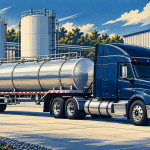
Today, fleet managers evaluating chemical truck layouts face another question: Can the entire system fit, operate, and be maintained efficiently throughout the truck’s life?
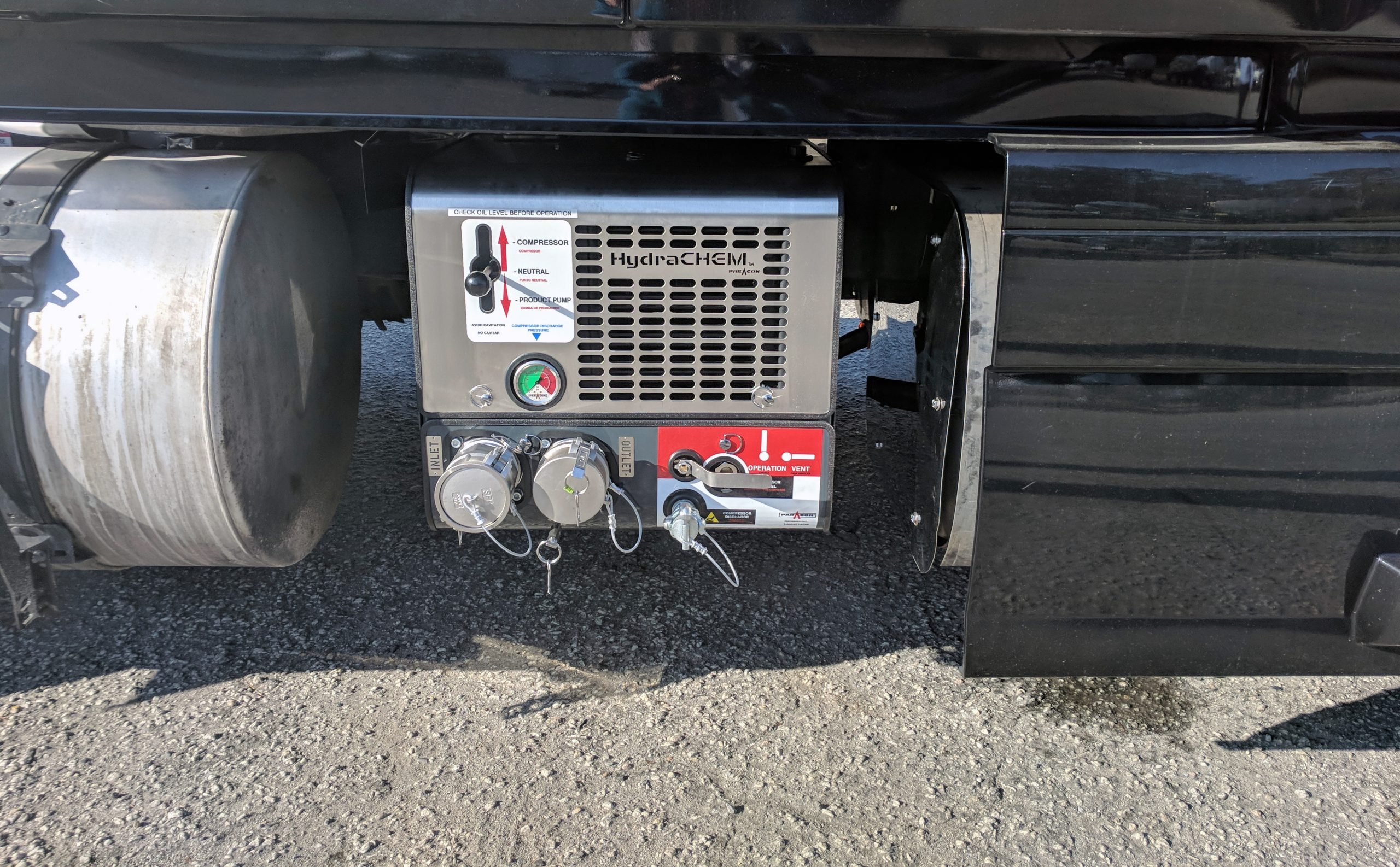
The Paragon HydraCHEM Standard unit, showing its front-mounted control levers, pressure gauge, and capped transfer connections. (Photo courtesy of Paragon.)
Fuel tanks, diesel exhaust fluid (DEF) tanks, and hydraulic equipment all compete for available frame rail space. As trucks become more complex, layout decisions can affect uptime, serviceability, and installation efficiency.
Reviewing service access, hose routing, maintenance visibility, and operator usability before ordering equipment can help identify potential problems. A system that performs well on paper can still create challenges if routine service is difficult or installation becomes more complicated than expected.
These considerations also influence how fleets evaluate equipment suppliers. Integrated systems offer an alternative to sourcing individual components separately and can help simplify truck integration and reduce installation complexity.
For example, Paragon’s HydraCHEM all-in-one pumping system combines hydraulic, cooling, compressor, and product-transfer functions within a single enclosure designed for truck installations where space and accessibility matter.
The takeaway is simple: The conversation is no longer just about equipment performance. It’s about how the complete system works together on the truck.
Learn more about Paragon’s HydraCHEM liquid bulk transfer systems.