- Wabash will display chemical and sanitary tank configurations at booth 1239 during Tank Truck Week.
- The equipment highlights drainage, insulation, weight, and valve-status visibility for fleet buyers.
Wabash tank trailers for chemical and sanitary service will be on display at National Tank Truck Carriers’ Tank Truck Week, September 27–30, 2026, in Oklahoma City. The lineup includes specialty chemical, fleet chemical and frame-and-cradle sanitary trailers.
According to Wabash’s September 24 announcement, the exhibit centers on matching equipment to hauling applications. The company says its frame-and-cradle design has been in production for more than 50 years.
For chemical and food-grade carriers, the display offers a chance to examine how a specification handles the whole assignment: carrying the intended product, unloading it, cleaning the equipment, and preparing for the next load. Empty weight is one part of that comparison.

Chemical tanks put drainage and materials in focus
According to Wabash’s published chemical tank specifications, the range includes an integrated outlet sump intended to limit product remaining after unloading, along with 2205 duplex stainless-steel heat panels. The company also highlights precision welding and a choice of materials as design features.

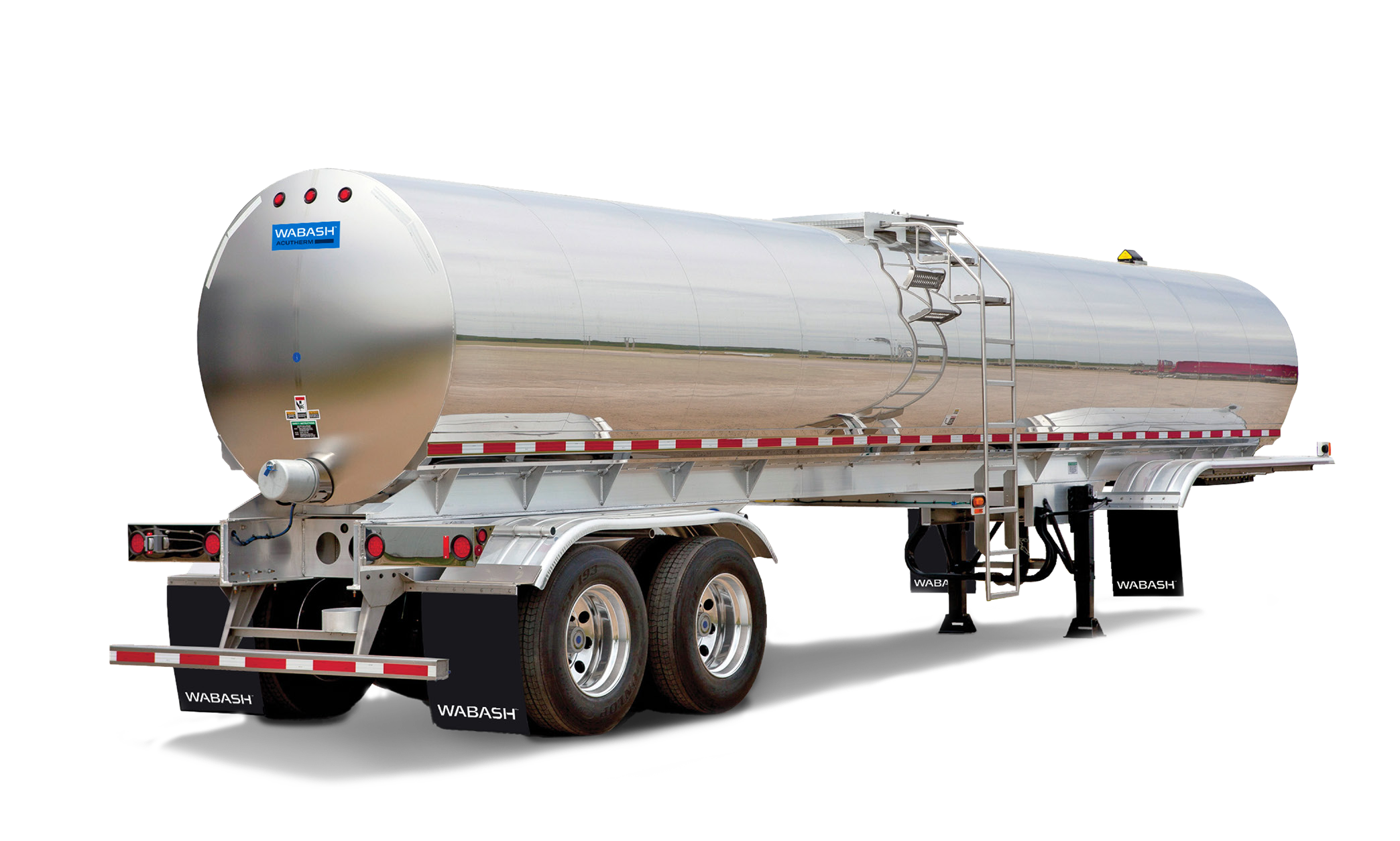
Wabash chemical tank trailer with tandem axles and rear discharge equipment. (Photo: Wabash)
Those details give buyers a starting point for discussing the commodity, operating temperatures, and unloading arrangement with the manufacturer. A useful comparison would cover the tank, its fittings, and its discharge equipment together, using the fleet’s actual loading and receiving conditions.
The product literature describes the broader chemical-tank range. Buyers will still need individual build sheets to compare the specialty and fleet configurations on display, including capacities, empty weights, material grades, and installed options. A family-level feature list does not establish that every trailer carries the same equipment.
Sanitary design connects weight with cleanability.
Wabash says its aluminum frame-and-cradle design is approximately 250–500 pounds lighter than traditional stainless-steel designs. The announcement does not identify matched trailer configurations behind that comparison.
According to Wabash’s Acutherm sanitary tank literature, tension-fit rings support a smooth barrel interior without the welding scars associated with attaching external rings. The design also uses urethane insulation and offers application-specific configurations.
For a fleet evaluating replacement equipment, the practical question is how the finished specification balances weight, interior condition, temperature requirements, and cleaning access. Comparing similarly equipped trailers is more useful than treating a construction-weight difference as a guaranteed increase in every load.

Manhole cover and vent assembly on a Wabash food-grade tank trailer. (Photo: Wabash)
These considerations fit the wider food-transport operating framework. According to FDA’s sanitary transportation rule summary, covered operations must protect food against contamination, including from previous loads. The vehicle and equipment requirements in 21 CFR 1.906 call for equipment suitable and adequately cleanable for its intended use, with temperature control when needed for food safety.
FDA says a waiver applies to businesses holding valid permits and inspected under the National Conference on Interstate Milk Shipments’ Grade “A” Milk Safety Program, only when transporting bulk and finished Grade “A” milk and milk products. The same regulatory route therefore does not apply to every sanitary hauling assignment.
The equipment already has a place in the dealer market: Tank Transport’s recent coverage of SEMO Tank’s equipment and fleet-support business identified Wabash sanitary trailers among its offerings. That connects the show-floor comparison with the sales, parts and service decisions fleets face after choosing a trailer.
Valve visibility joins the specification discussion.
According to Wabash, its display will also highlight Betts Industries technology for monitoring valve, vent and manhole positions. The company says it can help verify closure and reduce climbing for seal checks.
For buyers, useful demonstration questions include which openings are monitored, where the operator sees their status, and how the system indicates an unavailable signal. Those details would help a fleet determine how the equipment fits its existing checks and maintenance procedures.
Elsewhere at the show, Tremcar’s TremSmart preview will focus on tire monitoring, cameras and onboard weighing for petroleum trailers, giving fleets another equipment-monitoring display to examine.
The specification discussion continues beyond the exhibits. According to NTTC’s official program, a trailer-specification panel is scheduled for September 29, from 4–4:45 p.m. in Hall BCD. Wabash’s Adam Quinn is listed alongside representatives of Peterson Manufacturing and United Petroleum Transports, with The Jack Olsta Co. moderating.
NTTC says the session will cover configuration and component choices, maintenance, driver usability, and ownership costs. For fleets comparing Wabash tank trailers, it offers another setting to test how a proposed equipment package would fit their operation before placing an order.
Wabash Tank Trailer Display: Key Developments
- The exhibit brings together chemical and sanitary applications.
- Chemical product literature emphasizes drainage, heat panels, and material options.
- Sanitary construction centers on frame-and-cradle support, a smooth interior, and insulation.
- NTTC’s September 29 panel extends the discussion to maintenance, usability, and ownership costs.