- DOT awarded $200 million for 14 truck parking projects in 12 states.
- Project plans list 2,403 spaces, including some replacement capacity; the total is not a verified net increase.
- For tank fleets, opening dates, access rules, and location will determine how useful the facilities become.
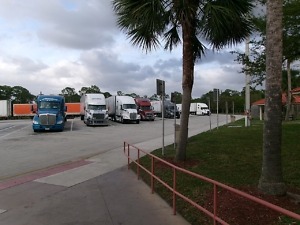
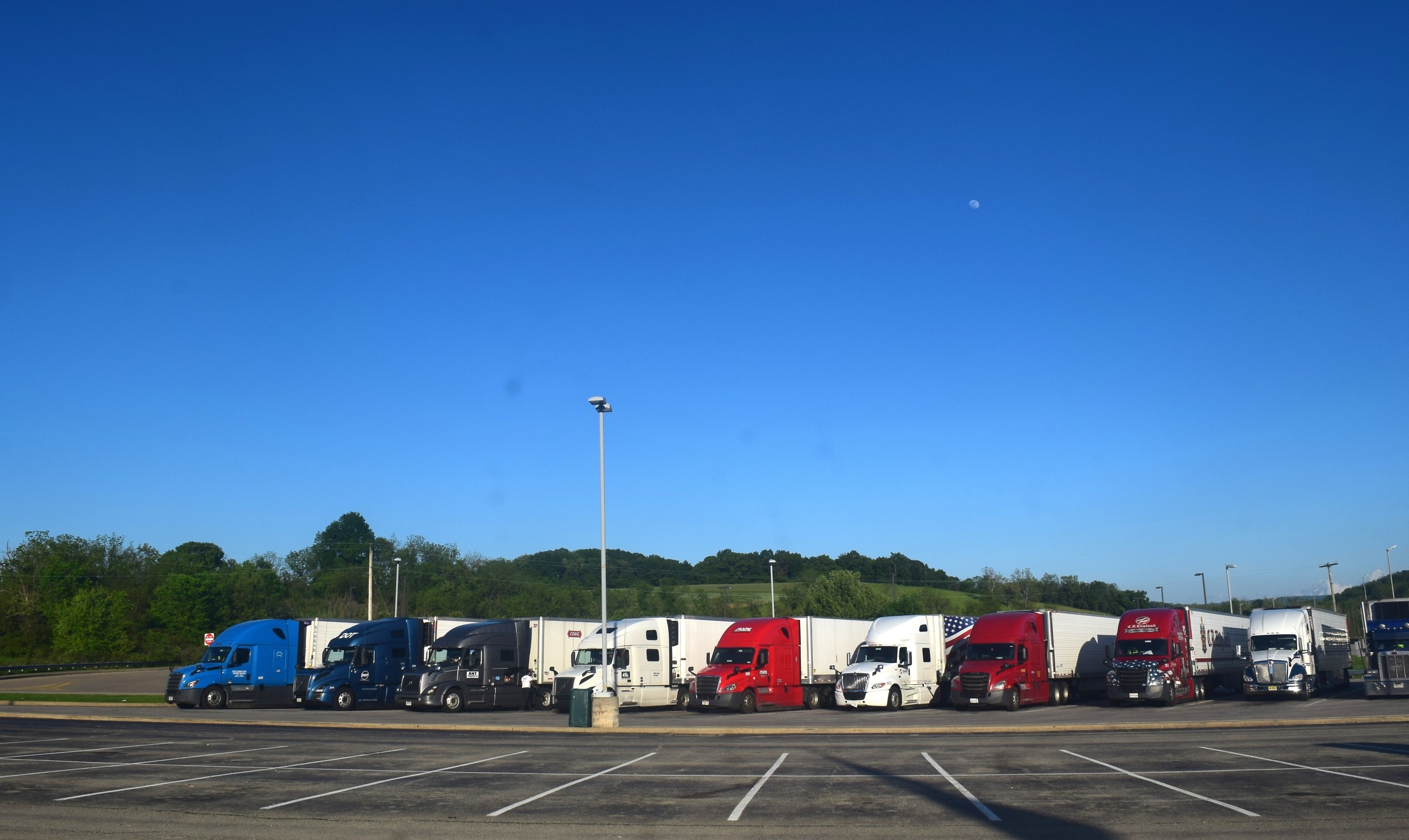
Trucks occupy marked spaces at the northbound I-95 rest area in Martin County, Florida, in March 2025. (Photo: DanTD; CC BY 4.0)
Truck parking grants totaling $200 million will support 14 projects in 12 states under awards the U.S. Department of Transportation announced October 14. The funding comes through the fiscal 2026 INFRA program and covers highway rest areas, port facilities and travel-center expansions.
The DOT announcement identifies additional parking as a way to reduce fatigue-related risks and time spent searching for a place to stop. Those are intended benefits; the awards do not establish that the planned facilities are already available.
For liquid and dry-bulk carriers, the practical implication is more potential stopping options between loading, tank washing, and delivery appointments. A space must fit the route, the driver’s available hours, and the cargo requirements to be useful. A statewide funding total alone cannot establish that fit.


Where the truck parking grants will go
DOT’s project fact sheets provide the following award amounts and estimated space counts.
| State | Corridor or location | Federal award | Listed spaces |
|---|---|---|---|
| Arkansas | Future I-49 | $23,024,000 | 137 |
| California | Needles; I-40/CA-95 | $6,435,138 | 100 |
| Connecticut | Enfield; I-91 | $13,500,000 | 260 |
| Georgia | Monroe County; I-75 southbound | $13,490,220 | 109 |
| Georgia | Savannah; SR 21/SR 307 | $11,950,000 | 275 |
| Iowa | I-80 rest areas | $24,545,040 | 150 |
| Illinois | I-57 rest areas | $12,645,145 | 38 |
| Minnesota | Fergus Falls; I-94 | $27,741,777 | 63 |
| North Carolina | Wilmington; I-40 | $6,002,296 | 140 |
| Nebraska | Dawson County; I-80 | $7,464,000 | 120 |
| Tennessee | I-40/I-24 | $23,959,776 | 500 |
| Texas | Fort Worth; SH-170/I-35W | $5,060,000 | 100 |
| Texas | Los Indios; FM 509/I-69E | $9,182,608 | 305 |
| Wisconsin | Dodge County; I-41 | $15,000,000 | 106 |
| Total | $200,000,000 | 2,403 | |
Space counts are DOT estimates and may change. Federal awards are not total project costs.

A nearly full truck parking area alongside I-84 in Oregon on January 17, 2024. (Photo: Oregon Department of Transportation; CC BY 2.0)
Nebraska illustrates the counting limitation: its 120-space project replaces existing capacity, and the narrative describes a net increase of about 92 stalls. The national total should therefore remain an attributed project count.
Rest areas and freight staging serve different needs
Tennessee has the largest listed space count: approximately 500 across five Pilot Travel Centers near Nashville and Knoxville. DOT says those parking areas will be free and accessible around the clock.
The announcement highlights six Iowa rest areas along I-80 and two Wisconsin rest areas along I-41. It also includes parking near the ports of Savannah and Wilmington and the Los Indios border crossing in Texas. These locations address different points in a driver’s workday.
A highway rest area can support a longer trip between customers. A facility near a port or border can help separate waiting trucks from surrounding streets. Neither function automatically ensures every space is available for an unrestricted overnight stay by a passing tanker.
That distinction matters for bulk dispatch, especially when loading and unloading delays disrupt a driver’s schedule. A driver released late from a receiver may need a place to stop on the correct side of an interchange; another may need somewhere to wait before a scheduled loading slot. Routing distance, legal access, and the site’s operating rules determine whether a new facility solves either problem.
Parking also intersects with the fuel-cost pressure facing trucking fleets. Avoidable searching consumes fuel and driver time. The awards could reduce that burden, but they do not establish a uniform saving per truck, load, or fleet.
Opening dates and cargo access remain essential

A Pilot tanker at a Flying J travel plaza near I-75 and State Road 52 in Pasco County, Florida, in September 2010. (Photo: DanTD; CC BY-SA 3.0)
The INFRA program guidance identifies Track 2 as a dedicated commercial-vehicle parking funding stream. Eligible public applicants may partner with private entities on development, expansion, operations, and maintenance. Public funding therefore does not mean every selected project will be a conventional state-operated rest area.
DOT also distinguishes selection from formal grant obligation, which involves signing an agreement after federal prerequisites have been met. Construction and opening are further milestones. The award announcement does not provide a common opening date for this group of projects.
For dispatch planning, the useful next information is site-specific: when spaces enter service, which direction of travel they accommodate, whether reservations or time limits apply, and which cargoes the operator accepts. Until those details are confirmed, fleets still need workable alternatives on the route.
Hazardous-material carriers have an additional consideration. Federal parking requirements in 49 CFR 397.7 remain applicable. For hazardous materials other than Divisions 1.1, 1.2 and 1.3, the rule generally prohibits parking on or within five feet of the traveled portion of a public street or highway, with a limited operational exception. The grant awards do not change that requirement or establish universal hazmat acceptance.

Parked trailers at a truck stop in Portage, Indiana, during a rainy night in July 2012. (Photo: Tony Webster; CC BY 2.0)
Accurate availability information can make new capacity easier to use. Tank Transport’s earlier reporting on truck parking information systems described using sensors and driver-facing information to identify open spaces. For a fleet, the operational value comes when reliable information and a suitable parking location are available together.
The next meaningful measure is delivery: usable spaces opened, access conditions published, and existing parking preserved during replacement work. Those milestones will show how the investment changes actual trip planning.
Truck Parking Grants: Key Developments
- The October 14 awards fund a geographically varied mix of parking projects.
- Published space counts require care because replacement capacity is included.
- Fleet benefits depend on completed facilities, practical access, and reliable operating information.
- Existing hazardous-material parking requirements continue to apply.