- FMCSA reopened comments on Grote’s radar-triggered rear-collision warning system through November 19.
- Grote now specifies amber collision warnings, with steady red reserved for the brake-activated function.
- The radar-triggered exemption remains pending; approvals for existing brake-activated lamp systems are separate.
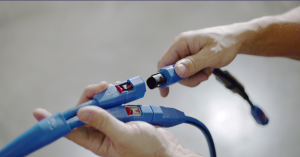
Grote’s 4SEE digital harness provides the wired platform used by its rear-collision warning system. (Photo: Grote Industries.)
FMCSA has reopened public comments on rear-collision warning lights after Grote Industries clarified how its radar-controlled system would alert motorists approaching a commercial vehicle from behind. The agency’s October 20 notice sets a November 19, 2026, deadline for comments on the supplemental information.
The central clarification concerns what the lamps communicate. Grote says its Rear-End Collision Warning, or RCW, function pulses amber without changing to steady red. A steady-red indication belongs to the separate brake-activated function, which takes priority when braking and a radar warning occur together.
For tank fleets evaluating auxiliary lighting, the distinction affects both equipment specifications and compliance. A system activated by an approaching vehicle presents a different operating case from one activated by the truck’s service brakes. FMCSA has not yet granted the requested radar-triggered exemption.


What the radar warning would communicate
Grote describes its 4SEE Rear-Collision Warning System as combining a rear radar unit, data processing, and an auxiliary strobe lamp through its digital harness. The visible warning is intended for the following motorist.
The original application describes a system that calculates time to collision from an approaching vehicle’s movement. It identifies a typical activation threshold of 2.1 to 4.0 seconds. That is a calculated collision-risk threshold, rather than a fixed following distance or a promise that every driver will have that much time to respond.
Earlier application language allowed the warning sequence to finish with steady-red lamps while the collision risk continued. In its May 7 comments, the Commercial Vehicle Safety Alliance raised concern that a following driver could interpret that signal as hard braking and react unexpectedly.
CVSA welcomed the system’s potential and its automatic operation, but supported an exemption only if the transition from flashing amber to steady red was removed from the collision-warning sequence. Grote’s supplemental explanation addresses that distinction:
| Trigger | Auxiliary-lamp response |
|---|---|
| Radar warning only | Amber pulses for up to four seconds per activation; no transition to steady red. |
| Service-brake application | Under the existing Grote exemption, amber pulses for up to four seconds, then steady red while the brake circuit remains active. |
| Braking during a radar alert | The brake-activated sequence takes priority. |
The comparison concerns auxiliary lamps. Required steady-burning brake lamps remain part of the vehicle’s lighting equipment.
Why existing brake-light exemptions are different

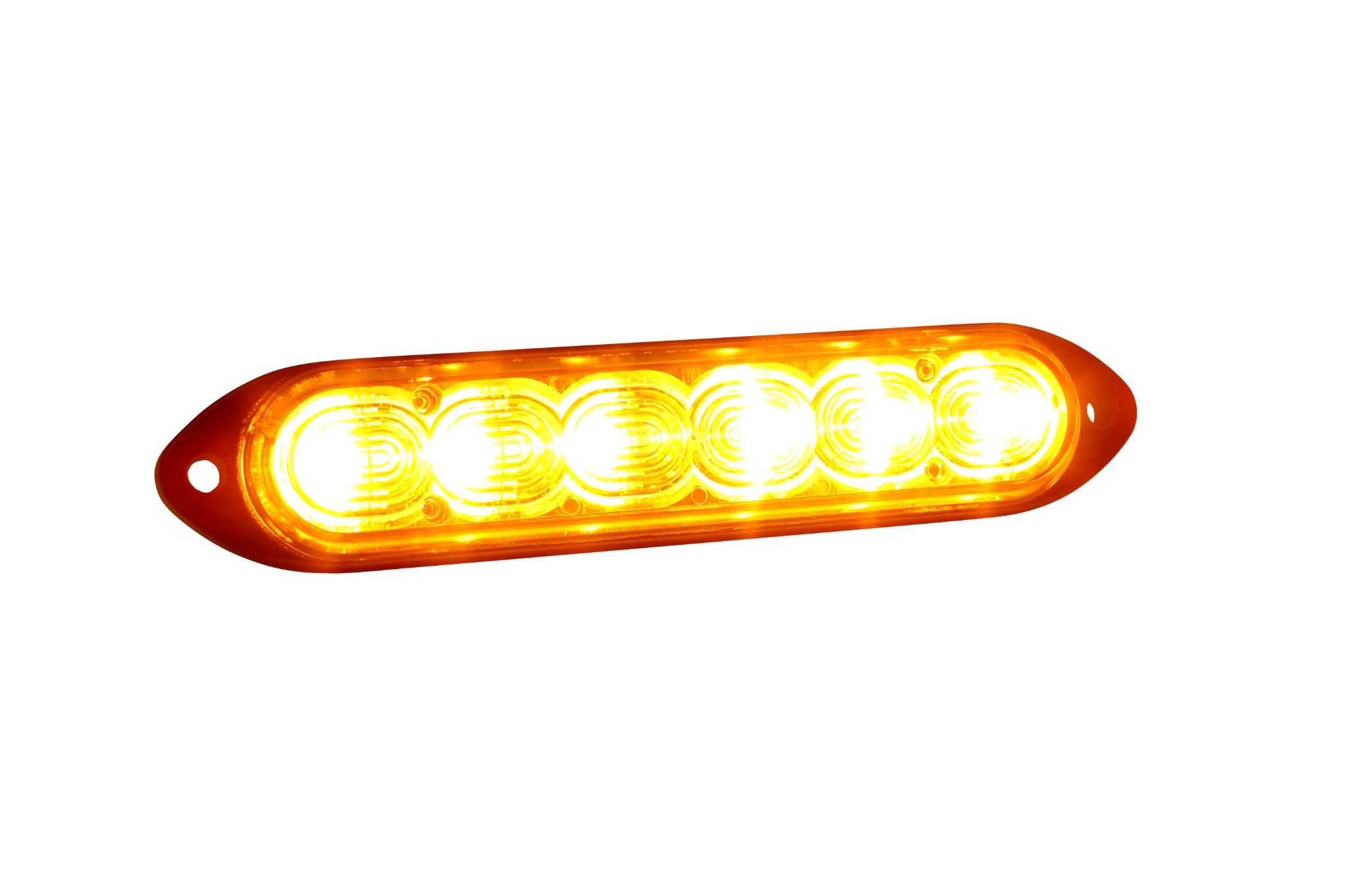
Grote’s compact auxiliary lamp shown unlit, amber and red. The brake-activated function uses an amber-to-red sequence. (Image: Grote Industries.)
The underlying federal rule, 49 CFR 393.25(e), generally requires exterior commercial-vehicle lamps to remain steady-burning, with specified exceptions. Adding a lamp does not, by itself, remove that requirement. Grote therefore requested a five-year exemption for the RCW application.
A separate Grote exemption renewed in November 2025 permits specified amber brake-activated auxiliary lamps on trailers and van body trucks from December 3, 2025, through December 2, 2030, unless revoked earlier. It includes placement and operating conditions and requires those lamps to supplement the mandatory brake lights.
That existing authorization does not authorize a radar signal to trigger the lamps independently of braking. Fleets considering equipment changes need to match the installed configuration and activation logic to the applicable exemption.
Tank fleets’ interest in pulsating brake lights predates the RCW application. Tank Transport reported on Groendyke’s brake-activated trailer-light exemption in 2019 and revisited the subject in its Tank Summit 2025 coverage. The RCW proceeding adds a separate question: how to warn a following driver when an approaching vehicle creates the risk, including when the commercial vehicle has not applied its brakes.
What tank fleets can address before November 19?
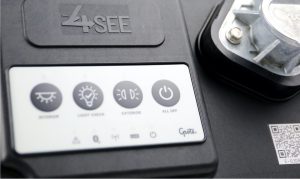
A close-up of Grote’s 4SEE smart nose box, part of the company’s smart-trailer platform. (Photo: Grote Industries.)
FMCSA is seeking comments on the new information, including a docket memorandum explaining how the system operates. Submissions must address that supplemental material; the agency says comments on other matters will not be considered in this reopened round.
For a tank carrier, useful feedback could describe whether a proposed installation preserves an unobstructed view of the auxiliary lamps and radar, and how the warning sequence would interact with the trailer’s existing lighting. Evidence should identify the equipment configuration and operating conditions behind any reported result.
Driver recognition is another practical issue. A fleet could explain what testing would distinguish an amber collision warning from a brake indication, and how it would evaluate nuisance activations or conflicting signals. Those are operational questions arising from the clarified design, rather than additional requirements imposed by this notice.
As with other collision-avoidance technologies, equipment evaluation should distinguish the intended benefit from measured performance. Results obtained with brake-activated lamps cannot automatically establish the effectiveness of radar-triggered warnings.
Comments can be submitted through docket FMCSA-2026-0100. Contributors should identify the relevant section and explain the basis for their recommendations. Any eventual approval would establish its own effective period and conditions; this notice does not create an installation mandate.
Rear-Collision Warning Lights: Key Developments
- Comment deadline: November 19, 2026, for the supplemental information.
- Signal clarification: Radar warnings pulse amber; braking controls any steady-red auxiliary indication.
- Separate permissions: The existing Grote brake-activated exemption does not authorize the pending radar-triggered function.
- Fleet focus: Lamp visibility, signal recognition, and evidence from comparable operations can inform the review.