- Sempra found damage in Energía Costa Azul’s refrigerant compressors during a planned shutdown after the terminal’s first LNG cargo.
- The project now targets substantial completion in the fourth quarter of 2026, but that forecast depends on the root-cause investigation and repairs proceeding as expected.
- The delay postpones reliable access to a 0.4-Bcf/d Pacific outlet for U.S. natural gas; it does not erase the route’s long-term strategic value.
Sempra Infrastructure’s Energía Costa Azul LNG Phase 1 has entered an extended commissioning period after planned inspections found damage in the project’s refrigerant compressors. The Energía Costa Azul delay was disclosed July 27, less than three weeks after the terminal shipped its first liquefied natural gas cargo from Baja California.
The central distinction in the Energía Costa Azul delay is the difference between producing one commissioning cargo and beginning dependable commercial service. The first shipment demonstrated that the new liquefaction facilities could receive U.S. feed gas, produce LNG, load a vessel and reach the export market. It did not establish that the single-train plant was ready to meet long-term delivery obligations.
That distinction matters to terminal operators, energy shippers, pipeline companies and bulk-logistics providers. Energía Costa Azul is designed to create a 0.4-billion-cubic-feet-per-day Pacific outlet for U.S. natural gas, with LNG moving from Mexico’s west coast toward Asian markets. Until the compressor problem is diagnosed, repaired and retested, the route remains proven at the cargo level but not yet established as a steady commercial supply lane.


First LNG Cargo Proved the Route, Not Commercial Reliability
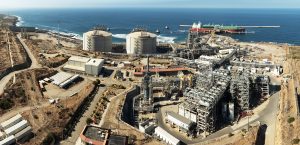
ECA LNG Phase 1’s liquefaction train, two storage tanks and first commissioning cargo are visible at the terminal north of Ensenada, Mexico. (Photo: Sempra Infrastructure)
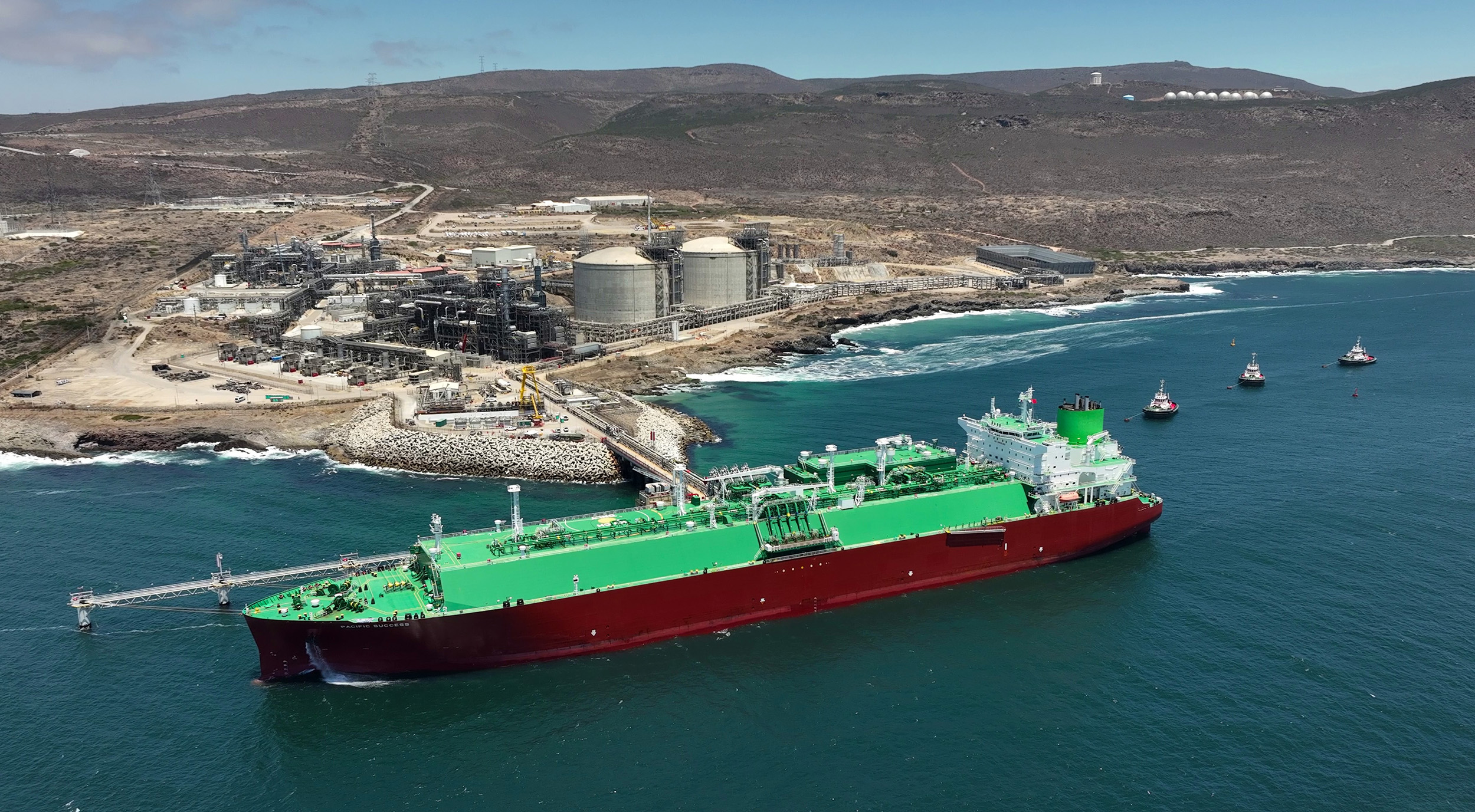
ECA LNG Phase 1 had advanced through a recognizable commissioning sequence. It reached mechanical completion in December 2025, introduced feed gas in April 2026 and produced its first LNG in June. On July 8, Sempra announced that the facility had loaded and shipped its first cargo.
TotalEnergies, which owns 16.6% of the project, said it shipped that cargo to Asia and would be the sole LNG offtaker during ramp-up. Once commercial operations begin, TotalEnergies is contracted to take 1.7 million metric tons per year for 20 years. Sempra also identifies Mitsui & Co. as a long-term buyer.
The U.S. Energy Information Administration supplied the most useful definition of the project’s status. EIA classifies commissioning facilities as sites that have introduced feed gas, begun system testing, and produced or exported initial LNG, but have not started meeting long-term shipping obligations. That is why the July cargo and the July compressor disclosure are not contradictory. Both can be true: the facility completed a major test, then found equipment damage before regular contracted service began.
A first cargo proves that a terminal can make and load LNG. It does not prove that the plant can sustain contracted service.Sempra had expected substantial completion during the summer, with sales under long-term agreements beginning shortly afterward. Its revised forecast moves substantial completion to the fourth quarter of 2026, again with contracted sales expected to follow. The wording is important: the company has not announced a fixed restart date or a specific first commercial cargo date.
Why Refrigerant Compressor Damage Changes the Commissioning Test
Main refrigerant compressors are central to an LNG liquefaction train. They circulate and compress the refrigerants used to remove heat from treated natural gas until it becomes a cryogenic liquid suitable for storage and marine shipment. Siemens Energy describes main refrigeration compressor trains as key components of the liquefaction process that produces LNG for storage tanks and export vessels.

Refrigerant compressors are central to the liquefaction process, making inspection, repair and successful retesting critical to ECA LNG’s commercial startup. (Original Tank Transport illustration)
ECA Phase 1 consists of one liquefaction train with nameplate capacity of 3.25 million metric tons per year. Because there is no second Phase 1 train available to carry scheduled production while this train is shut down, the inspection and remediation work directly controls the project’s path to commercial service.
Sempra has said the plant was taken offline for planned inspections and that the inspections discovered damage in the project’s refrigerant compressors. It has not disclosed the damage mechanism, the affected components, the compressor supplier, repair cost, replacement needs or whether the issue developed during startup. The company also has not attributed the damage to design, manufacturing, installation, controls, operating conditions or another cause.
Those omissions are not evidence of a larger failure. They define the limits of what can be reported responsibly. A root-cause investigation must determine whether repairs can be confined to damaged parts or whether parallel equipment, lubrication systems, seals, bearings, piping, controls or operating procedures require additional inspection and corrective work.
The fourth-quarter target is therefore conditional. Sempra said the timing depends on completing the investigation and executing remediation workstreams in line with management’s expectations. The next meaningful milestone is not another broad progress statement; it is evidence that repairs are complete and the liquefaction train can run through renewed testing without reproducing the damage.

North American LNG export capacity could rise from 11.4 Bcf/d in early 2024 to 28.7 Bcf/d in 2029 if projects under construction begin as planned. Energía Costa Azul represents 0.4 Bcf/d of Mexico’s cited growth. (Graphic: Tank Transport; data: U.S. Energy Information Administration)
The Delay Holds Back a New Pacific Outlet for U.S. Gas
EIA estimates that Energía Costa Azul adds 0.4 Bcf/d of nominal LNG export capacity and, once completed, would triple Mexico’s LNG export capacity. The agency also places the project within a larger North American buildout that could lift regional LNG export capacity from 11.4 Bcf/d at the beginning of 2024 to 28.7 Bcf/d in 2029 if projects under construction start as planned.
The feed gas is sourced from the United States. TotalEnergies identifies the Permian Basin in Texas and New Mexico as the supply region. At the same time, the U.S. Department of Energy has authorized exports of U.S.-sourced gas to Mexico and the re-export of LNG from the ECA project. For U.S. producers and pipeline operators, regular ECA service would create an additional demand outlet on the opposite coast from the large Gulf Coast LNG complex.
Tank Transport has previously examined the broader rise in U.S. LNG export capacity and the way expanding liquefaction infrastructure connects domestic gas production to global markets. The near-term ECA consequence should still be stated narrowly: an extended commissioning period delays the terminal’s transition to dependable feed-gas consumption and contracted cargo loading. It does not by itself prove a regional gas glut, a pipeline disruption or a measurable change in Permian pricing.
Nor does the first cargo establish a new tank-truck lane. ECA is a pipeline-fed liquefaction and marine-export project. Its direct logistics chain runs from U.S. gas production and transmission systems through the Baja California terminal to LNG carriers. Any claim about added highway LNG hauling would require separate evidence of truck-loading facilities, customers and movements.
The Pacific LNG Route Still Retains Its Strategic Value

EIA’s map places Energía Costa Azul within the expanding North American LNG export buildout. (Graphic: U.S. Energy Information Administration)
The compressor problem changes timing and startup risk, but it does not eliminate the project’s geographical advantage. A cargo leaving Ensenada for an Asian destination is already on the Pacific Ocean and does not need to cross the Panama Canal. Sempra and TotalEnergies describe the location as a shorter route for U.S. gas moving to Asia and other Pacific Basin markets.
That positioning matters while LNG buyers are paying closer attention to route concentration, canal constraints and geopolitical chokepoints. Tank Transport’s coverage of global competition for LNG and the more recent Hormuz supply risk shows why an additional Pacific source can carry value beyond its percentage of world capacity. Route diversity cannot prevent equipment trouble at the terminal, but it can reduce dependence on longer or more exposed shipping pathways after reliable operations begin.
The compressor damage delays the commercial value of the Pacific route; it does not erase the route itself.Commercial commitments also provide a reason to distinguish delay from project abandonment. Phase 1 has a 3.25-Mtpa nameplate rating and long-term sale-and-purchase agreements with TotalEnergies and Mitsui. TotalEnergies is both an equity partner and a contracted buyer. Those arrangements do not guarantee an on-time restart, but they show that ECA was built around committed offtake rather than an uncontracted attempt to sell all output into the spot market.
Sempra said the extended commissioning process is not expected to reduce planned Sempra Infrastructure earnings contributions relative to its 2026 and 2027 segment guidance ranges. That statement is useful but limited. It does not disclose the repair cost, allocation of that cost, insurance treatment, contractual protections, or any effect on individual cargo schedules.
The same caution applies to the proposed second phase. EIA says Phase 2 could add 1.6 Bcf/d from two larger trains if constructed. Phase 2 remains a development proposal, and Sempra has not said the Phase 1 compressor findings will change its design, schedule, or investment decision. Treating the current damage as proof that Phase 2 will either proceed unchanged or be curtailed would move beyond the evidence.
What to Watch as ECA LNG Commissioning Continues: Key Developments
- Root cause: Sempra has not identified what damaged the refrigerant compressors or whether the issue extends beyond the components already inspected.
- Repair scope: Watch for disclosure of repair versus replacement work, additional equipment inspections, and the testing required before restart.
- Commercial milestone: Substantial completion is now expected in the fourth quarter, with long-term sales beginning shortly afterward; neither milestone has a fixed public date.
- Operating proof: Sustained feed-gas intake, repeated LNG production and a continuing cargo schedule will matter more than a second isolated commissioning shipment.
- Financial and expansion effects: Sempra has maintained segment earnings expectations, but project-level repair costs and any implications for the proposed Phase 2 remain undisclosed.