- Hormuz supply risk is shifting from oil-price volatility to physical fuel logistics, with diesel, jet fuel, LNG, and refined-product exports now under closer industry scrutiny.
- A contested Strait of Hormuz reopening does not mean normal shipping has returned, especially while carriers, insurers, and cargo owners remain cautious about vessel safety and war-risk exposure.
- Fuel haulers and tank transport operators should watch terminal pressure, export pull, surcharge exposure, and short-notice delivery demand as global supply uncertainty moves downstream.
Hormuz supply risk is no longer just a commodity-market concern. It has become a live operating issue for oil producers, ocean carriers, refiners, fuel buyers, terminal operators, traders, and downstream transport fleets that depend on stable flows of diesel, jet fuel, gasoline, LNG, and marine fuel.

“Commercial confidence is harder to restore than physical passage through a contested chokepoint.” Screenshot showing fast-attack craft swarming the Panama-flagged oil tanker Niovi in the Strait of Hormuz.
The Strait of Hormuz crisis has entered a more complex phase. Earlier coverage focused on whether the waterway might close, how high crude prices could climb, and whether military tensions between Iran, the United States, Israel, and Gulf states would disrupt energy exports. The newer question is more practical: what happens when a maritime chokepoint is technically being reopened, but commercial operators still do not treat it as safe, normal, or fully insurable?
That distinction matters for industry readers. A government announcement can move oil futures. A single escorted ship can ease market anxiety for a trading session. But normal energy logistics require something much more durable: vessel confidence, charterer confidence, insurance availability, safe port calls, reliable loading windows, terminal coordination, and predictable downstream supply.


“A reopening effort is not the same thing as a normalized supply chain.”
Right now, the market does not have all of that.
Reuters reported May 5 that the CS Anthem, a U.S.-flagged chemical tanker managed by Crowley-Stena Marine Solutions, became the second U.S.-flagged vessel to exit the Strait of Hormuz with U.S. military protection. But Reuters also reported that President Trump temporarily paused “Project Freedom” amid progress toward a possible agreement with Iran. In contrast, UKMTO reported a separate cargo vessel struck by an unknown projectile within the Strait. Together, those developments reinforce the central point: protected transits may be possible, but Hormuz supply risk remains elevated until commercial shipping can move safely, predictably, and without extraordinary military support.
The latest points to a contested reopening, not a clean return to normal shipping. U.S. forces have attempted to reopen commercial passage. Iran has continued to assert control over parts of the waterway. Commercial ships have reportedly remained exposed to projectiles, drone threats, small-boat activity, and shifting guidance. Major carriers continue to approach the route with caution. Energy executives are warning that the market is moving from price volatility toward physical shortages.
For fuel haulers and tank transport operators, that is the core story. Hormuz supply risk is not just about crude oil at sea. It can move through the chain into refined-product exports, diesel cracks, jet-fuel availability, terminal pressure, rack prices, emergency freight, fuel-surcharges disputes, and customer anxiety over whether the product will be available when needed.
For more reporting on oil-market developments affecting tank fleets, explore our Oil&Gas coverage and broader FuelPrices archive.
Hormuz Supply Risk Moves From Price Shock to Logistics Reality
The Strait of Hormuz remains one of the most important energy passages in the world. Roughly one-fifth of global petroleum liquids consumption and about a quarter of seaborne oil trade have historically moved through the waterway. It is also deeply important for LNG flows from Qatar and the UAE.
That scale is why Hormuz supply risk can never be treated as a narrow regional issue. A disruption in the Strait affects Asia first because of its heavy dependence on Gulf crude and LNG, but it does not stop there. Europe feels the pressure through competition for replacement cargo, jet fuel imports, gas markets, and freight costs. The United States is less directly dependent on Hormuz crude, but it is still exposed through global pricing, refined-product exports, and the pull of overseas buyers on U.S. Gulf Coast fuel supply.
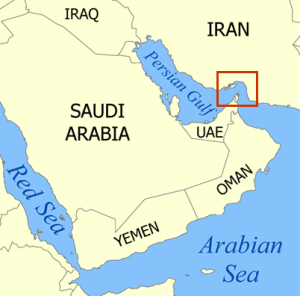
“Hormuz supply risk matters because one narrow waterway connects Gulf energy exports to global fuel markets.” Map showing the Strait of Hormuz in relation to Iran, Oman, and the Arabian Peninsula.
For global energy and regional conflict coverage tied to fuel markets, follow our Middle East updates.
The issue has become more serious because the crisis is no longer only about the possibility of closure. It is now about whether reopening can restore the commercial conditions needed for normal trade.
That is a higher bar.
A naval escort can move selected vessels. It cannot, by itself, normalize war-risk premiums, remove uncertainty about mines, reassure every cargo owner, or persuade every shipowner to resume passage. A cleared route can demonstrate the possibility, but it does not guarantee repeatable flow. A diplomatic statement can signal intent, but it does not eliminate the risk of projectiles near Fujairah or small-boat threats in the Gulf of Oman.
This is why the newest phase of Hormuz supply risk is operational. The market is asking practical questions. Can tankers transit without escort? Will insurers write cover at workable rates? Will charterers nominate Gulf cargoes with confidence? Can LNG carriers move without interruption? Will container lines lift booking suspensions? Will ports and terminals outside the Strait remain viable alternatives? Will fuel buyers need to reroute product, draw inventory, or pay more for short-notice supply?
Those are not theoretical questions. They are daily operating questions.
The clearest evidence comes from shipping behavior. Even after an escorted U.S.-flagged vessel reportedly transited the Strait, commercial traffic remained constrained. That matters because shipping markets are driven by risk decisions, not only official claims. If operators believe passage remains uncertain, they will delay sailings, reprice freight, reroute cargoes, pause bookings, or demand stronger contractual protections.
The insurance market is another warning signal. War-risk insurance does not merely add cost; it determines whether a voyage is commercially rational at all. When premiums rise sharply, vessel owners may avoid the route unless freight rates compensate for the increased costs. Cargo owners may delay shipments. Buyers may seek alternatives. Terminals may face bunching when ships finally move. The result is a logistics system that becomes less fluid even before the product is fully depleted.
This is where Hormuz supply risk becomes visible downstream.
For additional coverage of fuel availability and supply disruption, browse our FuelShortage reporting.
Refiners may run harder where crude is available. U.S. Gulf Coast refiners may see stronger export economics if buyers in Asia, Europe, or Latin America need replacement barrels. Diesel and jet fuel margins can widen when middle distillates become scarce. Marine-fuel markets can tighten if bunkering hubs face uncertainty. LNG buyers may need replacement cargoes, but replacement cargoes may be limited or priced at a premium.
The LNG and gas-market angle also remained active. Reuters reported May 5 that Dutch gas prices edged lower as traders weighed U.S. efforts to reopen the Strait of Hormuz, though analysts cautioned that a sustained easing in prices would likely require a more durable peace arrangement. That reinforces the point that Hormuz supply risk is not limited to crude oil; it also influences LNG expectations and European gas pricing.
For tank transport companies, the risk is not that every rack suddenly runs dry. The more likely near-term issue is unevenness. Some markets may remain supplied while others tighten. Some customers may be willing to pay premiums for guaranteed delivery. Some terminals may see a stronger pull from export channels. Some fleets may face more volatility in procurement timing, dispatch planning, surcharge calculations, and customer communication.
Hormuz supply risk, in other words, is not only a maritime story. It is a supply-chain story. For more on supply-chain ripple effects across fuel and bulk transportation, browse our SupplyChain coverage and Logistics section.
Why Hormuz Supply Risk Is Now a Fuel Logistics Story
The fuel logistics impact begins with the size of the chokepoint. The Strait of Hormuz connects Gulf producers to global markets. Crude oil, condensate, refined products, LNG, LPG, petrochemical feedstocks, and bunker-related flows all depend on the surrounding maritime system.
For more on crude-market shifts and crude transportation, visit our CrudeOil archive.
When that system slows, energy buyers do not simply wait. They look for a substitute supply. They bid for cargoes from other regions. They draw inventory. They ask refiners to increase runs. They shift routes. They change delivery timing. They pay more for certainty.

“The issue is no longer whether ships can pass, but whether ordinary commercial traffic can return safely and predictably.” A map of the Strait of Hormuz showing the narrow passage, surrounding states, and marked shipping lanes.
That is how a maritime chokepoint can affect a truck loading at a terminal thousands of miles away.
The United States is better positioned than many import-dependent economies because domestic crude production and refined-product capacity reduce direct exposure. But less exposed does not mean insulated. U.S. refiners compete in global markets. If overseas buyers need more diesel, gasoline, jet fuel, or other refined products, U.S. Gulf Coast barrels can become more attractive. That export pull can support refinery margins while also tightening domestic balances.
The distillate market is especially important. Diesel is the working fuel of freight, agriculture, construction, mining, emergency response, and much of the industrial economy. When middle distillate cracks widen, the cost pressure can ripple into trucking, rail, marine operations, distribution networks, and public-sector fleets.
For fleet-facing updates on diesel markets, rack pressure, and freight costs, see our DieselFuel coverage.
Jet fuel is similarly exposed. The Middle East is a major supplier of jet fuel into global markets. If regional exports are disrupted, airlines and airports must compete for replacement supply. That competition can affect refinery yield decisions, cargo nominations, storage economics, and transport-fuel pricing.
LNG adds another layer. Qatar is a critical LNG exporter, and LNG cargoes from the Gulf depend on the Hormuz passage. If LNG movements are delayed or force majeure notices affect contracted deliveries, buyers in Asia and Europe may seek replacement cargoes elsewhere. That can raise gas prices, alter power-generation economics, and affect industrial users that depend on predictable fuel costs.
For natural gas and LNG-related transportation coverage, explore our LNG reporting.
The result is a multi-product squeeze rather than a simple crude-only shock.
That is why Hormuz supply risk deserves attention from fuel haulers, terminal managers, and fleet operators. The first visible impact may be price volatility, but the deeper issue is reliability. Customers rarely panic because a benchmark moves by a few dollars. They panic when allocation rumors begin, when delivery windows shift, when suppliers reduce optionality, or when a terminal cannot confirm product availability on time.
Operationally, this creates a difficult environment. Dispatchers may need to manage more last-minute changes. Buyers may need to diversify supply points. Carriers may need to review surcharge language. Terminals may need to plan for irregular inbound supply. Retail and commercial customers may ask for more frequent updates. Contracted haulers may face pressure to prioritize critical accounts.
The longer the disruption lasts, the more these second-order effects matter.
Hormuz supply risk also complicates the inventory strategy. Holding more product can protect against disruption, but it ties up capital and storage capacity. Running lean can reduce cost, but it leaves buyers exposed if market conditions tighten quickly. In a stable market, lean operations can be efficient. In a disrupted market, they can become fragile.
“Price is the loudest signal, but logistics is the more important one.”
That is the central lesson from the current crisis for the industry.
How Hormuz Supply Risk Reaches Diesel, Jet Fuel, and LNG
Crude oil still gets the headlines because global benchmarks respond quickly to geopolitical risk. Brent and WTI futures can rise or fall within minutes based on news of attacks, escorts, diplomatic negotiations, or reopening claims. But physical product markets often tell the more useful story for operators.
Diesel is one of the most sensitive products in this environment. It is globally traded, heavily used, and tied to economic activity. When Middle Eastern supply becomes uncertain, buyers seek alternatives. If U.S. refiners have barrels available, export demand can strengthen. If inventories are not deep enough, prices can rise quickly.
This is where middle distillate cracks become a key indicator. A crack spread reflects the margin between crude and refined products. When diesel cracks widen sharply, it usually means the market values diesel more urgently relative to crude. That can be good for refiners but painful for end users.
For transport fleets, diesel volatility affects more than the pump price. It affects surcharge formulas, customer contracts, lane profitability, working capital, and procurement timing. If prices move sharply during a short billing cycle, disputes can emerge over whether surcharges reflect current costs. If customers expect a guaranteed supply, carriers may need to communicate earlier and with more detail.
For a closer look at how fuel costs are affecting carriers, see our analysis of diesel trucking costs and freight-market pressure.
Jet fuel pressure can move through the system differently but just as forcefully. Airlines cannot easily substitute away from jet fuel. If supply tightens, carriers may cut routes, raise fares, hedge more aggressively, or seek alternative suppliers. Airports may need additional coordination with fuel providers. Refiners may adjust yields to capture higher aviation-fuel margins, which can affect other products.
LNG is less directly tied to tank transport, but it matters for the broader energy economy. If LNG flows from Qatar and the UAE are constrained, buyers in Asia and Europe may compete harder for U.S., Australian, or other Atlantic Basin supply. Gas prices can rise, power costs can shift, and industrial energy users can face higher operating costs. Those effects can feed back into manufacturing, chemicals, cold storage, and other freight-intensive sectors.
LPG and naphtha also matter. They are often overlooked in mainstream coverage, but they are important for petrochemicals, household fuel, and industrial feedstocks. If they are delayed, rerouted, or repriced, the effect may show up in manufacturing costs rather than at a retail fuel pump.
That is why Hormuz supply risk should be read across the barrel. Crude is the headline. Diesel, jet fuel, LNG, LPG, and naphtha show how the disruption spreads.
What Companies Reveal About Hormuz Supply Risk
Company behavior is often more revealing than public statements.
Chevron’s recent comments are important because they frame the issue as a physical supply issue, not just price. When a major integrated oil company warns that shortages are beginning to appear, the market should treat that as a signal that inventories, spare logistics capacity, and substitution options are being tested.
The regional order of impact also matters. Asia is likely to feel the strain first because it relies on the Gulf supply. Europe can follow through with exposure to crude, products, LNG, and aviation fuel. The United States may be less exposed to direct import shortages, but U.S. refined-product exports can become more attractive when overseas buyers are short.
Maersk is important for a different reason. As a global carrier, it reveals how cautious commercial shipping remains. A single successful escorted transit does not automatically mean normal service resumes. If a major carrier still warns against passage, suspends bookings, imposes emergency freight charges, or relies on land-bridge alternatives, that is a practical signal that Hormuz supply risk remains active.
ADNOC’s behavior also deserves close attention. If a Gulf producer offers customers the ability to load crude outside the Gulf on a case-by-case basis, that suggests the company is adapting contract performance and logistics around the chokepoint. Such workarounds can help maintain supply, but they introduce new complexity: ship-to-ship transfer risk, demurrage disputes, cargo-title timing, insurance allocation, port scheduling, and quality assurance.
QatarEnergy, Petronet LNG, Edison, and other LNG-linked buyers and sellers show the gas-market side of the story. If force majeure notices, canceled shipments, or replacement purchases become necessary, the crisis becomes both a contract-performance issue and a maritime-security issue.
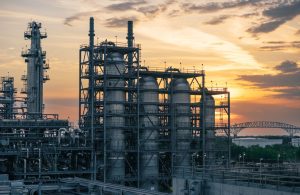
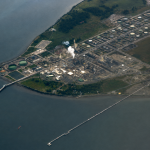
“Global supply shocks often become local fuel-market pressure through refineries, racks, and export channels.” Exterior view of Valero’s Port Arthur refinery on the Texas Gulf Coast.
U.S. refiners are also central. Valero, Phillips 66, Marathon Petroleum, PBF Energy, and other refiners with Gulf Coast export access may benefit from stronger margins if global refined-product markets tighten. That does not mean every effect is positive. A refiner may benefit from higher crack spreads while domestic customers pay more for fuel. A fuel hauler may see more demand but also higher procurement risk. A terminal may move more volume but face more uneven supply timing.
In the related refinery-market context, our coverage of the Valero Port Arthur blast shows how refinery disruption can spill over into diesel logistics and rack conditions.
This mixed impact is why the article must remain impartial. Hormuz supply risk creates winners and losers, sometimes inside the same market. Producers may benefit from higher prices, but buyers suffer. Refiners may benefit from margins, but airlines and fleets face higher costs. Shipping companies may collect emergency charges, but they also face crew risk, insurance costs, and service disruption.
The most accurate reading is not that the crisis is uniformly negative or positive. It is that the crisis redistributes risk across the energy chain.
Where Hormuz Supply Risk Hits Fleets, Terminals, and Customers
For tank transport operators, the most immediate concern is not the Strait of Hormuz itself. It is how the disruption changes domestic fuel-market behavior.
First, diesel price volatility can accelerate. If global buyers compete harder for U.S. diesel, rack prices may become more sensitive to export economics. That can affect carriers with fixed-price contracts, delayed surcharge recovery, or customers who expect stable weekly pricing.
Second, jet fuel markets can tighten in ways that spill into refinery planning. Refineries can adjust yields, but they cannot produce unlimited quantities of every product at once. Strong jet fuel demand can influence the balance between aviation fuel, diesel, and other middle distillates.
Third, terminal pressure can become uneven. Some terminals may remain well supplied while others experience stronger pull, longer resupply intervals, or more competitive allocation. This can create regional differences even when national inventory data looks manageable.
For a regional example of terminal and rack pressure, read our coverage of the Midwest fuel supply squeeze.
Fourth, emergency logistics can become more common. Customers may request short-notice loads, additional safety stock, backup deliveries, or priority dispatch. That can strain driver availability, equipment scheduling, and carrier commitments.
Fifth, customer communication becomes more important. In volatile fuel markets, silence creates uncertainty. Customers want to know whether supply is secure, whether prices are likely to change, whether delivery timing is reliable, and whether contingency plans exist.
Sixth, fuel surcharge language may be subject to stress. If market prices move rapidly, older formulas may lag actual cost. Carriers and customers may need to revisit index timing, regional basis, emergency fees, and pass-through language.
Seventh, insurance and security language can matter even for companies far from the Gulf. A carrier moving domestic fuel may not face maritime war-risk exposure, but it may have customers affected by higher marine insurance, higher product costs, or disrupted imports.
Eighth, inventory discipline becomes more valuable. Buyers who understand their minimum operating stock, backup terminals, supplier alternatives, and contract flexibility will be better positioned than buyers who rely on a single supply path.
Ninth, the situation can change quickly. A credible reopening could reduce price pressure. A major vessel attack could reverse that within hours. A diplomatic agreement could calm futures markets, while physical shipping may still take longer to normalize.
That is why Hormuz supply risk should be tracked as an evolving operating condition rather than a single event.
What Should Operators Watch Next as Hormuz Supply Risk Evolves?
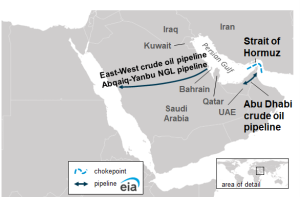
“Bypass routes can reduce pressure, but they cannot fully replace the scale of normal Strait of Hormuz flows.” EIA map showing the Strait of Hormuz, nearby Gulf states, and regional oil pipeline routes.
The first issue to watch is whether normal commercial traffic resumes without military escort. Escorted passage is significant, but it does not prove that the Strait is commercially normal. Industry confidence will depend on repeated, safe, insurable, and predictable transits by tankers, LNG carriers, container ships, and bulk carriers.
For future coverage of this critical oil chokepoint, follow our StraitOfHormuz archive.
The second issue is whether Fujairah remains viable as a workaround hub. Fujairah matters because it lies outside the Strait of Hormuz and serves as a major energy, bunkering, and storage hub. If attacks occur near Fujairah, or if risk perception around the port rises, one of the region’s most important bypass options becomes less reassuring.
The third issue is whether insurers normalize coverage. War-risk premiums are not a footnote. They shape voyage economics. If insurance remains expensive or uncertain, shipping flows may remain constrained even if the waterway is technically open.
The fourth issue is whether Gulf producers expand workaround loading. Outside-Gulf loading options, ship-to-ship transfers, pipeline bypass routes, and alternative ports can reduce pressure. But they cannot fully replace normal Hormuz volumes. The available pipeline bypass capacity is meaningful, but still far below the normal daily flow through the Strait.
For a U.S. example of how infrastructure limits can redirect crude into tanker-truck movements, see our article on California crude by truck.
The fifth issue is whether LNG disruptions persist. Oil markets get more attention, but LNG is a major part of the Hormuz story. If Qatar-linked flows remain constrained, buyers in Asia and Europe may compete for replacement cargoes, pushing gas stress into power, manufacturing, and industrial markets.
The sixth issue is whether refined-product exports continue to draw barrels from the United States. If diesel, jet fuel, and gasoline exports remain strong, domestic users may face higher prices even if physical supply remains available.
For more on how export economics can limit domestic fuel relief, review our breakdown of the Jones Act waiver and domestic fuel movement.
The seventh issue is whether demand destruction begins. High prices can reduce consumption. Airlines may trim capacity. Freight activity may slow. Industrial users may cut output. Governments may intervene through reserves, subsidies, caps, or export rules. Those responses can reduce pressure but also distort market signals.
The eighth issue is diplomacy. A U.N. resolution, regional security framework, ceasefire, or negotiated maritime arrangement could reduce risk. But diplomacy will need to translate into vessel confidence before logistics truly normalize.
The ninth issue is timing. Energy markets can react instantly, but supply chains heal slowly. Even after risk declines, delayed cargoes, repositioned vessels, insurance renewals, port backlogs, and contract disputes can linger.
Can Hormuz Supply Risk Ease Without Normal Commercial Traffic?
Hormuz supply risk can ease partially before normal commercial traffic returns, but it cannot fully disappear without repeated evidence that ships can move safely and predictably.
Oil futures may decline on news of a successful escort, a ceasefire, or a diplomatic breakthrough. That would reduce financial pressure. But physical markets need more than optimism. Buyers need cargoes. Refiners need crude. Airlines need jet fuel. Utilities need LNG. Terminals need resupply. Fleets need diesel.
If commercial traffic remains thin, the market will continue to experience price uncertainty. That uncertainty may show up as higher freight costs, higher insurance costs, wider cracks, stronger export pull, or more cautious inventory behavior.
The key difference is between “passage exists” and “commerce has normalized.”
A passage exists when selected vessels can move through under special conditions.
Commerce normalizes when ordinary vessels, ordinary cargoes, ordinary insurance terms, ordinary scheduling, and ordinary port operations resume at scale.
The market is not yet clearly at that second point.
For fuel haulers, the practical conclusion is straightforward. Do not treat a reopening headline as the end of the issue. Watch actual vessel traffic, insurance behavior, carrier advisories, product inventories, export flows, and terminal-level signals.
A cautious approach is not alarmist. It is operationally realistic.
Bottom Line on Hormuz Supply Risk
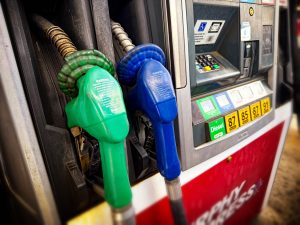
“Fleets feel Hormuz supply risk when diesel volatility reaches the pump, the rack, and the surcharge line.” A diesel pump stands ready at a retail fueling station. (Photo via Wikimedia Commons.)
Hormuz supply risk has entered a more consequential stage. The crisis is no longer defined only by the possibility of closure or the daily movement of crude benchmarks. Contested passage, military escort operations, Iranian assertions of control, commercial-vessel threats, war-risk insurance pressure, producer workarounds, LNG uncertainty, and downstream fuel-market stress now define it.
For industry readers, the most important takeaway is that a reopening effort is not the same thing as a normalized supply chain.
The Strait of Hormuz can be partially open, militarily contested, commercially risky, and economically disruptive all at once. That is the current challenge. It explains why major carriers remain cautious, why energy executives are warning about physical shortages, why refiners are watching margins closely, and why fuel buyers should pay attention to diesel, jet fuel, LNG, and refined-product export dynamics.
“The Strait of Hormuz can be partially open, militarily contested, commercially risky, and economically disruptive all at the same time.”
The companies to watch most closely are Chevron for its physical-shortage signal, Maersk for real-world commercial-shipping behavior, ADNOC for producer-level logistics adaptation, QatarEnergy and Petronet LNG for contract and LNG-flow risk, and U.S. refiners for the export-pull effect on transport fuels.
The products to watch are crude, diesel, jet fuel, LNG, LPG, and naphtha. Crude will dominate headlines, but diesel and jet fuel may matter more directly to fleets, airlines, distributors, and end users. LNG will matter to energy security and industrial costs. LPG and naphtha will matter to petrochemicals and downstream manufacturing.
The operating advice is equally clear. Track the physical market, not just the headline price. Monitor terminal supply, product availability, surcharge exposure, customer communication, alternate sourcing, and dispatch flexibility. In a fragile reopening, the companies that prepare for uneven supply will be better positioned than those that wait for a single all-clear signal.
Hormuz supply risk is still elevated because commercial confidence has not fully returned. Until normal, unescorted traffic, workable insurance, secure alternative hubs, and reliable product flows are restored, the crisis remains a fuel-logistics story as much as an oil-market story.
Key Developments: Hormuz Supply Risk Moves Downstream
- The Strait of Hormuz crisis has entered a contested-reopening phase, with military escort efforts, reported vessel attacks, and commercial caution all occurring simultaneously.
- Hormuz supply risk is no longer limited to crude oil pricing, as diesel, jet fuel, LNG, LPG, naphtha, and refined-product export flows are increasingly contributing to market impact.
- Major carriers remain cautious, showing that a single escorted vessel transit does not automatically restore normal commercial confidence.
- War-risk insurance and maritime-security uncertainty remain central issues, shaping whether shipowners, charterers, and cargo owners are willing to resume ordinary passage.
- Fujairah’s role as a workaround hub is under greater scrutiny because threats near or around the UAE energy hub weaken confidence in bypass logistics.
- Chevron’s warning about physical oil-supply shortages sharpened the market narrative, shifting the narrative from price risk to actual availability concerns.
- A second U.S.-flagged vessel has exited the Strait under military protection, reinforcing that protected passage is possible but still not equivalent to normalized, ordinary commercial traffic.
- The temporary pause in “Project Freedom” ties the reopening effort more directly to diplomacy, truce talks, and commercial operators’ willingness to trust that any passage window will remain stable.
- U.S. Gulf Coast refiners may benefit from stronger export demand, but that same export pull can increase volatility for domestic diesel, jet fuel, and other refined products.
- Tank transport operators should monitor rack conditions, terminal timing, surcharge formulas, customer communication, and alternate sourcing options as the crisis continues to evolve.
- The core industry takeaway is that “reopening” is not the same as normalized supply, and fuel logistics may remain exposed until safe, insurable, predictable commercial traffic returns.
External Resources on Hormuz Supply Risk and Fuel Logistics
- For official data on Strait of Hormuz oil flows, petroleum-liquids exposure, LNG relevance, and bypass-pipeline limits, review the U.S. Energy Information Administration’s Strait of Hormuz chokepoint analysis.
- For a global energy-security overview of crude, oil products, LNG exposure, and limited alternative routes, see the International Energy Agency’s Strait of Hormuz factsheet.
- For carrier-level operational guidance on Strait of Hormuz transit risk, booking restrictions, and emergency freight measures, read Maersk’s Middle East Operational Update.
- For maritime-security advisories related to commercial-vessel incidents, projectile risks, and caution guidance near Gulf waters, monitor the UK Maritime Trade Operations recent incidents.
- For reporting on Chevron CEO Mike Wirth’s warning that physical oil-supply shortages were beginning to appear, read Reuters’ coverage of Chevron’s oil-supply shortage outlook.
- For reporting on the CS Anthem becoming the second U.S.-flagged vessel to exit the Strait of Hormuz with U.S. military protection, see Reuters’ report on the CS Anthem chemical tanker transit.
- For reporting on the temporary pause in “Project Freedom” and the diplomatic context around the reopening effort, see Reuters’ report on the pause in the Strait of Hormuz escort effort.
- For reporting on a cargo vessel struck by an unknown projectile inside the Strait of Hormuz, see Reuters’ report on the UKMTO Strait of Hormuz projectile incident.
- For reporting on European gas prices reacting to U.S. efforts to reopen the Strait of Hormuz, see Reuters’ coverage of Dutch gas prices and Hormuz reopening hopes.
- For reporting on U.S. efforts to reopen the Strait of Hormuz, escorted commercial passage, and military activity during the operation, see Reuters’ report on the U.S. reopening effort in the Strait of Hormuz.
- For details on the Maersk-operated U.S.-flagged ship that transited Hormuz with U.S. military support, review Reuters’ report on the Alliance Fairfax transit.
- For context on why commercial traffic remained constrained despite reopening efforts, read Reuters’ report on Strait of Hormuz shipping remaining near a standstill.
- For details on ADNOC offering some customers crude-loading alternatives outside the Gulf, see Reuters’ coverage of ADNOC’s outside-Gulf crude-loading option.
- For reporting on the UAE accusation involving an empty ADNOC tanker and maritime-risk implications near Fujairah, read Reuters’ report on the ADNOC tanker incident near Fujairah.
- For background on Saudi and UAE bypass capacity, Fujairah’s strategic role, and why alternative routes cannot fully replace Hormuz flows, review Reuters’ analysis of alternative Middle East oil and gas routes.
- For reporting on stronger U.S. Gulf Coast refining margins, refined-product exports, and diesel and jet fuel strength tied to Middle East disruption, read Reuters’ coverage of U.S. fuel demand and Gulf Coast refining margins.
- For more on how Middle East supply disruption affected Valero, Phillips 66, Marathon Petroleum, PBF Energy, and U.S. refining profits, see Reuters’ report on U.S. refiners and stronger fuel margins.
- For the LNG market context involving Petronet LNG, Qatari supply concerns, and force majeure risk, read Reuters’ coverage of Petronet LNG and Qatar’s supply expectations.
- For reporting on Edison’s view of Qatar gas force majeure and potential replacement LNG cargoes, review Reuters’ report on Edison, Qatar LNG, and U.S. replacement supply.
- For diplomatic context on efforts to condemn obstruction of the Strait of Hormuz, see Reuters’ report on the U.S. and Gulf Arab U.N. resolution effort.