
- The UCR fee increase could add another mandatory cost to the compliance stack for motor carriers, tank fleets, brokers, and leasing companies.
- Current UCR public fee tables still show approved 2026 fees unchanged, while a 2027 fee and revenue recommendation has already moved from the UCR Plan Board toward FMCSA review.
- The issue is less about one fee and more about how registration costs, insurance, inspections, equipment, and enforcement demands keep layering across interstate trucking.
Why the UCR fee increase story is still open for 2027
The UCR fee increase remains an active issue for the 2027 registration year because the public record shows two things at once: current approved fees remain in place for 2026, while the Unified Carrier Registration Plan Board has already approved a 2027 fee and revenue requirement recommendation for submission to the U.S. Department of Transportation and the Federal Motor Carrier Safety Administration. That distinction matters because no separate approved 2027 fee table is currently shown on the UCR public fee-bracket page. Until FMCSA finalizes a new schedule, the 2027 fee question should be described as pending, proposed, or under federal review. For related coverage of interstate registration requirements, see Tank Transport’s UCR registration coverage.
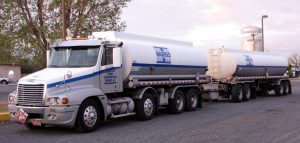
“A carrier’s UCR bracket starts with vehicle count, making accurate fleet data a practical compliance issue before every registration year.” Freightliner double tanker rig in Moses Lake, Washington (Greg Goebel, Wikimedia Commons, CC BY-SA 2.0).
The UCR Plan’s public fee-bracket page currently lists approved 2026 fees and 2025 fees under the same six-bracket structure: $46 for the smallest bracket and $44,836 for the largest. The current federal regulatory table also lists the 2025-and-subsequent fee schedule under 49 CFR § 367.50. Those figures establish the baseline for evaluating the proposed 2027 change, but they do not settle the 2027 registration year if FMCSA moves forward with a new fee table.
The proposed UCR fee increase under discussion would raise registration costs by about 20% on average. Tank Transport also tracks broader carrier fee updates affecting fleets, brokers, and regulated transportation businesses. Based on the fee scenario described in the proposal materials, the smallest carriers would see only a modest dollar increase, while the largest fleet bracket would face an increase measured in thousands of dollars. For a one- or two-truck operation, the issue is not the size of a single UCR payment. It is the continued accumulation of small mandatory costs across the business.


For large tank carriers, petroleum haulers, chemical fleets, and bulk transport operations, the larger dollar impact matters because UCR is one more annual compliance line item in a budget already shaped by insurance, equipment prices, diesel volatility, maintenance, cargo tank inspections, hazmat obligations, driver qualification costs, tolls, IRP, IFTA, and state-level fees. Tank Transport tracks these broader operational cost pressures across the trucking and bulk transport sectors.
“The issue is not whether one fee breaks a fleet budget, but whether smaller increases across the system keep compounding at the same time freight margins remain tight.”
The UCR fee increase is therefore not a crisis-level cost story. It is a regulatory cost-layering story. Tank Transport’s trucking regulations coverage follows the federal and state rulemaking issues that affect operating costs. UCR is not voluntary. It applies to covered interstate motor carriers, motor private carriers, brokers, freight forwarders, and leasing companies. For more on regulated trucking operators, visit Tank Transport’s motor carrier compliance issues section. A covered entity must register annually through its base state and pay the required fee to operate legally under the UCR agreement.
The UCR system is designed to collect and distribute registration-related revenue among participating states, which are required to use UCR-derived revenue for motor carrier safety programs, enforcement, or administration of the UCR Plan and agreement.
The current 2026 UCR registration portal through the National Registration System opened Oct. 1, 2025. UCR states that covered entities must complete registration and pay the fee before Jan. 1 of the registration year to continue operating legally. After Jan. 1, the fee remains due, and non-registrants may be subject to state enforcement action. The 2027 question is different. It is not whether UCR applies. It is whether the fee table will change before the 2027 registration cycle.
What is driving the UCR fee increase?
The proposed UCR fee increase is tied to the UCR Plan’s revenue mechanics. UCR fees are not supposed to be static forever. Federal law provides a process for setting and adjusting annual fees. Related coverage of Federal Motor Carrier Safety Regulations provides additional context on the rules shaping interstate trucking compliance. The UCR Plan Board recommends the fee level, and the Secretary sets the fees after notice and an opportunity for public comment. The fee-setting process takes into account the administrative costs of the UCR Plan and agreement, whether prior-year revenue produced a surplus or shortage, and whether collections are sufficient for participating states to receive the revenue levels established under the program.
That framework explains why UCR fees can move in both directions. In years when collections exceed what the program needs, fees can be reduced. In years when collections are projected to fall short, fees can be raised. The proposed 2027 adjustment reflects that second situation. The proposal materials describe a projected shortfall of nearly $21.8 million and a revenue target of about $118 million needed for allocations to participating states and the UCR Plan. Under that scenario, the fee adjustment would average about 20%.

“UCR revenue is tied to the state safety and enforcement framework that interstate carriers encounter throughout the year.” A map showing weigh station locations across the United States. (Wikideas1/Wikimedia Commons, CC0 1.0)
That is the core regulatory rationale: the program expects that existing fee levels will not generate enough money to meet authorized revenue needs. Carrier opposition comes from a different point. Many motor carriers already file company, operating authority, and fleet information through other federal and state systems. FMCSA requires motor carriers and other regulated entities to update USDOT and operating authority records when key information changes, and entities under FMCSA jurisdiction must update their information every two years, even if nothing has changed.
That overlap creates frustration. The objection is not always that the UCR fee itself is enormous. It is that UCR feels like one more required registration layered on top of USDOT numbers, MC authority, MCS-150 updates, state registrations, fuel-tax filings, insurance filings, and operating credentials. For owner-operators and small fleets, a modest fee increase can become symbolic of a broader compliance burden. For larger fleets, the increase becomes more material because the UCR fee table scales by commercial motor vehicle count.
The largest bracket covers fleets with 1,001 or more vehicles and currently carries a fee of $44,836. A roughly 20% adjustment in that bracket would add a meaningful four-figure or five-figure budget item, depending on the final table. The practical effect is uneven: small carriers may notice the bureaucracy more than the dollar amount, while large carriers may notice both.
How the UCR fee increase would affect fleet brackets
The UCR fee schedule is built around six brackets. For additional reporting on industry payment requirements, follow Tank Transport’s registration fee reporting. Carriers, motor private carriers, and freight forwarders are assigned based on the number of commercial motor vehicles owned or operated. Brokers and leasing companies pay the smallest bracket amount. Current approved 2026 UCR fees are:
| Bracket | Number of vehicles | Current fee |
|---|---|---|
| B1 | 0–2 | $46 |
| B2 | 3–5 | $138 |
| B3 | 6–20 | $276 |
| B4 | 21–100 | $963 |
| B5 | 101–1,000 | $4,592 |
| B6 | 1,001+ | $44,836 |
This bracket structure is why the UCR fee increase would be felt differently across the industry. For a two-truck operation, the increase discussed in the proposal materials would be roughly the price of a small administrative expense. It would not compare with insurance renewal pressure, a major repair, tire replacement, or fuel-price movement. For a mid-sized regional carrier, the fee increase would remain manageable but would still become another recurring compliance charge.
For a national carrier, a large private fleet, a tank-truck group, or a carrier with more than 1,000 power units, the change would be more visible. A major fleet may be better positioned to absorb the cost, but it still has to budget for it, track it, and account for it across a wider operating footprint. That makes the UCR fee increase a fleet-planning issue, not merely a registration issue.

“For fuel and bulk carriers, registration costs are one part of the larger cost stack tied to operating legally across state lines.” A propane tank truck was parked at a Chevron station near I-65 in Greenville, Alabama. (Infrogmation/Wikimedia Commons, CC BY-SA 4.0)
The timing also matters. UCR registration opens before the registration year. For 2026, the National Registration System portal opened Oct. 1, 2025. If a new 2027 fee table is approved, carriers will need enough lead time to update budgets, back-office workflows, auto-renewal settings, and compliance calendars before the 2027 registration cycle begins.
UCR’s auto-renew program adds another operational detail. The UCR Plan has said that many carriers signed up to have 2026 registration automatically renewed through the National Registration System. Those registrations use option A and the number of power units on the carrier’s most current MCS-150 form. That detail matters because an outdated MCS-150 record can affect the power-unit count used in registration. FMCSA separately requires biennial updates, and failure to complete a required biennial update can result in USDOT number deactivation and civil penalties.
The UCR fee increase, therefore, intersects with a familiar compliance point: accurate fleet data. If a carrier has added or reduced power units, changed its business name, changed its address, altered its operating authority, shifted broker or leasing activities, or stopped interstate operations, the registration record should be checked before relying on auto-renewal or repeating the prior year’s UCR filing.
Why tank fleets and bulk carriers should track the UCR fee increase
Tank fleets operate in one of trucking’s higher-compliance environments. For more reporting on fleet obligations, inspections, and regulatory readiness, see Tank Transport’s carrier compliance reporting. The annual UCR payment is not usually the largest expense in a tank carrier’s budget. It is far smaller than tractors, trailers, tires, maintenance, driver wages, fuel, insurance, or cargo tank inspection programs. But tank fleets face a dense compliance stack. Depending on the operation, a tank carrier may be managing hazmat registration, cargo tank testing and inspection, driver endorsements, terminal-access requirements, product-specific training, spill response procedures, customer audits, security plans, safety data, incident reporting, insurance minimums, and specialized maintenance programs.
The UCR fee increase becomes relevant because it lands in the same budget category as other recurring compliance expenses. It is mandatory, calendar-based, and tied to the right to operate. That matters for petroleum haulers, chemical carriers, food-grade tank fleets, dry bulk operations, and private fleets moving regulated commodities across state lines.
The issue is also broader than carriers that own tractors. UCR applies to brokers and leasing companies as well. That is important in bulk transport because freight may involve brokerage arrangements, leased equipment, third-party logistics relationships, and specialized trailer capacity. A fee change can therefore touch multiple parts of the bulk transportation chain.
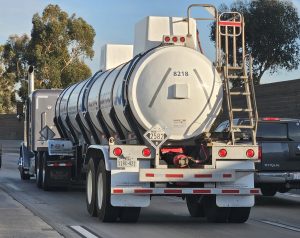
“Hazmat and tank carriers already operate under a dense compliance structure, making any added registration cost part of a much larger regulatory burden.” Semi-trailer tank truck hauling ferric chloride with hazmat placard 2582
The effect may not stop with the entity paying the UCR fee. In a tight-margin freight market, small increases in mandatory operating costs often work their way into pricing models, administrative fees, contract assumptions, or carrier minimums. A single registration increase rarely changes a freight market. Repeated cost additions across several categories can influence rate discipline, capacity decisions, and fleet investment.
For tank operations, the timing is especially relevant because equipment cycles are already capital-intensive. Cargo tanks are specialized assets, and replacement decisions are affected by interest rates, trailer availability, maintenance costs, customer requirements, regulatory risk, and expected utilization. A modest UCR fee increase will not determine whether a fleet buys new equipment. But it adds to the same ledger where management is already measuring every recurring cost.
What should carriers do before 2027 registration opens?
Carriers should treat the 2027 UCR fee increase as a pending budget item until a final fee table is published. The most practical step is to model a roughly 20% UCR increase in 2027 compliance budgets. That does not mean the final table will match the proposal exactly. It gives fleet accounting departments a reasonable planning number while the regulatory process remains open.
The second step is to verify the fleet’s vehicle count. UCR brackets are based on the number of commercial motor vehicles owned or operated by the carrier, motor private carrier, or freight forwarder. A carrier near the top or bottom of a bracket should pay particular attention to vehicle-count changes, leased power units, inactive units, and how the company’s MCS-150 data aligns with its current operation. The third step is to review the entity type. A company that operates as a motor carrier and also has brokerage authority may need to understand how UCR treats businesses performing more than one function. Leasing companies and brokers should also confirm whether they are registered under the correct entity category.
The fourth step is to watch the FMCSA action. Tank Transport’s FMCSA regulatory updates cover federal actions affecting carriers, brokers, drivers, and fleet compliance teams. The UCR Plan Board approved a 2027 fee and revenue recommendation on Aug. 7, 2025. The next decisive step is federal action that either finalizes, modifies, or otherwise resolves the 2027 fee schedule. The fifth step is to align UCR with other annual compliance renewals. For many carriers, UCR is handled alongside IRP, IFTA, state registrations, permits, insurance renewals, hazmat filings, and internal audit reviews. The simplest way to reduce errors is to place UCR into the same recurring compliance calendar rather than treating it as a stand-alone administrative task.
The sixth step is to avoid assuming that 2026 fees automatically settle 2027. The current approved 2026 table remains unchanged from the 2025 schedule, but the 2027 fee recommendation shows that the next registration year may be different. The seventh step is to document the payment. UCR compliance may be checked by enforcement agencies, and the UCR Plan has promoted awareness initiatives for verifying UCR compliance during roadside inspections. A carrier should maintain payment confirmation and registration records in a way that compliance, safety, and operations personnel can access when needed.
What does the UCR fee increase mean for brokers and leasing companies?
The UCR fee increase is not limited to trucking fleets. Brokers and leasing companies are included in the UCR system. Under the current fee schedule, brokers and leasing companies pay the smallest bracket amount, currently $46. That makes the dollar effect modest for most brokers and leasing companies if the proposal moves forward. Even so, the compliance requirement is still meaningful because UCR registration is part of the regulated operating environment for covered entities.
For brokers, the issue sits alongside FMCSA authority, bond requirements, fraud controls, identity-theft concerns, carrier vetting, and shipper expectations. The UCR Plan’s public site has also highlighted FMCSA alerts regarding broker and carrier fraud and identity theft. For leasing companies, UCR compliance can intersect with fleet records, equipment availability, customer operating models, and the distinction between leasing vehicles with or without drivers.
In bulk and tank transport, brokers and leasing companies can be central to capacity management. A petroleum marketer may rely on private fleet equipment and third-party carriers. A chemical shipper may work through a specialized broker. A tank carrier may lease tractors or trailers in response to seasonal demand, customer contract changes, or replacement-cycle delays. That makes UCR relevant beyond the carrier named on the door. A change in the UCR fee table can affect the broader network of entities supporting interstate freight movement, even when the fee itself is not a major expense.
Does the UCR fee increase apply to intrastate-only operations?

“For fuel and bulk carriers, the UCR fee increase is less about one payment and more about the steady layering of costs required to keep freight moving legally.” A fuel tanker truck moves along an open highway under clear blue skies. (Gera Cejas / Pexels)
The UCR system is tied to interstate commercial transportation. Entities that operate only intrastate may not be subject to UCR solely because they operate commercial vehicles within one state. However, the line between intrastate and interstate commerce can be more complicated than a truck crossing a state border. A carrier may be involved in interstate commerce even when a particular trip occurs inside one state, depending on the movement of the freight, the shipper’s intent, and the overall transportation chain.
For tank and bulk operations, that distinction matters. Fuel, chemicals, food-grade liquids, dry bulk commodities, and industrial products may move through multistate supply chains before or after a local delivery leg. Carriers that are uncertain about UCR applicability should examine operating authority, freight patterns, customer contracts, brokered loads, private carriage, and whether the operation participates in interstate commerce. The UCR fee increase only matters financially to entities that are required to register, but misclassifying the operation can create enforcement exposure that is more costly than the fee.
What happens if UCR registration is missed?
A covered entity that misses UCR registration still owes the fee. UCR’s public guidance states that covered entities must complete registration and pay before Jan. 1 of the registration year to continue operating legally. After that date, the fee remains due, and a non-registrant may be subject to state enforcement action. For carriers, missed registration can become a roadside, audit, or administrative problem.
For tank fleets, the risk is operational disruption. The cost of an enforcement problem, delayed dispatch, customer concern, or audit finding can exceed the registration fee itself. That is why the UCR fee increase should be tracked as a compliance calendar item rather than handled reactively. The most efficient response is straightforward: confirm whether the business is subject to UCR, verify fleet count, update FMCSA records as needed, budget for a possible 2027 increase, monitor the final fee table, and complete registration before the deadline.
The final fee amount may change. The compliance obligation will not disappear for covered interstate entities. The 2027 UCR story remains open because the existing fee table is still visible for 2026, the statutory fee-setting process allows adjustments, and the UCR Plan Board has already advanced a 2027 recommendation. Until FMCSA resolves the 2027 fee schedule, carriers should treat the issue as a pending cost and compliance item.
Key Developments: 2027 UCR fee increase remains a carrier-cost issue to watch
- The UCR Plan Board approved a 2027 registration-year fee and revenue requirement recommendation for submission to USDOT/FMCSA on Aug. 7, 2025.
- Current public UCR fee listings show approved 2026 fees unchanged from the 2025 schedule, with six brackets ranging from $46 to $44,836.
- The proposed 2027 UCR fee increase described in the available proposal materials would average about 20%, with the smallest carriers seeing a modest dollar increase and the largest bracket facing a much larger budget impact.
- UCR applies beyond for-hire trucking fleets, covering motor carriers, motor private carriers, brokers, freight forwarders, and leasing companies.
- For tank carriers and bulk transport fleets, the main issue is cumulative compliance cost, not a single registration charge.
- Covered entities must complete UCR registration and pay the required fee before Jan. 1 of the registration year to continue operating legally.
- FMCSA biennial update rules and UCR auto-renewal procedures make accurate fleet and company data especially important before the 2027 registration cycle.
For more context on regulatory, fleet, and market issues shaping carriers, follow Tank Transport’s trucking industry developments.
External Resources for UCR Fee Increase and Carrier Compliance
- Review current annual fee brackets, registration deadlines, and UCR payment categories at UCR Plan fee brackets.
- Track formal UCR Plan Board actions, including the 2027 registration-year fee recommendation, at UCR Plan Board decisions.
- Check whether a carrier, broker, freight forwarder, or leasing company must register through UCR’s registration applicability guide.
- Start or manage official annual registration through the National Registration System for UCR.
- Access UCR-1, UCR-2, and related fleet-count documentation at UCR registration forms.
- Review the federal law establishing the Unified Carrier Registration system at 49 U.S.C. § 14504a.
- Read the current federal regulatory fee schedule and standards for state registration at 49 CFR Part 367.
- Update USDOT, operating authority, and biennial registration information through FMCSA registration update guidance.
- Understand federal operating authority requirements for carriers and brokers at the FMCSA operating authority guidance.
- Verify company safety and registration information through the FMCSA SAFER Company Snapshot.