- PACCAR is recalling 5,919 model-year 2027 Kenworth and Peterbilt trucks because oil contamination in a power distribution center could interrupt engine power and several safety systems.
- The campaign covers 12 models built during production windows from June 9 through July 13, 2026, although PACCAR estimates 0.3% of the recalled population contains the defect.
- Dealers will inspect power-distribution-box serial numbers and replace suspect units free of charge; owner notifications are scheduled for September 25.

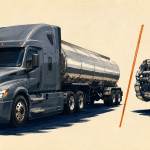
Representative Peterbilt 579 tanker delivering gasoline; the pictured truck is not identified as part of recall 26V485. (Photo: Grendelkhan/Wikimedia Commons, CC BY-SA 4.0)
PACCAR has launched a PACCAR truck recall covering 5,919 new Kenworth and Peterbilt vehicles whose power distribution center boxes may be contaminated with oil, creating a risk of losing engine power, antilock-brake functionality, exterior lighting, windshield wipers, or windshield defrosting.
The recall spans highway tractors and medium- and heavy-duty vocational trucks used across tank and bulk operations. For fleets running model-year 2027 equipment in fuel, chemical, food-grade, dry-bulk or liquid-waste service, the practical issue is broader than an electrical component: the potentially affected functions include several systems important to controlling and seeing a loaded truck.
PACCAR reported no related warranty claims, field reports, deaths or injuries as of July 27. The company nevertheless determined that the condition could increase crash risk and create noncompliance with federal standards covering defrosting, windshield wiping and vehicle lighting, according to the Part 573 report filed with the National Highway Traffic Safety Administration.

Twelve 2027 Kenworth and Peterbilt Models Are Included
NHTSA assigned the campaign number 26V485; PACCAR identifies it as 26PACD. Every vehicle listed in the filing is a model-year 2027 truck, but the production dates and population vary by model.
| Make and model | Potentially involved | Production window |
|---|---|---|
| Kenworth T680 | 1,451 | June 9–July 13, 2026 |
| Kenworth T880 | 1,221 | June 9–July 13, 2026 |
| Kenworth W990 | 105 | June 9–July 13, 2026 |
| Kenworth T280 | 87 | June 22–July 13, 2026 |
| Kenworth T380 | 82 | June 22–July 13, 2026 |
| Kenworth T480 | 81 | June 22–July 13, 2026 |
| Peterbilt 567 | 1,123 | June 9–July 13, 2026 |
| Peterbilt 579 | 989 | June 9–July 13, 2026 |
| Peterbilt 589 | 524 | June 9–July 13, 2026 |
| Peterbilt 548 | 109 | June 23–July 13, 2026 |
| Peterbilt 537 | 76 | June 23–July 13, 2026 |
| Peterbilt 536 | 71 | June 23–July 13, 2026 |
| Total recall population | 5,919 | Model year 2027 |
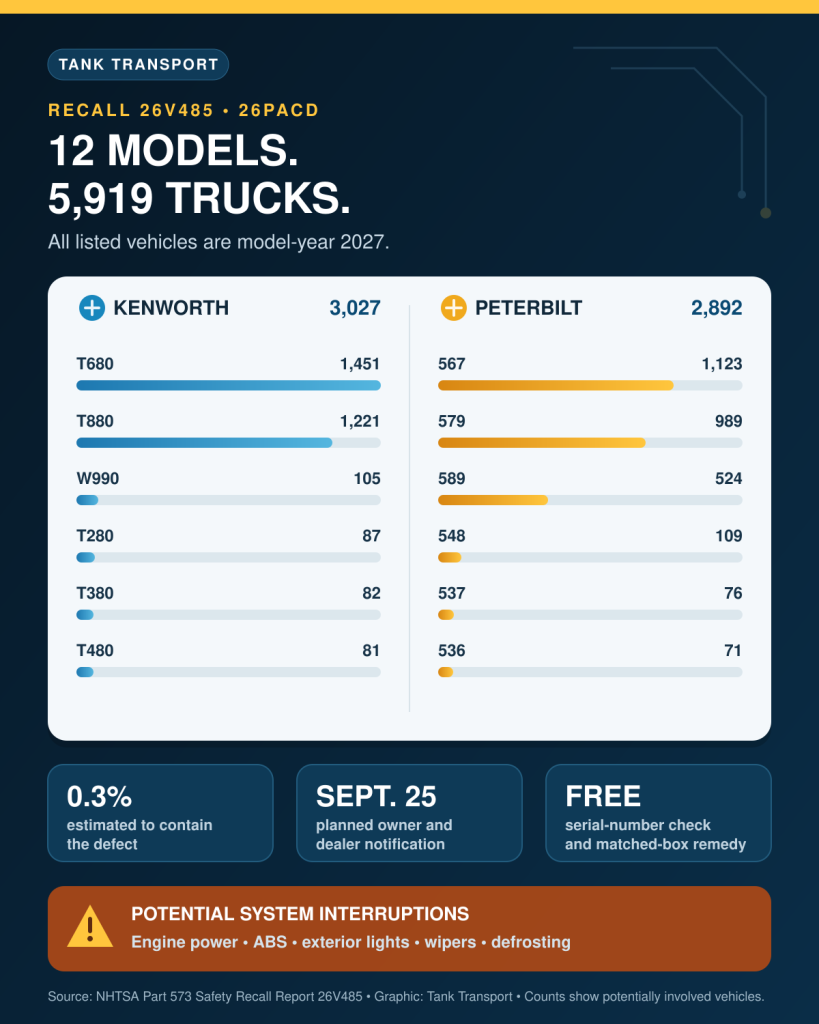
Six Kenworth and six Peterbilt models are included in PACCAR recall 26V485, with 5,919 vehicles potentially involved. (Graphic: Tank Transport; source: NHTSA)
The T680 and 579 are the largest highway-tractor populations in the campaign, while the T880 and 567 add substantial vocational exposure. The medium-duty T280, T380, T480, 536, 537 and 548 populations are smaller, but fleet managers should not use model-level totals to decide whether an individual unit is clear.
The recalled population was defined by production timing, PDC part numbers and whether trucks left PACCAR facilities before the supplier notified the manufacturer. That means the vehicle identification number and component serial number—not appearance, configuration or duty cycle—determine the next step. The campaign is separate from Tank Transport’s earlier Kenworth and Peterbilt gear-shifter recall coverage.
Oil Entered the PDC Manufacturing Process
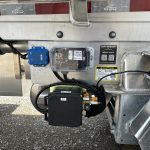
PACCAR attributes the condition to a damaged air-compressor filter during manufacture of printed circuit boards used in the power distribution center. Oil entered the soldering process at supplier PKC Group North America, potentially compromising electrical connections inside PDC part numbers P27-1297-0101 and P27-1298-0101.
The PDC routes electrical power to multiple cab and vehicle functions. A compromised connection could therefore interrupt the engine, ABS, lights, wipers, or defroster rather than produce one uniform failure. PACCAR says an ABS malfunction lamp may warn of an antilock-brake fault, but the other listed failure modes may occur without a warning.
That distinction matters in tank service. A driver could receive no advance dashboard alert before a loss of propulsion, lighting, or weather-visibility equipment. The filing does not establish that all systems will fail together, nor does it say that every recalled PDC is contaminated. PACCAR’s 0.3% defect estimate explains why the remedy begins with serial-number inspection instead of automatic replacement of all 5,919 boxes.
The safety-standard portion of the recall concerns FMVSS 103 for windshield defrosting and defogging, FMVSS 104 for windshield wiping and washing, and FMVSS 108 for lamps and related equipment. The potential engine-power and ABS losses add operational safety concerns beyond those three cited compliance standards.
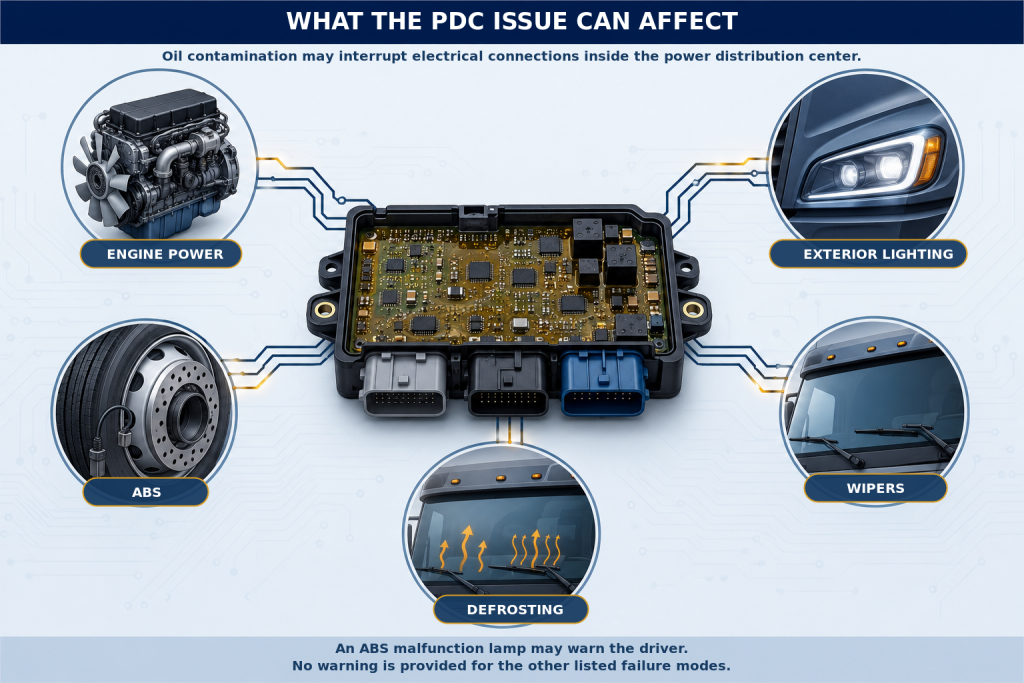
Oil contamination in the power distribution center may interrupt five critical vehicle functions, while only an ABS failure is expected to produce a warning lamp. (Graphic: Tank Transport; source: NHTSA)
What Fleets Should Check Before September 25
PACCAR plans to notify dealers and affected owners on September 25. Dealers will compare the PDC serial number with the supplier’s suspect list and replace a matched box at no charge. Trucks retained at PACCAR plants were inspected and, when necessary, repaired before release; the manufacturer identified July 14 as the clean point for production controls.
Fleet maintenance teams can begin by identifying model-year 2027 Kenworth and Peterbilt units from the listed production period, recording both NHTSA recall 26V485 and PACCAR campaign 26PACD, and checking each VIN through the NHTSA recall lookup or an authorized dealer. NHTSA cautions that some newly announced recalls may not appear in VIN results until manufacturers finish identifying affected vehicles, so a fleet should recheck a plausible unit rather than treat an early blank result as permanent clearance.
Because only an ABS-related problem is expected to produce a warning lamp, the absence of a dashboard alert does not establish that a recalled truck has a clean PDC. Fleets should follow PACCAR and dealer instructions for inspection and scheduling, and drivers should report unexpected electrical, lighting, wiper, defrost, ABS or engine-power behavior promptly. Additional developments can be followed through Tank Transport’s PACCAR coverage and the NHTSA recall archive.
PACCAR Truck Recall Key Developments
- The campaign covers 5,919 model-year 2027 Kenworth and Peterbilt trucks across 12 models.
- Oil contamination in the PDC may interrupt engine power, ABS, exterior lighting, windshield wipers, or defrosting.
- PACCAR estimates 0.3% of the recall population contains the defect and reported no related field cases or injuries through July 27.
- Dealers will inspect PDC serial numbers and replace suspect boxes free of charge, with notifications planned for September 25.