- Fourteen rules take effect September 3, 2026. A refrigerating-machine rule takes effect August 19, and the CERCLA hazardous-substance reference changes December 2.
- Emergency-response information and PHMSA registration proof may be electronic. Immediate access remains mandatory, and hazardous-material shipping papers do not become universally electronic.
- Special-permit, residue IBC and on-vehicle unloading relief is tightly conditioned. None of it authorizes general mobile fueling or eliminates ordinary cargo-tank requirements.

PHMSA’s 16 final rules create targeted changes across records, packaging, equipment and operations, requiring fleets to determine which provisions apply. (Illustration: Tank Transport)
PHMSA hazmat rules gave operators a 30-day implementation window for most of a regulatory package that is easy to underestimate and just as easy to overread.
On August 4, the Pipeline and Hazardous Materials Safety Administration published 16 separate final rules. They touch emergency-response information, registration records, special permits, package unloading, residue intermediate bulk containers, refrigerating equipment, cylinder requalification, rail procedures, farm security plans and several smaller classification or marking issues.
PHMSA presented the actions as burden reduction, modernization, and adoption of established special permits. That framing is directionally correct, but it can hide the operational risk. Every relief provision has a boundary. Several preserve a carrier’s obligation while changing only the acceptable method of compliance. Others apply only to named packagings, materials, destinations or modes.


The safest reading is not “PHMSA removed the paperwork.” It is “PHMSA changed where some information may live, while preserving the duty to produce it immediately.”
That distinction matters for roadside inspections, terminal procedures and emergency response. It also separates this package from the Federal Motor Carrier Safety Administration’s recent motor-carrier paperwork changes. The FMCSA rules and PHMSA rules can affect the same truck, but they arise under different regulations and do not erase one another.
PHMSA hazmat rules create three compliance dates
Most fleets should build one implementation project around September 3 while reserving two entries on the compliance calendar. The refrigerating-machine exception under HM-268M starts August 19. The change that points hazardous-substance determinations directly to EPA’s CERCLA table starts December 2.
The following table shows the full publication set. “Fleet reading” identifies the likely operational significance; it does not replace the applicability analysis for a particular material, package, or movement.

Fourteen of the 16 final rules take effect September 3; HM-268M begins August 19, and HM-268E begins December 2. (Graphic: Tank Transport; sources: PHMSA and Federal Register)
Fourteen rules sharing an effective date does not mean every employee needs 14 new procedures. A fuel-hauling fleet may have no practical use for the aerosol or refrigerating-machine changes. A chemical distributor that returns hundreds of IBCs may find HM-268P operationally significant. A rail-served terminal may need to map the motor-carrier, packaging and rail changes together.
The first management task is therefore applicability, not training. Determine which rules intersect the company’s materials, modes, packaging, special permits and customer services. Then train only on the procedures that actually change.
The digital-document rules come with an uptime requirement
Emergency information may move to a screen
Electronic emergency-response information is optional—but access is mandatory

HM-268D permits electronic emergency-response information, but carriers must ensure it can be produced immediately during an inspection or emergency. (Illustration: Tank Transport)
HM-268D changes 49 CFR 172.602(b)(1) so required emergency-response information may be presented in hard-copy or electronic form for domestic transportation. The rule also reaches facilities where hazardous materials are received, stored, or handled during transportation.
That gives a carrier flexibility to place information on a driver device, onboard system, or another electronic platform. It does not lower the performance standard. The information must remain immediately available for use away from the package and must be available to federal, state or local authorities and emergency responders when required.
PHMSA addressed the predictable failure modes directly. Loss of wireless service, insufficient battery power, a broken device, or another technical problem is not a defense if the information cannot be produced. A fleet choosing electronic delivery should therefore treat local storage, backup power, login continuity and replacement-device access as compliance controls—not information-technology preferences.
The National Tank Truck Carriers supported an electronic option during rulemaking. Other commenters emphasized offline availability. PHMSA kept the regulation performance-based rather than prescribing one device or system, leaving each company responsible for proving that its design works in a real inspection or emergency.
A file stored “in the cloud” is not immediately available if the driver cannot unlock it beside a disabled truck.
A practical rollout starts with an offline test. Put a representative tractor in an area with no signal, turn off the primary device’s network connection, and ask a driver to retrieve the emergency-response information without help from dispatch. Repeat the drill after a simulated dead battery or account lockout. Keep a paper backup unless the electronic system can pass those tests consistently.
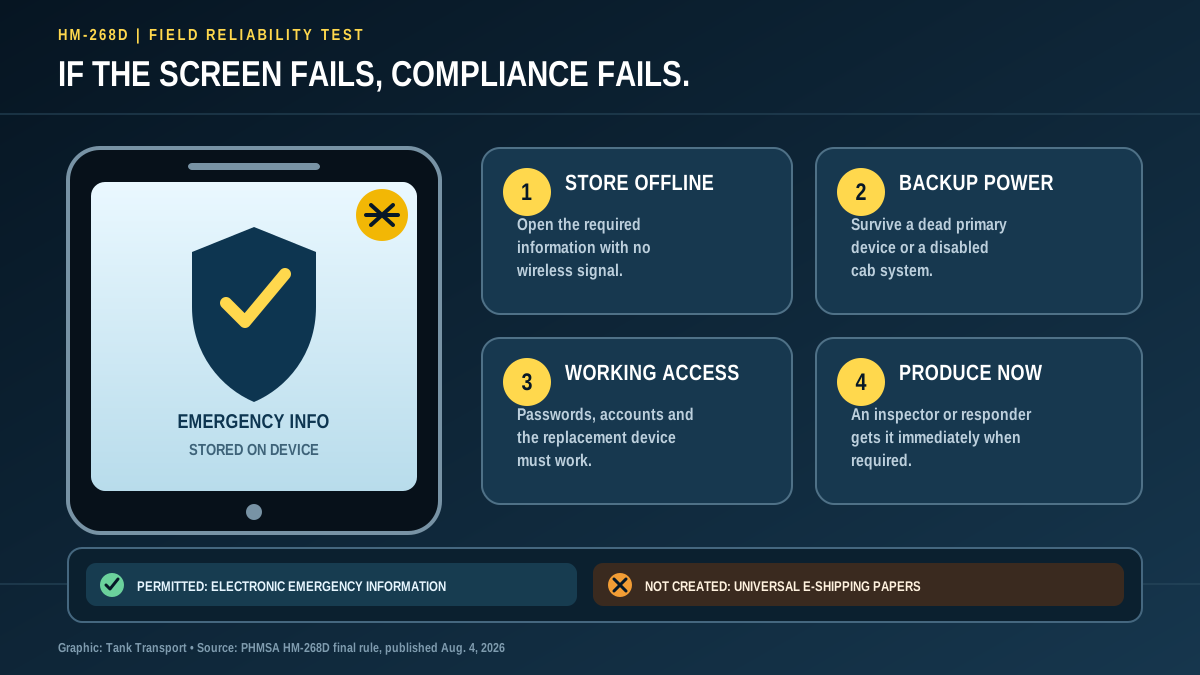
Electronic emergency-response information is permitted only when it remains immediately available despite field conditions. (Graphic: Tank Transport; source: 91 FR 49325)
Most importantly, HM-268D addresses emergency-response information. It does not announce a general conversion of hazardous-material shipping papers to electronic form. Fleets should continue to follow all shipping-paper location, accessibility, and retention rules that were not amended.
Registration proof can be electronic; registration payment cannot be a paper check.
HM-268I separately allows a motor carrier or vessel carrier to carry its PHMSA certificate of registration—or another document showing the registration number—either electronically or on paper. The carrier must still make it available to an inspector.
This is the low-risk digital change, provided the registration number is stored where the driver can retrieve it. Fleets can add the certificate to a managed document wallet or compliance application. Still, a screenshot or locally stored PDF is usually more resilient than a link that requires a network connection.
HM-268H modernizes the other side of registration. Beginning September 3, PHMSA will no longer accept paper checks for hazmat registration fees. Registrants must use the Department of Transportation’s electronic system. Automated Clearing House payment remains available along with other electronic methods, so the rule does not require a credit card.
Together, the registration rules move both payment and proof toward digital administration. They do not alter which persons must register or create a grace period for an expired registration.
Special-permit relief reduces deadline and equipment traps
Renewals can remain active when the filing is timely
The 60-day advance rule disappears
Under HM-268G, a holder may submit a special-permit or approval renewal on or before the authorization’s expiration date. A timely filed authorization remains in effect while PHMSA reviews the renewal. The former rule told holders to apply at least 60 days before expiration.
This is useful protection against agency processing time, but it is not permission to manage renewals on the last day. A late filing can still interrupt authority, and an incomplete internal record can make it difficult to prove that the renewal was timely. Fleets should keep earlier renewal reminders while updating written procedures, so employees do not mistakenly treat the old 60-day date as the legal cutoff.
Qualifying packaging may outlive the manufacturing special permit
HM-268F addresses a different special-permit problem. Packaging manufactured while a manufacturing special permit was valid may continue in hazardous-material service for its useful life after that permit expires, provided the packaging remains in compliance with the HMR and the most recent terms of the permit.
The relief belongs to the already manufactured packaging. It does not allow a manufacturer to keep producing that design after the authority expires. It also does not preserve packaging covered by a special permit that PHMSA terminated for safety reasons.
Users retain conditions tied to the special permit, including applicable marking, documentation, and training requirements. The operational opportunity is to avoid retiring sound equipment solely because the manufacturing authority lapsed. The operational risk is losing the records needed to show why a particular package remains authorized.
An expired manufacturing permit is no longer an automatic retirement date, but it remains a document-control event.
Before September 3, a packaging owner should match each affected asset to the most recent permit, confirm that the permit was not terminated for safety, preserve the permit terms, and verify that inspection, requalification, and service-life requirements remain current. This is especially important after acquisitions, when containers and their underlying authorization records may arrive through different systems.
IBC relief is narrower than the headline suggests
Residue returns gain a defined path
HM-268P removes selected transport requirements only when every condition is met

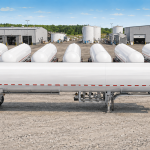
HM-268P provides limited relief for qualifying residue IBC returns when package, quantity, documentation, destination, and enclosed-transport conditions are met. (Illustration: Tank Transport)
PHMSA incorporated Special Permit 21478 into the HMR for certain residue IBC movements. The rule can relieve the ordinary shipping-paper, placarding and UN identification-number requirements when qualifying IBCs are returned for reconditioning, remanufacturing, requalification, disposal or repair.
The exception covers steel, rigid-plastic and composite IBCs with capacities no greater than 2,100 liters, or 550 gallons. They may contain only residue—no more than 0.3% by weight of the IBC’s total capacity—of Packing Group II or III materials in Class 3, Divisions 4.1, 5.1 or 6.1, or Classes 8 or 9.
The IBCs must move by motor vehicle or rail in a fully enclosed vehicle or freight container. They must remain marked and labeled as otherwise required. A paper or electronic document bearing the words “Residue IBC(s)” must accompany the movement and show the number of IBCs in each hazard class or division.
That document is not the standard hazardous-material shipping paper the exception displaces, but it is still mandatory. So are the destination restriction and the 0.3% residual limit.
What can the residue exception change?
- Qualifying return loads can move without the otherwise required hazmat shipping paper.
- The vehicle or freight container can move without placards triggered only by those qualifying residue IBCs.
- The movement can omit the UN identification numbers otherwise associated with those residues.
- The required “Residue IBC(s)” count document may be paper or electronic.
What it does not change
- The packages are not unregulated “empties.” They remain subject to the conditions written into the exception.
- The IBCs must still display required package marks and labels.
- The relief does not apply above the residual threshold, to Packing Group I material, to unlisted hazard classes, or to an unrestricted destination.
- The rule does not authorize open flatbed movement; the vehicle or freight container must be fully enclosed.
- The exception does not automatically displace other requirements triggered by additional hazardous materials on the same vehicle.
PHMSA said more than 40 entities had used the underlying special permit since 2021 without an agency-reported incident. The agency estimated 44 respondents and about 2,200 annual shipments for its paperwork analysis. Those figures show a practiced return-logistics model, not a universal empty-package rule.
The residue IBC rule replaces some transport documents and vehicle markings with a narrower control document; it does not make the load disappear from the HMR.

The residue-return and on-vehicle unloading rules apply to different operations and preserve detailed package, material and handling limits. (Graphic: Tank Transport; sources: 91 FR 49335 and 91 FR 49349)
Certain packages may be unloaded while they remain on the vehicle
HM-268L codifies two established special permits
Section 177.834 generally restricts discharging hazardous material from a package while the package is on a motor vehicle. HM-268L brings two special-permit practices into the regulation for specified drums, IBCs and DOT 57 portable tanks.
The new language is significant for chemical delivery routes, water-treatment deliveries and similar operations in which removing every package before transfer can create its own handling risk. It does not create a broad right to pump from any package at a customer’s site.
Drum operations
Qualifying drums may contain specified Class 3 Packing Group II or III material, Division 6.1 Packing Group II or III material, Class 8 Packing Group II or III material, or Class 9 material. Petroleum distillate fuels are excluded from the Class 3 authority.
Transfer must use a pump or injection system and be attended by a qualified person. Hoses may not remain attached during transportation, packages may not be manifolded, and reused drums must meet the applicable reuse requirements. Class 3 transfers carry bonding and grounding controls.
IBC and DOT 57 portable-tank operations
The IBC and DOT 57 provisions contain their own material exclusions. They do not cover Class 3 Packing Group II material, Class 3 Packing Group III material with a flash point below 100 degrees Fahrenheit, Division 5.1 Packing Group II material or Division 6.1 Packing Group II material.
Eligible IBC types are 31A, 31B, 31N, 31H1, 31H2 and 31HZ1. The movement must be by private or contract motor carrier, and the package, transfer system and receiving equipment must satisfy compatibility, attendance, inspection, pressure-relief and connection controls. Permanent connections and manifolding are prohibited, and transfer hoses must be purged or drained and pressure tested as required.
The water-treatment exception is specific.
The rule includes a limited provision involving hypochlorite solution and fluorosilicic acid delivered for water treatment. No more than two IBCs may be carried; each may have a capacity no greater than 450 gallons, and they may not be discharged simultaneously.
Mobile fueling remains outside the rule.
PHMSA explicitly excluded petroleum distillate fuels from the relevant drum authority. The rule also excludes the more volatile Class 3 categories from the IBC and DOT 57 authority. It should not be represented as approval for mobile gasoline delivery or as a substitute for cargo tanks designed, inspected, and operated under the cargo-tank provisions.
A fleet that wants to use HM-268L should build a product-and-package eligibility matrix from the final regulatory text. Driver training should identify not only what is allowed, but the disqualifiers: wrong packing group, low flash point, excluded hazard division, wrong IBC type, common-carrier movement, attached hoses during transport, or a manifolded setup.
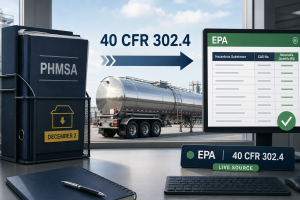
Beginning December 2, regulated parties must use EPA’s table at 40 CFR 302.4 as the authoritative source for CERCLA hazardous substances and reportable quantities. (Illustration: Tank Transport)
EPA becomes the live source for CERCLA hazardous substances
HM-268E takes effect December 2, 120 days after publication. It removes PHMSA’s redundant list of CERCLA hazardous substances from Appendix A to 49 CFR 172.101 and directs regulated parties to EPA’s table at 40 CFR 302.4.
PHMSA said the rule does not functionally change which materials are hazardous substances or their reportable quantities. It changes the source a regulated party must consult. That matters because PHMSA’s copied list could lag an EPA amendment, creating two federal tables that appeared to answer the same question.
Shippers and carriers should update classification procedures, product-master references, and training materials before December 2. Any software that embeds the former PHMSA appendix should be checked to ensure it follows EPA’s current table rather than a frozen copy. This same discipline matters in fuel compliance, where the industry has already had to distinguish federal hazardous-material classifications from separate environmental obligations; Tank Transport’s HM-265 fuel compliance analysis explains that broader divide.
The CERCLA rule does not redraw the hazardous-substance map. It changes which federal table is authoritative when the map changes.
The remaining rules matter by cargo, equipment, or mode
Lithium batteries receive a larger materials-of-trade allowance
HM-268C raises the allowable size of qualifying lithium cells, and batteries carried as materials of trade to 30 kilograms, or 66 pounds, per cell or battery. It establishes an aggregate limit of 500 kilograms, or 1,102 pounds, of net battery weight per motor vehicle, while batteries installed in equipment do not count toward that aggregate cap.
The cells and batteries must be of a type that passed the applicable UN 38.3 tests and must be secured against short circuits, shifting, and accidental activation. This may help service fleets carry larger battery-powered tools or replacement batteries used in their own trade. It is not an exception for hauling batteries as customer freight.
Farm security relief reaches a larger revenue band
HM-268J replaces a $500,000 annual gross-receipts threshold set in 2005 with a threshold of less than $825,000 in 2025 dollars, then indexes it for future inflation. Qualifying farmers may use the existing exception from security plans and in-depth security training.
The rule does not erase general hazmat employee training or other HMR duties. Carriers serving agricultural customers should not assume that the farmer’s exception transfers to the for-hire carrier or removes transportation requirements for fertilizer, fuel, or other regulated material.
Refrigerating equipment and cylinder bundles gain targeted relief
HM-268M, effective August 19, expands an exception for small refrigerating machines containing no more than 20 kilograms, or 44 pounds, of qualifying Category 1B under the Globally Harmonized System or A2L under the ASHRAE standard. The relief applies to ground modes; air and vessel restrictions remain.
HM-268N covers larger refrigerating machines and components under detailed pressure-vessel, refrigerant, safety-device, and mode conditions. Division 2.1 equipment moving by highway must be carried on an open flatbed or in a well-ventilated enclosed vehicle. Neither refrigeration rule is blanket authority for every mildly flammable refrigerant system.
HM-268O allows a 10-year rather than five-year requalification interval for specified DOT 3A and 3AA cylinder bundles in flammable or nonflammable, nonpoisonous gas service when requalified by an authorized ultrasonic examination method or the specified hydrostatic-and-visual method. A valid requalifier identification number and the other requirements of 49 CFR 180.205 still apply.
Aerosols, limited quantities, and rail procedures receive narrower changes.
HM-268A aligns the domestic aerosol definition with international rules by including an article that contains only gas. HM-268B permits a 25-millimeter-square limited-quantity mark to be incorporated into a qualifying shipping label for domestic non-air transportation. The reduced mark is not authorized for radioactive material, an overpack, or an international vessel movement, and the electronic label data must communicate the package’s limited-quantity status and allowed modes.
HM-268K removes obsolete rail reporting and publication references, including provisions tied to the Association of American Railroads’ Bureau of Explosives. It also gives railroads more flexibility in protecting an open tank car during transloading while preserving the ability to address unusual local hazards. Rail-served tank terminals should review their own transloading procedures rather than assuming a motor-carrier-only implementation.
What tank fleets should change before September 3?
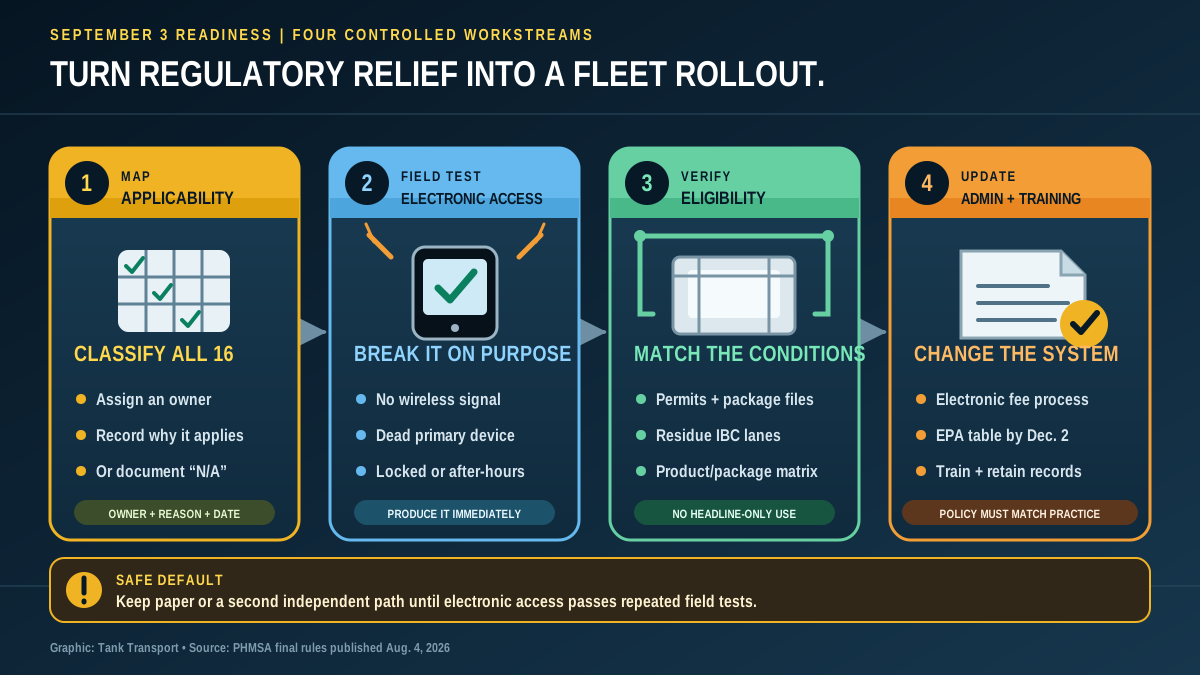
Tank fleets can prepare for the new PHMSA rules through four controlled workstreams: map applicability, test field access, verify eligibility and update procedures. (Graphic: Tank Transport; source: PHMSA)
A fleet does not need to use every new option on the effective date. Paper emergency information and paper registration proof remain acceptable. In many operations, the controlled choice will be to keep paper while electronic systems are tested.
- Build a 16-rule applicability matrix. Assign each rule to compliance, safety, operations, maintenance, finance or “not applicable,” and record the reason.
- Separate the records. Mark emergency-response information, PHMSA registration proof and shipping papers as three distinct compliance objects. Do not let a policy for one silently rewrite the others.
- Test electronic access offline. Simulate no signal, low battery, a disabled cab device, a forgotten password and an after-hours inspection.
- Keep a fallback. Until the electronic system passes repeated field tests, retain a paper copy or a second independent electronic path.
- Inventory special permits and approvals. Confirm expiration dates, renewal status, affected packaging, the most recent permit terms, and whether any authorization was terminated for safety.
- Audit residue IBC return lanes. Verify capacity, package construction, hazard class, packing group, residual percentage, enclosed transport, destination, and the “Residue IBC(s)” document.
- Validate on-vehicle unloading by product and package. Create an approved matrix and prohibit drivers from extending one approved material’s procedure to another material.
- Update the registration-payment process. Remove paper-check instructions and confirm who controls the DOT electronic account.
- Prepare the December classification update. Point hazardous-substance and reportable-quantity checks to EPA’s current 40 CFR 302.4 table.
- Document training. Train affected hazmat employees on changed functions and preserve records. Tank Transport’s hazardous-material shipping guide and 2026 hazmat violations analysis provide useful baselines, but the final rules control.
Regulatory relief creates value only when dispatch, drivers, terminals and inspectors can identify the same boundary.
Companies should also revisit automation assumptions. Electronic documents may support connected or eventually driverless operations, but PHMSA’s immediate-availability requirement does not disappear when a human driver is absent. Tank Transport’s analysis of driverless hazmat trucking explains why emergency communication and custody remain unresolved operational questions even when the driving task is automated.
What the August 4 publication did not change
- It did not create one omnibus “16-rule” section of the HMR; operators must apply 16 separate final rules.
- It did not make hazardous-material shipping papers universally electronic.
- It did not excuse an electronic emergency-information failure.
- It did not eliminate PHMSA registration, proof-of-registration, or fee requirements.
- It did not authorize new packaging to be manufactured under an expired special permit.
- It did not turn all residue IBCs into nonregulated empty containers.
- It did not allow general mobile fueling from drums, IBCs or DOT 57 portable tanks.
- It did not replace cargo-tank specification, inspection, repair, loading or unloading rules.
- It did not displace EPA, OSHA, state or local requirements that independently apply.
The publication is therefore best understood as a set of targeted operating options and administrative repairs. The benefits are real: fewer paper-only records, more forgiving renewal timing, longer useful life for compliant packaging and easier return movements for tightly defined residue IBCs. The compliance exposure is equally real if a fleet adopts the headline without the conditions.
September 3 is not a deadline to throw away paper. It is the first day most of the new options can be used. Fleets that treat the next four weeks as an applicability and reliability exercise will be positioned to capture the relief without creating a roadside or emergency-response failure.
Key developments
- August 4, 2026: PHMSA published 16 separate final rules in the Federal Register.
- August 19, 2026: HM-268M’s exception for specified small refrigerating machines takes effect.
- September 3, 2026: Fourteen rules take effect, including electronic emergency-response information, electronic registration proof, special-permit changes, package unloading and residue IBC relief.
- December 2, 2026: HM-268E begins directing hazardous-substance determinations to EPA’s CERCLA table at 40 CFR 302.4.
Authoritative resources
- PHMSA Federal Register document index
- HM-268D: Electronic emergency-response information
- HM-268I: Electronic PHMSA registration proof
- HM-268G: Special-permit and approval renewals
- HM-268F: Continued use of special-permit packaging
- HM-268L: On-vehicle package unloading
- HM-268P: Residue IBC movements
- HM-268E: CERCLA hazardous-substance reference
- Current 49 CFR hazardous-materials regulations
- EPA CERCLA hazardous substances and reportable quantities