- EPA proposes restoring earlier graduated vapor-tightness limits for gasoline cargo tanks.
- The proposal leaves current compliance obligations in place while reopening questions about test precision and temperature effects.
- Fuel fleets and testing shops must still distinguish federal requirements, state certification, and terminal acceptance.

A Peterbilt 579 tanker delivers gasoline at a fuel station. (Photo: Grendelkhan/Wikimedia Commons, CC BY-SA 4.0)
Gasoline cargo-tank testing could change under an EPA proposal signed September 24, 2026, that would ease the annual pressure-and-vacuum limits adopted in the agency’s 2024 gasoline-distribution rule. The proposed limits would return to an earlier graduated schedule, with the allowable change determined by cargo-tank or compartment capacity.
For petroleum carriers, the practical issue is whether a trailer can demonstrate vapor tightness reliably and carry documentation acceptable at its loading locations. Testing shops face the same question from the measurement side: how to distinguish leakage from unstable test conditions.
The immediate answer is that the proposal does not authorize changes to today’s testing practices. Existing requirements and their compliance schedules remain controlling while EPA considers the revisions.


What EPA would change in gasoline cargo-tank testing
EPA’s gasoline-distribution rulemaking addresses emissions from storage, loading and equipment leaks along the distribution chain. Its facility requirements reach carriers through the cargo tanks that arrive to load, connecting terminal compliance with fleet maintenance and certification.
The September 24 proposal would replace the tighter annual certification thresholds with the limits used under the major-source gasoline-distribution standards before the 2024 amendments. The comparison below covers the allowable pressure or vacuum change over five minutes.
| Tank or compartment capacity | Tighter 2024 limits | Proposed limits |
|---|---|---|
| 2,500 gallons or more | 0.50 | 1.00 |
| 1,500–2,499 gallons | 0.75 | 1.50 |
| 1,000–1,499 gallons | 1.00 | 2.00 |
| 999 gallons or less | 1.25 | 2.50 |
Sources: EPA’s September 2026 proposal and the annual-certification table in 40 CFR 63.425(e). The 2024 column identifies the tighter standards adopted that year; it does not mean those limits already apply at every facility.
For a 3,000-gallon compartment, the proposed threshold would be 1.0 inch of water column rather than 0.5 inch. These figures describe a change in measured pressure or vacuum. They are not pounds per square inch, tank design pressures, or permissible gallons of product lost.
The table also is not a complete test specification. Annual certification includes a separate internal vapor-valve test, and the applicable regulation determines the full procedure. A fleet should not substitute a table of thresholds for its shop’s approved testing instructions.
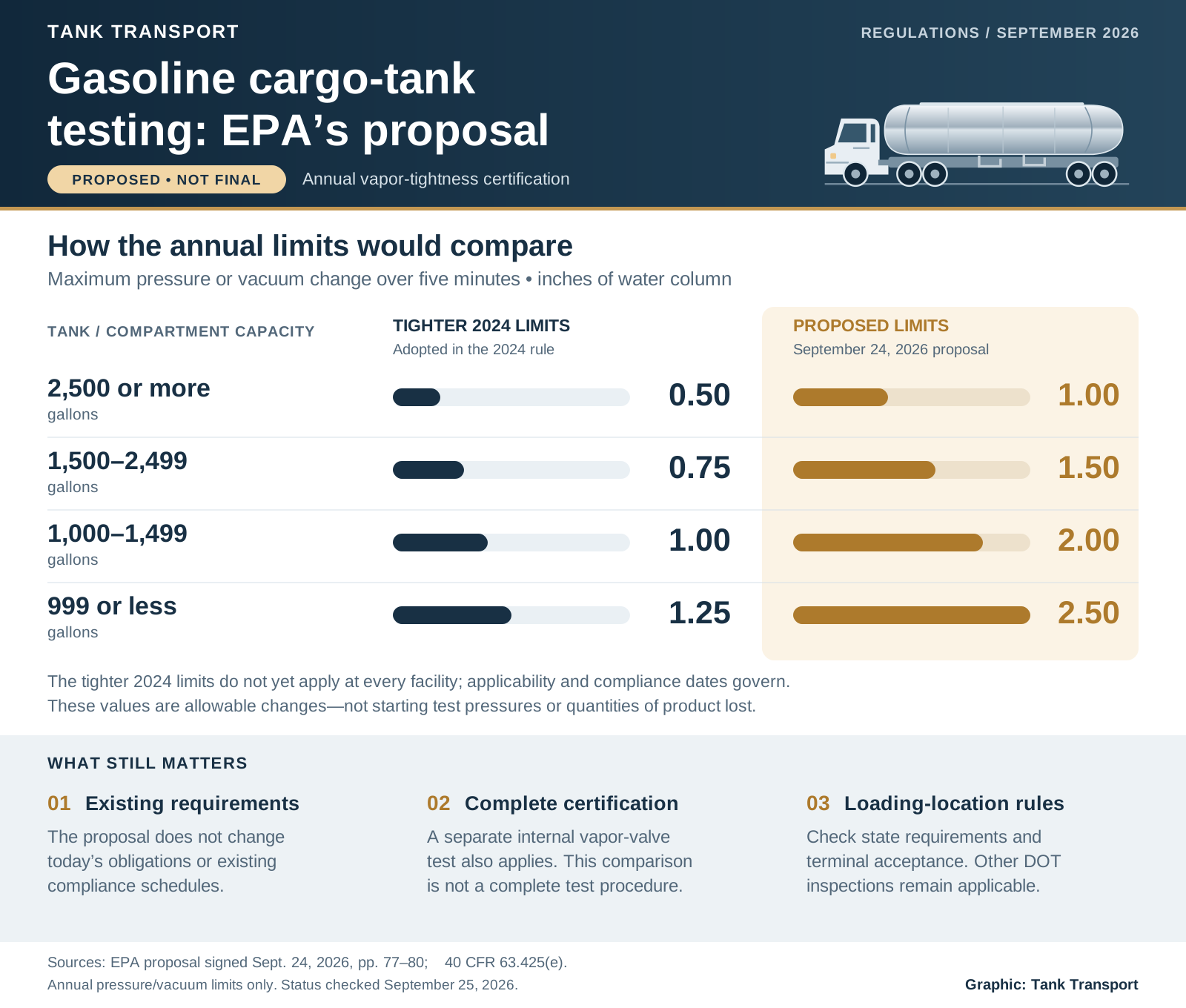
EPA proposes restoring graduated annual vapor-tightness limits for gasoline cargo tanks. Existing requirements and compliance schedules remain in force while EPA considers the proposal. (Graphic: Tank Transport; sources: EPA and 40 CFR 63.425.)
Why Method 27 precision is central to the proposal
EPA says fleet operators raised concerns that the 0.5-inch threshold can produce failures driven by temperature instability, prompting unnecessary retests or equipment replacement. The agency cites test precision and questions whether the tighter requirement can be demonstrated consistently across different climates.
EPA Method 27 measures the change after applying pressure and vacuum to a gasoline delivery tank. It already identifies volatile vapors and temperature fluctuations as potential sources of erroneous results and calls for stabilization before readings are taken.
The method reports precision within 0.5 inch of water column. It also requires consecutive pressure-test results and consecutive vacuum-test results to agree within 0.5 inch before averaging the results and comparing them with the applicable limit.
That method-wide precision figure differs from the measuring instrument’s specified precision of 0.1 inch. A more finely graduated gauge alone therefore does not resolve questions about the repeatability of the entire test.
For a shop, the useful distinction is between identifying a leak and producing a repeatable measurement. A result close to a pass/fail boundary deserves careful documentation of conditions and repeat runs. EPA’s concern about possible false failures does not establish that a particular failed tank is sound.
The financial implications also need restraint. EPA’s economic analysis does not project cost changes from the cargo-tank vapor-tightness revision. Its quantified savings concern other terminal testing and monitoring provisions. No supported per-trailer savings figure exists to apply to a fleet budget.
The same economic analysis anticipates no emissions change from the cargo-tank revision, based on EPA’s conclusion about the tighter standard’s feasibility. That is the agency’s assessment of the proposal, rather than a measured outcome after implementation.
Which requirements still apply before a final rule
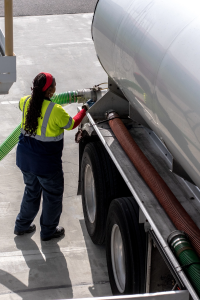
Transporter operator Yolanda Bush connects an air-vent hose to a fuel-supply tanker at MacDill Air Force Base. The hose helps equalize pressure during loading; the photograph does not show a Rule 352 vapor-tightness test, the photograph does not show a vapor-tightness test. (U.S. Air Force photo by Airman 1st Class Sterling Sutton)
Timing matters because the 2024 amendments contain different compliance schedules. Under 40 CFR 63.425(e), facilities that commenced construction on or before June 10, 2022, must meet the tighter annual-certification limits as expeditiously as practicable, but no later than May 8, 2027. The earlier limits remain specified before that transition.
Facilities that commenced construction after June 10, 2022, were assigned the tighter limits upon startup or July 8, 2024, whichever came later. The relevant dates concern the affected facility, not simply the trailer’s manufacture date.
Other gasoline-distribution provisions, including the area-source standards and the newer bulk-terminal performance standards, have their own applicability and cross-references. Consequently, “the federal limit” is not enough information to select a test criterion without identifying the rule governing the loading operation.
A proposed testing limit does not change the standard a terminal must apply today.State requirements add another layer. California’s cargo-tank vapor-recovery program uses its own certification procedure, and lists graduated limits of 0.50–1.25 inches of water column. It requires annual testing and certification; EPA’s proposal does not itself amend that state program.
Tank Transport’s coverage of Maricopa County tanker-testing requirements shows why you must also check local requirements. A carrier’s operating territory and loading locations matter when deciding what certification its equipment needs.
DOT obligations require similar care. 49 CFR 180.407(h)(2) permits certain petroleum-distillate fuel tanks equipped with vapor collection equipment to use Method 27 for leakage testing and points to 40 CFR 63.425(e). That permitted route must use air; the method’s liquid-based alternative is not allowed for this DOT purpose.
This connection does not replace other applicable cargo-tank inspections and tests. The distinctions discussed in Tank Transport’s cargo-tank compliance and test-record coverage and HM-265 fuel-compliance analysis remain relevant: a test record must establish the specific requirement satisfied, not merely indicate that some testing occurred.
What fleets, shops and terminals should document
The immediate operational opportunity is to reconcile test records with the locations where each trailer loads. A useful fleet review would identify the applicable certification, the threshold used, the renewal date, and any location-specific documentation requirements before the next shop appointment.
For terminals covered by Subpart R, EPA’s recordkeeping provisions require current vapor-tightness documentation. Required details include tank identification, test location and date, tester information, repairs, and results such as compartment capacity, test pressure, pressure or vacuum change, and test duration.
Those details also make a useful handoff between carrier and shop. Recording the actual readings preserves information that a pass/fail notation cannot convey. If requirements change later, the underlying report can show what was tested without requiring anyone to reconstruct the job from memory.
Loading restrictions still matter. Under Subpart R, a terminal must stop loading a tank that fails the specified vapor-tightness checks until it satisfies the applicable follow-up requirements. The prospect of a future relaxed annual threshold is not a substitute for resolving an existing failure.
For shops or fleets considering comments, repeat-test records, environmental conditions, and documented repair findings would provide more useful evidence than unsupported estimates of nationwide failure rates. Separating confirmed leaks from unstable measurements would help explain where the present criteria work and where problems arise.
The signed proposal calls for comments within 45 days after Federal Register publication, under docket EPA-HQ-OAR-2025-0302. As of September 25, EPA’s rule page linked the prepublication version, so the calendar deadline still needed confirmation. The next milestone is the published notice, followed by EPA’s response to comments and any final requirements.
Gasoline Cargo-Tank Testing: Key Developments
- EPA proposes annual pressure-and-vacuum limits of 1.0–2.5 inches of water column, depending on capacity.
- Existing facility-specific requirements and compliance schedules remain in place while the proposal is considered.
- State certification, terminal documentation, and other applicable DOT inspections remain separate compliance questions.
- Test reports with actual readings and conditions can support both current acceptance and informed rulemaking comments.