- Cargo tank compliance may be changing in ways many fleets and shops have not fully priced into their annual inspection routines.
- New PHMSA interpretations could reshape how wrapped or insulated MC 331 inspections are handled and how LPG leakage tests should be documented.
- For carriers, inspectors, and repair facilities, these clarifications raise new questions about inspection frequency, recordkeeping, and exposure to compliance risks.
Cargo tank compliance usually changes through a rulemaking, a deadline, or an enforcement wave. This time, the shift came through two short interpretation letters from the Pipeline and Hazardous Materials Safety Administration. On paper, the letters are narrow. In practice, they reach directly into how MC 331 fleets schedule annual work, how shops scope internal and external visual inspections, and how propane operators document leakage tests on requalification reports.
For more news and updates on PHMSA rulemakings and interpretations, browse our PHMSA coverage.
That matters because an MC 331 is not a niche container. Under 49 CFR 178.337, it is the DOT specification cargo tank motor vehicle primarily used for compressed gases, and the current inspection table in 49 CFR 180.407 still anchors its requalification life around recurring external visual inspections, leakage tests, pressure tests, and periodic internal visual work. What changed in early 2026 was not the basic framework. What changed was how PHMSA said fleets must apply that framework when insulation, coatings, or wraps block visibility, and how paperwork should distinguish an LPG leakage test from a pressure test.


For broader reporting on hazardous materials transportation and enforcement, see our Hazmat coverage.
Public records now show a follow-on interpretation request arguing that 25-0035 conflicts with older agency letters from 2004 and 2006, while the current Federal Register and eCFR record show PHMSA simultaneously loosening some design and inspection mechanics through video-assisted inspections and updated reflective-cover language for uninsulated MC 331 tanks. That combination makes the story richer than a simple “two letters, two compliance tips” item.
For a wider look at recent federal changes affecting tank fleets, see our tank fleet compliance update.
In other words, it is no longer just about two interpretations. It is about how cargo tank compliance is being reshaped by the collision of old guidance, new interpretive language, evolving inspection technology, commercial form design, and the practical choices fleets make when they insulate, coat, brand, or wrap tanks that still have to pass annual scrutiny.
Cargo tank compliance is shifting in ways fleets cannot ignore
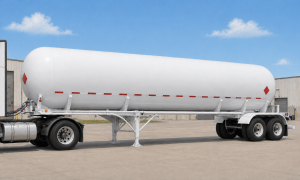
Design choices for an MC 331 cargo tank can affect how easily fleets inspect, verify, and document compliance.
The first letter, 25-0035, was published on January 14, 2026, in response to a request about insulated and non-insulated MC 331 cargo tanks. PHMSA said that when insulation prevents a complete external visual inspection, the cargo tank must also receive an internal visual inspection of the areas that cannot be inspected externally. The agency then applied the same logic to non-insulated MC 331 tanks when a coating or vinyl wrap prevents a proper external visual inspection of the shell.
The second letter, 25-0136, was published on February 24, 2026, in response to a question from Linde Gas & Equipment about annual visual and leakage inspections on LPG cargo tanks. PHMSA said a leak-detecting-fluid test that looks for bubbles at fittings, valves, and welds is a leakage test under 49 CFR 180.407(h), not a hydrostatic or pneumatic pressure test under 49 CFR 180.407(g). For recordkeeping, that means the leakage test should be recorded as a leakage test, not forced into the wrong pressure-test box on a form.
For additional reporting tied to LPG operations and equipment, see our LPG archive.
The first clarification is the one with the broadest operational blast radius. PHMSA said insulated and non-insulated MC 331 tanks are not treated differently on the five-year full internal visual interval. In both cases, a complete internal visual inspection is due every 5 years. But where insulation, coating, or another external covering prevents a complete annual external visual inspection, the affected areas must also receive an internal visual inspection in conjunction with that annual external cycle. PHMSA then made the practical consequence explicit: because the external visual interval is annual, the interval for the partial internal visual inspection of those affected areas is annual too.
“Where insulation, coating, or another external covering prevents a complete annual external visual inspection, the affected areas do not simply wait for the five-year cycle. Under PHMSA’s reading, they move into annual partial-internal work tied to the external visual interval.”
The current regulation adds another nuance that many short write-ups miss. Section 180.407(d)(1) does not merely say that blocked external visibility triggers internal inspection of the affected areas. It also says that if internal visual inspection is itself precluded because the tank is lined, coated, or designed to prevent internal access, the tank must instead be hydrostatically or pneumatically tested. At the same time, the areas that remain externally visible must still be inspected and noted in the report. That distinction matters because not every covered area is equally accessible from the inside.
For related reporting on tank testing, repairs, and inspection capability, read our TankInspection coverage.
Cargo tank compliance looked routine until two letters sharpened the rules.

Cargo tank compliance can hinge on what an inspector can see, verify, and document.
The reason 25-0035 landed with such force is that it did not arrive on empty ground. Older interpretation letters from PHMSA and its predecessor, the Research and Special Programs Administration, had given many fleets a simpler working assumption for insulated MC 331 tanks: a partial annual external visual inspection plus the required leakage testing satisfied the annual requirement. In contrast, the complete internal visual stayed on the five-year cycle. That view appeared in a 2004 chlorine-service letter, a 2004 carbon-dioxide refrigerated-liquid letter, and a 2006 letter confirming the same logic for insulated MC 330 and MC 331 tanks more generally.
For more on how the HMRs are evolving across tank transport, explore our HMRs coverage.
That apparent tension is no longer just industry chatter. A public January 28, 2026, interpretation request from Ohio motor-carrier enforcement officials tells PHMSA that 25-0035 appears to conflict directly with those older letters and asks the agency to clarify the annual requirements for insulated MC 331 cargo tanks where only a partial external visual is possible. The filing even recites the older language stating that a partial external visual inspection and a leakage test fulfill the annual requirement for insulated MC 331 tanks.
There is another important twist. The 2026 letter did not invent the view that wraps and coatings can change annual inspection practice. PHMSA had already said in a 2020 interpretation that if rock guard, paint, or a vinyl wrap prevents the proper external visual inspection described in 49 CFR 180.407(d)(1), the affected areas must be internally inspected in conjunction with the external visual inspection. What 25-0035 did was carry that same obstructed-visibility logic more explicitly into the insulated MC 331 context and then state, in plain terms, that the partial internal interval becomes annual because the external interval is annual.
That is why the first letter is more consequential than it looks. On a narrow legal reading, it is an interpretation of existing text. On an operational reading, it changes the planning assumptions many compliance teams used for insulated tanks, especially if those teams had relied on older letters or on shop practice shaped by them. The public follow-on filing shows that even experienced regulators read the new interpretation as a meaningful departure from the current understanding of the annual requirement.
For ongoing reporting on rule changes affecting day-to-day fleet operations, visit our Compliance archive.
Cargo tank compliance starts with a basic question about what MC 331 means.
For readers outside the daily requalification world, it helps to reset the baseline. An MC 331 is a specification cargo tank motor vehicle under 49 CFR 178.337 for the transportation of compressed gases. Under the current 49 CFR 180.407(c) table, all cargo tanks are generally subject to an annual external visual inspection. In contrast, most MC 331 cargo tanks are subject to a five-year internal visual inspection unless a more specific service condition applies. That is the skeleton on which both 2026 interpretations hang.
The leakage-test side of the rule is equally specific. Section 180.407(h) states that each cargo tank requiring a leakage test must be tested for leaks with the product piping, valves, and accessories in place and operative, and that all internal or external self-closing stop valves must be tested for leak tightness. The test pressure must be maintained for at least five minutes, and cargo tanks in liquefied compressed gas service must be externally inspected for leaks during the test. For dedicated liquefied petroleum gas service, an MC 330 or MC 331 may be tested for leakage at a pressure of not less than 60 psig.
For more propane-sector coverage relevant to bobtails and delivery equipment, browse our PropaneGas archive.
A fresh rulemaking detail adds still more context. The January 2026 final rule on fuel transportation adopted a new 49 CFR 180.407(a)(7) authorizing the use of video cameras or fiber optic equipment for any test or inspection, or portion of one, so long as all required areas and elements can still be viewed and evaluated in accordance with the cargo-tank rules. That does not erase the burden of 25-0035. Still, it may soften it by giving inspectors a more flexible way to perform some internal visual work without defaulting to older methods every time. That is an inference from the rule text, but it is straightforward.
For more on HM-265’s inspection and marking changes, read our HM-265 fuel compliance analysis.
Cargo tank compliance changes when one question keeps surfacing about wraps and insulation.
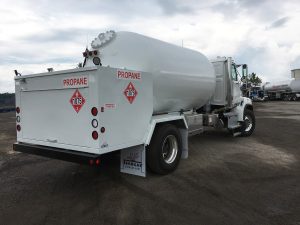
Propane cargo tank equipment sits at the intersection of fleet operations, inspection access, and federal compliance. Credit: Courtesy Tremcar.
The practical hook for fleets is simple: cargo tank compliance is no longer just about what material a tank carries. It is also about what the operator chooses to put on the outside of the shell, and whether that choice prevents a proper annual visual examination. A tank can be insulated for product reasons, coated for corrosion protection, or wrapped for branding and still be perfectly lawful. But if those coverings preclude the external visual inspection PHMSA expects, they change the inspection burden.
“A tank can be insulated for product reasons, coated for corrosion protection, or wrapped for branding and still be perfectly lawful. But if those coverings preclude the external visual inspection PHMSA expects, they change the inspection burden.”
The broader rulemaking record reinforces that point. In the 2024 HM-265 NPRM, PHMSA proposed revising 49 CFR 180.407(d)(1) to say expressly that “coverings such as wrappings and coatings” that preclude a complete external visual inspection require an internal visual inspection. In the January 2026 fuel-transportation final rule, PHMSA did not finalize that broader rewrite of 180.407(d)(1). It did, however, finalize the new camera-and-fiber-optic inspection provision in 180.407(a)(7) and separately amend 49 CFR 178.337-1(d) so that an uninsulated MC 331 tank no longer has to be “painted” a reflective color; current text now says it may be white, aluminum, or a similar reflecting color on the upper two-thirds of the tank.
That pairing is one of the most useful fresh details for an insider audience. PHMSA has effectively made external coverings more usable in the design phase, while its most recent interpretation makes obstructive coverings more consequential during inspection. The agency has not said those two developments contradict each other. But fleets considering reflective wraps, specialty coatings, or cosmetic branding now have to consider not only whether the design is permissible but also how it will affect annual requalification planning. That conclusion is an inference from the current rule text and interpretations, but it is hard to avoid.
And there is still a technical backstop behind the whole discussion. Section 180.407(d)(1) says that if the covering blocks the external view, the affected areas must be internally inspected. If internal visual inspection is precluded, a hydrostatic or pneumatic pressure test is required. In other words, a fleet cannot solve an obstructed-visibility problem by simply declaring the area uninspectable. The rule already describes the next step.
Cargo tank compliance now carries an open question about older guidance.
The older letters are worth reading as more than historical footnotes. In 2004, a letter to the Metropolitan Water District of Southern California stated that an insulated MC 331 used in chlorine service did not require an annual internal visual inspection instead of the annual external visual inspection, and that an annual partial external visual inspection plus periodic pressure and leakage testing satisfied the applicable requirements. Later that same year, a letter to the Compressed Gas Association stated that the annual partial external visual inspection and a leakage test met the annual requirement for insulated MC 331 tanks in carbon-dioxide refrigerated-liquid service.
Then, in 2006, a letter to the National Tank Truck Carriers extended that exception logic to all hazardous materials moved in insulated MC 330 and MC 331 cargo tank motor vehicles.
Set against that record, 25-0035 reads less like a mere housekeeping interpretation and more like a stricter reconciliation of the rule text. PHMSA now says insulated and non-insulated MC 331 tanks are not treated differently for internal visual inspection intervals. Those covered areas require a partial internal visual in conjunction with the annual external visual. The January 2026 follow-on request shows that the regulated community immediately saw the friction between that statement and the older service-specific letters.
For fleets and shops, the practical takeaway is not that the older letters disappear. The safest current operating assumption is that the newer one is the one until PHMSA says otherwise in another interpretation, guidance document, or rulemaking. That is not legal advice, and it does not predict how PHMSA will ultimately resolve the apparent conflict. It is simply the conservative compliance reading of the newest public interpretation on the subject.
Cargo tank compliance is also affected by a practical question about cameras and reflective covers.

Cargo tank compliance depends on the details fleets can inspect, verify, and retain for reference when questions arise.
The January 2026 final rule warrants more attention than it has received in trade coverage because it changes the mechanics of cargo tank compliance, even though it does not directly address the 25-0035 dispute. PHMSA finalized the use of video cameras or fiber optic equipment in 180.407(a)(7), and the current eCFR text for 178.337-1(d) now focuses on reflective design rather than paint as such, allowing an uninsulated MC 331 to be white, aluminum, or a similar reflecting color rather than specifically painted that way.
That means fleets may gain options, not lose them. They may be able to use newer reflective coverings or camera-assisted inspection methods more freely than before. But those options only help if the operator can still prove that all required areas and elements were actually viewed, evaluated, reported, and retained in accordance with 180.417(b). The real compliance problem is no longer just access. It is access plus documentation.
It also matters who brought the second interpretation to the agency. Parent company Linde reported $34 billion in 2025 sales, and its own investor materials place Linde Gas & Equipment within the North America businesses of the Americas segment. On the quality side, Linde says Linde Gas & Equipment maintains ISO 9001 certification in the United States. That does not settle the legal question, but it underscores that the paperwork issue in 25-0136 surfaced inside a large, systematized industrial-gases operation rather than at the margins of the industry.
For more on how inspection and documentation issues affect tank fleet operations, follow our TankTransport coverage.
Cargo tank compliance for LPG shops hinges on a paperwork question about leakage tests.
The second interpretation is narrower than 25-0035, but it may be the more immediately useful letter for shop personnel. PHMSA said the bubble-fluid method described by Linde Gas & Equipment conforms to the leakage-test requirement in 49 CFR 180.407(h). Just as important, PHMSA said it is appropriate not to select either “hydrostatic” or “pneumatic” when recording that leakage test, because those terms belong to the pressure-testing section of the rule. PHMSA further said that the second portion of the form should remain blank unless the shop is providing information related to Environmental Protection Agency Method 27 vapor-tightness testing.
“For LPG leakage testing, the compliance risk is not only how the test is performed, but whether the shop records it as a leakage test rather than forcing it into a hydrostatic or pneumatic pressure-test box.”
This is one of those interpretation letters that becomes far more significant once it takes on a real form. Section 180.417(b)(2)(iii) requires test or inspection reports to list all items tested or inspected and, for leakage and pressure testing when applicable, to capture the pneumatic or hydrostatic method, the fluid used, the test pressure, and the holding time. That phrasing is broad enough to confuse form designers. PHMSA’s 2026 answer effectively narrows the practical reading. For a leakage test, the shop should document the leakage test and the required leakage-test data, but it should reserve hydrostatic and pneumatic labels for actual pressure tests performed under 180.407(g).
For propane and LPG operators, the deeper regulatory details matter. The leakage test under 180.407(h) must include testing product piping with all valves and accessories in place and operative, testing self-closing stop valves for leak tightness, maintaining test pressure for at least five minutes, and externally inspecting liquefied compressed gas tanks for leaks during the test. Dedicated LPG-service MC 330 and MC 331 cargo tanks may be leakage tested at not less than 60 psig. A shop that gets the label right but misses those underlying parameters still has a compliance problem.
The form issue PHMSA answered is not hypothetical. The sample tanker inspection report from J. J. Keller & Associates includes distinct boxes for leakage testing and pressure testing, fields for fluid used, pressure, and holding time, and a separate K-EPA27 section. J. J. Keller also markets cargo tank inspection markings as products intended to help users satisfy 49 CFR 180.415. In other words, the interpretation letter addressed a form of architecture that many shops will instantly recognize from off-the-shelf compliance products.

MC 331 inspection work integrates the tank shell, piping, leak testing, and paperwork into a single compliance overview.
PHMSA’s EPA Method 27 comment is also more than a throwaway line. The U.S. Environmental Protection Agency describes Method 27 as the pressure-vacuum procedure for determining the vapor tightness of gasoline delivery tanks. That is a different test context from an LPG bubble-fluid leak check at fittings, valves, and welds. So when PHMSA says the K-EPA27 portion of the form should remain blank unless that EPA method is actually being used, it draws a clear boundary between two distinct compliance regimes that some forms place on the same sheet.
A simple question about records will ultimately judge cargo tank compliance.
The larger lesson from 25-0136 is that cargo tank compliance lives or dies on the report, not just on the shop floor. Section 180.417(b) requires each person performing a test or inspection under 180.407 to prepare a written report in English listing the cargo tank serial information, specification number, special-service status, type and date of test, items tested or inspected, defects found, repairs if applicable, the facility or person performing the test, registration numbers, a continued-qualification statement, and dated signatures from the registered inspector and cargo tank owner. The owner and motor carrier must then keep those reports until the next test or inspection of the same type is completed.
Markings matter too. Under 49 CFR 180.415, cargo tanks that have completed the required tests and inspections must be durably marked with the month, year, and type of test or inspection performed. The rule’s abbreviations separate V for external visual, I for internal visual, P for pressure test, L for lining inspection, T for thickness test, K for leakage tests under 180.407 other than 180.407(h)(2), and K-EPA27 for leakage tests under EPA Method 27. The examples in the rule make clear that “K” and “K-EPA27” are not interchangeable shorthand.
The reason that the bookkeeping point matters is that PHMSA enforcement shows record retention is not a technicality. In a 2025 notice of probable violation made public in 2026, PHMSA alleged that Federated Co-ops offered and transported LPG in MC 331 cargo tanks while failing to maintain monthly discharge-system inspection records and the inspection and test reports for internal visual inspections and pressure tests. Elsewhere in FMCSA’s safety-rating appendix, failure to periodically inspect cargo tanks under 180.407 is classified as critical. The message is unmistakable: paperwork errors related to tests and inspections can quickly become enforcement problems.
That is why these letters deserve to be read together. The first one says a wrap, coating, or insulation issue can move covered MC 331 areas onto an annual partial-internal cycle. The second says an LPG bubble-fluid check should be documented as what it is: a leakage test, not a mislabeled pressure test. Taken together, they do not rewrite the hazardous materials regulations. They do something more practical. They tell fleets that cargo tank compliance now has to be evaluated not only at the point of testing, but at the point of design choice, form design, marking, and record retention.
For fleets that wrap tanks, shops that rely on commercial forms, and compliance teams that assumed the older insulated-tank letters still controlled the annual rhythm, that is not a small clarification. It is the kind of quiet regulatory development that changes everyday practice before many operators realize it already has.
Key Cargo Tank Compliance Developments
- PHMSA’s 2026 interpretation of MC 331 inspections states that blocked shell visibility due to insulation, coating, or wraps can trigger an internal visual inspection of affected areas in conjunction with the annual external visual inspection.
- The agency’s position suggests that some covered MC 331 cargo tanks could face annual partial internal inspections, even though the full internal visual interval remains every five years.
- A second 2026 interpretation clarifies that an LPG bubble-fluid check is a leakage test, not a hydrostatic or pneumatic pressure test for recordkeeping purposes.
- Shops and fleets may need to review inspection forms to ensure cargo tank compliance records properly identify leakage tests and are retained in accordance with federal reporting requirements.
- Older PHMSA interpretation letters appear to sit in tension with the newer MC 331 guidance, adding another layer of uncertainty for compliance teams and inspectors.
- Recent regulatory updates also allow greater use of video or fiber-optic inspection tools, which could influence how some internal visual inspection work is performed.
- The broader takeaway for fleets is that design choices such as wraps, coatings, and insulation can now carry more direct inspection and documentation consequences than many operators may have assumed.
Official Cargo Tank Compliance Sources and Technical References
- Review PHMSA’s interpretation on annual inspection implications for insulated, coated, or wrapped MC 331 cargo tanks at PHMSA Interpretation 25-0035.
- See PHMSA’s clarification on LPG leakage-test documentation and report treatment at PHMSA Interpretation 25-0136.
- Read the federal cargo tank specification for compressed-gas service at 49 CFR 178.337.
- Understand the general design requirements, including reflective-cover language for MC 331 tanks, at 49 CFR 178.337-1.
- Use the current federal inspection and test requirements for specification cargo tanks at 49 CFR 180.407.
- Check the federal marking requirements for completed cargo tank tests and inspections at 49 CFR 180.415.
- Reference cargo tank reporting and record-retention requirements at 49 CFR 180.417.
- See PHMSA’s earlier interpretation on wraps, paint, and obstructed external visibility at PHMSA Interpretation 20-0038.
- Read PHMSA’s older chlorine-service interpretation for insulated MC 331 tanks at PHMSA Interpretation 03-0241.
- Review PHMSA’s earlier carbon-dioxide service interpretation for insulated MC 331 tanks at PHMSA Interpretation 04-0221.
- See the broader PHMSA interpretation covering insulated MC 330 and MC 331 cargo tanks at PHMSA Interpretation 06-0034.
- Examine the Ohio follow-on filing that argues Interpretation 25-0035 conflicts with older agency letters at Ohio’s follow-on interpretation request.
- Read PHMSA’s 2026 fuel-transportation final rule covering video-assisted inspection and related changes at Hazardous Materials: Eliminating Unnecessary Regulatory Burdens on Fuel Transportation.
- Review PHMSA’s broader HM-265 proposal addressing hazardous materials transportation changes at Hazardous Materials: Advancing Safety of Highway, Rail, and Vessel Transportation.
- See EPA’s technical explanation of vapor-tightness testing under Method 27 at EPA Method 27.
- Review FMCSA’s safety-rating appendix for the enforcement context around cargo tank inspection failures at Appendix B to Part 385.
- For the company directly referenced in the article, review Linde’s latest annual results at Linde’s full-year and fourth-quarter 2025 results.
- For background on certifications cited in the article, see Linde’s external certifications page.
- For the form structure discussed in the article, review J. J. Keller’s sample tanker inspection report.
- For the markings product referenced alongside the discussion of 49 CFR 180.415, see J. J. Keller cargo tank inspection markings.
- For an enforcement example tied to record retention and LPG cargo tank service, review PHMSA’s Federated Co-ops notice of probable violation.