- Shared equipment interfaces could help tank and bulk businesses investigate faults, coordinate testing, and review operating records.
- Equipment makers, laboratories, and automation providers are the strongest candidates for early trials.
- Fleets and service shops can begin by identifying useful equipment data and measuring a narrowly defined pilot.
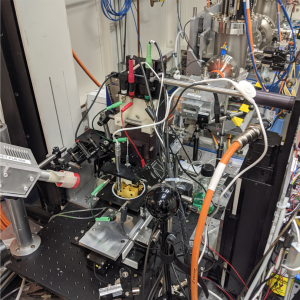
NIST’s scientific AI robot was used in a January 2020 experiment on corrosion-resistant alloy coatings, years before the MHS preview. (Photo: H. Joress/NIST)
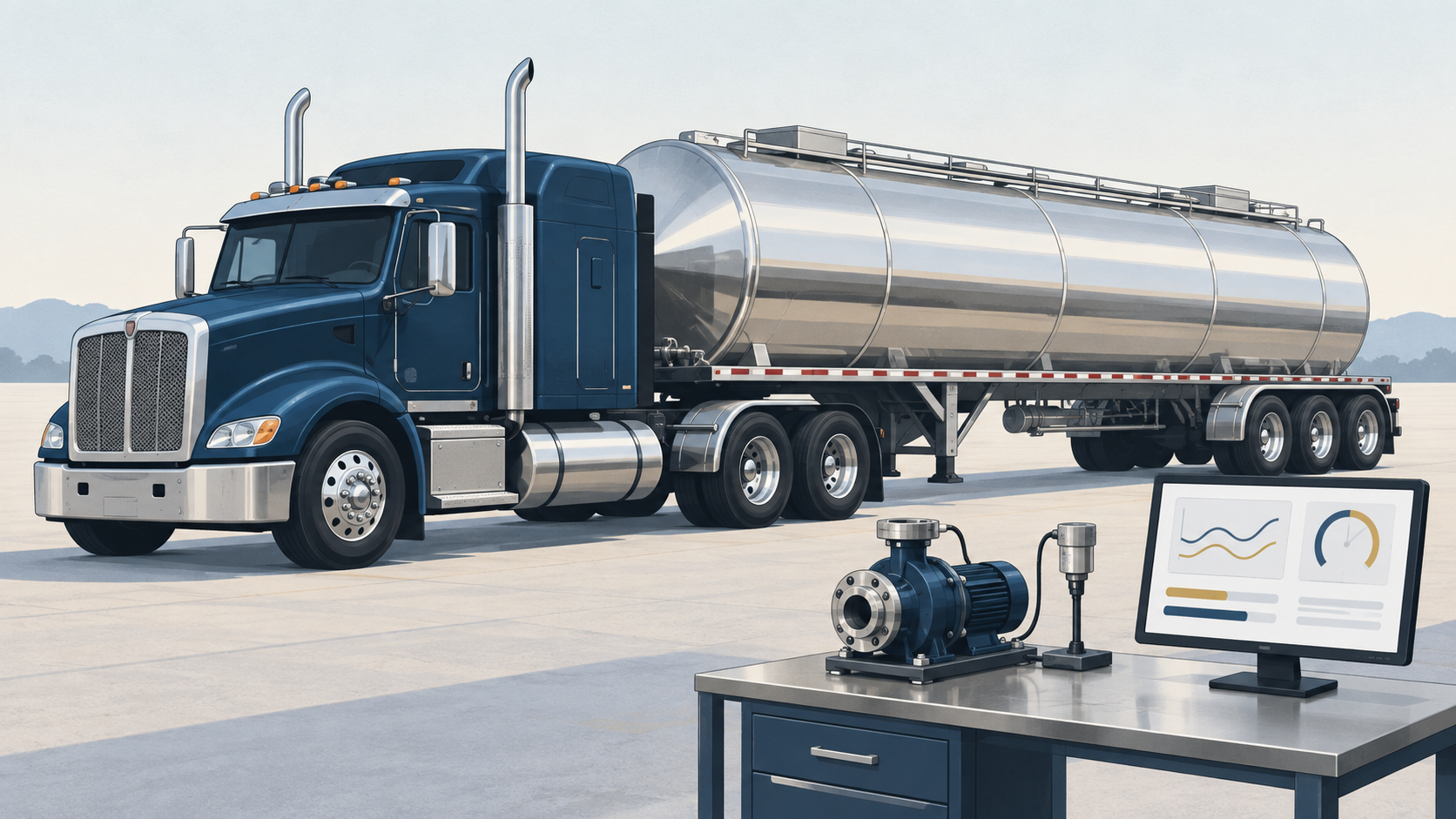
The Model Hardware Standard could give tank and bulk businesses a more consistent way to connect artificial intelligence with the equipment behind a load: trailer sensors, a shop’s test bench, cleaning controls or laboratory instruments.
Anthropic announced the research preview on August 27, 2026. Developed with HHMI Janelia Research Campus, MHS is a shared specification for connecting AI agents with physical equipment. Access remains by application, ahead of a planned open-source release.
For businesses serving bulk transportation, the opportunity lies in reducing time spent gathering information, connecting incompatible equipment, and coordinating repetitive tasks. The strongest initial cases appear to be in controlled workshops, laboratories, and equipment development. Wider use would depend on supported interfaces, engineering validation, and measurable savings.


What the Model Hardware Standard adds
An AI agent is software that can carry out a task in multiple steps, using tools and feedback. MHS provides such software with a common driver interface to discover equipment, read its condition, and request operations. Device descriptions communicate capabilities and limits. It supports different AI models and access through MCP, command-line tools, and programming interfaces.
Consider a service technician investigating an unloading problem. Useful information might sit in a controller, a sensor log, and a maintenance system. A well-designed integration could consolidate that evidence into a single view, with equipment readings linked to the correct asset and service history.
The distinction matters alongside earlier developments in generative AI in transportation: answering a question from documents and requesting an action from a machine involve different engineering responsibilities.
Industrial interoperability also predates MHS. On April 20, 2026, the OPC Foundation announced work to make more than 430 OPC UA Companion Specifications easier for AI systems to use. These specifications describe industrial information consistently across equipment and suppliers.
For an operator with existing automation, the purchasing question is how an AI product fits the installed controls, data definitions, and support arrangements. MHS is one emerging approach. A proposal should explain which connections already exist and which require new engineering.
Where tank and bulk businesses could put it to work
The following are prospective applications, not announced MHS deployments at tank fleets or terminals. Each starts with a business problem and a measurable result.
| Business | Candidate pilot | What to measure |
|---|---|---|
| Tank and dry-bulk fleets | Compare available unloading data with previous trips and service records. | Diagnostic time, false alerts, and repeat faults. |
| Repair shops and dealers | Collect approved bench-test readings into a technician’s job record. | Technician time and documentation corrections. |
| Cleaning facilities | Review recorded cycle conditions and flag departures from approved procedures. | Review time, missed exceptions, and unnecessary rechecks. |
| Terminals and transloaders | Combine controller status and alarm histories for troubleshooting. | Time to identify a problem and restore service. |
| Equipment manufacturers | Coordinate validated component tests on an isolated development bench. | Setup time, repeatability, and engineering support hours. |
| Product and environmental labs | Coordinate sample preparation, instrument status, and result collection. | Turnaround time, failed runs, and sample traceability. |
The common opportunity is reducing the effort between tasks. A useful pilot must demonstrate that it can reliably retrieve the right information or coordinate an approved sequence, even when something goes wrong.
For carriers, connected equipment provides a starting point. EnTrans has documented smart trailer technology on Heil and Polar products, including sensor information and third-party integration. Tank Transport’s coverage of TANK Ai fleet technology describes that existing direction. It does not establish MHS compatibility.
A dry-bulk fleet, for example, could investigate whether longer unloading times coincide with unusual pressure readings, a particular product, or recurring equipment faults. Those relationships would be clues for a technician. Pressure data alone would not establish the cause, and comparisons would need to account for different receiving sites and operating conditions.
Repair businesses could combine instrument readings, asset identification, and job history before a technician evaluates the result. That could extend the value of AI-assisted maintenance into evidence collection. Manufacturers could go further on development benches by coordinating measurements across pumps, valves, meters, or sensors while retaining approved test procedures.
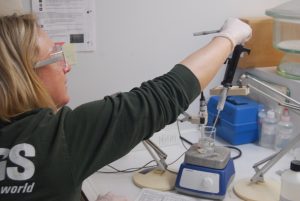
A USGS technician processes a water sample in a laboratory in this 2016 photograph. (Photo: Steven Sobieszczyk/USGS; public domain)
Cleaning operations offer another concrete connection. Alfa Laval’s Rotacheck documentation describes monitoring rotary jet-head operation and communicating signals to a programmable logic controller, or PLC. Where suitable data are available, an AI application could help flag incomplete records or unusual cycle behavior for review. Monitoring equipment operation would still need to be distinguished from confirming cleanliness for the next cargo.
At terminals, Smith Meter’s AccuLoad IV documentation already describes Modbus communications for querying or controlling the equipment. That demonstrates an existing digital interface, not a ready-made MHS connection. An initial application could analyze recorded status and alarms while established loading controls continue to govern the transfer.
The closest demonstrated environmental connection comes from Tetsuwan Scientific. The company describes integrating MHS into ResearchOS and using a laboratory workflow to examine bacterial contamination associated with California’s San Pedro Creek. Its account also describes a human moving labware during an equipment-recovery sequence.
For laboratories supporting liquid waste, water, chemical, or food businesses, this suggests a possible route to coordinating instruments and sample handling. It does not establish that a particular commercial cargo test, release decision, or regulatory reporting method has been validated.
The first useful result may be a faster, better-documented diagnosis that a technician can verify.Equipment access must preserve operating safeguards
Anthropic’s Genentech example illustrates a practical limitation: when foaming disrupted liquid handling, repeated attempts could worsen the bubbles until researchers supplied the necessary physical explanation. A successful software call and a successful physical operation are different things.
That distinction matters around pumps, pressure, product compatibility, and tank cleaning. A pilot should preserve approved operating limits and stop or escalate when readings are missing, contradictory, or outside its validated conditions. An agent should not improvise a recovery that changes those limits.
NIST’s guidance for operational technology emphasizes performance, reliability, and safety alongside cybersecurity. It recommends network segmentation and controlled communications. Applied here, that supports separating an AI service from unrestricted access to equipment and retaining logs of what was requested and what occurred.
Emergency stops, interlocks, and protective controls should remain effective independently of the AI application. Connecting a device does not establish that the resulting system is suitable for a hazardous location or a particular transfer duty.
For cargo-tank shops, 49 CFR 180.409 sets qualifications for people performing or witnessing specified inspections and tests, with defined exceptions. An AI-generated record does not, by itself, satisfy those personnel requirements. Qualified people remain responsible for the applicable inspection and certification work.
How to evaluate a useful first trial
As of September 5, the project’s official site describes a limited research preview with access by application. Equipment builders, automation providers, and laboratories with engineering support are plausible direct participants. Smaller fleets may benefit first through products supplied by those businesses.
A practical first-month evaluation could begin with one recurring problem: a difficult diagnosis, a laborious test record, or a cleaning report that repeatedly needs correction. Record the current time required and the frequency of errors before introducing AI.
Next, identify which devices actually expose the needed information. Ask the supplier about supported software interfaces, data ownership, units, timestamps, calibration status, and maintenance responsibility. An analog gauge or undocumented controller may require additional hardware or integration work.
Start with historical records or a connection that can only read approved data. Compare the system’s output with an experienced employee’s assessment, including faulty sensors, interrupted connections, and incomplete records. Where physical actions are proposed, move to an isolated test setup with a controls specialist and a defined approval process.

A proposed pilot uses approved equipment data to support technician review while existing local controls govern physical operation. Conceptual workflow, not an MHS architecture or engineered safety design. (Graphic: Tank Transport; source: NIST SP 800-82 Rev. 3)
Ask what happens during an internet outage, how sensitive operating data are handled, and whether a software or model update triggers revalidation. Require a clear answer on which functions continue to run locally.
Then compare the verified benefit with the full cost: integration, sensors, computing, staff review, and ongoing support. Faster report drafting has limited value if employees spend the time saved correcting it. Track useful findings and missed faults, along with minutes saved.
Many record-review tasks can already be attempted through existing software interfaces without MHS. A proposed MHS implementation earns its place when it measurably reduces the work required to connect and maintain equipment integrations. The trial should settle that question before a business expands it.
AI Across Tank and Bulk Equipment: Key Developments
- Availability: MHS remains an application-based research preview; participation and equipment support need confirmation.
- Industry fit: Diagnostic evidence, cleaning records, development testing, and laboratory coordination offer specific problems to investigate.
- Existing infrastructure: Connected trailers, PLC monitoring, and documented industrial communications provide starting points but do not prove MHS compatibility.
- Adoption test: A narrowly scoped trial should demonstrate reliable results, preserved safeguards, and savings after integration and support costs.
Sources and Further Reading
- Anthropic: Model Hardware Standard announcement and research examples
- Model Hardware Standard: Preview access and project status
- Tetsuwan Scientific: MHS integration and environmental laboratory work
- OPC Foundation: Industrial information models for AI
- EnTrans: Smart trailer technology and third-party integration
- Alfa Laval: Rotacheck tank-cleaning monitoring
- Guidant Measurement: AccuLoad IV Modbus Communications Manual
- NIST: Guide to Operational Technology Security, Revision 3
- 49 CFR 180.409: Cargo-tank inspector and tester qualifications