- Polar plans to display a new dry-bulk trailer at booth 801 during Tank Truck Week in Oklahoma City.
- The preview lets fleets examine payload, application fit, and service access before comparing equipment.
A new Polar dry bulk trailer will be on display at National Tank Truck Carriers’ Tank Truck Week, scheduled for September 27–30, 2026, in Oklahoma City. Polar says the trailer is based on an existing crude-oil trailer that it reengineered for dry-bulk service, with low weight and increased payload capacity as design objectives.
According to Polar’s September 9 announcement, the equipment will be at booth 801. The announcement does not include detailed specifications, pricing, or production availability for the new trailer.
The preview comes as Polar marks its 80th anniversary. In the same announcement, the company traces its roots to Opole Blacksmith Shop, founded in Opole, Minnesota, in 1946 by brothers Vince, Roy, and Frank Warzecha. The business produced stainless steel tanks for bulk milk distribution.
Today, Polar builds trailers for chemical, food, petroleum, and dry-bulk transportation. The company plans an anniversary celebration at its Minnesota Trailer Operations in October.
Payload Starts With the Complete Combination
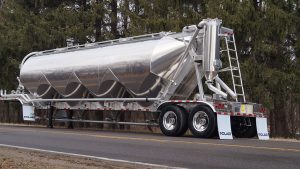
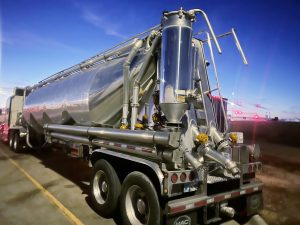
An existing Polar 1660 dry-bulk trailer. Specifications for the new Tank Truck Week preview have not been released yet. (Photo: Polar Tank Trailer)
Polar’s lightweight design addresses a practical fleet consideration: a lighter trailer leaves more allowable weight for cargo in weight-limited operations. The usable benefit depends on the complete combination, including the tractor, installed equipment, load distribution, and route limits.
The Federal Highway Administration’s Bridge Formula guidance lists general Federal Interstate limits of 80,000 pounds gross, 20,000 pounds on a single axle, and 34,000 pounds on a tandem, subject to applicable exceptions. Axle spacing also matters because the formula can require lower weights for particular axle groups.
The Federal Motor Carrier Safety Administration’s tire requirements generally prohibit loading above the applicable tire rating and require cold inflation pressure sufficient for the load. Tire capacity therefore belongs in the same assessment.
For fleets evaluating the Polar preview, the useful comparison is between similarly equipped combinations carrying the intended product. Whether that product reaches a weight limit or fills the available volume first will help determine which specifications matter most.
Matching Trailer Capacity to the Cargo
According to Polar’s dry-bulk product specifications, its small-cube equipment ranges from 940 to 1,350 cubic feet, and its large-cube equipment ranges from 1,550 to 1,660 cubic feet. The manufacturer describes the larger range as suited to low-density materials. Those published ranges provide background on the current lineup; they do not identify the show trailer’s capacity.
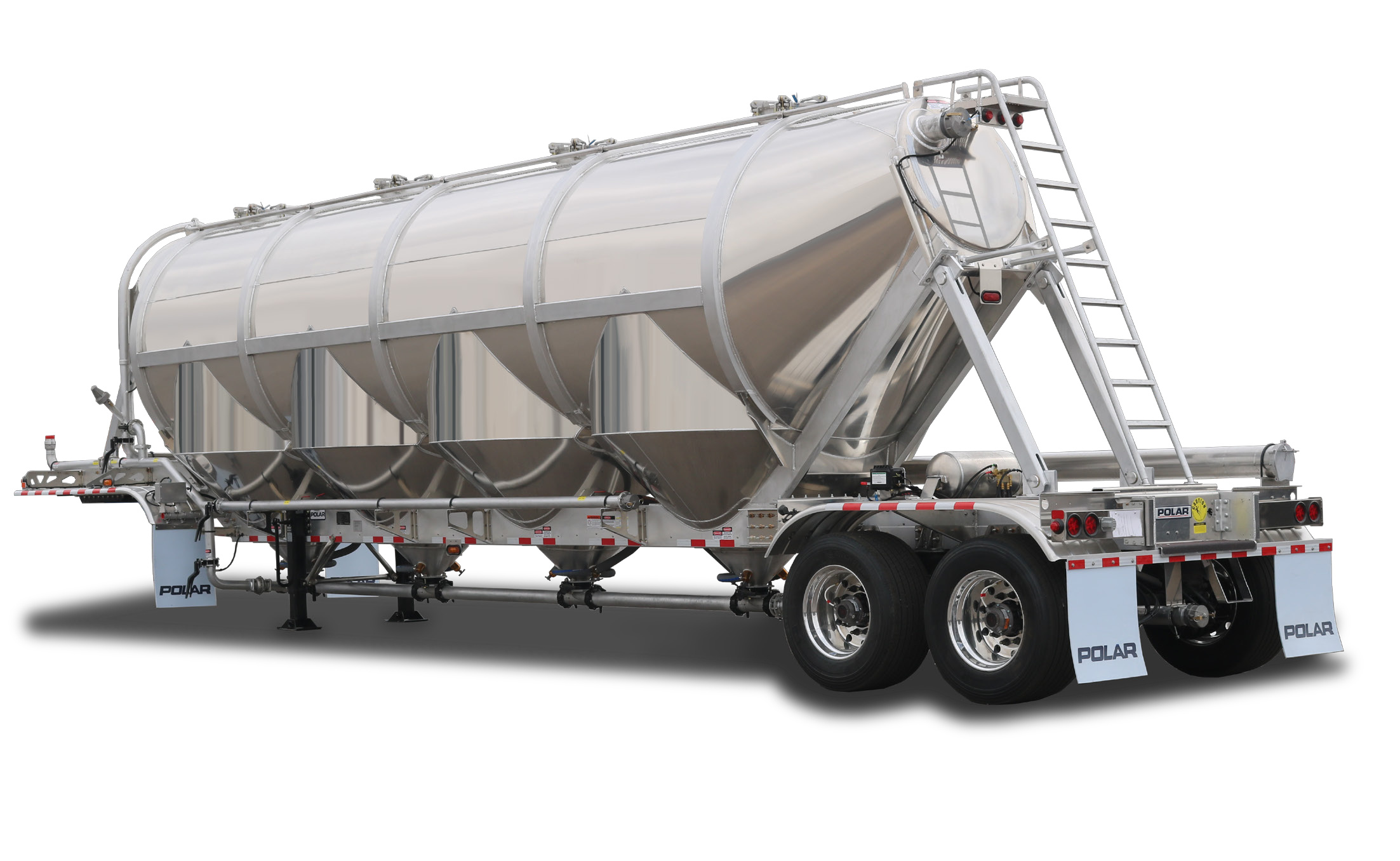
Polar states in its 2024 brochure for its existing 1,660-cubic-foot trailer that the model uses four hoppers, external reinforcement, and an interior without internal structural members. The manufacturer describes that arrangement as suitable for food-grade cargo, including flour. The brochure also lists discharge valves, pressure gauges, and other components as part of the operating specification.

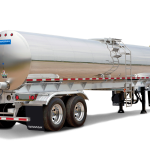
Side profile of a Polar 1660 four-hopper pneumatic dry-bulk trailer. (Photo: Polar Tank Trailer)
Those existing designs give visitors a starting point for discussing the new trailer with Polar: Which commodities is it intended to handle? What loading and discharge arrangements does it offer? How accessible are valves and wear components? What cleaning requirements apply between loads?
Tank Transport’s coverage of dry-bulk loading and unloading equipment examines the related importance of matching airflow and transfer equipment to the application. A trailer comparison becomes more useful when it includes the receiving facilities and delivery routines the fleet already serves.
A Show-Floor Look at Specification and Support
According to National Tank Truck Carriers’ official program, the first exhibit-hall opening is at 4:30 p.m. Monday, September 28, with additional exhibit periods Tuesday and Wednesday. The conference begins Sunday. Times are local to Oklahoma City, and the program is subject to change.
NTTC’s agenda also includes a Tuesday panel on trailer specification, covering configuration, components, maintenance, driver usability, and ownership costs. That gives equipment buyers a broader setting for evaluating what they see on the floor and identifying questions to take back to suppliers.
Polar is part of EnTrans, whose service-network expansion through B&R Repair brings additional context to questions about parts, maintenance, and repair arrangements. Visitors to Polar’s booth can discuss those support needs alongside the new trailer’s intended applications, available configurations, and production plans.
Polar’s Dry-Bulk Preview: Key Developments
- Equipment preview: Polar has reserved booth 801 for the new trailer, marking its 80th anniversary.
- Performance evaluation: Compare complete specifications, application fit, and axle loading when assessing potential payload benefits.
- Show timing: Exhibit access begins September 28, a day after the conference opens.
- Buyer follow-through: Discuss commodity suitability, unloading configuration, availability, and service support with Polar.