- Texas petroleum theft is becoming a cargo-tank security issue, with unauthorized vacuum trucks, suspicious tickets, and brokered loads moving stolen crude into the transportation stream.
- New Texas enforcement laws now put petroleum cargo tanks under sharper scrutiny, giving trained DPS officers authority to inspect crude and condensate cargo tanks, collect samples, and take custody of suspected stolen product.
- Recent West Texas cases show how oilfield theft can escalate into pipeline fires, organized-crime charges, and chain-of-custody risks for carriers, dispatchers, brokers, receivers, and first responders.
Why Texas Petroleum Theft Now Belongs in the Transport-Security Conversation

Members of the State Taskforce on Petroleum Theft meet in Midland to address organized petroleum theft in Texas. (Railroad Commission of Texas)
The scale and persistence of the problem have moved it beyond nuisance theft. For more reporting on Texas-based transportation and energy issues, follow Tank Transport’s Texas coverage. The Houston Chronicle reported that incidents had become routine around Midland and Odessa, citing one example in which more than 400 barrels of crude worth about $31,000 were missing from two storage tanks and another in which Winkler County Sheriff Darin Mitchell said 600 barrels were stolen from a single location. The Texas Tribune likewise reported that local sheriffs in the Permian were handling repeated calls about stolen oil drums, copper, and other oilfield equipment, while law enforcement resources remained thin across vast rural areas.
The operational methods also appear to have become more sophisticated. Houston Chronicle reporting said law enforcement was seeing drones, thermal cameras, and surveillance of worker and supply-truck movements. Texas Public Radio reported that Jim Wright said some thieves disguise tanker trucks to look like legitimate oilfield service vehicles and described them as “cloning” trucks so they can take a full load “and not be noticed.” A Bloomberg Businessweek excerpt republished by the Permian Basin Petroleum Association added that some thieves pose as waste haulers, cover license plates, or swap vehicles to evade detection.
That matters because it explains why legitimate-looking transport equipment is now central to the threat. Howard County Sheriff Stan Parker told Texas Public Radio that one of the hardest parts of enforcement is simply knowing who is authorized to be at a site. In a field where trucks, hoses, portable tanks, and nighttime operations can all look ordinary from a distance, transport authentication becomes part of theft prevention. To follow broader security issues affecting freight, fleets, and supply chains, explore our Freight Security coverage.


”Oil theft does not end at the well site. Once stolen crude is loaded into a truck, it becomes a chain-of-custody, cargo-tank, documentation, safety, and liability problem.“
How Texas Petroleum Theft Evolved From Lease-Site Crime Into Cargo-Tank Risk
The Permian Basin’s importance raises the stakes. For broader coverage of petroleum markets, producers, and transportation issues, explore our Oil & Gas reporting. The U.S. Energy Information Administration reported that in 2025 the Permian in West Texas and southeastern New Mexico produced 6.6 million barrels per day and accounted for 48% of total U.S. crude oil production. Western Midstream, one of the companies named in the Odessa-area affidavit reporting, says its Delaware Basin assets include thousands of miles of pipeline and extensive crude, gas, and water infrastructure in counties including Reeves, Loving, Ward, and Culberson. In a basin this large and this productive, even a small number of unauthorized movements can be financially meaningful and operationally hard to spot.
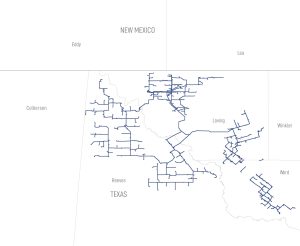
Western Midstream’s Delaware Basin oil-system map shows crude-related infrastructure across Reeves, Loving, Ward, Culberson, Eddy, and Lea counties. (Western Midstream)
The public record now shows that stolen crude can move through ordinary-seeming commercial channels. To follow additional reporting on crude movement, pricing exposure, and market risk, see our Crude Oil coverage. Texas Public Radio reported that stolen crude can be moved through brokers and resold into the market. In April 2026, the U.S. Attorney for the Northern District of Texas announced a 14-defendant Permian Basin case alleging conspiracy to transport stolen crude oil across the New Mexico-Texas border for resale.
In September 2025, the U.S. Attorney for the District of New Mexico announced charges against five men accused of stealing crude from Plains All American Pipeline facilities, storing it in Carlsbad, transporting it into West Texas for resale, and using fraudulent load tickets to disguise the thefts.
That is why Texas petroleum theft should be read as a chain-of-custody story. For more stories focused on petroleum hauling and cargo movement, browse our Petroleum Transport coverage. In the older version of the problem, the loss was the stolen barrel at the lease. In the current version, the stolen barrel may pass through a vacuum trailer, a dispatcher, a receiving location, a suspicious ticket, or a brokered handoff before anyone challenges it. That is also why the new Texas legal changes emphasize not only theft itself, but transportation, purchase, storage, and documentation-linked conduct.
How Texas Petroleum Theft Became a Fire-and-Response Hazard
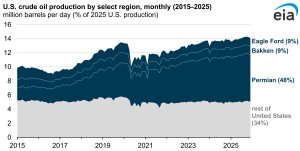
EIA chart showing crude oil production by selected U.S. region, including the Permian Basin. (U.S. Energy Information Administration)
The Reeves County case is the clearest example of why this is no longer just a property-crime story. For related coverage of pipeline infrastructure and energy movement, review our Pipelines reporting. On the night of March 5, 2025, deputies responded to a pipeline explosion and tank-battery fire near U.S. Highway 285 and County Road 436 near Orla. According to the Reeves County Sheriff’s Office account reported by KOSA, two vacuum trucks appeared to be attempting to steal petroleum products from a station designed for pipeline maintenance, and investigators said violated safety protocols, static electricity, and high pipeline pressure caused the fire and detonation.
Texas Public Radio added a critical transportation and infrastructure perspective. The outlet reported that the fire was contained before it spread to populated areas or to a nearby natural gas pipeline, and that DPS testimony to the Texas House Energy Resources Committee described suspects trying to tap directly into a main pipeline. That turns Texas petroleum theft into an industrial-safety and emergency-response issue, not just a theft-loss line item. It also explains why first responders, pipeline operators, and fleet safety teams should treat unauthorized cargo movement as a potentially catastrophic event.
What Texas Petroleum Theft Reveals About Unauthorized Vacuum Trucks
Vacuum trucks and vacuum trailers are central because stolen crude has to be physically moved, and it often has to be moved quickly. For more coverage of vacuum equipment, oilfield service vehicles, and related fleet operations, visit our Vacuum Trucks archive. In the Reeves County incident, KOSA reported that Western Midstream’s site manager found crude oil burning and observed two tanker trucks at the scene, while the foreman confirmed no one else should have been on site. That single fact pattern captures the modern risk in West Texas: the equipment used in a theft may be the same category of equipment used every day for legitimate field work.
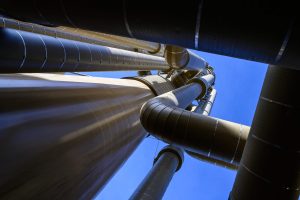
Midstream pipeline and facility infrastructure illustrates the fixed assets that can become vulnerable when unauthorized petroleum access occurs. (Western Midstream)
The same transport logic shows up in the Odessa-area Western Midstream case. Midland Reporter-Telegram reported that surveillance footage showed a red semi-truck with a white vacuum trailer entering the site, turning off its lights, and connecting to the pipeline. Investigators alleged 16 loads totaling 1,920 barrels were stolen from Western Midstream’s Cobra CTF East Pipeline location. In other words, the alleged theft depended on transport assets, not just a tap point.
How Texas Petroleum Theft Unfolded in Reeves County
What is most striking about Reeves County is not only the fire, but the location and the operational mismatch. Investigators said the trucks appeared to be stealing product from a station designed for pipeline maintenance, not from some improvised black-market loading rack. In May 2025, KOSA reported that one suspect, Yuliesky La Rosa, had been arrested in Florida, extradited to Reeves County, and charged with engaging in organized criminal activity, a first-degree felony, with more arrests potentially pending.
That makes the case unusually important for carriers and tank operators. It suggests that thieves were not just opportunistically skimming exposed production tanks. They were allegedly using transport equipment to interact with a sensitive midstream asset in a way that investigators said triggered a detonation. For TankTransport readers, that is the moment where petroleum theft clearly becomes a cargo-tank safety story.
Why Texas Petroleum Theft Matters to First Responders
The first-responder lesson is that unauthorized petroleum movement can create a complex scene before anyone even realizes the underlying issue is theft. KOSA reported that multiple agencies, including the FBI, ATF, DPS, and Texas emergency management, were involved in the Reeves County investigation. Texas Public Radio reported that DPS testimony described the pipeline as burning for several days after the attempted tap. That is not the profile of a routine theft call.
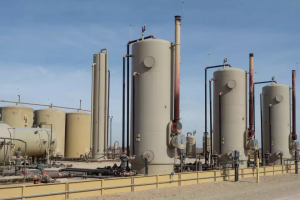
Oilfield tank battery image accompanying reporting on a Reeves County attempted petroleum theft and pipeline fire. (Tim Fischer/Midland Reporter-Telegram)
For operators and carriers, the implication is practical. A suspicious nighttime job at an unmanned location is not only a theft indicator; it can also be a precursor to a fire, explosion, environmental release, or pipeline emergency. The Texas petroleum theft pattern now intersects directly with hot work restrictions, static control, access control, ignition risk, and incident command.
How Texas Petroleum Theft Is Changing Paperwork, Dispatch, and Inspections
The Western Midstream affidavit reporting is where the transport-compliance story becomes unmistakable. For more reporting on theft, fraud, and cargo-security risks affecting transportation, see our Cargo Theft coverage. Midland Reporter-Telegram reported that DPS investigators described a red semi-truck and white vacuum trailer, nighttime loading, transport to frac tanks, and a driver who said he thought the work was legitimate because it came through a dispatcher chain. Investigators also said a ticket provided by the driver showed pickup from an Anadarko lease even though Anadarko was no longer an active company, which they described as a fact widely known in the local industry.
That combination of facts is exactly why Texas petroleum theft now reaches beyond theft prevention into transport due diligence. A load can appear to be routine if the truck, trailer, and work order look normal. But the Odessa affidavit reporting flags a cluster of red flags: work at night, no company personnel on site, a direct pipeline hookup, transport to frac tanks, and a ticket tied to a company name that no longer made commercial sense. The September 2025 New Mexico federal case underscores the same documentary risk, alleging fraudulent load tickets and an insider pipeline employee who abused his position while stolen crude was transported into West Texas for resale.

FMCSA cargo tank safety graphic supporting federal oversight of cargo tank motor vehicles. (Federal Motor Carrier Safety Administration)
The company references help explain why the “Anadarko lease” detail mattered. Western Midstream states that it owns and operates crude oil, natural gas, NGL, and water gathering systems and pipelines, including extensive Delaware Basin assets in Reeves County and surrounding areas. Anadarko, by contrast, ceased being a standalone public company after Occidental completed its acquisition in August 2019. So investigators’ conclusion that an “Anadarko” pickup ticket was suspicious was not just semantic; it fit a real corporate-history mismatch that an informed operator, dispatcher, or receiver should have questioned.
Texas lawmakers responded to that transport-chain exposure with a three-part enforcement package in 2025. House Bill 48 created the Organized Oilfield Theft Prevention Unit inside DPS. Senate Bill 494 required the Railroad Commission to establish STOPTheft. Senate Bill 1806 added cargo-tank inspection and sampling authority, expanded theft-related conduct, and increased penalties.
Under the enrolled text of SB 1806, a person can commit an offense not only by tapping a pipeline or tank, but also by unlawfully possessing, delivering, receiving, purchasing, selling, moving, concealing, or transporting petroleum product; by purchasing petroleum from a person not authorized by the Railroad Commission to sell it; or by storing, purchasing, or trading petroleum for financial benefit through a method not authorized by the Commission. For the cargo-tank inspection section specifically, “petroleum product” means crude oil or condensate.
”Texas petroleum theft is now being treated as a coordinated transport-and-enforcement problem centered on trucks, tanks, documents, samples, and chains of custody.“

STOPTheft task force members discuss recommendations for addressing petroleum theft, oilfield security, and law-enforcement coordination. (Railroad Commission of Texas)
The compliance implications are substantial. For more on inspection rules and cargo-tank oversight, read our Tank Inspection coverage. SB 1806 authorizes trained DPS officers to conduct comprehensive inspections of any cargo tank used or suspected of being used to transport crude oil or condensate on a public road or railroad in Texas, collect product samples, and submit them for forensic analysis. The same law also allows law enforcement to take custody of allegedly stolen crude or condensate and sell it using NYMEX-based pricing benchmarks while proceeds are handled under criminal-seizure procedures.
Penalties were also elevated so that petroleum theft below $10,000 is now a third-degree felony, $10,000 to under $100,000 is a second-degree felony, and $100,000 or more is a first-degree felony.
Texas has also moved from statute to visible implementation. HB 48 gives the DPS unit statewide jurisdiction, directs it to coordinate with federal, state, and local agencies and the Railroad Commission, and requires it to maintain a centralized database tracking relevant offenses and related criminal enterprises. KOSA reported that the DPS Oilfield Theft Prevention Unit presented a new oilfield-theft investigations course in Midland on February 19, 2026, aimed at law enforcement and oil-industry personnel. That is an important signal that Texas petroleum theft enforcement is becoming more specialized, not merely more punitive.
Federal cargo-tank rules did not disappear when Texas added this theft-specific overlay. FMCSA says it enforces cargo-tank safety and conducts inspections, while PHMSA’s cargo-tank rules require periodic testing and inspection of specification cargo tanks. The practical takeaway is that Texas carriers moving crude or condensate may now face both the traditional safety-and-maintenance compliance framework and a separate theft-focused scrutiny regime tied to suspicious origin, unauthorized handling, or forensic product questions.
What Texas Petroleum Theft Means for Fleets, Brokers, Dispatchers, and Receivers

Annual changes in U.S. crude oil production by region highlight the production weight of major oil-producing basins. (U.S. Energy Information Administration)
The cases and statutes reviewed here point to a clear operational inference: legitimate carriers and shippers need to tighten verification before a load is ever pulled. For continuing coverage of regulatory expectations, documentation, and fleet obligations, visit our Compliance section.
In practice, that means confirming the actual operator or midstream owner at pickup, matching site names to currently active companies, independently validating any nighttime or unmanned-site assignment, confirming that a dispatcher or broker is tied to a real customer relationship, and requiring a custody trail that makes commercial sense from pickup through delivery. The Odessa affidavit reporting shows how a load can look legitimate enough to involve an outside trucking company while still presenting obvious red flags once someone checks the site conditions and paperwork closely.
Receivers and storage locations also sit inside the risk now. In the Western Midstream case, investigators alleged the product was transported to frac tanks behind M&W Hot Oil on Highway 17 in Reeves County, a location they said had surfaced in prior theft investigations. In the 2025 New Mexico federal case, prosecutors alleged stolen crude was stored at a Carlsbad yard and then moved into West Texas for resale. Texas petroleum theft, in other words, is not only about the truck that loads the oil. It is also about who accepts it, where it is staged, and whether receiving systems can prove they are taking custody of legitimate product.
The policy timeline gives this story staying power. STOPTheft’s first meeting was held on October 29, 2025, and its second meeting on April 2, 2026, with subcommittees focused on background and history, laws and regulations, economic analysis and impact, and recommendations. The first legislative report is due in December 2026, and the Railroad Commission says that report will assess theft impacts, long-term economic effects, and law-enforcement coordination.
Until that report arrives, some of the largest statewide loss figures should still be treated as estimates rather than settled official totals. What is already firmly established, however, is the direction of travel: Texas is treating petroleum theft as a coordinated transport-and-enforcement problem centered on trucks, tanks, documents, samples, and chains of custody.
Open questions and limitations: Public materials currently confirm the task force’s timeline, the existence of new cargo-tank inspection powers, the Dallas Fed impact survey, and several concrete criminal cases. They do not yet provide a full statewide count of theft-linked cargo-tank inspections, forensic sample matches, or “cloned truck” incidents under the new regime. That means the December 2026 STOPTheft report is the next major document to watch if the goal is a more complete statewide baseline for enforcement outcomes and transport-specific risk patterns.
Key Developments in Texas Petroleum Theft and Cargo-Tank Security
- Texas petroleum theft is now being treated as a broader transport-security problem, not just a lease-site theft issue.
- The Railroad Commission of Texas has launched the STOPTheft task force, created under Senate Bill 494, with a legislative report due in December 2026.
- More than 40% of oil and gas operators reported theft affected their operations in the prior year, according to the Dallas Fed energy survey cited in the article.
- Senate Bill 1806 gives trained Texas DPS officers new authority to inspect petroleum cargo tanks, collect crude or condensate samples, submit samples for forensic analysis, and take custody of suspected stolen product.
- House Bill 48 created an organized oilfield-theft prevention unit within the Texas Department of Public Safety, giving the state a dedicated enforcement structure for oilfield and petroleum-product theft.
- Recent Reeves County reporting tied an attempted petroleum theft to a pipeline explosion and tank-battery fire, showing how unauthorized vacuum truck activity can become an industrial safety and first-response hazard.
- Odessa-area affidavit reporting described suspicious transport activity involving a red semi-truck, white vacuum trailer, nighttime loading, frac tanks, and allegedly false or questionable tickets.
- Federal cases in Texas and New Mexico show stolen crude may move through resale channels, including allegations involving fraudulent load tickets, storage yards, brokers, and interstate crude movement.
- For legitimate carriers, the risk now centers on verification, including confirming active lease/operator information, validating dispatch instructions, checking pickup and delivery locations, and maintaining clear chain-of-custody records.
- The next major policy milestone is the December 2026 STOPTheft report, which could shape future Texas enforcement, inspection priorities, and petroleum-transport compliance expectations.
External Resources for Texas Petroleum Theft, Cargo-Tank Security, and Enforcement
- Review the Railroad Commission of Texas update on the STOPTheft task force’s second quarterly meeting and December 2026 legislative report at RRC Petroleum Theft Task Force Holds Second Quarterly Meeting.
- Learn how the STOPTheft task force began its coordinated review of petroleum-theft laws, enforcement gaps, and state revenue impacts at Petroleum Theft Task Force Holds First Meeting at RRC.
- Read the enrolled Texas legislation giving trained DPS officers authority to inspect petroleum cargo tanks and collect crude or condensate samples at Texas Senate Bill 1806.
- Review the enrolled Texas law creating the Organized Oilfield Theft Prevention Unit within the Texas Department of Public Safety at Texas House Bill 48.
- Understand the state’s broader oilfield-theft legislation package and Governor Abbott’s signing announcement at Governor Abbott Signs Oilfield Theft Protection Legislation Into Law.
- Find federal cargo-tank safety guidance for hazardous materials transportation at FMCSA Cargo Tank Safety.
- Review federal cargo-tank testing and inspection requirements under 49 CFR Section 180.407 at PHMSA Cargo Tank Testing and Inspection Requirements.
- See Permian Basin crude-production context from the U.S. Energy Information Administration at EIA Permian Basin crude oil production analysis.
- Explore operator survey data showing the reported impact of theft on oil and gas operators at Dallas Fed Energy Survey, Third Quarter 2025.
- Learn more about Western Midstream’s crude oil, natural gas, NGL, and water infrastructure at Western Midstream operations overview.
- Review Western Midstream’s Delaware Basin assets and service-area description at Western Midstream Delaware Basin operations.
- Read the federal announcement on the 14-defendant Permian Basin crude-oil theft indictment at U.S. Attorney’s Office, Northern District of Texas crude-oil theft case.
- Review the federal New Mexico case involving alleged crude theft, fraudulent load tickets, storage, and resale into West Texas at U.S. Attorney’s Office, District of New Mexico crude-oil theft case.
- Read local reporting on the Reeves County pipeline explosion and alleged attempted theft of petroleum products at KOSA First Alert 7 Reeves County pipeline explosion report.
- Follow reporting on the arrest tied to the Western Midstream pipeline explosion investigation at KOSA First Alert 7 Western Midstream explosion arrest report.
- Read Midland-Odessa reporting on a Midland man charged in a petroleum-theft case valued at more than $114,000 at Midland Reporter-Telegram Midland oil-theft arrest report.
- Review reporting on the Odessa arrest tied to alleged Western Midstream oil theft, suspicious tickets, and vacuum-trailer activity at Midland Reporter-Telegram Odessa oil-theft arrest report.
- Read Texas Public Radio’s reporting on organized oilfield theft, cloned-looking trucks, and enforcement challenges in Texas at Texas Public Radio oilfield theft investigation.
- Review Texas Tribune coverage of West Texas oilfield theft, sheriff concerns, and the state task-force response at Texas Tribune West Texas oilfield theft report.
- Read Houston Chronicle reporting on West Texas oil theft, law-enforcement concerns, and organized-crime allegations at Houston Chronicle West Texas oil theft report.
- Explore the Permian Basin Petroleum Association’s republished Bloomberg Businessweek excerpt on oil theft and West Texas economic losses at Permian Basin Petroleum Association oil-theft feature.
- Confirm the corporate history behind Anadarko’s acquisition by Occidental Petroleum at SEC archive on Occidental’s Anadarko acquisition.