- FMCSA has temporarily doubled a key military CDL waiver window from one year to two years, effective through Oct. 29, 2026.
- FMCSA now lists 27 states as participating in Even Exchange and nine more as committed, creating a potential 36-state military knowledge-test pathway.
- Tank and hazmat fleets gain a promising recruiting channel, but the program does not automatically make a veteran tanker- or hazmat-qualified.
FMCSA’s Freedom Haulers CDL initiative has expanded the time in which experienced current and former military drivers may seek certain commercial-license test waivers, opening a wider recruiting window for trucking companies—including tank carriers looking for safety-minded drivers with heavy-vehicle or fuel-handling backgrounds.

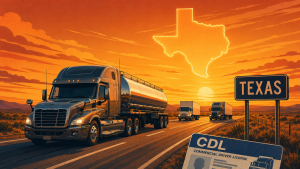
The federal Freedom Haulers campaign connects service members and veterans with CDL waiver, training and employment resources. (Graphic: U.S. Department of Transportation)
The change is meaningful, but it is narrower than the phrase “automatic CDL” may suggest. The Federal Motor Carrier Safety Administration issued a 90-day waiver effective July 30 through Oct. 29, 2026. It extends the lookback period for qualifying military employment from one year to two years; it does not remove the remaining licensing, safety or state-approval requirements.
For tank fleets, the recruiting connection is unusually direct. The qualifying occupations under the companion Even Exchange program include Army and Air Force fuelers, along with military motor-transport, vehicle and equipment operators. National Tank Truck Carriers representatives participated in the White House launch, reflecting the sector’s interest in a workforce already accustomed to disciplined procedures and high-consequence equipment.
The Two-Year Window Is Temporary
FMCSA’s existing Military Skills Test Waiver program allows a state to waive the civilian driving test for an applicant with two years of safe experience operating military vehicles comparable to commercial motor vehicles. More than 40,000 service members and veterans have used that pathway, according to the agency.

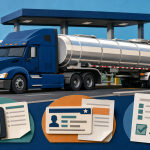
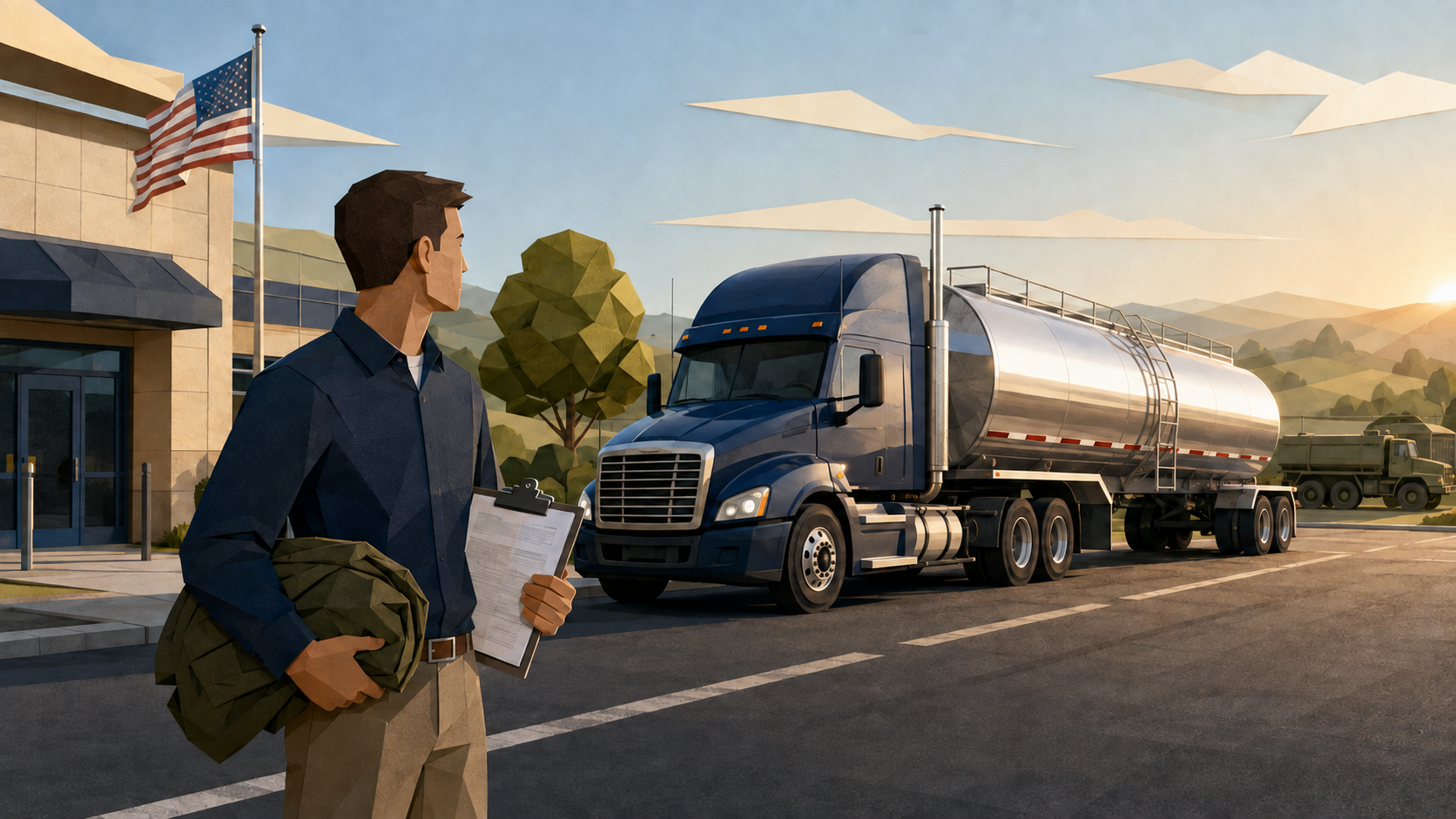
Qualified military drivers must still present documentation and complete their state’s licensing process before entering civilian tank trucking. (Original Tank Transport illustration)
Until July 30, the applicant generally had to be currently serving in a qualifying driving position or have left that work within the previous year. The temporary waiver doubles that recency period to two years for the general knowledge- and skills-test pathways. It also applies to eligible active-duty personnel seeking a commercial learner’s permit or CDL in the state where they are stationed rather than domiciled.
The additional year can help candidates who missed the old deadline while transitioning, relocating, or pursuing another civilian job. It also gives fleets more time to reach veterans whose military experience fits commercial equipment. Tank Transport has previously reported on the military-to-CDL path for heavy-vehicle operators; Freedom Haulers turns that established pathway into a more visible federal recruiting campaign.
The waiver changes the time window—not the safety record an applicant must document. States may still require the military-skills application, proof of comparable equipment experience, a commander’s certification and a review for disqualifying convictions, suspensions or at-fault crashes. FMCSA strongly encourages states to adopt the temporary waiver, but state driver licensing agencies administer the applications.
Even Exchange Pipeline Grows Toward 36 States
Freedom Haulers initially announced that Alabama, Arkansas, Florida, Indiana, Louisiana, Maryland and Wyoming had committed to join the Even Exchange knowledge-test waiver, which would have brought the program’s reach to 34 states. FMCSA’s live implementation map, updated Aug. 3, also lists Connecticut and Nebraska as committed. The current map therefore shows 27 participating states and nine committed states—a potential 36-state pathway if every commitment is implemented.
That distinction matters at the licensing counter. A veteran should confirm that the state has activated its process, identify the correct form, and verify which military occupational codes it accepts before relying on the knowledge-test waiver. The federal rule allows state participation; it does not force every licensing agency to use the same application workflow.
The July 30 launch announcement also included a Werner commitment to hire 1,400 veterans and military spouses in 2027. That is a recruiting pledge rather than a licensing guarantee, but it shows how the campaign is intended to connect a federal test-waiver pathway with actual carrier hiring.
Tank and Hazmat Qualifications Remain Separate

Military driving experience can provide a valuable foundation for civilian trucking, but fleets and states must still verify every required qualification. (Original Tank Transport illustration)
A general CDL fast track is not the same as a complete tank or hazardous-materials qualification. Under 49 CFR 383.77, a state may separately waive the tank-vehicle knowledge test or hazardous-materials knowledge test for a qualifying service member with matching recent military experience. The hazardous-materials security-threat assessment and other federal requirements still apply.
The July 30 waiver expressly suspends the one-year provisions governing the general knowledge test, driving-skills test and certain out-of-state applications. It does not list the separate subsection governing tank and hazmat endorsement waivers. Applicants and recruiting fleets therefore should not assume that the new two-year window automatically extends every endorsement-waiver deadline; the state licensing agency should confirm the route for an N, H or X endorsement.
FMCSA says a person who receives a CDL under the temporary military waiver is exempt from federal Entry-Level Driver Training requirements, consistent with the existing military exception. Other applicants can still face ELDT requirements, particularly for a first hazardous-materials endorsement, making the status of a chosen school in the FMCSA Training Provider Registry important.
Nothing in Freedom Haulers replaces the carrier’s own qualification process, medical certification, drug-and-alcohol testing, road evaluation or cargo-specific training. A new tank driver may still need instruction in surge control, loading and unloading, hose and valve procedures, product compatibility, personal protective equipment, shipping papers, placards and emergency response. Those controls remain central to the specialized demands of hazmat driving.
Veterans without qualifying military driving experience can use the campaign as a gateway to training resources instead of test waivers. The Department of Veterans Affairs confirms that GI Bill benefits may be used for approved truck-driving programs. Still, coverage depends on the veteran’s eligibility tier, the school, and the program. The campaign centralizes those existing benefits; it does not create universal free tuition.
Freedom Haulers CDL Key Developments
- The two-year military-experience lookback is a temporary FMCSA waiver effective July 30 through Oct. 29, 2026.
- FMCSA lists 27 states as participating in Even Exchange and nine more as committed to implementation.
- States administer the waivers and may require their own forms, evidence and review.
- Tank and hazmat endorsements remain separate qualification steps; fleets should verify state rules before promising a fast-track outcome.
- Freedom Haulers gives tank carriers a stronger recruiting pipeline, not a substitute for fleet training and safety controls.