- FMCSA restored up to 30 days of automatic hours-of-service relief for qualifying regional emergencies, effective October 5.
- Eligibility still depends on direct emergency assistance; ordinary commercial deliveries don’t qualify just because they enter a declared area.
- Hazmat, CDL, and other requirements remain in force, while residential heating-fuel shortages retain a separate provision.

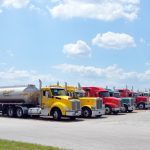
A fuel truck displays a FEMA sign at Hood Army Airfield in Texas during the 2017 Hurricane Harvey response. (Photo: U.S. Army/Todd Pruden)
Federal emergency HOS relief now lasts up to 30 days for qualifying regional declarations, following a Federal Motor Carrier Safety Administration final rule effective October 5, 2026. FMCSA said in its October 5 announcement that restoring the window from 14 to 30 days would reduce extension requests.
Under amended Section 390.23(b), the change applies to regional emergencies declared by a state governor, the governor’s authorized representative, or FMCSA. Relief ends when the emergency ends or 30 days after the initial declaration, whichever comes first. Carriers and drivers must still be providing direct assistance.
For tank fleets delivering emergency fuel, water, or other essential supplies, the longer window can simplify planning when response work continues beyond two weeks.


What the 30-Day Emergency HOS Relief Covers
According to FMCSA’s final rule, the amendment makes one change to 49 CFR 390.23(b): replacing 14 days with 30. It responds to petitions following an October 2023 rule that shortened the automatic regional-emergency period.
The agency explains in the rule that ordinary regional relief covers the driving-time limits in Sections 395.3 and 395.5. For property-carrying tank trucks, Section 395.3 applies. The amendment changes the duration of that relief without expanding it into a general suspension of motor-carrier safety regulations.
In its rulemaking summary, FMCSA reported that National Tank Truck Carriers neither supported nor opposed the proposal, saying it would likely have limited practical effect on the tank truck industry. The agency likewise expects the principal effect to be fewer extension filings, rather than a substantive change in emergency transportation.
Residential heating-fuel shortages remain a distinct case under Section 390.23(b)(1). That provision supplies broader relief from Parts 390–399 for qualifying deliveries within the area designated by a governor. If the shortage continues, the governor can extend the declaration for up to two additional 30-day periods, subject to a 90-day total limit. The October amendment leaves that provision unchanged.
Which Fuel and Bulk Deliveries Qualify

Fuel trucks line up at Hood Army Airfield in Texas to support FEMA’s Hurricane Harvey relief operations in 2017. (Photo: U.S. Army/Todd Pruden)
The deciding factor is transportation’s role in the emergency. FMCSA defines direct assistance in 49 CFR 390.5 as operations that supplement state and local efforts to protect lives, property, or public health and safety, including the immediate restoration of essential services or supplies.
Depending on the declaration and circumstances, that could include diesel for emergency generators, drinking water for communities with disrupted service, or transportation supporting restoration of sewer service. Those are potential applications of the existing definition; a fuel or water load does not qualify automatically.
For water carriers, Tank Transport’s water-tank transport analysis examines the equipment, sanitation, and approved-source considerations that shape emergency drinking-water deliveries.
FMCSA’s definition excludes long-term rehabilitation of damaged infrastructure and routine commercial deliveries after the initial threat has passed. A normal customer replenishment run therefore needs more than a destination inside an emergency area to establish eligibility.
Tank Transport’s earlier coverage of Texas flood emergency hauling examined this distinction between a disaster declaration and the purpose of an individual trip. The new federal rule lengthens the regional window while retaining that direct-assistance test.
FMCSA explains in its interstate emergency-assistance guidance that qualifying trips can begin outside the affected state, using aviation fuel hauled across state lines for wildfire suppression as an example. Once the driver switches to cargo unrelated to that emergency, the exemption no longer applies.
Dispatch, Safety and the Return to Normal Operations
Dispatchers should check the issuing authority, initial declaration date, covered area, applicable transportation, and any conditions or amendments. Section 390.23(b) starts the 30-day clock at the initial declaration, not the carrier’s first dispatch. Keeping the declaration and trip records together can help explain why a movement qualified. FMCSA’s emergency guidance says drivers need not carry a copy of the declaration unless the declaration itself requires one.
FMCSA’s emergency-declaration guidance states that emergency relief does not itself waive CDL, drug-and-alcohol, hazardous-materials, size-and-weight, registration or tax requirements. Any separate relief must come from the appropriate authority. Cargo-tank operators still need to meet applicable shipping-paper, placarding, and emergency-information obligations, including the requirements discussed in Tank Transport’s PHMSA hazmat rules coverage.
FMCSA’s rule at Section 392.3 prohibits unsafe operation by an ill or fatigued driver; ordinary regional HOS relief does not eliminate that requirement. A longer emergency window does not establish that a particular driver is fit for another trip.
Under Section 390.23(e), a driver may make a qualifying empty return to the carrier’s terminal or normal reporting location after direct assistance ends. A driver who reports needing immediate rest must receive at least 10 consecutive hours off before being required to make that return. After returning, the driver must be relieved of all duties and satisfy applicable rest requirements before resuming ordinary commercial driving.
If qualifying work must continue beyond the available period, Section 390.25 allows FMCSA to extend or modify relief. The regulation requires interested parties to request an extension before expiration and explain the continuing need. FMCSA determines whether further relief is warranted and can set additional conditions.
Regional Emergency HOS Relief: Key Developments
- The final rule took effect October 5, 2026, restoring the ordinary regional automatic-relief window from 14 to 30 days.
- Relief can end sooner, and each operation must continue to meet the direct-assistance requirement.
- Residential heating-fuel shortages retain their separate provision and conditional extension process.
- Hazmat and other unaffected requirements continue to apply; dispatchers must also manage driver fitness and the return to normal operations.