
- States must provide three stages of DataQs review under requirements implemented on September 18.
- Fleets have 30 days to request the next review stage and 14 days to answer a request for additional information.
- A complete initial evidence file matters: new, unrequested evidence can send an appeal back to the beginning.
The new DataQs review process gives truck fleets a more structured way to challenge inaccurate inspection and crash records. Beginning September 18, 2026, states must provide Initial Review, Reconsideration, and Final Review, with defined response deadlines and safeguards separating later reviewers from earlier decisions.

A DMV representative reviews a pre-trip inspection checklist with a driver in April 2009. (Photo: Oregon DOT, “Vehicle Inspection”, CC BY 2.0)
For tank and bulk carriers, the practical value lies in the details. A disputed vehicle identifier, inspection finding, or crash entry needs a documented explanation tied to the actual trip, driver, and equipment. A fuel carrier contesting a hazmat finding and a pneumatic fleet disputing a maintenance violation face the same central task: establish precisely what is wrong and support the requested correction.
FMCSA announced the revised requirements in April. Its updated DataQs guidance now identifies September 18 as the implementation date. The change advances the DataQs initiative discussed in Tank Transport’s earlier coverage of federal trucking reforms.


How the three review stages work
The state requirements operate through the Motor Carrier Safety Assistance Program, or MCSAP. At Initial Review, the issuing officer cannot be the sole decision-maker when a request closes without a data correction. Reconsideration requires independent subject-matter expertise; the issuing officer, that officer’s immediate supervisor, and the initial decision-makers cannot decide it. Final Review must exclude participants in either earlier review.
States must review inspection requests submitted within three years of the inspection and crash requests within five years of the crash. Those windows should encourage a review of unresolved records, but prompt action remains preferable: people remember more, records are easier to retrieve, and evidence is less likely to disappear.
The DataQs Help Center sets out the principal clocks. All deadlines below are measured in calendar days.
| Action | Time allowed |
|---|---|
| State opens Initial Review | Within 7 days of submission |
| Initial Review decision | Within 21 days of submission |
| Reconsideration decision | Within 21 days of escalation |
| Final Review decision | Within 45 days of escalation |
| Fleet requests next review stage | Within 30 days of the previous decision |
| Fleet supplies requested information | Within 14 days; the state’s decision clock pauses |
The seven-day opening requirement sits inside the initial 21-day decision period. It does not add another week. Likewise, the three review periods should not be presented as a guaranteed 87-day total: requester response periods, escalation timing, and requests for information affect elapsed time.
A missed state deadline does not automatically erase a violation. FMCSA’s final DataQs requirements retain decisions based on the merits and require the requester to substantiate the challenge.
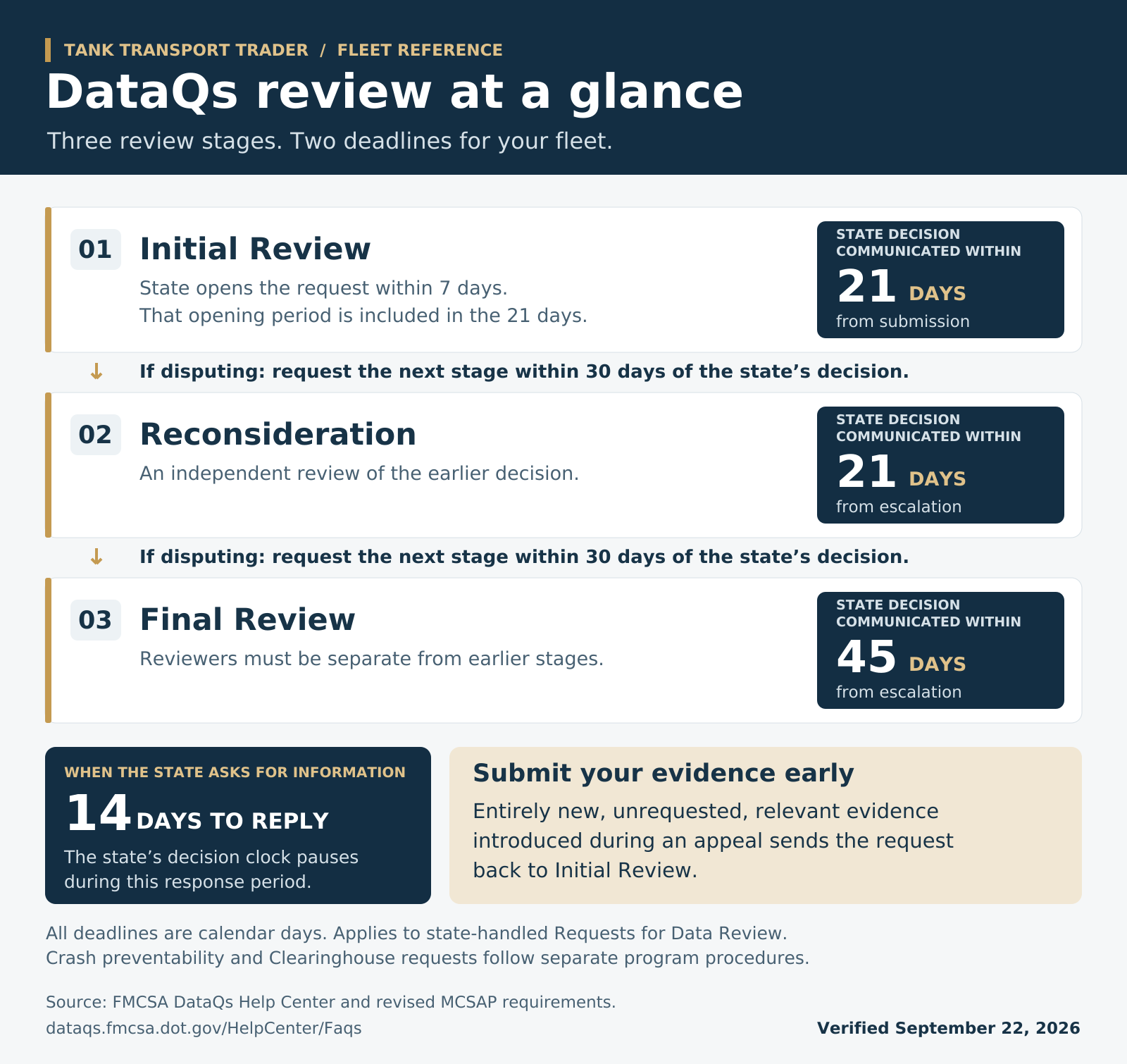
State-handled DataQs requests follow three review stages, with separate deadlines for requesting further review and supplying additional information. (Graphic: Tank Transport Trader; source: FMCSA)
Build the tank-fleet evidence file before submitting
A useful fleet practice is to assign one person to assemble the file, even when dispatch, maintenance, the driver, and a terminal each hold part of the evidence. Start with the inspection or crash report, confirm the carrier and vehicle identifiers, and identify the exact entry being challenged.
Then organize supporting material around that entry. Depending on the dispute, relevant evidence may include dated photographs, shipping papers, dispatch records, equipment records, electronic logs, or maintenance documents. These are examples of potentially useful evidence, not a universal federal checklist or a guarantee of success.
Consider a hypothetical shipping-paper dispute. The submission should explain which document applied to the movement and what it demonstrates about the contested finding. Merely attaching a bill of lading from the same customer does not answer whether it covered that load, that vehicle, and that inspection.
A photograph deserves the same scrutiny. Label the equipment, date, location, and condition shown. If it was taken after a repair or after a placard was replaced, disclose that timing. Evidence of a corrected condition should not be presented as evidence of the earlier condition.
That distinction matters in the recurring shipping-paper and placard failures covered by Tank Transport. A safety manager should separate a mistaken record from a genuine operating failure that needs correction. The two may require different responses even when they arise from the same inspection.
The strongest submission connects each disputed entry to evidence from the actual movement and equipment.The new process makes early preparation especially important. Entirely new, unrequested, relevant evidence introduced during an appeal sends the request back to Initial Review. Information specifically requested by an appellate reviewer can remain at that appeal stage. Holding material back for a later round is therefore a poor filing strategy.
For a fleet, the practical recommendation is a short indexed submission: state the requested change, explain the reason, and point to the supporting document or image. Keep originals intact. If several records tell different stories, resolve the discrepancy or explain it openly before asking the state to rely on them.
Keep data corrections, court outcomes, and crash preventability separate

Workstations and screens inside a weigh station overlook truck traffic and inspection activity. An Oregon DOT inspector works at a weigh-station computer in July 2019. (Photo: Oregon DOT, “Inside the weigh station”, CC BY 2.0)
DataQs is the submission system, but not every request follows the same review route. FMCSA’s Crash Preventability Determination Program evaluates eligible crash types under its own requirements. Drug and Alcohol Clearinghouse petitions also have separate procedures and response timelines.
For example, a carrier arguing that a crash was assigned to the wrong USDOT number raises a different issue than a carrier accepting that its truck was involved but seeking a not-preventable determination. A fleet should identify the question first and select the corresponding request category.
Court outcomes require similar care. FMCSA’s adjudicated-citation policy allows verified court results to be appended to inspection records. A qualifying dismissal or not-guilty outcome can change how the associated violation is used in the Safety Measurement System and Pre-Employment Screening Program. A dismissal involving a fine or punitive court costs is treated differently.
That is why the actual disposition matters more than a driver’s shorthand account that a ticket was dismissed. Obtain the certified disposition or an official court link, match it to the inspection violation, and submit the result through the appropriate process. DataQs does not itself adjudicate the traffic citation.
A successful correction does not guarantee lower insurance premiums or a particular commercial outcome. Record accuracy is valuable in its own right. How a customer or insurer evaluates the corrected record remains a separate question.
Turn the decision into a controlled follow-up.
Once a decision arrives, compare the explanation with the request actually submitted. Identify whether the reviewer addressed the disputed fact and the relevant attachment. An appeal should explain a specific factual or legal error in that decision, rather than repeat disagreement.
Fleets can use a compact internal tracking sheet: request number, responsible state, disputed entry, submission date, current stage, last decision date, next action, and assigned employee. Add a backup employee so vacation, illness, or a missed email does not consume the response window.
If the state requests additional information, save its request and your response together. If the case closes for lack of response, supplying the requested information can reopen it at the same stage with a fresh review period; that is different from escalation. Consult the applicable state implementation plan before assuming which official or panel will handle the next step.
Keep the ordinary post-inspection workflow moving while you review the data. Tank Transport’s analysis of the July inspection-paperwork changes explains the separate correction and recordkeeping duties. FMCSA’s completed-report rule narrows when forms must be returned to states; it does not turn a DataQs submission into a maintenance action.
After a favorable decision, retain the written result and check that the relevant downstream record reflects it. Avoid telling a customer that every database has already changed merely because the request has closed. The fleet’s own file should distinguish the decision date from the date it verified the corrected record.
DataQs Review Process: Key Developments
- The September 18 implementation establishes a three-stage state review structure.
- Fleet calendars should track both appeal deadlines and requests for supporting information.
- Complete initial submissions reduce the risk of returning to the first review stage.
- Court dispositions, crash-preventability requests, and ordinary inspection follow-up require distinct handling.