- PHMSA has authorized an optional ASME Section XII construction route for DOT 406, 407, and 412 and MC 331 and 338 cargo tanks.
- The choice carries specific continued-service requirements, while qualifying existing U-stamped cargo tanks gain another inspection and maintenance option.
- Voluntary compliance began September 28; the final rule takes effect October 28, 2026.
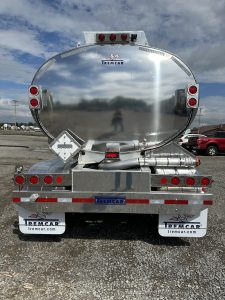
Rear view of a Tremcar petroleum tank trailer. (Photo courtesy of Tremcar)
Cargo tank construction is getting a new federal compliance option, with consequences that extend from the manufacturer’s design office to the shop handling a trailer years later. The Pipeline and Hazardous Materials Safety Administration has finalized a rule allowing several major cargo-tank specifications to use ASME Section XII, a code developed specifically for transport tanks.
The September 28 final rule, identified as HM-241, permits voluntary compliance immediately and becomes effective October 28, 2026. It preserves the existing Section VIII, Division 1 construction route while adding Section XII and its associated inspection, testing, and repair framework.
For petroleum, chemical, compressed-gas, and cryogenic fleets, the practical issue is how that choice follows the equipment through its working life. A tank built under the new route must continue to receive service under the incorporated National Board Inspection Code. Buyers therefore have a reason to discuss inspection and repair support when specifying the tank, alongside capacity, weight and price.
What the cargo tank construction rule authorizes
PHMSA authorizes the 2015 edition of ASME Boiler and Pressure Vessel Code Section XII for MC 331 and MC 338 cargo tanks and DOT 406, DOT 407 and DOT 412 cargo tanks. The broader rule also covers UN T75 cryogenic portable tanks and DOT-106A and 110AW multi-unit tank car tanks (ton tanks).
The Section XII option is limited to the equipment specifications named in the rule.
The agency also incorporates the 2015 National Board Inspection Code, or NBIC, Parts 2 and 3, including Supplement 6. Those provisions address inspection, repairs, and alterations, with Supplement 6 supplying transport-tank requirements. Newer published editions do not automatically become the governing editions under this rule.
Section XII’s transportation focus explains the change. PHMSA says transport tanks experience loading and unloading pressure cycles, shocks, and vibration that distinguish their operating environment from stationary pressure vessels. The agency identifies transport-specific design methods and fatigue analysis among the code’s advantages.
The final rule brings that route into the Hazardous Materials Regulations for the listed specifications. This expands the options discussed in Tank Transport’s earlier coverage of Section XII cargo-tank special-permit applications. Individual permits remain separate authorizations; this rule should not be read as a decision on any particular application or as permission to disregard an existing permit’s conditions.
For fleets, the construction and service requirements fall into three cases:
| Tank or decision | Available route | Service consequence |
|---|---|---|
| New cargo tank under the existing framework | Existing Section VIII, Division 1/HMR route remains available. | Continue under applicable Part 180 requirements and relevant NBIC provisions. |
| Eligible tank built to Section XII | 2015 Section XII, subject to federal conditions and limitations. | 2015 NBIC and Supplement 6 must be used; applicable HMR requirements remain. |
| Existing Section VIII, Division 1 tank bearing a U stamp | Qualifying DOT-specification tanks may use the new NBIC option. | 2015 NBIC works with Part 180; the tank does not become a Section XII tank. |
The tank’s construction records determine the applicable route. Similar-looking trailers carrying the same commodity can have different applicable service requirements.
Existing tanks retain their identity and obligations
New 49 CFR 180.402 makes the distinction explicit. Paragraph (a) requires the NBIC for continuing qualification, maintenance, and periodic testing of cargo tanks constructed to Section XII under the new authorization.
Paragraph (b) provides a separate option for DOT-specification cargo tanks constructed to Section VIII, Division 1 that bear a U stamp. Those tanks may be inspected, repaired, and tested using the incorporated NBIC together with Part 180. Among the NBIC supplements, only Supplement 6 is included.
That U-stamp condition matters. Fleet managers cannot assume every older cargo tank qualifies for the alternative merely because its specification number appears elsewhere in the rule. The tank’s construction records and markings establish whether it meets that condition.
ASME’s certification program identifies U with Section VIII, Division 1 pressure vessels and T with Section XII transport tanks. The stamp identifies the tank’s construction standard; owners still need the records documenting its inspections and maintenance.
The construction choice follows the tank into inspection, testing, and repair.The rule also retains federal requirements that Section XII does not cover. New Section 173.252 expressly preserves applicable provisions in Parts 178 and 180, including accident-damage protection. Cargo tanks must also satisfy applicable Part 173 requirements and the rule’s stated conditions and exceptions.
For existing equipment, this builds on the importance of accurate records already evident in MC 331 inspection and documentation requirements. An optional code route does not itself resolve missing records, establish a tank’s condition, or authorize an owner to extend its inspection schedule.
Inspection and repair capacity become purchasing questions

A technician works at the rear piping of a tank trailer in a photograph from B&R Repair’s service gallery. (Photo: B&R Repair)
For cargo tanks using the new Section XII route, Section 173.252 sets qualifications for certification inspectors. It requires the relevant Section XII qualifications and either an appropriate National Board commission and endorsement or, where applicable, employer certification under the NBIC. The inspector or employer must also be registered with DOT.
For repairs under that route, the facility must hold a current National Board certificate authorizing use of the R stamp. The person performing repairs, or the employer, must also meet DOT registration requirements. Manufacturing authorization and repair authorization serve different functions.
The National Board’s R authorization program covers repairs and alterations to pressure-retaining equipment. Its certification process includes a quality system and an inspection agreement. Separately, FMCSA’s cargo-tank registration resources provide facility-registration guidance and a facility search. A shop’s DOT registration should therefore be checked alongside its relevant code authorization and work scope.
PHMSA’s explanation of the new framework also distinguishes periodic inspections from other work. It says a DOT-recognized Registered Inspector may still perform periodic inspections of Section XII transport vessels after completing the specified training. For Section XII tanks, PHMSA says an Authorized Inspector, Qualified Inspector, or Certified Individual must witness hydrostatic testing, as applicable. A National Board-commissioned inspector must be involved in inspections of repairs and alterations.
Before placing an order, fleets should confirm which nearby shops can inspect and repair the proposed tank and who will provide any required inspection oversight. Discussing the tank’s specification and planned service work with those shops can help identify gaps in local support.
Tank Transport’s coverage of the expansion of EnTrans’ service network illustrates the commercial importance of maintenance access. Along with location, fleets need to consider whether a shop is authorized and equipped to perform the work required by the chosen tank design.

Fleets considering Section XII construction should evaluate inspection and repair support alongside the tank’s specifications and ownership costs. (Graphic: Tank Transport Trader)
Potential savings depend on the equipment and its use
PHMSA estimates approximately $8.1 million in annualized net savings across the rule’s regulated community, using a 7% discount rate. That is an agency estimate covering the overall action, including transport equipment beyond highway cargo tanks.
The agency largely attributes potential transportation savings to fuel savings from modified design standards. It also describes opportunities for more efficient designs. The final rule does not establish a standard weight reduction, purchase-price discount, or payload increase for an individual trailer.
Buyers should compare the proposed tank’s certified weight, usable capacity, intended cargo and operating limits, then account for inspection costs, repair access, and expected downtime. Any claimed savings should account for those service costs.
PHMSA acknowledges that some facilities and inspectors could face additional training or credential costs. An industry-wide estimate of net savings therefore does not mean every shop can adopt the new work without preparation.
The next useful evidence will come from manufacturers’ actual offerings and service providers’ documented capabilities. Fleets can use the voluntary-compliance period to review specifications and support arrangements, while continuing to operate properly qualified existing equipment under its applicable requirements.
PHMSA Cargo Tank Construction: Key Developments
- Timing: HM-241 was published September 28, 2026, with voluntary compliance that day and an October 28 effective date.
- Scope: The optional Section XII cargo-tank route covers MC 331, MC 338, DOT 406, DOT 407, and DOT 412.
- Continued service: Section XII tanks must use the incorporated 2015 NBIC and Supplement 6; applicable federal requirements remain.
- Existing equipment: Qualifying Section VIII, Division 1 DOT-specification tanks bearing a U stamp may use the 2015 NBIC with Part 180.
- Fleet decision: Confirm the construction basis, inspection qualifications, repair support, and documented economics before selecting the new route.