- Stephens Pneumatics and GTA Containers received awards for Agile Fuel Systems pumps.
- The procurement follows successful prototypes for deployable military fuel-handling equipment.

Staff Sgt. Garrett Huntoon refuels an A-10C Thunderbolt II using an aerial bulk fuel delivery system at Gimhae Air Base, South Korea, on March 12, 2024. (Photo: U.S. Air Force/Senior Airman Manuel Zamora)
Stephens Pneumatics has been selected to supply Agile Fuel Systems pumps, the Defense Innovation Unit said. DIU said it and the Air Force Life Cycle Management Center’s Support Equipment & Vehicles Division at Robins Air Force Base awarded the supply contracts.
The DIU announcement names Stephens and GTA Containers as pump suppliers, with Canflex and AEF receiving separate collapsible fuel-bladder awards. The supply agreements follow successful prototypes under the Agile Fuel Management project.
For the tank and bulk-equipment industry, the selection connects an established tank-trailer manufacturer with a specialized fuel-transfer requirement: moving fuel into remote operating locations and dispensing it where permanent infrastructure may be unavailable.
Portable fuel delivery supports dispersed operations
Fuel availability depends on more than getting a shipment to a destination. Operators also need equipment to contain the product, connect the supply to its receiving point, and move it through the final transfer. In dispersed military operations, those functions must travel with the mission.
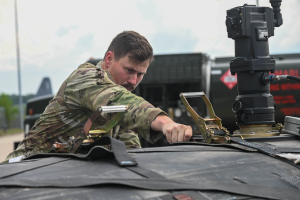
Senior Airman Brandon King adjusts straps on an Agile Bulk Fuel Delivery System bladder at Little Rock Air Force Base, Arkansas, on August 13, 2025. (Photo: U.S. Air Force/Senior Airman Imani West)
A separate August 2025 Air Force account from Little Rock illustrates that need. The 19th Airlift Wing described an Agile Bulk Fuel Delivery System using two pallet-mounted pumping units paired with one or more 3,000-gallon fuel bladders.
That system can receive fuel from transport aircraft and transfer it to other aircraft or ground storage at locations without established fueling infrastructure. The Air Force identified uses ranging from rapid mobility operations to humanitarian assistance and disaster relief.
The Little Rock account also described the training behind the equipment, including aircraft egress, night-vision operations, and other qualifications. Portable fuel delivery therefore involves trained personnel and aircraft integration as well as pumps and containers.
Those details describe the Air Force’s previously documented system, not specifications for Stephens’s newly announced pumps. They show why transportability, setup, and fuel-transfer capability matter in this equipment category.
The containment side has its own development history. DIU’s catalog entry for AEF Performance records a 3,000-gallon collapsible fuel-bladder prototype completed in 2025. The agency describes its purpose as delivering bulk liquid fuel into austere environments and supporting rapid dispensing. That entry concerns AEF’s storage component, not Stephens’s pumping equipment.
Stephens brings an established military refueling background
Based in Haslet, Texas, Stephens Pneumatics serves both commercial and military equipment markets. Its published product lineup includes gasoline, crude-oil and water tankers, dry-bulk pneumatic trailers and military mobile aircraft refuelers. Tank Transport’s September 2026 print edition also includes a company profile on page 8.
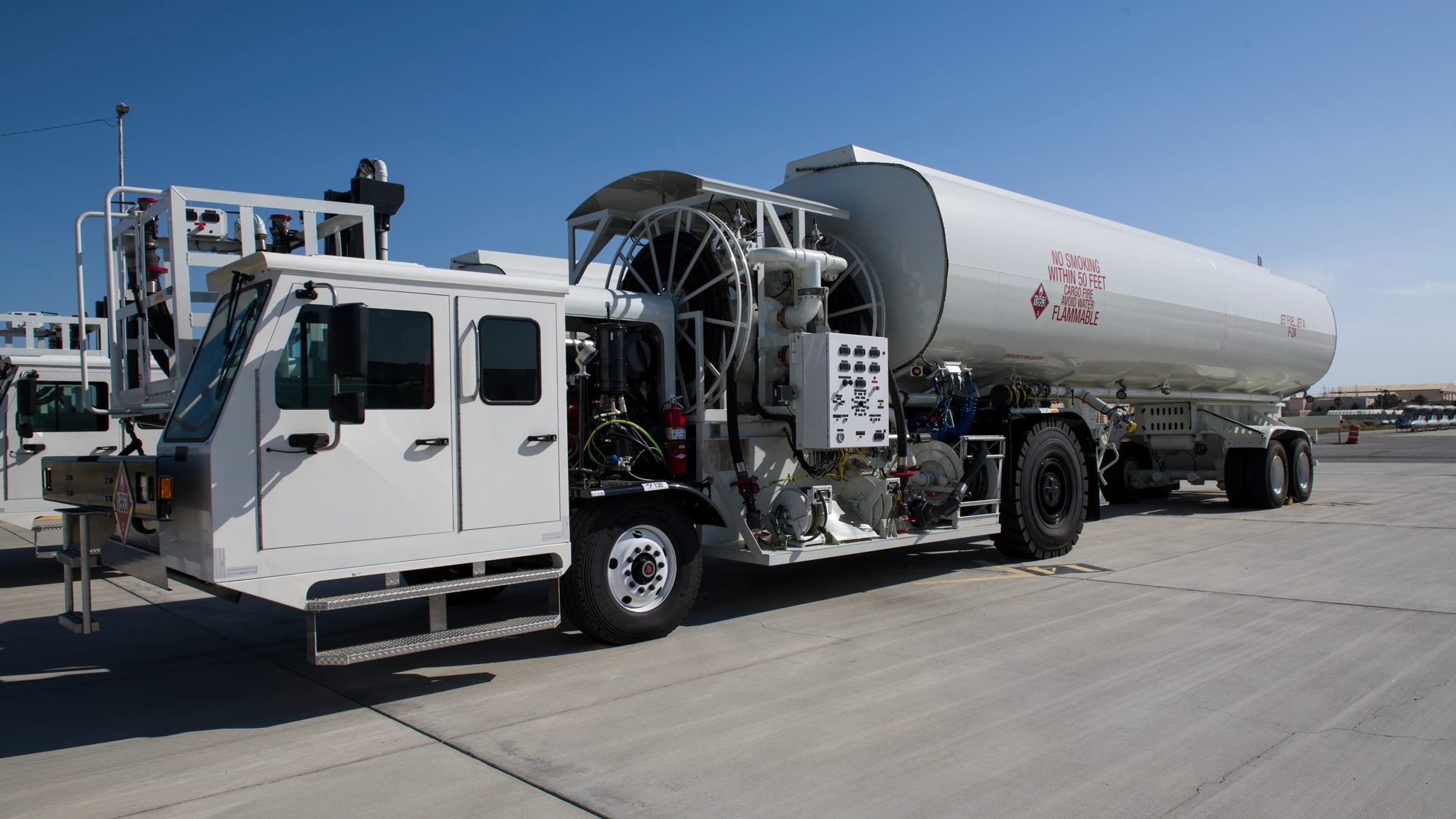
The company’s military work predates the current pump award. In June 2020, Edwards Air Force Base reported receiving two Large Capacity Refuel Vehicles for testing and identified Stephens as their manufacturer.
Each vehicle had an 18,000-gallon capacity and measured almost 60 feet long. The Air Force described a vehicle designed to receive, transport, store, and dispense aviation fuel, with three times the tank capacity of the earlier R-11 refueler.
That capacity addressed a different operating problem: servicing large aircraft with fewer refueling vehicles and personnel. Edwards was one of three bases receiving the vehicles for testing.
The historical truck program establishes Stephens’s experience with military fuel-handling equipment. The Agile Fuel Systems award concerns a separate pump requirement; the 18,000-gallon capacity belongs to the earlier refueler vehicles.
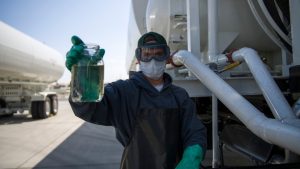
Daniel Beasley holds a jet-fuel sample during a filter-system check of a Large Capacity Refuel Vehicle at Edwards Air Force Base, California, on June 26, 2020. (Photo: U.S. Air Force/Giancarlo Casem)
From prototypes to supply agreements
DIU described the new awards as supply agreements using Other Transaction Authority. DIU did not disclose contract values, quantities, pump specifications, or vendor delivery schedules.
DIU’s Commercial Solutions Catalog explains that successful prototypes can receive documentation enabling government organizations to pursue production agreements without repeating the competition. Individual purchases still depend on the applicable acquisition arrangements; a catalog listing alone does not establish an order’s size.
For suppliers watching this market, the useful next milestones are published technical specifications and documented deliveries. Those would allow a closer assessment of the pumping equipment itself and the scale of the manufacturing work.
Stephens is not the only tank-equipment manufacturer serving military fuel logistics. Tank Transport’s coverage of EnTrans’s military contracts also examines Heil Trailer’s separate U.S. Army Tactical Fuel Distribution System tanker program.
Stephens Military Fuel Equipment: Key Developments
- Stephens joins the pump-supply portion of the Agile Fuel Management project.
- Earlier Air Force records document the company’s experience manufacturing military refuelers.
- The contract value, quantities, and vendor delivery dates were not disclosed.