- Why a single weekly gasoline inventory build does not fully ease broader U.S. fuel supply pressure heading into summer.
- How diesel prices, crude oil inventories, refinery utilization, and export demand could still affect fuel haulers, rack prices, and trucking costs.
- What carriers, shippers, and tank fleets should watch next as summer fuel demand tests domestic refined fuel supply.
U.S. Fuel Supply Faces a Summer Stress Test
The U.S. fuel supply entered June with a mixed signal that deserves a closer look from fuel haulers, over-the-road carriers, terminal operators, and freight customers. Gasoline inventories finally rose after a long slide. Distillate stocks also increased. Retail gasoline and diesel prices eased from the prior week.
That sounds like relief.
But it is not a clean bill of health.



“Emergency crude reserves can help stabilize the system, but they do not erase the pressure created by falling commercial inventories, strong exports, and refinery demand.” Strategic Petroleum Reserve crude oil pipeline infrastructure at a U.S. Department of Energy facility. (U.S. Department of Energy)
Beneath the surface, the same system is still being tested by sharply lower crude inventories, strong export demand, high refinery utilization, thin diesel buffers, low Cushing stocks, and the early stages of summer fuel demand. For the tank transport sector, the important story is not simply that gasoline stocks rose for one week. The larger story is whether the U.S. fuel supply can stay balanced while domestic users, exporters, refiners, and freight-dependent industries all compete for the same barrel.
”A one-week gasoline build gave fuel markets breathing room, but it did not remove the deeper pressure from crude draws, diesel costs, export demand, and refinery utilization.”
As of June 8, the latest EIA weekly petroleum data covered the week ending May 29. That report showed commercial crude oil inventories falling by 8 million barrels to 433.7 million barrels. Gasoline inventories rose by 3.4 million barrels to 215 million barrels. Distillate fuel inventories, which include diesel and heating oil, rose by 1.5 million barrels to 102.3 million barrels.
Those numbers created a split picture.
On the product side, gasoline and distillate builds gave the market breathing room after weeks of pressure. On the crude side, the draw was large enough to keep traders, refiners, and logistics operators focused on supply risk. U.S. crude exports reached 5.9 million barrels per day, the second-highest level on record, while Gulf Coast crude inventories fell by 6.7 million barrels. Refinery utilization climbed to 94.7%, indicating that refiners were already running hard heading into peak seasonal demand.
That combination is why the U.S. fuel supply remains a transportation story, not just a commodity-market story.
For consumers, gasoline usually gets the headline. For trucking, agriculture, construction, rail, tank fleets, and fuel distributors, diesel is often the bigger operating concern. Diesel prices influence linehaul costs, fuel surcharges, freight negotiations, customer pricing, regional rack pressure, and smaller carriers’ ability to absorb volatility. A gasoline build may calm the public-facing side of the market, but it does not remove diesel exposure from the freight economy.
The latest EIA Gasoline and Diesel Fuel Update showed the U.S. average retail regular gasoline price at $4.305 per gallon on June 1, down 17 cents from the prior week but still $1.178 higher than a year earlier. The U.S. average on-highway diesel price stood at $5.350 per gallon, down 17.3 cents from the prior week but $1.899 higher than a year earlier. For carriers, that year-over-year diesel increase remains a major cost burden even if weekly prices temporarily soften. For additional market context, follow TankTransport’s FuelPrices coverage.
The U.S. fuel supply is therefore not in a simple shortage narrative or a simple recovery narrative. It is in a stress-test phase. The key question is whether short-term product builds can hold as summer driving demand rises, diesel consumption stabilizes, crude exports remain elevated, and refineries continue operating near capacity.
Why did the U.S. fuel supply look calmer after the latest EIA report?
The latest report looked calmer because gasoline and distillate inventories increased after the Memorial Day weekend. Total product supplied, a broad proxy for demand, fell by 610,000 barrels per day to 20.33 million barrels per day. Gasoline demand softened, and distillate demand also moved lower. That helped product inventories build even as the crude side of the market tightened.
That is the first important distinction for industry readers: inventories can rise because supply improved, because demand weakened, or because both happened at once.
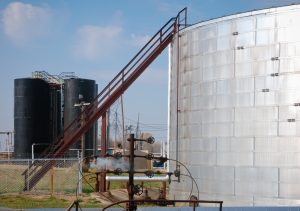
“High refinery utilization can support gasoline and diesel production, but it also leaves less room for the system to absorb outages, demand swings, or crude-quality issues.” Storage tanks and pipes at a refinery in Indiana. (Carl Young, Wikimedia Commons, CC BY-SA 4.0)
In this case, the product builds were partly tied to softer implied demand after the holiday weekend. That matters because summer demand had not fully played out. The driving season typically builds momentum after Memorial Day, and diesel demand is tied less to family travel than to freight volumes, agriculture, construction activity, rail movements, energy production, and industrial output.
A one-week increase in gasoline stocks does not erase the preceding drawdown. Gasoline inventories rose to 215 million barrels, but they remained about 5% below the five-year average for this time of year. That means the market received a break, not a surplus.
The second reason the market looked calmer is that refinery runs remained high. Refinery utilization reached 94.7%, suggesting the refining system was working hard to meet product demand. But high utilization is a double-edged signal. It supports gasoline, diesel, and jet fuel production, but it also leaves less room for refiners to respond if outages, storms, unplanned maintenance, or crude-quality issues interrupt operations.
The third reason is that the national figures can mask regional strain. A national gasoline build does not guarantee a comfortable supply at every terminal. A distillate build does not ensure stable diesel economics across every freight lane. A lower national diesel price does not mean carriers in California, the West Coast, the Midwest, or tight inland markets are feeling the same relief.
For fuel haulers, the practical version of the U.S. fuel supply story shows up at the rack. It appears in allocation notices, terminal wait times, dispatch changes, longer replenishment runs, wider regional price spreads, and customer conversations about fuel surcharges.
U.S. Fuel Supply Signal 1: Gasoline stocks rebounded, but the cushion remains thin
The gasoline build was real, and it matters. U.S. gasoline stocks rose by 3.4 million barrels to 215 million barrels in the week ending May 29. That ended a 15-week run of declines and gave the market a short-term reset after a weak inventory position heading into the summer driving season. For related reporting on gasoline inventories, retail pricing, and fuel distribution, visit our Gasoline news section.
For the public, that is the most visible part of the U.S. fuel supply picture. Gasoline prices are posted on signs across every city and highway corridor. They influence consumer sentiment, travel decisions, household budgets, and political pressure. A weekly build in gasoline inventories can quickly be read as a sign that the market is getting healthier.
But the industry view should be more cautious.
A rebound from a tight level is not the same as abundant supply. Gasoline inventories were still below normal seasonal levels. Demand also softened after the holiday period, suggesting the market still needs confirmation that inventories can hold as summer driving demand accelerates.
The retail price picture supports that balanced reading. U.S. average regular gasoline fell to $4.305 per gallon on June 1, down from $4.475 the previous week. That weekly decline was helpful. Yet prices remained materially higher than a year earlier, reminding carriers and consumers that the market was still operating in an elevated-cost environment.
Regional differences also matter. The Gulf Coast remained the lowest-cost major region for regular gasoline at $3.804 per gallon on June 1, while the West Coast averaged $5.500. California was higher still at $5.853. Those gaps are not academic for fuel distributors and tank fleets. They shape buying behavior, terminal competition, freight economics, and customers’ willingness to shift supply points.

“Fuel-supply pressure becomes real for tank fleets through dispatch timing, rack access, regional pricing, and the daily movement of product from terminals to customers.” Freightliner double tanker rig in Moses Lake, Washington (Greg Goebel, Wikimedia Commons, CC BY-SA 2.0)
For tank transport, improving gasoline inventory reduces one immediate concern but does not eliminate summer logistics risk. If demand rises quickly, if refinery output is redirected toward other products, or if regional supply becomes uneven, the rack-level impact can return before national inventory numbers look alarming.
The gasoline signal is therefore positive, but limited. It says the U.S. fuel supply received short-term breathing room. It does not say the summer market is comfortable.
U.S. Fuel Supply Signal 2: Diesel supply is still the freight market’s pressure point
Diesel remains the fuel that matters most to the freight economy. Distillate inventories rose by 1.5 million barrels to 102.3 million barrels in the latest weekly report. Still, diesel costs remained high enough to keep pressure on trucking, agriculture, construction, rail, fuel distributors, and industrial customers. For more industry coverage on diesel markets and freight costs, browse our DieselFuel updates.
The diesel side of the U.S. fuel supply picture is important because it travels through the economy differently from gasoline. Gasoline is mostly a consumer fuel. Diesel is a commercial input. When diesel prices rise, the increase can be passed on to freight rates, fuel surcharges, food distribution, construction materials, farm operations, parcel delivery, and wholesale goods.
The June 1 EIA diesel price clearly showed that pressure. U.S. on-highway diesel averaged $5.350 per gallon. That was lower than the previous week, but still nearly $1.90 higher than one year earlier. For a high-mileage tractor, that difference can translate into a major weekly cost increase. For smaller carriers with limited pricing power, it can be the difference between accepting a load and parking a truck.
The regional diesel picture was even more uneven. The Gulf Coast averaged $4.900 per gallon on June 1. The Midwest averaged $5.392. The West Coast averaged $6.398. California averaged $7.051. Those spreads matter for national fleets, regional carriers, private fleets, bulk fuel distributors, and anyone quoting freight across multiple markets.
Distillate demand fell in the latest report, which helped inventories build. But diesel demand can turn quickly when freight volumes, construction activity, agricultural work, or energy-sector needs pick up. If demand recovers while inventories remain historically tight, diesel can regain price pressure faster than gasoline.
That is why the U.S. fuel supply story should not be written as a gasoline recovery story. Gasoline matters, but diesel is the more direct cost signal for tank transport and over-the-road trucking.
The freight market has already been facing prolonged cost pressures. Earlier this year, average retail diesel crossed $5 per gallon for only the second time ever, according to market reports based on fuel price tracking. That March price shock was tied to Middle East supply disruptions and strain in the diesel chain. Even with the latest weekly decline, the industry is still operating in the shadow of that move.
For carriers, the diesel signal is not a panic. It is a caution. Distillate stocks improved over the past week, but the cost base remains elevated, and the system remains sensitive to crude availability, refinery yields, export demand, and regional supply balances.
How does U.S. fuel supply affect rack prices, fuel haulers, and OTR carriers?

“The U.S. fuel supply test begins with crude availability, because gasoline and diesel inventories depend on the barrels refiners can keep running through the system.” Aerial view of Department of Energy crude oil storage tanks at the Sunoco terminal near Nederland, Texas. (ENERGY.GOV, Wikimedia Commons, Public Domain)
The U.S. fuel supply issue becomes most practical at the rack. National inventory numbers are useful, but fuel haulers operate in local and regional realities. A carrier does not buy the five-year average. It buys from a terminal, on a lane, at a posted or negotiated price, under real dispatch pressure.
When the system tightens, the first signs may not be dramatic national shortages. They may be narrower loading windows, stronger competition for supply at preferred terminals, more calls to alternate racks, longer deadhead miles, higher delivered fuel quotes, and faster changes in daily rack postings.
That is where the crude side of the story becomes important.
Commercial crude inventories fell by 8 million barrels in the latest EIA report, far more than analysts had expected. Crude stocks fell even as product inventories built. That matters because refiners need crude feedstock to keep producing gasoline, diesel, jet fuel, and other petroleum products. For more news on crude markets and their effect on transportation, see our CrudeOil coverage. A product build can provide immediate relief, but sustained refined fuel supply depends on crude availability, refinery reliability, and the economics of producing each product.
The fourth signal in the U.S. fuel supply test is export pull. U.S. crude exports reached 5.9 million barrels per day in the latest weekly data. That was the second-highest level on record. In May, U.S. crude exports climbed to a record 5.6 million barrels per day as refiners in Asia and Europe sought replacement barrels for disrupted Middle East supply. For more reporting on how export demand affects domestic fuel markets, read our USExports updates.
This export strength is not automatically negative. U.S. crude exports can help stabilize global fuel markets when other supplies are constrained. They also support producers, ports, marine terminals, pipelines, and the broader energy trade. But for domestic fuel logistics, strong exports can reduce the crude buffer available to refiners, especially when inventories are already falling.
The fifth signal is refinery utilization. At 94.7%, refiners were running near full practical rates. High utilization helps rebuild gasoline and distillate inventories, but it also means there is limited spare refining capacity if demand surprises to the upside or if a refinery outage occurs. When refineries are already running hard, the system becomes more exposed to disruptions. For more on refinery output, utilization, and supply-chain pressure, explore our RefineryCapacity coverage.
The sixth signal is Cushing, Oklahoma. Cushing is the pricing and delivery hub for West Texas Intermediate crude, and its inventory levels influence both physical crude logistics and futures market signals. Cushing inventories fell to 22.4 million barrels as of May 29. Analysts have warned that levels below 20 million barrels can create operational challenges, including difficulty transferring and blending crude. That does not mean an immediate crisis, but it does narrow the margin for error.
Cushing is also important because it connects inland crude flows, Midwest refinery supply, Gulf Coast movement, and WTI pricing. If Cushing becomes more constrained, inland refiners may face procurement challenges or higher costs. That can ultimately influence refined product pricing and transportation economics.
The seventh signal is the Strategic Petroleum Reserve and the broader question of buffer. Emergency barrels can help supply the system, but they do not eliminate pressure if commercial inventories continue to be drawn down. When crude inventories fall despite reserve movements and high refinery utilization, the market is effectively saying that demand for barrels remains strong enough to absorb available supply.
For fuel haulers, the latest product build should be read carefully. The refined fuel side looked better for one week. The crude foundation underneath it looked tighter.
What should carriers watch next in the U.S. fuel supply chain?

“The Strategic Petroleum Reserve is part of the national safety net, but daily fuel-market pressure is still shaped by commercial inventories, refinery output, exports, and demand.” Infographic explaining the Strategic Petroleum Reserve and its role in U.S. emergency crude oil storage. (U.S. Department of Energy)
The next phase of the U.S. fuel supply story will depend on whether product inventories can build again as summer demand strengthens. One week of improvements in gasoline and distillate is helpful. Two or three weeks would be more meaningful. A return to draws would quickly put the market back on alert.
Carriers should watch gasoline stocks, but diesel and distillate inventories deserve priority. Diesel drives freight costs more directly than gasoline. Distillate stocks also influence heating oil, agricultural fuel, rail, marine, construction, and industrial use. When distillate inventories are thin, multiple sectors compete for the same supply pool.
Diesel price movement is another key indicator. A weekly decline can ease pressure on carriers, but year-over-year comparisons still show a much higher cost environment. If diesel prices begin rising again while inventories remain low, fuel surcharge disputes could become more common among carriers, brokers, shippers, and private fleets.
Gulf Coast crude inventories also deserve attention. The Gulf Coast is the heart of U.S. refining and export activity. A 6.7 million-barrel draw in Gulf Coast crude stocks is significant because the region supplies domestic product markets and serves overseas demand. If export demand remains strong, Gulf Coast barrels can continue moving offshore rather than into domestic storage.
Cushing should remain on the watch list. At 22.4 million barrels, it was above the level some analysts view as operationally sensitive, but not by a large margin. If Cushing moves closer to 20 million barrels, the market may become more focused on crude quality, pipeline movements, blending constraints, and exposure to Midwest refineries.
Refinery utilization is another signal. If utilization remains near 95%, refineries are doing heavy lifting. But if utilization falls due to planned work, unplanned outages, storm activity, or crude feedstock issues, product inventories could tighten quickly. The market does not need a nationwide disruption for fuel haulers to feel the impact. A regional refinery issue can be enough to affect rack pricing and terminal supply.
Product supplied should also be tracked carefully. The latest decline in total product supplied helped inventories build. If product supplied rebounds while crude stocks remain under pressure, the balance may shift again. For industry readers, the key question is not whether demand was soft for one week. It is whether demand remains soft as the summer driving season matures.
There is also a global context. Middle East supply disruptions have increased overseas refiners’ demand for American barrels. U.S. exports can help meet that need, but high export demand also pulls on the same crude system that domestic refiners depend on. That is the central tension in the U.S. fuel supply outlook.
Market commentary from analysts and major energy companies has reflected that tension. UBS commentary characterized the refined-product side as less bullish after the gasoline, distillate, and jet fuel builds, while noting that demand should increase in the coming weeks. Kpler analysis highlighted that crude still drew sharply even with reserve barrels moving through the system. Reuters also reported that executives from Exxon and Chevron warned that global inventory buffers had thinned, and that Phillips 66’s internal estimates indicated Cushing was approaching a more sensitive operating range.
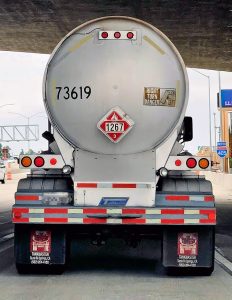
“Crude oil movements remain a core part of the U.S. fuel-supply chain, connecting production, storage, refineries, and the diesel and gasoline markets that keep freight moving.” Tanker semi-trailer carrying petroleum crude oil on a road in the United States.
Those comments should be read as informed market views, not as substitutes for EIA data. The most reliable baseline remains the weekly petroleum data itself. Still, industry commentary matters because it shows how refiners, analysts, traders, and producers are interpreting the same supply chain.
There is also a product-mix issue. U.S. refineries are producing more than just gasoline and diesel. They also balance jet fuel, residual fuel, propane, feedstocks, exports, and other products depending on margins and demand. Recent reporting showed U.S. jet fuel production reached record levels as global aviation fuel supply adjusted to disruptions in the Middle East. That matters, but it should remain a supporting point for a tank transport audience. The main domestic freight issue is still diesel.
U.S. Fuel Supply takeaway for tank fleets
For tank fleets, the takeaway on U.S. fuel supply is straightforward: the market received a short-term break, but not enough to ignore risk.
Gasoline inventories improved, but remained below normal seasonal levels. Distillate inventories improved, but diesel prices remained elevated. Crude inventories fell sharply. Exports stayed strong. Refineries were already running hard. Cushing remained low. Gulf Coast stocks drew down. Retail diesel remained expensive for carriers.
”The U.S. fuel supply is not defined by one weekly gasoline build. It is defined by the balance between crude availability, refining capacity, product inventories, regional logistics, export demand, and end-user consumption.”
This is a market where dispatch teams, procurement managers, fuel haulers, and carrier executives should stay close to terminal conditions and supplier communication. The national data is useful, but the operational impact will be regional. A carrier buying diesel in the Gulf Coast market faces a different cost environment than a carrier fueling in California. A fleet running Midwest agricultural freight faces a different exposure than one hauling urban retail fuel in the Northeast.
The most practical question is this: how will the U.S. fuel supply affect trucking costs this summer?
The answer is that costs are likely to remain sensitive. Diesel may not rise every week, and product builds can relieve pressure. But with crude inventories drawing down, exports elevated, and refinery utilization already high, the freight market does not have much cushion. If demand strengthens or supply is interrupted, diesel and rack prices can move quickly.
That matters for contract discussions. Fuel surcharge formulas should be reviewed for timing, index selection, regional relevance, and lag effects. Carriers using national averages may not be fully protected if they operate in higher-cost regions. Shippers should also understand that fuel volatility is not only a carrier problem. It can affect service reliability, load acceptance, delivery costs, and product availability.
Fuel distributors and tank transport operators should closely monitor customer ordering patterns. In tight markets, customers may pull loads earlier, shift suppliers, increase emergency replenishment requests, or pressure carriers for faster turnaround. That can strain drivers, equipment, dispatch planning, and terminal scheduling. For more coverage of petroleum delivery, fuel distribution, and carrier operations, visit our PetroleumTransport section.
The article’s central point is not that the U.S. fuel supply is failing. It is that the system is being asked to do several difficult things at once. It must support summer driving demand, absorb high diesel costs, feed refineries, supply export markets, maintain crude logistics, manage regional price spreads, and keep freight moving.
That is a real test.U.S. Fuel Supply indicators to monitor

“A product build can calm the market for a week, but sustained refined fuel supply still depends on crude availability, refinery reliability, and terminal flow.” Storage tank and transfer piping at a refinery in Indiana. (Carl Young, Wikimedia Commons, CC BY-SA 4.0)
The most important indicator is whether crude inventories continue to draw. If commercial crude stocks continue to fall while exports remain elevated, refiners may face a tighter feedstock environment even if product inventories occasionally rise.
The second indicator is whether gasoline inventories can build for more than one week. A single rebound after a 15-week decline is useful, but it does not prove that the summer market has turned comfortable.
The third indicator is distillate inventory direction. Diesel remains the freight-sensitive fuel, and distillate stocks are the clearest inventory signal for trucking, agriculture, construction, rail, and industrial users.
The fourth indicator is Cushing. If inventories move closer to 20 million barrels, operational concerns may become more important to crude pricing, inland refinery supply, and WTI-linked market behavior.
The fifth indicator is Gulf Coast export activity. The Gulf Coast is the core intersection of refining, crude exports, petroleum product exports, storage, marine terminals, and pipeline logistics. Continued draws there would keep pressure on domestic supply buffers.
The sixth indicator is refinery utilization. High utilization supports supply, but it also means less spare capacity. Any outage or operational disruption can matter more when the system is already running hard.
The seventh indicator is diesel’s retail and rack-level behavior. National averages are useful, but carriers should watch the actual markets where they fuel. Regional diesel spreads can change freight economics faster than headline inventory data.
The latest U.S. fuel supply data should not be read as a warning to overreact. It should be read as a warning not to relax too early.
Gasoline and distillate builds gave the market breathing room. Lower weekly retail fuel prices helped carriers and consumers. But crude inventories, exports, refinery utilization, Cushing levels, and diesel costs indicate that the system remains tight enough to matter.
For tank transport, that makes the story highly relevant. Fuel haulers are often among the first to see stress in the physical system. They see it when terminals get busier, when customers pull forward orders, when rack prices move sharply, when alternate supply points become necessary, and when drivers spend more time waiting or repositioning. For broader coverage of fuel hauling, petroleum logistics, and bulk transportation, follow our TankTransport news.
The U.S. fuel supply is not defined by one weekly gasoline build. The balance between crude availability, refining capacity, product inventories, regional logistics, export demand, and end-user consumption defines it.
That balance held for the latest report.
The real test is whether it holds through summer.
Key Developments: U.S. Fuel Supply Signals for Tank Transport
- Gasoline inventories improved, but remain below normal seasonal levels. The latest build gave markets short-term breathing room, but it did not erase earlier drawdowns heading into the summer driving season.
- Diesel remains the freight-sensitive pressure point. Distillate inventories rose, but elevated diesel prices continue to affect trucking costs, fuel surcharges, agriculture, construction, rail, and tank transport operations.
- Crude oil inventories fell sharply. The large crude draw showed that the underlying feedstock supply picture remains tighter than the gasoline build alone suggests.
- U.S. crude exports stayed strong. Export demand continues to pull barrels into global markets, helping overseas refiners while reducing the domestic crude buffer available to U.S. refiners.
- Refineries are already running near capacity. High utilization supports gasoline and diesel production, but leaves less flexibility if summer demand rises quickly or refinery disruptions occur.
- Cushing and Gulf Coast inventories remain important watch points. Low storage levels at key crude hubs can influence pricing, refinery supply, and broader fuel-market logistics.
- Fuel haulers may feel the impact first at the rack. Tight supply conditions can manifest as regional price swings, longer terminal waits, urgent replenishment loads, alternate supply points, and fuel surcharge pressure.
External Resources: U.S. Fuel Supply Data and Market Signals
- Track weekly crude oil inventories, gasoline stocks, distillate supply, refinery utilization, imports, exports, and petroleum balances through the EIA Weekly Petroleum Status Report.
- Monitor national and regional retail gasoline and diesel prices through the EIA Gasoline and Diesel Fuel Update.
- Review short-term forecasts for crude oil prices, petroleum product demand, gasoline markets, diesel costs, and global oil supply through the EIA Short-Term Energy Outlook.
- Compare U.S. crude oil and petroleum product export trends using the EIA U.S. Exports of Crude Oil and Petroleum Products data table.
- Check national crude oil stock movements and inventory history through the EIA Weekly U.S. Ending Stocks of Crude Oil data series.
- Explore U.S. refinery capacity, operable refinery data, and downstream fuel-production capacity in the EIA Refinery Capacity Report.
- Learn how emergency crude reserves support U.S. energy security through the U.S. Department of Energy Strategic Petroleum Reserve overview.
- Understand the WTI crude oil benchmark, Cushing delivery point, and futures-market structure through the CME Group Light Sweet Crude Oil overview.
- Read Reuters’ market report on crude draws, gasoline and distillate inventory movement, refinery demand, and export pressure as U.S. crude stocks fall on strong export and refining demand, EIA says.
- Review Reuters’ analysis of export-driven inventory pressure, Cushing levels, and domestic crude supply concerns as U.S. oil exports surge, draining domestic crude inventories toward rock bottom.
- Read Reuters’ diesel-price context for trucking, freight costs, and broader fuel-market pressure as U.S. average diesel prices cross $5 a gallon.
- Learn more about refining operations, fuel production, and downstream supply assets from Phillips 66 Refining.
- Review the broader energy-supply context from ExxonMobil Energy Supply.