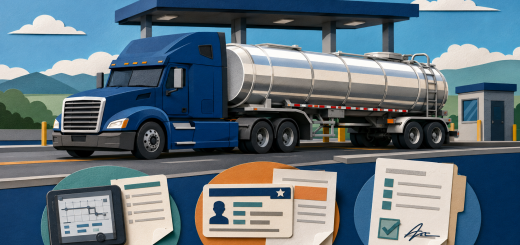
2026 Hazmat Violations Reveal 5 Preventable Roadside Failures
FMCSA’s midyear data show that securement, registration proof, shipping papers and placards remain the leading hazmat roadside failures—and most can be caught before dispatch.
wo PHMSA tank special permits could open paths for carbon-fiber portable tanks and Section XII MC 331 trailers—but neither is approved yet.
The EPA 2027 diesel rewrite would change DEF derates, warranties, useful life, truck costs, emissions penalties, and fleet planning while retaining the core NOx limits.
FMCSA Motus registration modernizes USDOT registration, identity verification, operating authority tracking, and fraud controls for carriers, brokers, cargo tank facilities, and supporting companies.
The renewable diesel mandate is facing production, feedstock, RIN, tax-credit, and logistics pressure as U.S. biofuel targets test fuel markets.
Operation Safe Driver Week 2026, revoked ELD deadlines, and July 2026 trucking enforcement create driver-behavior and out-of-service risks for tank fleets.
The UCR fee increase story remains a live cost-and-compliance issue for tank fleets, but current federal rules still show the 2025 fee table as the operative schedule.
Toyota hydrogen trucks are moving from concept to execution, with Toyota’s planned Cellcentric stake and a 40-truck Southern California deployment sharpening the outlook for hydrogen freight, fueling infrastructure, and Class 8 operations.
The Texas CDL English rule is moving English proficiency from a background qualification standard into licensing, roadside inspection, out-of-service risk, hazmat communication, and fleet compliance.
Heavy-duty truck excise tax repeal could lower upfront equipment costs for tank fleets, but it would also reopen major Highway Trust Fund and road-funding questions.
Texas petroleum theft has become a transport-security issue involving unauthorized vacuum trucks, suspicious tickets, pipeline fires, cargo tank inspections, and Texas STOPTheft enforcement reforms.
Water tank transport demand is rising as data centers, drought, wastewater compliance, reuse policy, and PFAS scrutiny reshape potable and waste liquid logistics.
Find reporting on regulations, fleets, equipment, terminals and the liquid and dry-bulk transportation market.
Simplify your path to success. Fill out the form below and our team will be in touch to discuss how we can help your brand thrive.
[contact-form][contact-field label=’Name’ type=’name’ required=’1’/][contact-field label=’Company’ type=’text’/][contact-field label=’Email’ type=’email’ required=’1’/][contact-field label=’# of Listings’ type=’text’ required=’1’/][contact-field label=’Ad Placement’ type=’checkbox-multiple’ options=’Print,Digital’ required=’1’/][contact-field label=’Comment’ type=’textarea’/][/contact-form]
-We will send info for online registration and answer any inquiries you have, after we receive your form.
Get liquid and dry-bulk transportation news, equipment updates, market trends, regulatory coverage, and Tank Transport Trader publication updates delivered to your inbox.
Join 20,000+ transportation professionals following Tank Transport.
No spam. Unsubscribe anytime.